



News
Saliva-based test validated as diagnostic tool for endometriosis
The test works by measuring levels of certain biomarkers that are present in the saliva of women with endometriosis


The first saliva-based test for endometriosis has been validated as a diagnostic tool for the condition affecting 190 million women globally.
The Endotest, developed by the French biotech company Ziwig, is a prescriptive-use only device for female patients clinically suspected of endometriosis between the age of 18 and 43.
The test works by measuring levels of certain biomarkers that are present in the saliva of women with endometriosis, aiming to provide a reliable and robust diagnosis of the disease within seven days.
Ziwig has announced the scientific validation of its Endotest following a study published in the NEJM Evidence journal.
The results, the company said, confirmed the performance and reproducibility of the test with sensitivity and specificity of over 95 per cent, making it the only non-invasive diagnostic tool of unquestionable effectiveness and an alternative to surgery.
In addition, the study’s demonstration of the effectiveness of the combination of Next Generation Sequencing (NGS) and Artificial Intelligence (AI) heralds the imminent advent of new non-invasive tools for predicting response to treatment, the start-up added.
Professor Horace Roman, founder of the Franco-European Multidisciplinary Institute of Endometriosis IfemEndo Bordeaux, described the test as “a revolution in diagnosis, with tremendous prospects for patient”, while Professor Samir Hamamah, head of the reproductive biology department at Montpellier University Hospital, said early diagnosis of endometriosis would enable the condition to be identified and treated more quickly.
Priscilla Saracco Ollagnier, ENDOmind France director general, said: “It’s about time that a revolutionary, easy-to-use tool is finally available to the millions of women suffering from endometriosis (…) to help them preserve their fertility and quality of life.
“This test is a revolution, of course for young women with endometriosis who will finally be able to have a quick and reliable answer, but also for those who ultimately do not have endometriosis.
“There are other pathologies and syndromes that cause very similar symptoms and it is finally time to bring them to light so that all women can be taken care of properly.”
The Endotest is currently available in Switzerland, the UK, Italy, Germany, Sweden, Norway, Denmark, Iceland, Lithuania, Latvia, Estonia, Saudi Arabia and the United Arab Emirates and will soon be available in Hungary, Belgium, Luxembourg, Kuwait, Qatar and Israel.
In France, Ziwig has confirmed it is working closely with the relevant health authorities to make the test available to healthcare professionals and patients by the end of 2023.








Women with diabetes are less likely to get preventive care than those without the condition, a UCLA-led study suggests.
The findings are based on an analysis of more than 40 studies from several countries.
They highlight how physicians largely overlook the importance of these routine services for women who have diabetes mellitus, or DM, putting them at risk of preventable medical conditions such as pregnancy complications.
Lauren Wisk is associate professor of medicine in the division of general internal medicine and health services research at the David Geffen School of Medicine at UCLA and senior author on the study.
She said: “These findings are important because they identify that women with diabetes are not receiving recommended well-woman care, which is essential to support both managing their diabetes and their overall health.
“Providers need to be aware that they should not forget to provide these essential services for women with diabetes.”
The researchers sifted through thousands of studies, focusing on the concepts of women, diabetes and women’s health services, and settled on 44 that addressed treatment services for women aged 15 to 49 with type 1 or type 2 diabetes, excluding those with diabetes insipidus or gestational diabetes.
They looked at four preventive health service categories: contraceptive counselling and use, breast and cervical cancer screening, pre-conception counselling, and screening for sexually transmitted infections.
One study found that 48 per cent of women with diabetes received contraceptive services compared with 62 per cent of women without the disease.
Nine papers showed cervical cancer screening rates ranging from 38 to 79 per cent for women with diabetes compared with 46 to 86 per cent for those without diabetes.
Four studies found that breast cancer screening rates for women with diabetes ranged between 38 and 69 per cent compared with 54 and 82 per cent for those without diabetes.
Fourteen studies found pre-conception counselling rates of just over 1 per cent compared with 46 per cent for women with diabetes who are planning to get pregnant.
The researchers did not identify any studies on screening for sexually transmitted infections, which they said represents “a substantial gap in the literature.”
The researchers wrote: “One of the more striking findings of this review is the importance of robust coordinated care teams in ensuring access to appropriate services for women with DM.
“Several of the identified studies provide support that a co-management model, or the concept of involving endocrinology, primary care, and other specialty care providers in the care of individuals with DM, as recommended by the American Diabetes Association, is associated with greater receipt of services.”
Within the time constraints of an office visit, primary care physicians are expected to address preventative health needs as well as chronic disease management, said Dr Lisa Kransdorf, an associate clinical professor of medicine at the Geffen School and a study co-author.
She said chronic disease management will often take priority.
“In cases where the patient has other providers such as specialists and clinical pharmacists actively involved in their chronic disease management, there is opportunity for primary care physicians to attend to preventative care gaps,” the researcher added:
There are some limitations to the findings.
The search yielded only 44 studies, many of which relied on patient recall, which can be unreliable, highlighting the need for further research.
In addition, most of the studies analysed had small sample sizes or were conducted at a single site, limiting how applicable the findings might be in other settings.
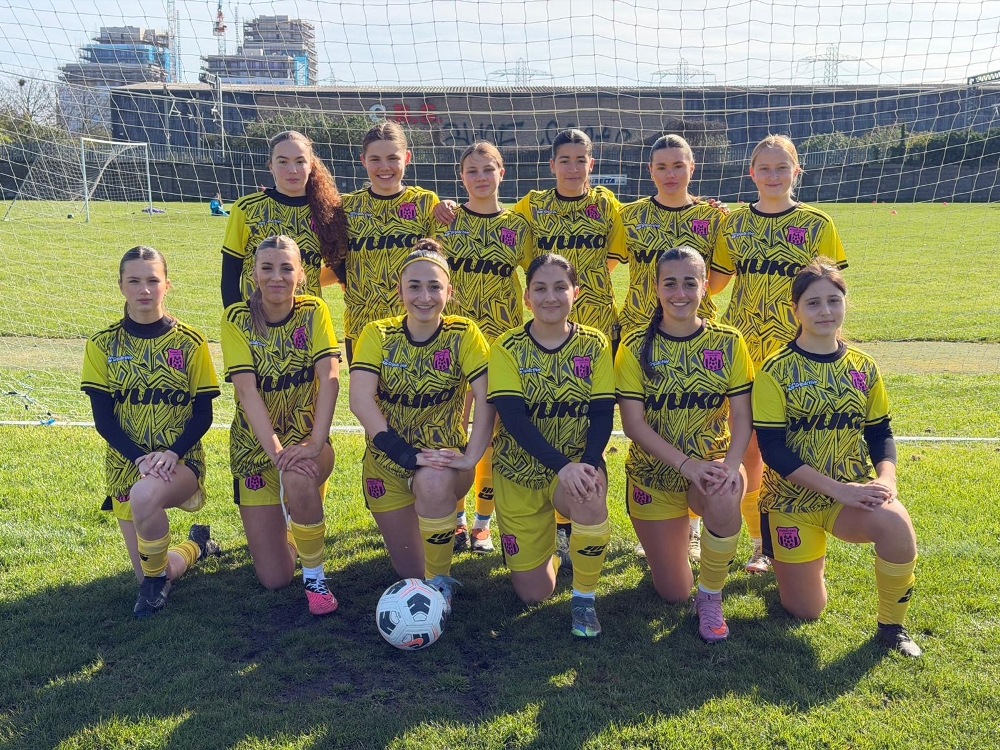
WUKA’s Tackle Anything campaign has officially reached their goal of supporting 6,000 girls across grassroots sports clubs in the UK – making a major milestone in the fight to keep girls in sport.
WUKA believes no girl should have to stop playing because of her period.
Yet for many young athletes, that’s still the reality. Fear of leaking through kit, managing cramps during training, or lacking access to sustainable period products continues to push girls out of sport.
The scale of the issue is impossible to ignore:
- 3 in 4 girls avoid sport and physical activity during their period
- This figure rises to 78 per cent among girls who have dropped out of sports.
- 43 per cent of girls drop out of sport after primary school
Source: https://womeninsport.org
That’s why WUKA, the award-winning, pioneering, female-founded period care brand, launched Tackle Anything – a campaign designed to support girls at grassroots level and create more period-inclusive sports environments from the very start of their journeys.
Since launching, the initiative has supported over 6,000 girls across a wide range of sports, including football, rugby, netball, roller hockey and taekwondo, reaching clubs in England, Scotland and Wales.
Through the campaign, clubs receive free WUKA Teen Stretch period underwear for young athletes, alongside expert-led period education delivered in partnership with 3x Olympian and Commonwealth, Euro & World Champion Hannah Miley MBE.
The programme helps coaches, parents and players feel more confident supporting girls in sport – both physically and emotionally
Continuing the Mission
While reaching 6,000 girls is a huge milestone, WUKA says the work is far from over.
The brand is continuing to expand Tackle Anything, with plans to support even more clubs and reach thousands more girls – ensuring that periods are no longer a barrier to participation in sport.
Because staying in the game shouldn’t depend on your cycle.
Founder and CEO of WUKA, Ruby Raut says: “At WUKA, this has never been about visibility – it’s about freedom.
“Freedom for girls to show up, play, and stay in sport without their period holding them back. Reaching 6,000 girls is a huge milestone, but for us, it’s part of a much bigger fight.
“We’ve already helped change the game, and we’re committed to continuing that progress.
“Every time we hit a goal, we set a new one — because this isn’t the finish line. It’s about shaping the future of sport and making sure the next generation grows up feeling confident, supported, and unstoppable.
Dean Wigzell (Head of Community Engagement at Kings Langley FC) adds: “The club is proud to be working with WUKA.
“Partnerships like this further reinforce our belief that our club is fast becoming the club to be at for young female footballers.”
The WUKA Mission:
WUKA – short for Wake Up Kick Ass – is on a mission to eliminate shame, silence, and stigma around periods.
Their commitment to menstrual equity in sport is starting where it matters most: at the beginning.
Because when you empower girls early, you don’t just keep them in the game – you change the future of the game itself.
Part of a Bigger Fight
This builds on WUKA’s wider activism – including their #AxeTheTax campaign, which successfully removed the tax on period pants, and continues to fight for true menstrual equity in the UK, including in sports.
Because access isn’t a luxury – it’s a right. WUKA is now making sure girls aren’t priced out of the game or made to feel like their period holds them back.
This isn’t just about products – it’s about freedom, fairness, and creating a level playing field for every girl.
To learn more about the campaign or explore how your club or organisation can get involved, visit: https://wuka.co.uk/pages/tackle-anything.


NICE has updated fertility guidance with a new endometriosis section for people struggling to conceive.
This follows feedback received during public consultation, recognising for the first time that the condition requires its own tailored approach to fertility care, separate from other causes of infertility.
Emma Cox, chief executive of Endometriosis UK, said: “This year’s Endometriosis Action Month theme is ‘Endometriosis Doesn’t Wait’ and our new State of Endometriosis Care report shows just how urgently change is needed.
“With average diagnosis times now standing at 9 years and 4 months, and 11 years for those from ethnically diverse communities, many have already waited far too long by the time they reach fertility services.
Today’s guidance marks a step change in the fertility support that anyone with endometriosis should receive.
“For years, those with endometriosis have told us they felt invisible within the fertility system, grouped with unexplained infertility despite having a diagnosed condition.
“We welcome NICE’s decision to listen to patient voices during consultation, to create a dedicated pathway, and to remove misleading labels like ‘mild’ and ‘severe’ endometriosis.”
“Endometriosis doesn’t wait. And now, at last, neither will the guidance.”
Endometriosis UK and others told NICE during consultation that endometriosis was being grouped with unexplained infertility, despite it being a diagnosed condition.
The committee agreed this was inappropriate and that endometriosis requires a distinct fertility pathway.
Respondents also told NICE that terms such as “mild” and “severe” endometriosis were clinically ambiguous and did not reflect the complexity of the condition or its impact on fertility.
The committee agreed and those terms have been removed from the final guideline.
Under the new recommendations, clinicians will discuss a range of options with patients with endometriosis who are trying to conceive, taking into account individual factors including how long they have been trying to conceive, the severity of their symptoms, their age, their ovarian reserve, which is a measure of remaining egg supply, and any male fertility factors.
The guideline sets out a treatment pathway. Where appropriate, expectant management, meaning time to try to conceive naturally, may be offered, or surgical treatment to address endometriosis, in line with NICE’s existing endometriosis guideline (NG73).
If neither approach is suitable or successful after 2 years, fertility treatment options including intrauterine insemination (IUI), where sperm is placed directly into the womb, or IVF will be discussed.
The new guidance supports the ambitions set out in the NHS 10 Year Health Plan, which commits to shifting care closer to home and empowering patients and professionals to make the best choices about treatment.
Setting out a clear, personalised pathway in the guideline for endometriosis helps ensure fertility services are better tailored to individual need, reducing variation in care and supporting equitable access across England.
Eric Power, interim director of the Centre for Guidelines at NICE, said: “We listened carefully to what patients, clinicians and patient groups told us during consultation.
“They described how complex endometriosis is, how they felt existing labels were misleading, and that the condition needed its own pathway. The committee agreed and acted on that feedback.”
“By creating a dedicated section for endometriosis, we are giving clinicians a clear, evidence-based framework to have better, more personalised conversations with their patients, ensuring that everyone, regardless of the cause of their fertility problems, has access to the right care at the right time.”
Public health minister Sharon Hodgson said: “Every woman with endometriosis deserves fertility care that recognises the complexity of her condition.
“This landmark guidance will ensure women can access a clear, personalised pathway to fertility care that leads to clearer conversations with clinicians and fewer barriers.
“We’re committed to giving every woman the support she deserves, and today’s guidance is a significant step towards ending the inconsistency that has let down too many, for too long.”











 Diagnosis4 weeks ago
Blood test shows promise in endometriosis

 Insight4 weeks ago
Women’s health leaders warn of censorship

 Insight4 weeks ago
Blood test predicts dementia 25 years before symptoms begin

 Menopause4 weeks ago
Study reveals hidden menopause tech privacy concerns

 News3 weeks ago
Femtech World Awards announces deadline extension

 News3 weeks ago
Luna and Kindbody partner to bring data-driven insight to women’s health and fertility care

 News4 weeks ago
Pregnancy may shed brain’s grey matter to prepare women for motherhood – study

 Menopause4 weeks ago
Non-hormonal menopause pill approved for NHS use
1 Comment