




News
Pregnancy may shed brain’s grey matter to prepare women for motherhood – study


Grey matter changes in pregnancy may help mothers bond with newborns, with levels falling by nearly 5 per cent, the largest study to date suggests.
The research followed 127 pregnant women using MRI scans, a type of scan that produces detailed images, before, during and after pregnancy.
It found that grey matter, the part of the brain involved in processing information, emotions and empathy, fell by an average of nearly 5 per cent before partly returning by six months after birth.

Women who went through the biggest brain changes were also more likely to report strong bonding with their babies.
One of the areas showing the clearest and most lasting changes was the default mode network, a brain system linked to self-perception, empathy and altruism.
Susana Carmona, director of the NeuroMaternal laboratory and co-lead of the study, said the reduction could reflect the brain reshaping itself in preparation for motherhood.
“I like to use the metaphor of pruning a tree,” she said.
“Some of the branches are cut to make it grow more efficiently.
“We find in biology, as in life, sometimes less is more.”
The team also collected hormone samples and found that, in some cases, rising oestrogen levels closely matched the drop in grey matter, suggesting hormones may play an important part in driving the changes.
For comparison, the researchers also scanned 52 women who had never been pregnant, including 20 women who were partners of pregnant participants.
That group showed only small fluctuations over the same period.
Carmona said the findings should change how pregnancy is understood.
“New mums learn a whole set of new skills,” she said, adding that research should not focus only on possible memory problems.
The study did not directly examine memory during pregnancy, although Carmona acknowledged that some women do feel more forgetful.
“Pregnancy places a huge metabolic load on your body, so you may have less energy and less sleep and feel less alert and forgetful,” she said.
Tania Esparza, one of the study participants who is now a new mother, said she was “tired of pregnant women being infantilised.
“Rather than becoming dumber, we are becoming more specialised for the job,” she said.
Esparza added: “They are undergoing tremendous transformation, and we need to approach them as someone who is coming outside of a cocoon and becoming something different.”
Liz Chrastil, a professor at the University of California who was not involved in the research, said the work could “help with attachment between caregivers and infants, and to find better ways to provide support and recovery for new mums.”












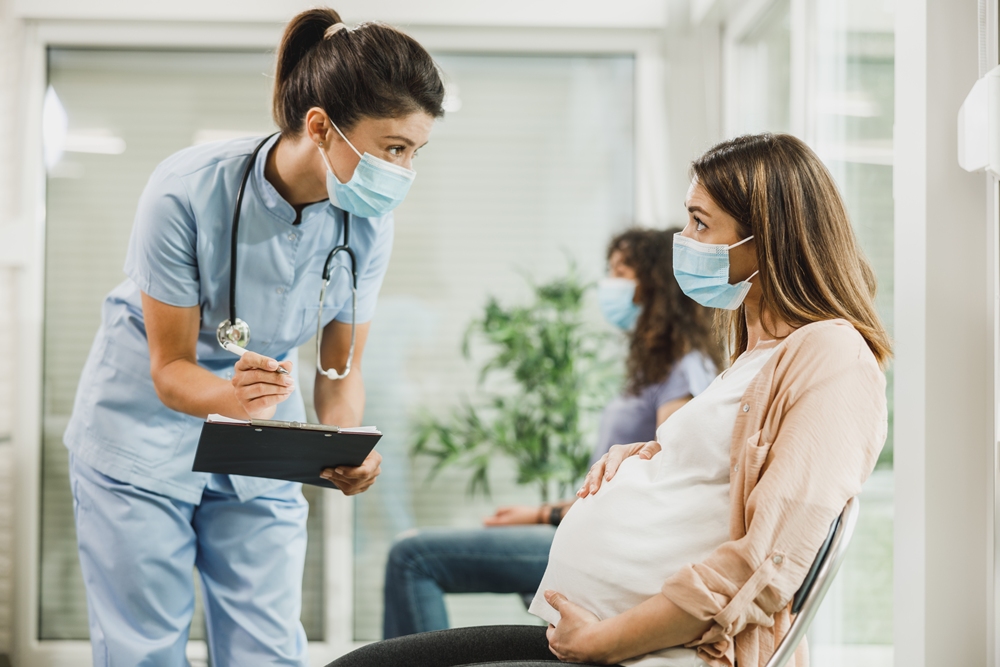
Black mothers across most of England lack targeted maternal mental health support despite facing higher risks during and after pregnancy, a report has found.
The analysis found a patchwork of provision across England, with inconsistent data, funding and support for Black women.
The vast majority of Integrated Care Boards (ICBs) do not commission services specifically for Black maternal mental health, while five hold no information on such provision.

The findings come from Understanding local provision for Black maternal mental health, a briefing produced through the Black Maternal Mental Health project, led by The Motherhood Group in partnership with the Maternal Mental Health Alliance and Centre for Mental Health.
The briefing is based on Freedom of Information responses from 35 of England’s 36 ICBs.
Most ICBs rely on general perinatal mental health services, but gaps in available data mean it is impossible to determine whether these services meet the needs of Black mothers, the report found.
Black women face a higher risk of developing mental health problems during and after pregnancy but are less likely to receive the support they need, according to the briefing.
Mental health problems also remain a leading cause of maternal deaths.
The report found that many ICBs do not have a complete picture of activity in their areas, including training delivered by community organisations, making it difficult to hold the NHS to account.
Some ICBs are commissioning targeted services and working with community groups, showing that good practice exists.
The briefing calls on NHS England and the Department of Health and Social Care to establish clear national guidance on ICBs’ responsibility for commissioning, monitoring and evaluating culturally competent, trauma-informed services for Black mothers, coproduced with Black women and communities.
It also calls for routine, linked data collection on Black mothers’ perinatal mental health experiences and outcomes.
ICBs are also urged to invest sustainably in community-led services, work with organisations trusted by Black mothers and learn from existing good practice, including anti-racism and cultural competency training.

A £254m UK funding package will expand reproductive health access for millions of women and girls across 54 countries.
The government said the investment will support family planning for more than 15 million women each year and could prevent 14 million unintended pregnancies and more than 35,000 maternal deaths by 2028.
The funding will expand access to contraceptives and safe abortion products, as well as medicines and equipment for maternal and newborn healthcare.
Women will be supported to access family planning products including condoms, pills, implants and coils.
The programme will also provide equipment to improve early detection of post-partum haemorrhage, severe bleeding after childbirth, and treatments shown to reduce severe bleeding by almost two thirds.
Kirsty McNeill, minister for development, said: “It is a scandal that women and girls are denied the fundamental right to make informed choices about their own body, free from coercion, discrimination and violence.
“Every woman and girl should be able to make decisions about her own future. That choice can mean staying in school, finding work or surviving childbirth.
“The funding I have announced will help give millions more women and girls across the world autonomy over their bodies, control over their futures, and the chance to fulfil their full potential.”
The funding will be delivered through the CHOICES programme, working with the United Nations Population Fund (UNFPA) and Clinton Health Access Initiative (CHAI) across more than 50 of the world’s poorest countries, including conflict zones.
An estimated 259 million women who want to avoid or delay pregnancy are not using safe, modern contraceptive methods.
The government said it will also work with national governments to support sustainable health systems as countries transition away from donor funding.
Maternal deaths have fallen by 40 per cent since 2000, but progress has been uneven, with 70 per cent occurring in sub-Saharan Africa.
CHOICES operates in more than 50 countries, including Afghanistan, Chad, the Gambia, Malawi, Sudan and Yemen. It focuses on countries with the highest rates of death in childbirth and lowest rates of contraceptive use, as well as providing emergency support during humanitarian crises.
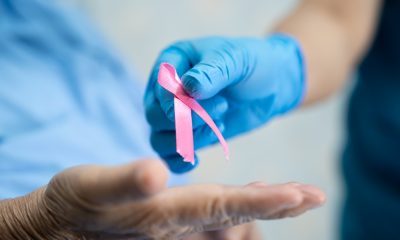
A health trust will decide how far back to review breast cancer cases after more than 30 women were found to have undergone unnecessary surgery.
It has already been established that hundreds of patients came to harm during treatment at the breast unit at County Durham and Darlington Foundation Trust (CDDFT).
The trust has apologised and is using specialists from other hospitals to review cases to see if other women underwent unnecessary operations or received otherwise poor care.
An extraordinary trust board meeting in Durham will consider the scope of its Look Back Exercise.
Board papers recommend reviewing cases as far back as 2015, working backwards one year at a time.
Documents estimate that this could take five years and involve reviewing the care of approximately 4,500 patients.
Members of the Pink Justice Network, an online support group for women who have received breast cancer treatment from the trust, will attend the meeting.
Nadeen Lister, who runs the group of around 150 women with Amelia Green, said members were calling for a public inquiry into what went wrong.
Lister told the Press Association: “When we started the group, nobody was talking about compensation, they just wanted justice for what has been done.
“The Look Back Exercise has cost the trust more than £500,000 this year, with staff checking back over records, medical experts reviewing cases and psychological help offered to patients affected.”
Green said the trust could avoid the expense of the exercise “by backing our call for a public inquiry”.
Hayley Collinson, of Hudgell Solicitors, which represents many affected patients, said: “Given the scale of harm revealed so far, we can’t see how the Trust board can come to any other decision than to extend this lookback investigation given the findings of the first batch of cases to have been reviewed, and the high percentage of harm being identified.
“The reality is that any woman who had breast cancer treatment at this Trust from 2015 onwards is now going to be questioning whether their treatment was appropriate and if they were actually harmed.”








 Menopause1 week ago
Menopause may not explain rising heart condition in women – study

 Fertility2 weeks ago
Paracetamol use may impact future fertility, studies suggest

 Insight1 week ago
Women with birth trauma face 2.5x higher healthcare costs – study

 News1 week ago
Medical cannabis may improve endometriosis symptoms – study

 Mental health6 days ago
Neuroscience-backed journaling for women’s mental health

 Cancer1 week ago
Study could explain why obesity is a breast cancer risk factor
 AI1 week ago
Evvy secures US$40m for AI-powered vaginal microbiome testing

 Q&A1 week ago
Innovating breast cancer screening with tears