




News
Spinout awarded £1.75m for AI-powered fetal ultrasound trial

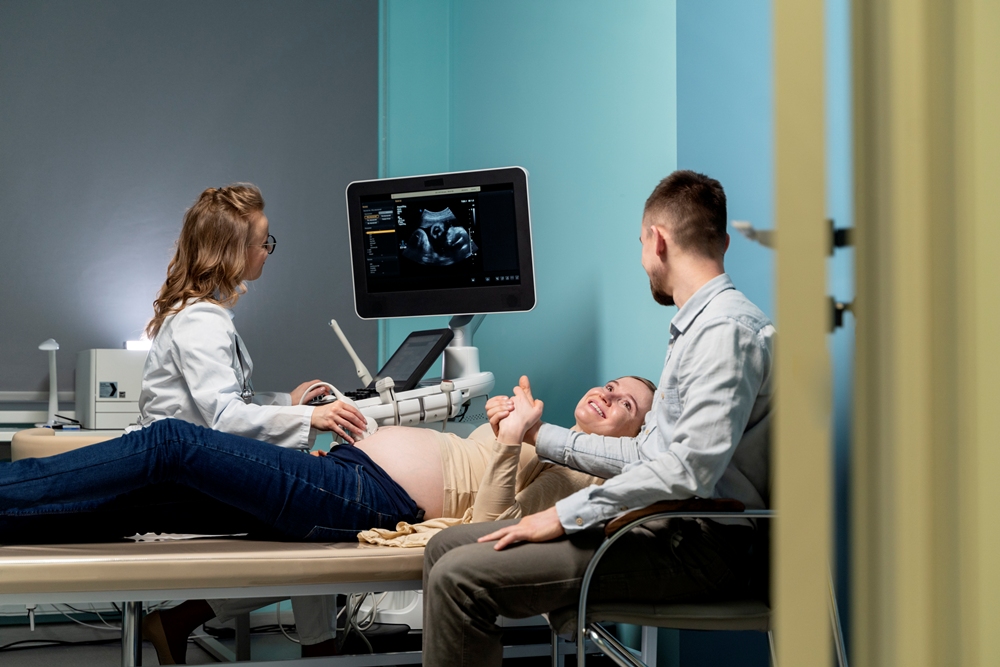
Fraiya Ltd has secured £1.75m to test how artificial intelligence could improve fetal ultrasound screening across several NHS sites.
The National Institute for Health and Care Research (NIHR) grant will support a 27-month trial of AI-assisted anomaly detection in pregnancy scans.
If successful, the tool could be integrated into NHS services and shape national standards for anomaly screening.
Anomaly detection refers to identifying potential birth defects or abnormalities during routine ultrasound.

King’s College London spinout Fraiya, led by professor Reza Razavi and Dr Jacqueline Matthew, will test the technology across four NHS trusts with more than 9,500 participants.
Congenital abnormalities affect about two per cent of UK pregnancies. Current detection rates vary widely across the country, with some cases missed.
The trial, beginning in November 2025, will compare standard ultrasound with AI-supported screening at Guy’s and St Thomas’, Lewisham and Greenwich, Liverpool Women’s and Royal Devon University Healthcare trusts.
The system will automate image capture and measurement, aiming to cut scan times and improve accuracy. It will also link to a remote review service, allowing specialists to check results.
Dr Jacqueline Matthew is co-founder of Fraiya, clinical research fellow and sonographer at the School of Biomedical Engineering & Imaging Sciences.
She said: “This work is about more than faster scans; it’s about giving clinicians and parents clearer information at a pivotal moment.
“By combining AI with sonographer expertise, we’ve shown it’s possible to improve both accuracy and the experience of pregnancy screening.
“We’re proud to see this research move into practice, and grateful to the families, clinicians and researchers who made it possible.”
The project involves public and patient input through an advisory group of NHS clinicians, advocacy groups and people with experience of antenatal screening.
A health economic evaluation, led by Dr Anna Barnes at the King’s Technology Evaluation Centre (KiTEC), will analyse NHS resource use, potential cost savings and long-term patient outcomes to support wider adoption.
The grant follows earlier trials showing AI’s potential to improve workflow and reduce cognitive load for sonographers.
Fraiya is also part of the London Institute for Healthcare Engineering’s MedTech Venture Builder programme, aimed at bringing new medical AI into practice.
Professor Razavi is co-founder of Fraiya and professor of paediatric cardiovascular science at the School of Biomedical Engineering & Imaging Sciences.
Razavi said: “Although many AI tools exist for imaging, very few are evaluated prospectively.
“We are excited to run this large randomised control trial of FraiyaScan and FraiyaDetect to see the clinical and economic impact in practice.”















Ovarian cancer cases are rising among younger adults in England, with bowel cancer showing a similar pattern, a new study suggests.
Researchers said excess weight is a key contributor, but is unlikely on its own to explain the pattern.

The authors wrote: “These patterns suggest that while similar risk factors across ages are likely, some cancers may have age-specific exposures, susceptibilities, or differences in screening and detection practices.”
They added: “Although overweight and obesity are linked to 10 of the 11 cancers evaluated and account for a substantial proportion of cancer cases, both BMI-attributable and BMI-non-attributable incidence rates have increased, though the latter more slowly, suggesting other contributors.”
The study analysed cancer incidence, meaning new diagnoses, in England between 2001 and 2019 across more than 20 cancer types, comparing adults aged 20 to 49 with those aged 50 and over.
Among younger women, cases of 16 out of 22 cancers increased significantly over the period, while among younger men, 11 out of 21 cancers increased significantly.
In particular, there was a significant rise in 11 cancers with known behavioural risk factors among adults under 50. These were thyroid, multiple myeloma, liver, kidney, gallbladder, bowel, pancreatic, endometrial, mouth, breast and ovarian cancers.
Rates of all 11 also rose significantly among adults aged 50 and over, with the notable exceptions of bowel and ovarian cancer.
Five cancers, endometrial, kidney, pancreatic, multiple myeloma and thyroid cancer, increased significantly faster in younger than in older women, while multiple myeloma increased faster in younger than in older men.
The researchers looked at established risk factors including smoking, alcohol intake, diet, physical inactivity and body mass index, a measure used to assess whether someone is underweight, a healthy weight, overweight or obese.
With the exception of mouth cancer, all 11 cancers were associated with obesity. Six, liver, bowel, mouth, pancreatic, kidney and ovarian, were also linked to smoking.
Four, liver, bowel, mouth and breast, were associated with alcohol intake. Three, bowel, breast and endometrial, were linked to physical inactivity, and one, bowel, was associated with dietary factors.
But apart from excess weight, trends in those risk factors over the past one to two decades were stable or improving among younger adults.
That suggests other factors may also play a part, including reproductive history, early-life or prenatal exposures, and changes in diagnosis and detection.
The study noted that red meat consumption fell among younger adults, while fibre intake remained stable or slightly improved in both sexes between 2009 and 2019, although more than 90 per cent of younger adults were still not eating enough fibre in 2018.
Established behavioural risk factors accounted for a substantial share of cancer cases.
Excess weight was the risk factor associated with most cancers in 2019, ranging from 5 per cent for ovarian cancer to 37 per cent for endometrial cancer.
The researchers said the findings were based on observational data, meaning the study could identify patterns but could not prove cause and effect.
They also noted there were no consistent long-term national data for several risk factors, that the analysis was limited to England rather than the UK, and that cancer remains far more common overall in older adults despite the rise in cases among younger people.














 Entrepreneur7 days ago
Future Fertility raises Series A financing to scale AI tools redefining fertility care worldwide

 Entrepreneur4 weeks ago
Three sessions that show exactly where women’s health is heading in 2026

 Pregnancy4 weeks ago
How NIPT has evolved and what AI NIPT means in 2026

 News4 weeks ago
Two weeks left to make your mark in women’s cardiovascular health

 Fertility2 weeks ago
Future Fertility partners with Japan’s leading IVF provider, Kato Ladies Clinic

 Mental health1 week ago
Lifting weights shows mental health and cognitive benefits in older women, study finds

 Menopause2 weeks ago
More research needed to understand link between brain fog and menopause, expert says

 News4 weeks ago
Copper coil vs Mirena: Which is right for you?
1 Comment