




Mental health
The $128b paradox: Corporate wellness vs women’s burnout


By Katrina Zalcmane, co-founder | partnerships and growth, Véa
The global corporate wellness market reached US$70.65 billion in 2024 and is projected to hit US$128 billion by 2033 – Europe leads the charge, capturing over 39.5 per cent of market share.
Meanwhile, femtech investment hit US$2.2 billion in 2024, representing 8.5 per cent of all digital health funding.
The message is clear: companies recognise that employee wellness matters and women’s health technology is finally getting serious investment.
So why are women still drowning?
In the UK, 91 per cent of adults report experiencing high or extreme stress levels – despite consumers spending an average of US$3,342 annually on wellness and self-care.
60 per cent of women in leadership positions report feeling constantly burned out, while 69 per cent of women feel emotionally drained after every workday.
Around 1 in 4 working women say they can’t manage workplace stress, with only 44 per cent confident their employer even has a burnout plan.
The numbers don’t add up. Billions flowing into wellness programmes. A femtech revolution promising personalised solutions.
And yet women ages 25-45 – the backbone of the modern workforce – are hitting crisis levels of exhaustion.
The problem isn’t a lack of investment – it’s what we’re investing in.
The Mismatch: What Companies Offer vs What Women Actually Need
Health risk assessments captured 21.2 per cent of the European corporate wellness market in 2024, while stress management programmes hold 13 per cent market share and continue expanding.
Companies are checking boxes: biometric screenings, mental health apps, flexible work, meditation subscriptions.
Yet these programmes consistently miss three critical factors:
1. Emotional data is invisible
Modern workplaces reward thinking, problem-solving and constant cognitive output.
What gets lost is the intelligence that comes from recognising early warning signals in the body – somatic indicators that burnout is building long before it becomes visible.
Women are taught to “think through” stress rather than listen to what their bodies are telling them. By the time burnout shows up in productivity metrics or sick days, the damage is done.
2. Hormonal rhythms are ignored
Corporate wellness assumes constant, linear productivity.
But women’s bodies don’t work that way. Menstrual cycles, perimenopause, fertility journeys – all create natural energy fluctuations that impact focus, stress response and cognitive performance.
Instead of working with these rhythms, most women fight against them, blaming themselves for “productivity dips” that are actually biological.
The result is chronic disconnection from their bodies and accelerated burnout.
3. Emotional labour stays uncounted
Women carry disproportionate loads of invisible work – managing team dynamics, mentoring, smoothing conflicts, holding space for others’ stress.
This labour never appears on performance reviews or workload assessments.
It accumulates beneath the surface until women hit a wall.
The Cost of Getting It Wrong
In the UK, mental health-related absences cost the economy approximately £21.6 billion annually, with employees taking 34 million sick days each year due to stress, depression and anxiety.
Employee burnout costs an average 1,000-person company US$5.04 million per year globally. Burned-out employees are 6 times more likely to leave, costing companies 50-200 per cent of salary in recruiting and training.
For women specifically, the crisis deepens.
Women new to leadership report 70 per cent burnout rates; for women of colour in senior positions, it reaches 77 per cent..
Nearly 40 per cent of women actively seeking new jobs cite burnout as the primary reason.
Replacing a mid- or senior-level woman costs up to 213 per cent of her annual salary.
We’re not just losing individual contributors but hemorrhaging the women leaders who hold institutional knowledge, mentor the next generation and drive diversity initiatives.
What Needs to Change
Instead of more generic wellness programs, we need to fundamentally rethink how we support women at work.
1. Shift from crisis response to prevention
Only 44 per cent of women feel confident their employer has a burnout plan – but by then, you’ve already lost.
Companies must teach women to recognise burnout signals in their bodies before a crisis hits. Somatic awareness catches exhaustion early, when intervention still works.
2. Design work around cyclical energy, not constant output
Women need organisational cultures that acknowledge hormonal rhythms as legitimate biological factors affecting performance.
This means training managers to understand energy fluctuations and designing workloads that account for them instead of just offering “flexible arrangements”.
3. Make invisible labour visible
Emotional labor must be quantified, acknowledged and redistributed.
This requires new frameworks for measuring contributions beyond traditional output metrics and structural changes preventing this work from defaulting to women.
4. Prioritise personalisation over one-size-fits-all
Workforce wellness now centres on personalisation powered by AI and data analytics.
A 27-year-old establishing her career has completely different needs than a 42-year-old navigating perimenopause while caring for ageing parents.
AI-driven platforms can deliver tailored support – virtual health assistants, personalised insights, telemedicine – making care more accessible for women balancing careers, family and wellness.
The Opportunity
Closing the women’s health gap could add at least $1 trillion annually to the global economy by 2040.
But unlocking that value requires interventions addressing burnout’s root causes, not just symptoms.
The market is already voting.
Virtual workplace wellness programmes saw substantial growth following the pandemic and Europe continues leading corporate wellness investment.
Companies in the UK and France are implementing AI-driven burnout assessments, hybrid wellness platforms and data-driven mental health monitoring.
Still, investment alone isn’t enough.
The question isn’t whether companies will spend on women’s wellness – they already are.
The question is whether they’ll invest in solutions that actually work: reconnecting women with somatic intelligence before burnout becomes visible, designing around hormonal rhythms rather than fighting them and making invisible labour visible so it can be redistributed.
The companies that do will win the talent war.
The ones that don’t will keep wondering why their best women keep leaving.
About Véa Workshops
Véa offers evidence-based corporate wellness workshops designed specifically for women professionals, addressing the root causes of burnout that traditional programs miss.
Grounded in neuroscience, psychology and somatic awareness, Véa workshops focus on prevention rather than crisis response – teaching women to recognise emotional data and somatic signals, work sustainably with hormonal rhythms and make invisible labor visible.
Available in formats from 45-minute executive sessions to half-day leadership offsites, these workshops support sustainable performance without asking women to step back from ambition.
Learn more at veajournal.app/workshops.


Mental health
Dr-Julian helps deliver breakthrough mental health support for Black and ethnically minoritised mothers


A groundbreaking digital perinatal mental health pilot for Black and ethnically minoritised women has helped women access support faster, complete therapy at higher rates, and recover more successfully than national averages.
The partnership between digital tech company Dr-Julian and The Essential Baby Company Ltd within a new model of mental health care named haPPIE SHE Cares – who offer personalised support for women sharing their healthcare experiences, showed results well above NHS benchmarks for Black and ethnically minoritised women.
The pilot was created to help women who are less likely to use traditional mental health services during pregnancy and in the first year after giving birth.
By combining trusted community referrals, culturally aware support, and fast access to therapy through Dr-Julian’s online and virtual care platform, the programme delivered standout results.
Every woman who joined the pilot started therapy, 90 per cent completed treatment, and 74 per cent recovered; well above the NHS benchmark of around 52 per cent.
Women referred through community organisations accessed support in just one day on average, compared with around 21 days through many standard services.
Even the programme’s regular referral route reduced waits to 13 days.
The findings come as NHS leaders continue to focus on maternity inequalities and unequal access to mental health care.
Black and ethnically minoritised women can face barriers including stigma, language needs, lack of trust in services, childcare pressures, and difficulty navigating complex systems.
The haPPIE SHE Cares model was designed to break down those barriers by working with trusted community groups, offering culturally informed support, and where possible matching women with therapists who understood their background or language.
Gemma Poole for The Essential Baby Company said: “Too many women who need help feel unseen, unheard or unable to get support when they need it most.
“This project shows that when services are built around trust, culture and community, women engage, recover and thrive.
“This early success could provide a blueprint for reducing inequalities in maternal mental health care across the UK. Behind every statistic is a mother who felt supported, a family that benefited and a woman who found her voice.
“Mental healthcare must work for every community. This partnership shows that when high-quality therapy is combined with culturally responsive support, outcomes improve and women get help faster.
We are proud to have provided the therapists, virtual care systems and digital pathways behind this programme. We believe this model could help NHS organisations nationwide cut waiting times and improve recovery rates.”
Women who took part described the programme as life-changing, saying it reduced isolation, gave them confidence speaking with healthcare professionals, and made them more willing to seek help.
With growing pressure on maternity and mental health services, leaders behind the project say the pilot offers a practical solution that improves care while helping cut long waiting lists.
Plans are now being explored to expand the model through training, regional partnerships, and future funding.
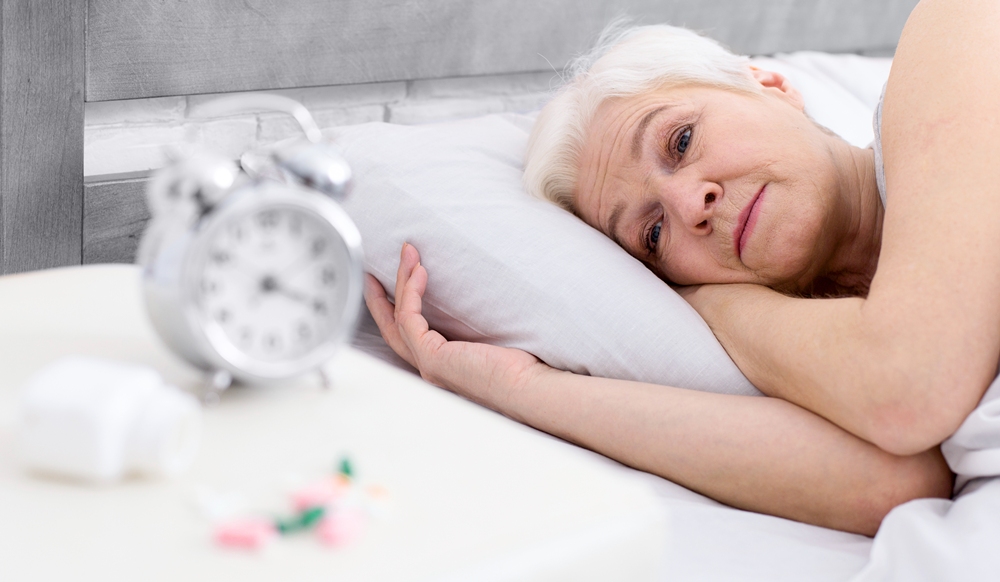
Poor sleep may signal higher Alzheimer’s risk in older women with greater genetic risk, a study suggests.
Older women who reported poorer sleep also showed greater memory difficulties and more Alzheimer’s-related brain changes, the study found.
That pattern appeared only in women with higher genetic risk, suggesting sleep complaints may be a stronger warning sign for some women than for others.
Researchers examined 69 women aged 65 years and older taking part in the Women Inflammation Tau Study, an ongoing project focused on ageing and Alzheimer’s disease risk.
Participants completed questionnaires about their sleep quality, underwent memory testing and received brain scans measuring tau. Tau is a protein that accumulates abnormally in Alzheimer’s disease.
The study found that poorer self-reported sleep was associated with worse visual memory performance and greater tau accumulation in brain regions affected early in Alzheimer’s disease, but only among women with higher genetic risk.
Women with lower genetic risk did not show the same relationship between sleep complaints, memory and tau build-up. The finding was specific to visual memory and was not observed for verbal memory.
Researchers said the results add to growing evidence that sleep disturbances and Alzheimer’s disease may reinforce one another over time.
Previous studies have suggested that disrupted sleep can contribute to the build-up of abnormal tau proteins, while Alzheimer’s-related brain changes may also interfere with healthy sleep patterns.
Because women account for nearly two thirds of Alzheimer’s cases and frequently report poorer sleep quality than men, the researchers said sleep may represent an important and potentially modifiable risk factor in older women.
The authors noted that self-reported sleep assessments are inexpensive and easy to administer, raising the possibility that sleep complaints could help identify people who may benefit from closer monitoring or early intervention.
They also suggested that improving sleep could become a target for future Alzheimer’s prevention strategies, particularly for women at elevated genetic risk.












 Opinion4 weeks ago
What Maternal Mental Health Month reveals about where postpartum support actually breaks down

 Insight3 weeks ago
NIH Grant terminations disproportionately impact minority scientists, research finds

 Menopause5 days ago
Perimenopause misinformation ‘putting women at risk’

 Adolescent health3 weeks ago
WUKA brings Period-Positive Pool Party to London Aquatics Centre to keep girls swimming through puberty
 Insight3 weeks ago
PCOS renamed after decade-long campaign to end ‘cyst’ misconception

 Events4 weeks ago
WHIS 2026 unveils agenda and first speakers for the leading women’s health summit

 Menopause3 weeks ago
CBT shows promise for menopause insomnia and hot flashes

 Insight4 weeks ago
Online abuse and deepfakes ‘pushing women out of public life’
2 Comments