



News
‘Long waiting lists and patchy care provision’- NHS-funded IVF cycles fall to 14-year low
NHS-funded IVF procedures dropped to 27 per cent in 2022 from 40 per cent in 2012, new data shows


The proportion of NHS-funded IVF cycles in the UK has fallen to the lowest level for 14 years, leaving fertility patients either unable to access treatment or forced to go private.
Some 27 per cent of IVF cycles were funded by the NHS in 2022, the lowest figure since 2008 and a sharp fall on the 40 per cent which it provided in 2012, according to the latest annual report by the Human Fertilisation and Embryology Authority (HFEA).
The number of NHS-funded cycles of IVF fell by 17 per cent in England, 16 per cent in Wales and seven per cent in Scotland between 2019 and 2022, the report showed. The East Midlands of England saw the biggest fall during that time, down 48 per cent.
The regulator said the fall may be being fuelled by the rise in NHS waiting lists, meaning it is taking longer for many patients to see a specialist in the first place.
Such delays can mean that women seeking help with fertility lose their window for treatment, as the chances of success fall.
Julia Chain, chair of the HFEA, said: “Our data shows the average age of patients starting treatment for the first time is now nearly six years older than the average age at which women in England and Wales gave birth to their first child.
“There are several possible factors for this including the knock-on effect of delays across the NHS due to the COVID-19 pandemic, particularly in gynaecology, which has likely led to delays in some patients accessing fertility services.”
The higher average age, Chain said, may also relate to difficulty in funding fertility treatment, owing to recent increases in the cost of living, a fall in the proportion of NHS-funded IVF cycles and increased waiting times for further investigations before accessing NHS-funded treatment.
Leila Thabet, general manager at Maven Clinic, told Femtech World: “Today’s figures highlight what many of us working in the field of women’s health have known for some time – fertility treatment is extremely challenging to access on the NHS.
“NHS IVF treatment is subject to long waiting lists and patchy care provision, often with inadequate support for the emotional toll the treatment takes.
“Women undergoing IVF will all need different types and levels of support as every IVF journey is different. This personalised treatment is not something the NHS is set up to provide, so even where women are lucky enough to benefit from NHS fertility treatment, they may need to turn to other providers for additional physical and emotional support.”
She added: “Women going through IVF often describe it as all consuming. It impacts every aspect of your life – physically, emotionally and practically. Juggling IVF treatment and a career are notoriously hard, for example. Add the huge financial toll, and we can clearly see why fertility treatment is life changing in every sense, no matter the outcome.”
To receive the Femtech World newsletter, sign up here.





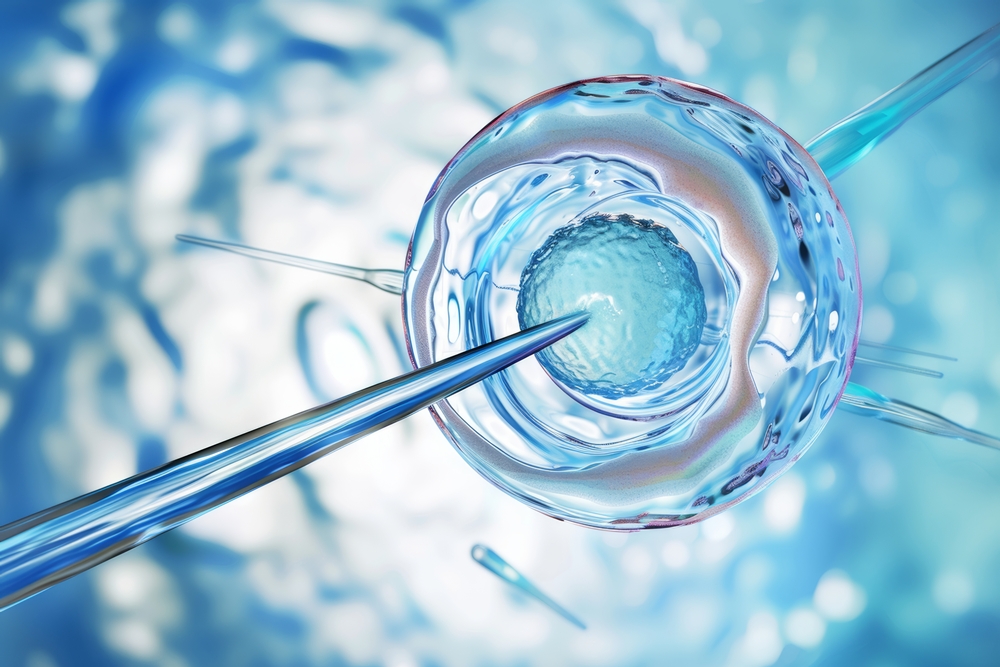
Scientists say they have ‘rejuvenated’ human eggs, in work that could improve IVF success rates for older women.
The team reports that an age-related defect causing genetic errors in embryos may be reversed by supplementing eggs with a key protein.
In eggs donated by fertility patients, microinjection of the protein cut the share showing the defect from 53 per cent to 29 per cent.

The findings were presented at the British Fertility Conference in Edinburgh by researchers from the Max Planck Institute for Multidisciplinary Sciences in Göttingen.
The technique is being commercialised by Ovo Labs, co-founded by professor Melina Schuh, who led the research.
The approach targets problems in meiosis, the process where eggs halve their genetic material before fertilisation.
In older eggs, chromosome pairs can loosen and separate too soon, leading to embryos with too many or too few chromosomes, known as aneuploidy.
The researchers found levels of a protein called Shugoshin 1, which helps hold chromosome pairs together, decline with age. Microinjections appeared to restore this “molecular glue” and reduce errors.
Professor Schuh said: “Overall we can nearly halve the number of eggs with [abnormal] chromosomes. That’s a very prominent improvement.
“Most women in their early 40s do have eggs, but nearly all of the eggs have incorrect chromosome numbers. This was the motivation for wanting to address this problem.
“What is really beautiful is that we identified a single protein that, with age, goes down, returned it to young levels and it has a big effect.
We are just restoring the younger situation again with this approach.
Declining egg quality is a major reason IVF success rates fall steeply with age.
UK figures show an average birth rate of 35 per cent per embryo transferred for patients under 35, dropping to 5 per cent for women aged 43 to 44.
Dr Agata Zielinska, co-founder and co-chief executive of Ovo Labs, said: “Currently, when it comes to female factor infertility, the only solution that’s available to most patients is trying IVF multiple times so that, cumulatively, your likelihood of success increases.
“What we envision is that many more women would be able to conceive within a single IVF cycle.”
The approach would not extend fertility beyond menopause.
The team is in talks with regulators about a clinical trial.
Dr Güneş Taylor, of the University of Edinburgh, who was not involved, said: “This is really important work because we need approaches that work for older eggs because that’s the point at which most women appear.
“If there’s a one-shot injection that substantially increases the number of eggs with properly organised chromosomes, that gives you a better starting point.”














-

 Features4 weeks ago
Cannabis compounds kill ovarian cancer without harming healthy cells, research finds
-

 Insight4 weeks ago
Meta removes dozens of abortion advice and queer advocacy accounts
-

 Entrepreneur4 days ago
2025: The year IVF innovation went from lab to life
-

 News3 weeks ago
Can biotech help close the fertility gap? Inside the race to improve egg quality
-

 Features4 weeks ago
University of Leeds IVF spinout raises £3.5m
-

 Insight3 weeks ago
AI-driven digital tool delivers sustained blood pressure reductions, study finds
-

 Insight4 weeks ago
Menopausal hormone therapy may not increase breast cancer risk in women with BRCA mutations
-

 News3 weeks ago
AHA invests in AI aimed at cardiology’s gender bias problem
3 Comments