



To receive the Femtech World newsletter, sign up here.
News
Health insurance company pledges CAD$1m to support women’s mental health research
The funding is hoped to support research, capacity development and advocacy

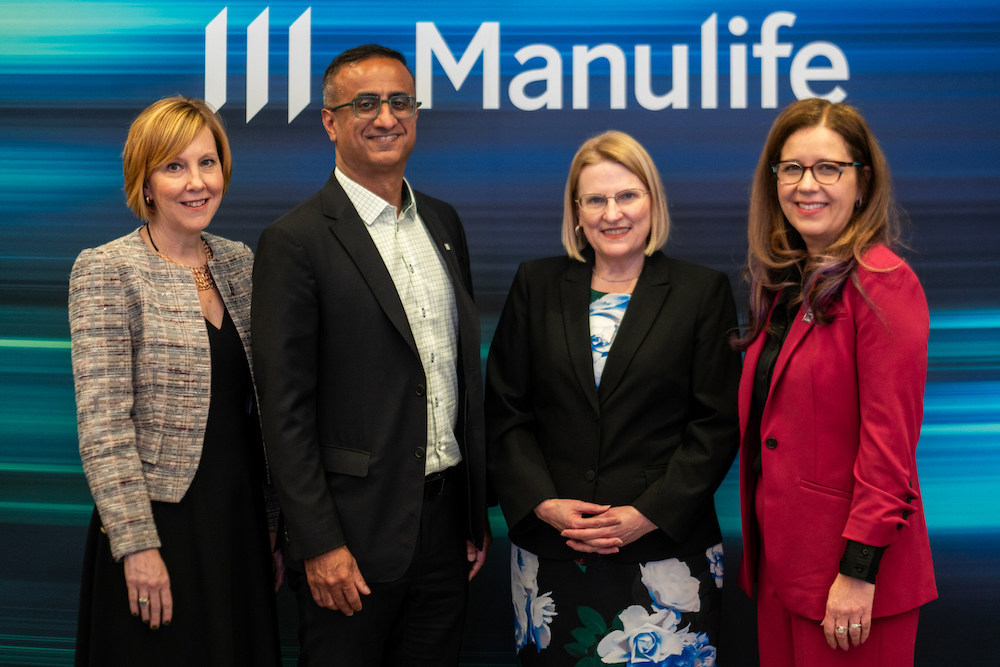
The Canadian health insurer Manulife has pledged CAD$1m to support women’s mental health research.
Manulife and the Centre for Addiction and Mental Health (CAMH) have announced a three-year partnership to support the Women’s Health Research Cluster (WHRC).
The CAD$1m donation is hoped to support women’s mental health and wellbeing in Canada and around the world.
The WHRC is a network of multidisciplinary professionals that strives to create a future where women and girls can live equitably healthy lives across their lifespan.
It aims to take an integrated health approach that recognises all aspects of a person can affect mental health, including access to help and treatment facilities, economic status, physical health and wellbeing.
The WHRC is allied with CAMH’s womenmindinitiative, a community of philanthropists, thought leaders and scientists who is working towards tackling sex and gender disparities in science and putting the unique needs and experiences of women at the forefront of mental health research.

Dr Liisa Galea, inaugural treliving family chair in women’s mental health, scientific lead for womenmind and leader of the WHRC, said: “Women’s health research has, for centuries, been undervalued and underfunded.
“In Canada, less than six per cent of research projects funded by the Canadian Institutes of Health Research explicitly examine factors specific to women’s health, despite the fact that many mental health disorders — such as anxiety and depression —disproportionately affect girls, women and gender diverse individuals.
“We need to do better, and we can do better. I am very grateful to Manulife as one of the largest corporate supporters of CAMH to help us cultivate sex and gender health equity in Canada and worldwide.”
Sylvia Jones, Ontario’s deputy premier and minister of health, said: “Our government is working with our partners to break down barriers to make it easier, and more convenient for people to access the mental health services they need, when they need them.
“Womenmind is another example of how collaboration across the health care system is ensuring essential research into women’s mental health, leading to better access to high quality mental health services, in every corner of the province, and meeting the unique needs of women across Ontario and Canada.”
Naveed Irshad, president of Manulife Canada, said: “Manulife proudly supports the WHRC’s efforts to tackle sex and gender disparities in science to place the unique needs and experiences of women at the forefront of mental and physical health research.
“We are deeply committed to fostering positive change and empowering sustained health and wellbeing here in Canada and worldwide. This partnership exemplifies our broader mission of making a meaningful difference in the lives of individuals and communities where we live and work, leaving a lasting legacy of support and empowerment.”










Up to 75 per cent of Australian women report concerns about their body image after giving birth, with many feeling pressure to “bounce back” to pre-pregnancy shape.
A review of 36 studies found these struggles are shaped by partners, families and cultural expectations, and that social pressure can even trigger eating disorders for the first time.
The analysis showed that social and interpersonal factors can either protect against or worsen body dissatisfaction and disordered eating during pregnancy and the first year after birth.
Researchers at Flinders University in Australia found that supportive partners and strong social networks help women feel more positive about their bodies, while unrealistic media portrayals and appearance-focused comments can cause harm.
Lead author Madeleine Rhodes, a PhD candidate at Flinders, said: “We wanted to understand how new and expecting mums are affected by the people and environment close to them when it comes to their bodies and eating habits.
“Whilst support from partners, family, friends, and healthcare professionals can help women feel better about their bodies, negative comments and social pressure to ‘bounce back’ make things worse.”
Protective factors included emotional and practical support from loved ones and clear, non-judgemental guidance from healthcare providers.
Risk factors included appearance-related comments, interpersonal abuse and pressure to conform to thin ideals. Some women reported that weight-related advice triggered distress, especially those with a history of eating disorders.
Healthcare professionals were identified as vital sources of reassurance, yet many women said conversations about body changes were absent or overly focused on weight.
Professor Ivanka Prichard, senior author, said: “The cultural obsession with ‘getting your body back’ is harmful and unrealistic.
“This is a public health issue with real consequences for mothers, babies, and families.
“By shifting the focus from individual responsibility to shared support, we can create healthier outcomes for everyone.”

The third annual Femtech World Awards will celebrate the very best of women’s health innovation, recognising individuals and organisations helping to transform outcomes around the world.
The Femtech Company of the Year award recognises an outstanding company that is driving innovation, impact and growth in the femtech.
The winner will be a company that has demonstrated exceptional leadership in addressing women’s health needs through groundbreaking products, services or platforms.
The award celebrates organisations that are not only advancing women’s health but also shaping the future of global femtech.
The award is sponsored by Femovate – a catalyst for change in women’s health.
Femovate uses design to fuel innovation across every stage of a woman’s health journey, from proactive prevention to early detection and personalised treatment.
As the global femtech incubator, Femovate has invested over $2 million in design capital and work side-by-side with founding teams to launch market-ready solutions.
Collectively, the startups Femovate supports have raised $120 million, launched 30 products, and received seven FDA clearances, with more clinical studies underway.
The Femtech World Awards are free to enter, with winners and shortlisted entries receiving extensive coverage across all Femtech World platforms.
Winners will also receive a physical award and have the opportunity to be interviewed for the publication.
We encourage you to read about each category and enter / nominate via the form on the entry page.
Find out more about the Femtech World Awards and enter for free here.

The National Institute for Health and Care Excellence (NICE) has proposed age-based thresholds for ovarian cancer screening to help identify women at higher risk earlier.
Previously, testing has used a blood test for cancer antigen 125 (CA125), a protein marker linked to ovarian cancer, with women showing 35 IU/mL or above referred for checks regardless of age.
Experts say this fixed threshold can miss cancers in older women while prompting unnecessary investigations in younger women.
In a draft update to guidelines, the NICE proposes more personalised criteria to reflect changing risk with age.
It adds that CA125 alone is not accurate enough to guide decisions for women under 40 and recommends ultrasound for those with persistent symptoms.
Eric Power, deputy director of the centre for guidelines at NICE, said: “The committee’s proposed recommendations will ensure more personalised, targeted testing, so women at greatest risk of ovarian cancer are identified and referred sooner.
“This tailored approach will mean GPs can make more informed decisions about which patients need urgent investigation, while reducing unnecessary ultrasound scans, freeing up NHS resources.
“These updates will ensure that our guideline reflects the latest evidence and will help improve the detection of cancer and ensure those who need it get swift treatment.”
The draft also proposes that people aged 60 and over with unexplained weight loss of more than five per cent over six months receive further investigation or suspected cancer pathway referral.
Amid rising hormone replacement therapy use in England, NICE also calls for more research into when unexpected bleeding while on HRT should trigger checks for endometrial cancer, which affects the womb lining.
There are an estimated 7,000 new ovarian cancer cases and nearly 4,000 deaths in the UK each year.
Only one in five patients are diagnosed early, when treatment is more likely to succeed.
Of those diagnosed early, 93 per cent survive more than five years, compared with 13 per cent diagnosed later.










-

 Insight3 weeks ago
Cannabis compounds kill ovarian cancer without harming healthy cells, research finds
-

 Insight4 weeks ago
Meta removes dozens of abortion advice and queer advocacy accounts
-

 Insight4 weeks ago
Sperm donor with cancer-causing gene fathered nearly 200 children across Europe
-

 News2 weeks ago
Can biotech help close the fertility gap? Inside the race to improve egg quality
-

 Features4 weeks ago
University of Leeds IVF spinout raises £3.5m
-

 Insight3 weeks ago
AI-driven digital tool delivers sustained blood pressure reductions, study finds
-

 Fertility3 days ago
2025: The year IVF innovation went from lab to life
-

 Mental health4 weeks ago
Denmark to compensate thousands of Greenlandic women and girls forcibly given contraception
9 Comments