




To receive the Femtech World newsletter, sign up here.
News
Health insurance company pledges CAD$1m to support women’s mental health research
The funding is hoped to support research, capacity development and advocacy

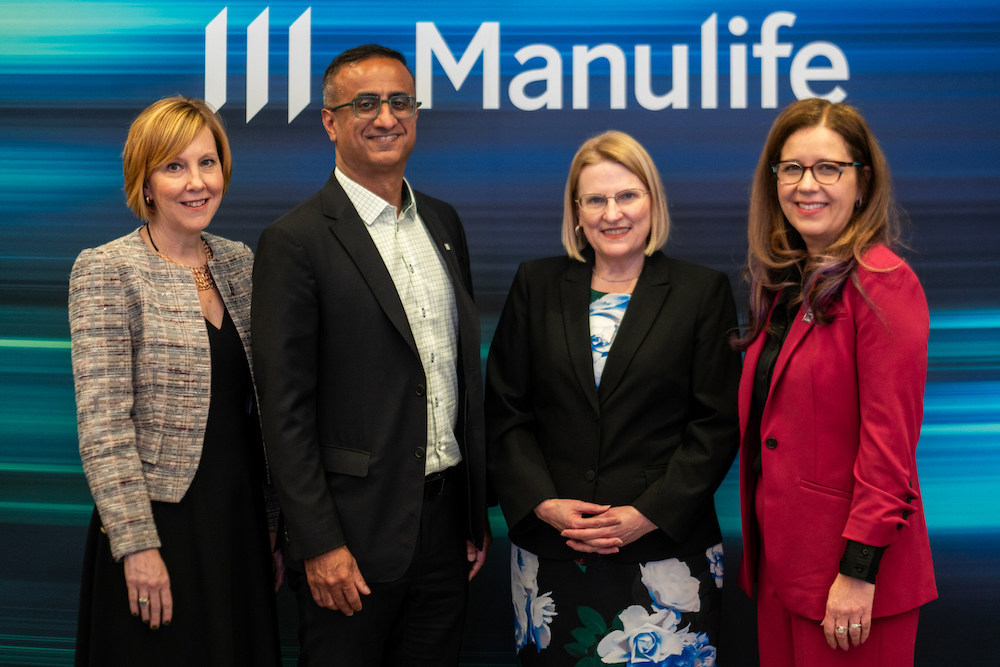
The Canadian health insurer Manulife has pledged CAD$1m to support women’s mental health research.
Manulife and the Centre for Addiction and Mental Health (CAMH) have announced a three-year partnership to support the Women’s Health Research Cluster (WHRC).
The CAD$1m donation is hoped to support women’s mental health and wellbeing in Canada and around the world.
The WHRC is a network of multidisciplinary professionals that strives to create a future where women and girls can live equitably healthy lives across their lifespan.
It aims to take an integrated health approach that recognises all aspects of a person can affect mental health, including access to help and treatment facilities, economic status, physical health and wellbeing.
The WHRC is allied with CAMH’s womenmindinitiative, a community of philanthropists, thought leaders and scientists who is working towards tackling sex and gender disparities in science and putting the unique needs and experiences of women at the forefront of mental health research.

Dr Liisa Galea, inaugural treliving family chair in women’s mental health, scientific lead for womenmind and leader of the WHRC, said: “Women’s health research has, for centuries, been undervalued and underfunded.
“In Canada, less than six per cent of research projects funded by the Canadian Institutes of Health Research explicitly examine factors specific to women’s health, despite the fact that many mental health disorders — such as anxiety and depression —disproportionately affect girls, women and gender diverse individuals.
“We need to do better, and we can do better. I am very grateful to Manulife as one of the largest corporate supporters of CAMH to help us cultivate sex and gender health equity in Canada and worldwide.”
Sylvia Jones, Ontario’s deputy premier and minister of health, said: “Our government is working with our partners to break down barriers to make it easier, and more convenient for people to access the mental health services they need, when they need them.
“Womenmind is another example of how collaboration across the health care system is ensuring essential research into women’s mental health, leading to better access to high quality mental health services, in every corner of the province, and meeting the unique needs of women across Ontario and Canada.”
Naveed Irshad, president of Manulife Canada, said: “Manulife proudly supports the WHRC’s efforts to tackle sex and gender disparities in science to place the unique needs and experiences of women at the forefront of mental and physical health research.
“We are deeply committed to fostering positive change and empowering sustained health and wellbeing here in Canada and worldwide. This partnership exemplifies our broader mission of making a meaningful difference in the lives of individuals and communities where we live and work, leaving a lasting legacy of support and empowerment.”









Insight
From Hologic to Ark Surgical: Why Joseph LaBruzzo is betting on the future of women’s surgical innovation


After more than two decades leading organisations at some of the world’s most respected medical device companies, including Hologic, SenoRx Breast Care, and BTL Industries, Joseph B. LaBruzzo is embarking on a new chapter as President & CEO of U.S. Operations and Board Member at Ark Surgical.
We sat down with Joseph to discuss what drew him to Ark Surgical, why he believes women’s surgical innovation is entering a transformative era, and what it takes to bring meaningful technologies from concept to standard of care.
You have held leadership positions at some of the biggest names in MedTech. What attracted you to Ark Surgical?
Throughout my career, I’ve been fortunate to work with organisations that developed technologies capable of changing the standard of care.
What attracted me to Ark Surgical is the opportunity to help address a meaningful unmet need in gynecologic surgery with an innovation that has the potential to improve patient outcomes while preserving the benefits of minimally invasive surgery.
Opportunities like that don’t come along very often.
FemTech World recently highlighted that many women remain unaware of gynecologic cancers and that unexpected diagnoses continue to have a profound impact on patients and families.
How has your own experience shaped the way you think about innovation in women’s health?
Earlier in my career, I witnessed many women receive life-changing cancer diagnoses.
Those experiences stayed with me and reinforced my belief that if there’s an opportunity to reduce risk through better innovation, it’s one worth pursuing.
That’s one of the reasons I was drawn to Ark Surgical.
The vast majority of minimally invasive gynecologic procedures are performed for conditions believed to be benign. Unfortunately, in rare cases, pathology later reveals an unexpected malignancy.
LapBox was designed with a proprietary dual-wall tissue containment system to help facilitate contained specimen retrieval and minimise the risk of tissue spillage during laparoscopic procedures.
I believe innovations like this can help surgeons manage the unexpected while preserving the many benefits of minimally invasive surgery for women.
Women’s health has gained significant momentum in recent years, yet surgical innovation often receives less attention than diagnostics or therapeutics. Why do you think that is?
Women’s health has historically been underfunded and underserved across many areas of medicine, and surgery is no exception.
While we’ve seen tremendous advances in diagnostics and pharmaceuticals, there are still important opportunities to improve the surgical experience for both physicians and patients.
Innovation that enhances safety, efficiency, and outcomes has the potential to make a lasting impact.
What excites you most about LapBox?
LapBox addresses a very real challenge that gynecologic surgeons face during minimally invasive procedures.
It was thoughtfully designed to integrate seamlessly into the surgical workflow while providing an added layer of confidence when tissue retrieval is required.
I believe technologies that solve real clinical challenges in a practical way have the greatest potential to become part of the standard of care.
What do you see as the biggest unmet needs in minimally invasive gynecologic surgery today?
The future of surgery isn’t simply about making procedures less invasive. It’s about making them smarter and safer.
Surgeons need technologies that integrate seamlessly into their workflow while helping them navigate increasingly complex clinical situations.
Every advancement that helps reduce risk while preserving the benefits of minimally invasive surgery has the potential to improve outcomes for both physicians and patients.
That’s where I believe the greatest opportunities for innovation exist.
As you take on this new role, what are your priorities over the next 12 months?
Our focus over the next 12 months is to build a strong foundation for growth. That means expanding physician partnerships, driving early clinical adoption, growing our team, and ensuring that more surgeons have access to technologies like LapBox.
At the same time, we’re focused on building strategic relationships with investors, healthcare systems, and industry partners that support our long-term vision.
What advice would you give entrepreneurs building the next generation of women’s health companies?
Start with a real clinical problem and never lose sight of the patient.
Great technology alone isn’t enough. You also need strong clinical evidence, physician advocates, and a clear market strategy. The companies that succeed are the ones that bring all of those pieces together while remaining focused on improving patient care.
About Joseph B. LaBruzzo
As President & CEO of U.S. Operations and Board Member, Joseph LaBruzzo is leading Ark Surgical’s U.S. growth strategy, physician partnerships, strategic investment initiatives, and organisational expansion, supporting the company’s mission to advance safer minimally invasive gynecologic surgery through innovative technologies.


Pregnancy complications may increase women’s risk of peripheral artery disease later in life, new research suggests.
The study analysed data from more than two million women in Sweden who gave birth to single babies between 1973 and 2015.
Led by Casey Crump, the research examined the long-term risk of peripheral artery disease among women who experienced preterm delivery, pre-eclampsia, gestational diabetes or other adverse pregnancy outcomes.

Crump, professor in the department of family and community medicine at McGovern Medical School at UTHealth Houston, said: “Our prior work has already shown that adverse pregnancy outcomes are associated with long-term risks of heart disease, stroke, and heart failure.
“This study builds on that work by showing that these women have an increased risk of peripheral artery disease, an important but understudied cardiovascular condition.”
Peripheral artery disease is often a precursor to long-term cardiovascular complications, including stroke, ischaemic heart disease and premature death.
The condition affects millions of people worldwide and occurs when narrowed arteries reduce blood flow, most commonly to the legs and feet.
Ischaemic heart disease occurs when the heart does not receive enough blood and oxygen, usually because the arteries have narrowed.
Symptoms of peripheral artery disease can include leg pain, cramps while walking, numbness, cold feet and sores on the feet or legs that are slow to heal.
Crump said women who experience pregnancy complications have an important opportunity after giving birth to make plans with their primary care doctor to monitor long-term risks.
Women who have experienced complicated pregnancies should speak with their doctor about possible future cardiovascular health risks.
Checks for blood pressure, diabetes and cholesterol are important.
While the period after childbirth is an important time for women to monitor their health, Crump said it is never too late to lower the risk of peripheral artery disease.
He said: “Women with a history of adverse pregnancy outcomes who seem to be doing well may still have a higher risk that can emerge later in life.”
Crump also suggested preventive steps such as avoiding smoking, maintaining a healthy weight and following a healthy lifestyle.
He stressed the importance of long-term follow-up care and conversations with healthcare providers to help protect cardiovascular health later in life.

Women with PMOS may have a fourfold higher risk of heart disease, new research suggests.
PMOS, or polyendocrine metabolic ovarian syndrome, is a complex hormone condition affecting about one in eight women in the UK.
It can affect hair growth, periods, fertility and mood.

US researchers analysed health insurance data collected between 2000 and 2022 from 413,450 women with PMOS aged 18 to 50.
They compared the group with more than two million women who did not have the condition.
The study found that women with PMOS had a fourfold higher risk of heart disease than those without it.
The increased risk remained after researchers accounted for other factors linked to heart disease, including high blood pressure and diabetes.
International PMOS guidelines recommend screening all patients for heart disease risk at diagnosis and providing advice on lifestyle changes.
However, researchers said patient surveys “report delayed diagnosis and substantial dissatisfaction with counselling regarding long-term comorbidities”.
Comorbidities are additional health conditions that occur alongside a main condition.
Researchers added: “Our results emphasise the need for physician education and patient awareness of cardiovascular disease risk to improve implementation of early preventive interventions.”
The team called for further studies following women through menopause, when periods stop.
They also called for research into whether treatments such as GLP-1 drugs or hormonal contraception affect the link between PMOS and heart disease.
GLP-1 drugs are medicines used for conditions including type 2 diabetes and weight management.
The main symptoms of PMOS include irregular periods or long gaps between periods, excessive hair growth or hair loss, weight gain or difficulty losing weight, and difficulty becoming pregnant.
Other symptoms include depression or anxiety, oily skin and acne, tiredness, and thick, dark patches of skin on the neck or armpits, known as acanthosis nigricans.
Until recently, PMOS was known as polycystic ovarian syndrome, or PCOS.
Experts called for the name change after highlighting that misunderstandings about cysts and too much focus on the ovaries were delaying diagnoses.
Earlier this month, the National Institute for Health and Care Excellence said women with PMOS should be seen by health professionals annually to monitor symptoms and manage long-term risks.
NICE said the condition affects between three and four million women in the UK but is “frequently underdiagnosed and inconsistently managed”.










 News1 week ago
New menopause drug approved for use by NHS in Scotland

 Entrepreneur2 weeks ago
Applications open for the third W Accelerate with Merck KGaA and M Ventures

 Hormonal health6 days ago
Stardust period tracker shares health data, study reveals

 News2 days ago
Zero Candida market set to reach over US$2 billion by 2030 – report

 News1 week ago
Women’s health draws record $1.55bn in equity as capital spreads beyond the mega-rounds

 Mental health2 weeks ago
SSRIs may lower heat intolerance in women with depression – study

 Menopause2 weeks ago
Avni Wellness secures US$470k funding

 Wellness2 weeks ago
Alcohol and smoking linked to breast cancer and irregular heartbeat in women, study finds
9 Comments