To receive the Femtech World newsletter, sign up here.
Q&A
The Polish start-up aiming to transform the reproductive medicine sector

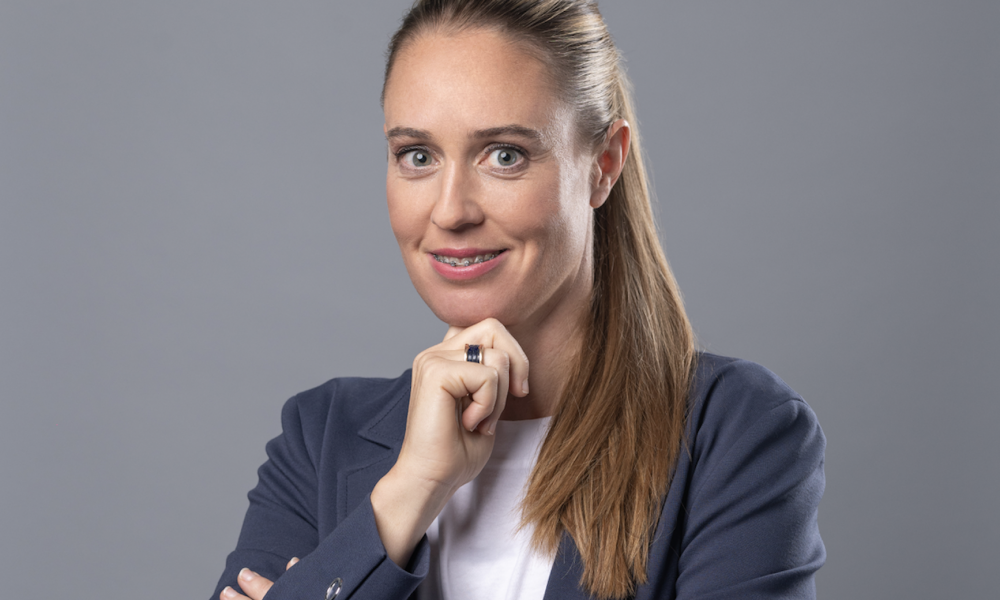
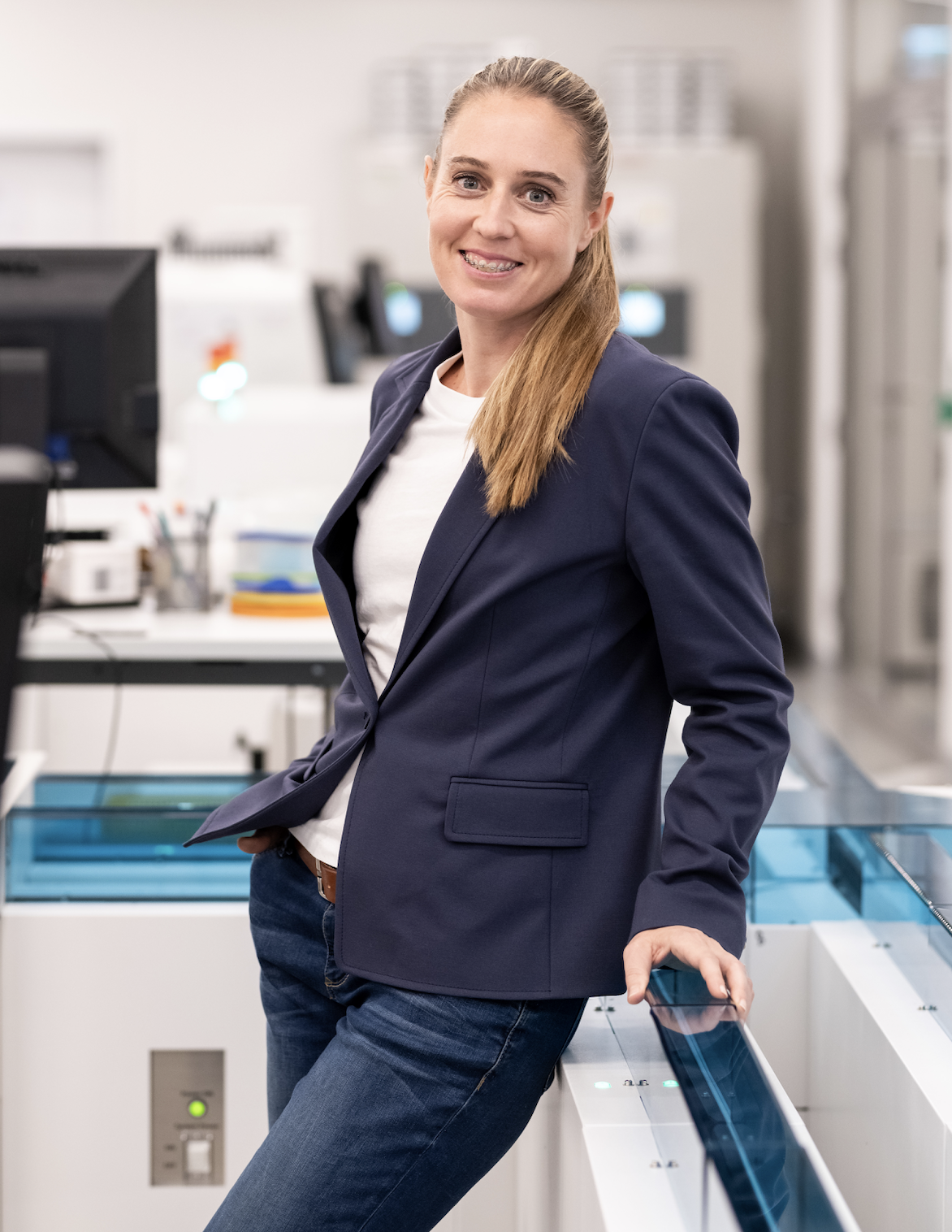
AI start-ups have emerged as the newest players in the tech world. We speak to Ula Sankowska, co-owner and co-CEO of MIM Fertility, one of Poland’s most exciting deep tech start-ups on a mission to revolutionise IVF.
How did MIM Fertility come about?

Ula Sankowska: I must admit that the idea was born from personal experience. For many years I was a patient of in-vitro clinics, my path to motherhood was long and winding.
I know what prospective patients go through and I know the shortcomings of the treatment. I want to help people to fulfil their dream of a desired child. If we manage to revolutionise infertility treatment, I will be able to say with a clear conscience that my lifelong dream has come true.
The second factor, for sure, that gave me an amazing kick to start MIM Fertility were the people who believed in the idea.
Here I am talking about Piotr Wygocki, co-CEO of MIM Fertility – a great Polish innovator and researcher. It was certainly his enthusiasm and faith in the idea that allowed us to develop and create technologies that today are commercialised globally.
How does your software help couples struggling to conceive?
US: With our AI-driven technologies we increase chances for people to become parents. We provide greater accuracy in the diagnostic and treatment process, reducing the time and cost associated with fertility treatments and leading to better outcomes for our customers.
We developed two software tools that promise to deliver these goals.
The first technology is EMBRYOAID – an application that supports skilled embryologists in choosing the most promising embryo for implantation.
Choosing the right embryo to be implanted for a woman is extremely important because it increases the chance of success, minimises complications and shortens the time to pregnancy.
The EMBRYOAID system learns how embryos develop over time and then our model uses this information to identify the best embryos for implantation.
By understanding the entire development process, the system is able to identify the right embryos even from just one image. This is a cheaper alternative to current analytical tools that are only available at the most expensive IVF clinics.
We believe that it will give clinicians the opportunity to choose the best embryo, thereby reducing the number of in vitro fertilisation cycles needed to achieve a successful pregnancy, improving the success rate and minimising the risk of multiple pregnancies.
Our other technology, FOLLISCAN, is an AI/ML software platform designed to identify, calculate and measure follicles of all sizes in a two-second sweep through the ovary during transvaginal ultrasound. This is a key test because it allows you to determine the fertility of a woman in a given cycle.
This test is performed several times during the IVF process itself and allows you to determine the timing of its individual stages.
Thanks to FOLLISCAN, the gynaecologist and medical staff will have access to highly specialised medical knowledge, so far reserved mainly for a small group of specialists.
In addition, the platform automates a large part of the activities that currently have to be performed by a human. This will significantly facilitate diagnostics in terms of the assessment of ovarian monitoring, as well as the development of follicles.
FOLLISCAN, we think, will improve the diagnosis of female fertility and contribute to the use of treatment methods that are better suited to the patient’s needs, increasing their effectiveness.
What makes your technology different?
US: In the case of FOLLISCAN we have a technology that can cooperate with any ultrasonographic machine, i.e., both 2D and 3D.
For example, our main competitors require us to use 3D mode, which is typically not used in the AFC examination but as well requires more advanced hardware.
As for EMBRYOAID, this is more about our transparent approach to the development of our tools that includes engaging into tests with clinics, explaining well limitations of our models, as well as working on the explainability of our tools.
Where are you with the business now?
US: We are offering our technologies to IVF centres and clinics globally. Starting from January this year, the MIM family have joined 15 IVF clinics from different continents.
We are truly happy that by empowering clinics with our AI-driven software, we have a real impact on the decisions making by doctors and thus influence the treatment of patients.
Our software was created with passion and with the conviction that, above all, it must provide real value to people who use it.
Our motto is quality. Solid and robust algorithms are solutions you can trust. We do not want to hand over something that would not be effective and transparent.
What are your long-term goals?
US: We aim to introduce AI into further aspects of the IVF process. Starting from individual and personalised patient care, through deeper understanding of factors that are important for the IVF procedure itself, and ending with AI support for pre and post implantation treatment.
It is important to stress that we are a deep-tech company, i.e., research that leads to the development of our products can take even years.
Hence, we have already started some of these research projects as well as are planning further development works. We truly believe that AI can greatly improve IVF and make it more accessible.
Some clinicians remain sceptical of the benefits of AI to their work. How do you deal with such perceptions?
US: There is almost no doubt that AI will become the technology of the 21st century and will enter into more and more aspects of our jobs and lives.
Such disruptive technologies usually raise questions and doubts as their introduction is clearly visible. Hence, we need to engage in education of the public on two levels.
First, we need to familiarise the public that this technology is helpful, for example by explaining that image editing or styling tools are based on cutting edge AI.
Second, we need to educate our users on how to apply our tools and what their limitations are. In order to build trust in our solutions, we take special care to make them robust and explainable.
Do you think we need more AI education in healthcare?
US: Certainly and MIM Fertility engages into this process in the context of fertility care. We present widely our solutions on specialistic conferences devoted not only to IVF but targeted at gynaecologists.
We are also inviting a wide range of IVF clinics to test our tools, giving them an opportunity for discussions and further explanations.
However, AI education is quite challenging, as fully understanding these methods requires deep mathematical knowledge.
Where do you see fertility care in ten years’ time when it comes to technology advances?
US: AI understands complex processes and dependences much better than we humans. This technology will only reveal its full potential when more aspects of IVF are digitised and amenable for analysis.
Only then will we be able to fully understand the process and help more people become parents.
For more info, visit mimfertility.ai.
News
Women missing cardiac rehab despite key benefits, study finds

Women are underutilising cardiac rehabilitation programmes despite clear evidence they reduce hospital readmissions and the risk of future heart attacks, new research shows.
Even when women do join these exercise, lifestyle and education programmes after heart surgery or major cardiovascular events, they are less likely than men to complete them.
An American Heart Association scientific statement highlights the benefits of cardiac rehabilitation, barriers to access, and potential ways to increase participation among women.
It was co-authored by Jessica Golbus, a cardiologist at the University of Michigan Health Frankel Cardiovascular Center.
Cardiac rehabilitation combines supervised exercise sessions, education about heart-healthy living, and counselling to reduce stress and improve mental health following a cardiac event.
Patients typically attend several sessions a week for multiple weeks or months.
Golbus said: “Even when women do participate, the research tells us that they are still less likely to complete cardiac rehabilitation as compared to men.
“There are several barriers that women face to accessing cardiac rehabilitation, and existing programmes may fail to adequately address their specific needs.”
Women are referred for cardiac rehabilitation less often than men, with clinicians less likely to discuss it with female patients.
This gap is even wider among women from underrepresented racial groups.
Other barriers include insurance coverage, transportation problems, social isolation and caring responsibilities.
Women are more often the primary caregivers in families, which can make attending regular sessions difficult.
Research shows women who do take part benefit just as much as men — with lower blood pressure, better cholesterol levels and an improved quality of life.
Golbus said: “There is so much research that shows how cardiac rehabilitation is an essential tool for patients to optimise their recovery.
“I would encourage anyone who thinks they might be eligible for cardiac rehabilitation to talk to their clinical team and consider participating.”
Women recovering from cardiac events often have specific needs that existing programmes do not always meet.
They are more likely than men to experience depression and emotional distress after a heart event, and tend to be older at diagnosis, with additional health conditions that may restrict their exercise capacity.
They are also more likely to be referred following less common cardiovascular conditions such as coronary artery dissection — a tear in the wall of a heart artery — rather than the more typical heart attacks that usually lead to referral.
Golbus said: “Despite women having some unique needs, the research supports that all patients that qualify for cardiac rehabilitation have the potential for benefit.”
The statement outlines several ways to close the participation gap.
Automatic referral systems could significantly boost enrolment, while direct recommendations from physicians or case manager support have been shown to improve awareness and attendance.
Golbus said: “All of this points to a clear need for targeted interventions to improve cardiac rehabilitation participation and outcomes among women.
“I think the approach needs to be multi-faceted.”
Tailored programmes for women could help — such as offering a wider range of exercise options, more focused education and stronger psychosocial support.
Peer support groups after cardiac diagnoses are also linked to better quality of life and lower depression and anxiety scores.
Golbus said: “Women may also benefit from a peer support group after a cardiovascular diagnosis or event.
“Participating in those groups is linked to increased quality of life and lower depression and anxiety scores, which all affect cardiac rehab attendance.
“Finally, there is reason to explore virtual cardiac rehab that incorporates digital health technologies.
“This could eliminate the need for transportation to sessions and potentially improve access for patients who are unable to attend centre-based cardiac rehabilitation.”
Q&A
How this rising startup says bye to Dr. Google and Prof. TikTok

The way we look for health information has changed a lot.
Search engines are full of confusing advice, and more and more people are turning to TikTok for answers, even though it’s risky.
Lina felt this struggle herself— being disappointed by multiple first time visits of various doctors she spent hours scrolling through Google and TikTok, trying to find reliable health information after not having a period for years.
Her frustration led to the creation of femble—a platform for womens health that allows you to find and follow health-experts within seconds.
Here, the founders Lina Graf and Daniel Steiner tell us more about the journey and why femble transforms our access to health information.
Lina, what was the founding idea behind femble?
We all have googled symptoms and thought “this is nonsense” or “it’s annoying to go through all those pages”.
This is particularly true for women who still are often dismissed by our health-care systems and have to rely on digital sources.
The concern is that TikTok is increasingly replacing Google as the go-to source for health questions among Gen Z, which brings its own set of risks.
So we face the issue of needing quick access to engaging information, but also making sure it’s valid.
With femble, we close this gap by enabling health-experts to build a digital presence while enabling women* to search and find valid information in a second.
Daniel, what motivates you to build femble even though the end result might not be helping you directly?
First of all thanks for having us and doing what you do.
Secondly I see a massive need and obligation of a new generation of men challenging systems that ultimately mostly other men have built.
This also accounts for the health-care system. And besides that, there have been other men in the fem-tech way before me – be it the founders of Flo health or the co-founder of Clue.
Ultimately working together, no matter what gender is even anchored in our name: femble. Fem for female, ble for ensemble – together.
What’s the market potential for femble, especially considering the current state of healthcare systems, Lina?
Healthcare systems are facing immense pressure globally, leading to a decline in quality and health literacy.
femble steps in as a solution by directly connecting women with expert-verified health information, increasing health literacy and guiding patients to the right resources.
For doctors/health-experts, this means a more efficient use of their time, allowing them to focus on quality care while reaching a broader audience through our platform.
This approach has the potential to significantly enhance doctor patient connection.
By empowering both patients and doctors, femble is set to make a significant impact in the healthtech landscape.
Daniel can you give us some insights on how the platform works exactly again? Do I get answers to specific questions or insights based on my profile?
Right now, femble offers a feed with verified knowledge from health experts, similar to how you’d consume social media content.
Our next phase is launching a search engine feature, enabling users to search for specific questions and content.
Then users can really find and follow health-experts within a second – you get to know a team of experts before you even had an appointment with them so to speak.
How many users and experts are on the platform by now?
We have thousands of monthly users and dozens of experts who are already building their following on femble.
What’s exciting is that over 55 per cent of our users engage with the platform weekly.
We’re starting to receive a lot of requests by various health-experts who want to educate their own patient base better and get guidance on how to create video-content.
So figuring out how to scale and automize health-expert onboarding is a challenge we currently work on and you can expect to see many more experts on the platform within the next couple of weeks and months.
Sounds amazing. Last question: What’s your vision for femble?
femble aims to make health as accessible as TikTok, but as trustworthy as a doctor’s office.
Our vision for femble is that it becomes the number one search engine for health questions and enables us all to continuously find trustworthy information – also meeting the demands of today’s generations.
Find out more about femble at femble.co
Q&A
Femasys founder Kathy Lee-Sepsick on entrepreneurship and the need for innovation in women’s health

Kathy Lee-Sepsick, founder and CEO of the biomedical company Femasys, opens up about her entrepreneurial journey and what nearly three decades of experience as a top medtech executive have taught her.
Could you tell us about your background and how you got into women’s health?
I spent 10 years in various leadership roles at medtech companies focused in the cardiovascular and orthopaedics specialties. During this time, I realised how underserved the women’s health area was in comparison and the available solutions for reproductive health needs, specifically in permanent birth control were unsuitable.
With inventions that I felt were revolutionary to address the unmet needs in critical areas of reproductive health, I made the decision to start Femasys in 2004.
What inspired you to create Femasys?
I was inspired by my daughters and desire to create solutions that would offer women suitable reproductive health options in areas that have seen little-to-no innovation.
In addition to realising a widespread global need, I personally faced the same challenges as others when I encountered inadequate options for my own reproductive care. I believe Femasys has the potential to create lasting change.
How would you describe Femasys in a few words?
Femasys is a female-founded and led biomedical company focused on empowering women worldwide as they seek solutions throughout their reproductive journeys by providing revolutionary products that are affordable and accessible.
How would you describe the impact and importance of your work?
Technological advancements in female reproductive health are long overdue, which has driven our focus to develop in-office, accessible, and innovative options. The work we are doing in infertility and permanent birth control are game-changers and have the potential to transform the landscape for women, couples, and their families.
Our work is so important because no one else is focused in advancing these much-needed technologies, which has the opportunity to impact women for generations to come.
People may be thinking ‘How is Femasys transforming women’s healthcare worldwide?’. What’s your response to that?
The product solutions we are advancing address issues women are facing worldwide. We are dedicated to not only helping women here in the US but around the globe as we work to amass country approvals for our product initiatives.
As a small emerging company, the allocation of resources and funds for this effort demonstrates our commitment.
What is the best part about being an entrepreneur in this space?
It is hard pressed to find a space in healthcare that is this neglected, so the best part is knowing every day that the work we are doing has the potential to make such a significant impact worldwide. Executing on our mission is a constant responsibility that bears immeasurable satisfaction as we achieve our goals.
What is your greatest achievement since establishing Femasys?
My greatest achievement since establishing Femasys is making our products available to women in the US and other countries outside the US as we gain regulatory approvals of our important technologies.
This includes FemaSeed for the next generation of artificial insemination, FemVue for diagnosis a woman’s fallopian tubes with ultrasound, and FemCerv for obtaining a comprehensive tissue sample for diagnosis of cervical cancer.
Entrepreneur3 weeks agoOura launches women’s health AI model
Entrepreneur4 weeks agoKindbody unveils next-gen fertility platform
Insight2 weeks agoThe missing layer in the women’s health conversation
Insight3 weeks agoWomen’s HealthX launches in Boston this December to transform women’s health through data and science
International Women's Day 20262 weeks agoHow AI is shaping the future of women’s health
News2 weeks agoMenstrual health apps market tipped to reach US$13bn
Entrepreneur4 weeks agoMatresa raises £315k for maternal health platform
Hormonal health3 weeks agoEndometriosis-sufferer wins landmark tribunal case on workplace discrimination


Pingback: Warsaw-based machine learning company selected for EU’s Global Gateway business advisory group - FemTech World
Pingback: AI fertility start-up bags US$2m in funding to boost IVF outcomes - FemTech World