



Insight
Round up: Trial to evaluate ovarian cancer drug candidate and more


Femtech World explores the latest research developments in the world of women’s health.
Fertility treatments linked to higher mutations than natural conception
Mice that were conceived with IVF in the lab have slightly increased rates of DNA errors, or mutations, compared to pups conceived naturally, a new study suggests.
While the results do not directly apply to humans, they highlight the importance of understanding how fertility treatments affect an offspring’s DNA.

The researchers compared genome sequences of lab mice conceived naturally and mice conceived through assisted reproductive technologies, including hormone treatments, IVF, and embryo transfer.
They discovered pups born through these fertility treatments had about 30 per cent more new single-nucleotide variants, or tiny changes in DNA sequences.
Nucleotides are DNA’s building blocks or “letters.” Arranged in specific sequences, these letters compose the instructions cells use to grow and function.
Single-nucleotide variants are simply genetic differences (or mutations) involving a change in just one DNA letter. They can occur when cells replicate their DNA.
The mutations observed in the study are unlikely to be harmful.
Scientists estimate that fewer than 2 per cent of new mutations arising in a genome are deleterious or have an impact on an individual’s phenotype or disease susceptibility, the researchers said.
The mutations appeared spread across the genome, rather than clustered in particular genes.
The timing of when these new mutations appeared in early embryos also looked similar between fertility-treated and natural groups, implying that fertility treatment increases the overall chance of new DNA changes but does not impact when they occur during development.
Even with a 30 per cent increase in new mutations, the absolute number of harmful new mutations per mouse remains low.
For about every 50 mice conceived with IVF, scientists expect roughly one additional harmful DNA change compared to natural conception.
That is one problematic change out of many possible ones, since the mouse genome is about 2.7 billion DNA letters long.
A similar effect is expected if the male parent’s age increased by about 30 weeks, since paternal age is a major driver of mutation rates in mammals.
The biological mechanisms underlying these genetic changes are not clear.
Further research is needed to study whether the new mutations come from a specific step in the IVF process or from the combined effects of several steps.
One possible factor is the use of hormone treatments that stimulate the ovaries, since these hormones push eggs to restart meiosis, a stage of cell division known to be prone to mistakes.
Other aspects of the fertility treatment protocol could also play a role, such as physical handling of embryos or the chemical conditions of the lab culture environment.
The study does not show whether the same effect happens in humans. Fertility procedures vary between mice and humans, and both have different reproductive biology.
For example, mice do not menstruate. Also, people seeking IVF will likely encounter environmental factors that may already have affected their genetics.
First patient enrolled in study evaluating sofetabart mipitecan in recurrent ovarian cancer
The GOG Foundation has announced the enrollment of the first patient in GOG-3133, a Phase 3 clinical trial evaluating sofetabart mipitecan in recurrent ovarian cancer.
Sofetabart mipitecan is a novel folate receptor alpha-targeting antibody-drug conjugate featuring an exatecan payload.
In early-phase studies, sofetabart mipitecan demonstrated robust and durable clinical activity with an ORR of 50 per cent among 104 heavily pre-treated patients with platinum-resistant ovarian cancer (PROC), across all range of FRα expression levels, and in patients previously treated with mirvetuximab soravtansine with negligible rates of interstitial lung disease and peripheral neuropathy and no ocular toxicity or alopecia.
This clinical trial, sponsored by Eli Lilly and Company, has two parts; it tests a potential new medicine called sofetabart mipitecan for people with certain types of ovarian, peritoneal, and fallopian tube cancers.
Part A looks at participants whose cancer no longer responds to platinum-based chemotherapy (platinum resistant).
Part B looks at participants whose cancer has a higher chance of responding to platinum-based chemotherapy (platinum sensitive).
The FRAmework-01 study aims to address the need for more effective therapies in both platinum-resistant and platinum-sensitive ovarian cancer.
Young people in Wales to receive new information about women’s health
The Women’s Health Network has worked with school nurses and learners across Wales to develop resources for women’s health.
Girls and boys contributed to ensure they reflect the information young people need.
The resources, which were launched this week by the Minister for Mental Health and Wellbeing, Sarah Murphy, cover 4 key areas including menstrual health, endometriosis, pelvic health, and menopause.
Secondary schools will be able to adapt the resources to include their own branding.
The materials work across multiple platforms, including email, leaflets, posters, social media and QR codes.
They are designed to reduce stigma around periods, help young people recognise when to seek medical help, and raise awareness of conditions like endometriosis.
They also provide information on pelvic health and menopause to support understanding of health issues throughout their lives.
Members of the Cardiff and Vale University Health Board youth panel who helped create the materials were at the launch event at the Children’s Hospital in Cardiff.
Sarah Murphy, Minister for Mental Health and Wellbeing, said: “These new resources will help to support the health and wellbeing of young people across Wales.
“By working directly with young people to develop these materials, we’ve ensured they address the real questions and concerns they have.
“I’m grateful to all the young people who have contributed their insights and experiences to make these materials relevant and accessible.
“This is part of our commitment to address the gender health gap and improve health outcomes for women and girls across the country.”
Nestlé joins UN-led coalition supporting women’s health
Nestlé has announced it has joined the Coalition for Reproductive Justice in Business, led by the United Nations Population Fund (UNFPA).
The coalition aims to drive private-sector investment into advancing comprehensive health policies and measurable standards for women’s health across workplaces, supply chains, and broader business ecosystems.
“We are proud to join this initiative and collaborate with UNFPA and other coalition members to redefine how businesses address women’s health,” said Serena Aboutboul, global head of nutrition division at Nestlé.
“From maternal health to menopause, our commitment is unwavering.
“We provide innovative and tailored nutrition solutions, ensure respectful workplace conditions, and increase support to women. When women thrive, families, communities, and economies flourish.”
The coalition’s work supports the UN Sustainable Development Goals on Good Health and Wellbeing and Gender Equality.
By becoming a coalition member, Nestlé will help strengthen broader corporate action in line with the UNFPA’s scorecard of metrics and indicators for women’s health and wellbeing in the workplace.
“We welcome companies taking concrete steps to strengthen women’s health and rights in the workplace,” says Mariarosa Cutillo, UNFPA private sector and civil society branch chief.
“By joining the Coalition, Nestlé signals its commitment to advancing measurable standards and supporting a future where women’s health is recognised as central to business success and societal well-being.”













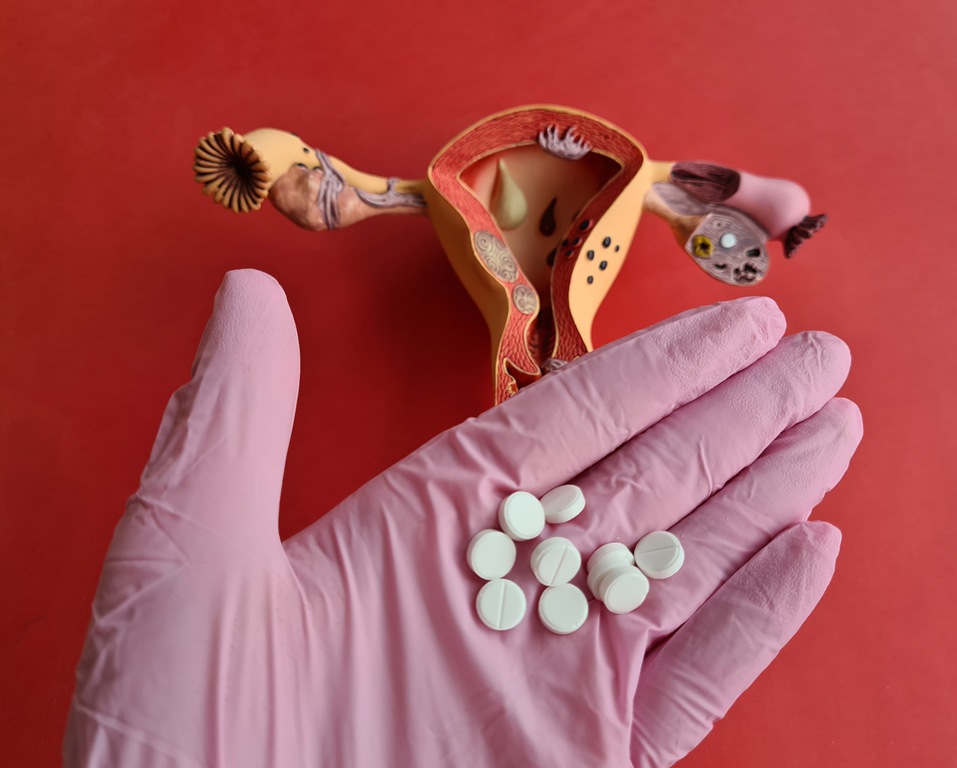
GSK said its ovarian cancer drug shrank or cleared tumours in more than 60 per cent of patients in an early trial as CCO Luke Miels pushes faster development.
The company said that in an early-stage trial, Mocertatug Rezetecan, known as Mo-Rez, shrank or eliminated tumours in 62 per cent of patients with ovarian cancer after chemotherapy had failed, and in 67 per cent of those with endometrial cancer.

Hesham Abdullah, GSK’s global head of cancer research and development, said: “Treatment of gynaecological cancers remains a major challenge, with a pressing need for new therapies that offer improved response rates.
“With Mo-Rez we now have compelling evidence of a promising clinical profile.”
GSK acquired the Mo-Rez treatment, an antibody-drug conjugate, from China’s Hansoh Pharma in late 2023 and has trialled it in 224 patients around the world, including the UK, over the past year.
Only a few patients needed to stop treatment because of side effects, the most common being nausea.
It is given every three weeks by intravenous infusion, meaning directly into a vein.
Combined with data from a separate intermediate trial in China, the results have given the British drugmaker the confidence to go straight to late-stage trials, with five clinical studies planned globally in the next few months, including on patients in the UK.
Speaking to journalists before the conference, Abdullah described Mo-Rez as a “key asset” in the company’s growing cancer portfolio.
It is expected to be a blockbuster drug, with peak annual sales of more than £2bn, which GSK hopes will help it achieve its 2031 sales target of £40bn.
A few years ago GSK did not have any cancer drugs on the market, but it now has four approved medicines and 13 in clinical development.
Last year, oncology generated nearly £2bn in sales, up 43 per cent from 2024, with sales of its endometrial cancer drug Jemperli rising 89 per cent.

Self-employment is linked to lower rates of high blood pressure, obesity, diabetes, poor health and binge drinking in Hispanic women, research suggests.
The findings, published in the peer-reviewed journal Ethnicity & Disease, suggest work structure may be related to cardiovascular disease risk among this group.

Dr Kimberly Narain is assistant professor of medicine in the division of general internal medicine and health services research at the David Geffen School of Medicine at UCLA, senior author of the study, and director of health services and health optimisation research for the Iris Cantor-UCLA Women’s Health Center.
She said: “Hispanic women experience a disproportionate burden of heart disease compared to non-Hispanic women. This is the first study to link the structure of work with risks for heart disease among this group of women.”
The researchers examined 2003 to 2022 data from the Behavioral Risk Factor Surveillance System to assess the association between self-employment, cardiovascular disease risk factors and health outcomes for Hispanic women.
The data included 165,600 Hispanic working women. Of those, about 21,000, or 13 per cent, were self-employed rather than working for wages or a salary.
Overall, the researchers found that self-employed women were less likely to report cardiovascular-disease-associated health problems.
They were also about 11 per cent more likely to report exercising compared with their non-self-employed counterparts.
Specifically, they found that self-employed Hispanic women had a 1.7 percentage point lower chance of reporting diabetes, roughly a 23 per cent decline.
They also had a 3.3 percentage point lower chance of reporting hypertension, roughly a 17 per cent decline.
The study also found a 5.9 percentage point lower chance of reporting obesity, roughly a 15 per cent decline.
It found a 2.0 percentage point lower chance of reporting binge drinking, roughly a 2 per cent decline.
It also found a 2.5 percentage point lower chance of reporting poor or fair overall health, roughly a 13 per cent decline.
The relationship between heart disease risks and the structure of work among Hispanic women was not driven by access to healthcare or differences in income, Narain said.
In fact, the decrease in high blood pressure linked to self-employment was nearly as large as the decrease in high blood pressure linked to being in the highest income group.
The study has some limitations.
The researchers relied on self-reported outcomes, which might be less reliable among ethnic and racial minorities and those from a lower socioeconomic background.
In addition, the researchers’ definition of poor mental health does not entirely match the accepted definition in the fifth edition of the Diagnostic and Statistical Manual of Mental Disorders.
They also did not have data allowing them to examine the specific types of occupations held by the women.
The study design also cannot prove any causal relationship between self-employment and cardiovascular disease risk, which is a subject the researchers will explore.
“The next step in the research is to conduct studies that are able to better assess if the structure of work is a cause of higher heart disease risks among Hispanic women.”
Narain said this.
Study co-authors are Lisette Collins, who led the research, and Dr Frederick Ferguson of UCLA.
Grants from the Iris Cantor-UCLA Women’s Health Center-Leichtman-Levine-TEM program and the UCLA National Clinician Scholars Program supported the research.












 Entrepreneur2 weeks ago
Three sessions that show exactly where women’s health is heading in 2026

 Menopause4 weeks ago
California plans US$3.4m menopause care overhaul

 Pregnancy3 weeks ago
How NIPT has evolved and what AI NIPT means in 2026

 Menopause3 weeks ago
Watchdog bans five ads for women’s heath claims

 Entrepreneur4 weeks ago
WHIS USA 2026 announces first ticket release for landmark Women’s Health Innovation Summit

 News2 weeks ago
Two weeks left to make your mark in women’s cardiovascular health

 Menopause4 weeks ago
Menopause has no lasting impact on cognition, research finds

 Opinion3 weeks ago
Q1 momentum: Female founders are advancing, but the system still hasn’t caught up