




News
EngagedMD raises US$11m in funding to make fertility care more accessible
The company’s software integrates patient education and engagement into existing clinical workflows to reduce clinical burden


A Washington, DC-based technology company has raised US$11m in funding to make fertility care more accessible.
The funding round, led by the venture capital firm MonCap, will help EngagedMD to expand its global presence and expansion into other healthcare verticals.
As part of the investment, EngagedMD has also welcomed Jonathan Sockol, managing partner of MonCap, to the company’s board.
The company currently supports more than half of all patients in the US, UK, and Canada through its cloud-based SaaS platform that empowers patients and providers to collaborate and make informed decisions.
Its software integrates patient education and engagement into existing clinical workflows to reduce clinical burden and improve patient experiences and outcomes.
The company says clinics using EngagedMD save up to two hours of manual time per patient, allowing them to provide better and more accessible care to more patients.
A number of medical journals have also clinically validated the firm’s impact on patient experience, noting benefits such as enhanced knowledge, control over decision making, and overall satisfaction scores.
“We are excited to partner with MonCap on EngagedMD’s next chapter of growth,” said Taylor Stein, co-founder and co-CEO of EngagedMD.
“MonCap has a proven track record of adding value and their expertise will help us further our mission of making patients’ and providers’ lives easier.
His co-founder, Jeff Issner, said the company would use the funds to continue developing products that support providers and patients navigating a complex care journey.
“We also look forward to expanding our platform into other specialties in our relentless journey to make healthcare more efficient and effective,” he added.
MonCap’s Sockol said: “EngagedMD has already positively impacted the lives of over one and a half million patients. We are proud to back this team in making better care more accessible to even more patients across healthcare.”




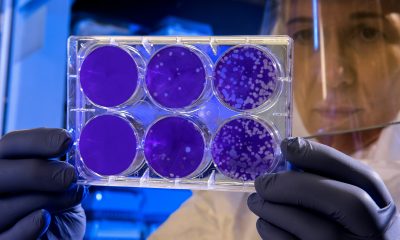







Women later diagnosed with endometriosis used more antidepressant and anxiety medication than other women, with the pattern emerging years before diagnosis, recent study found.
The difference was evident up to 10 years before diagnosis and continued for a decade afterwards, according to a large Danish registry-based study involving 136,842 women.
Women with the condition also had substantially more contact with psychiatric hospital departments than those without it.

Researchers at Aarhus University found that women with endometriosis redeemed 29 per cent more prescriptions for antidepressants and 16 per cent more for anxiety medication in the years before diagnosis.
After diagnosis, the differences rose to 40 per cent for antidepressants and 46 per cent for anxiety medication.
Marie Josiasen, PhD student at the department of public health and one of the researchers behind the study, said: “What surprised us was how clear and persistent the pattern was, and that the difference did not diminish over time.
“On the contrary.
“Women with endometriosis consistently redeemed more prescriptions for antidepressant medication than women without the disease throughout the entire period, from ten years before to ten years after diagnosis.”
The study does not provide an answer as to what causes the mental strain.
Josiasen said prolonged pain, uncertainty about the cause of symptoms and fertility problems could be among the factors contributing to psychological strain.
She said: “It’s possible that prolonged pain, uncertainty about the cause of the symptoms, and frustration over not being able to live the life one wants may be among the reasons. For some women, fertility problems can also be a major psychological burden.”
Researchers also found that the gap compared with women without endometriosis did not narrow after diagnosis. Instead, it became more pronounced in the years that followed.
Josiasen said: “A diagnosis can be a relief, but it also involves coming to terms with having a chronic illness.”
The study does not indicate whether diagnosing endometriosis earlier could reduce psychological strain.
As part of her PhD project, Josiasen will investigate the role hormonal contraception may play in the mental health of women with endometriosis.
She said: “We can see that many receive medication and are in contact with psychiatric services. But we still lack an understanding of what actually helps these women.
“That’s what I want to help find out.”
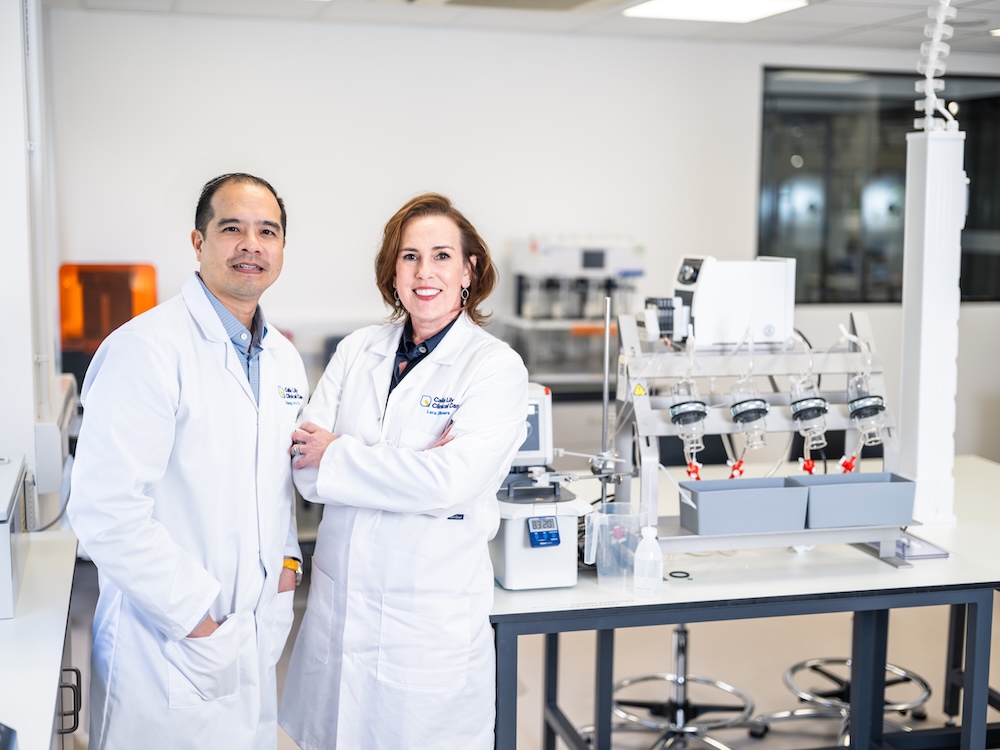
Calla Lily Clinical Care has joined a US$50m antibiotics programme to assess vaginal delivery of UTI treatments through its Callavid platform.
The women’s health medical technology company will evaluate whether antibiotics can be delivered directly through the vaginal wall to treat urinary tract infections (UTIs).
The project will use Callavid, the company’s intravaginal drug delivery platform, aiming to deliver treatment to the site of infection while limiting systemic exposure.
Calla Lily has been selected for Wellcome Leap’s Focused Antibiotics programme, which is exploring ways to reformulate existing antibiotics so they reach infections while sparing the gut microbiome without loss of efficacy.

Dr Serena de Gelidi, Principal Investigator and R&D Manager, Calla Lily Clinical Care
The programme is backed by US$50m and aims to investigate technologies that could reduce the unintended effects of antibiotic treatment.
UTIs are among the most common bacterial infections in women. According to the source material, women are prescribed almost 40 per cent more antibiotics than men between the ages of 16 and 54.
Calla Lily will assess whether Callavid can deliver antibiotics through the vaginal wall while bypassing gastrointestinal transit and first-pass metabolism.
The company expects the approach could keep systemic exposure below 5 per cent.
There is currently no first-line UTI antibiotic available in a mass-manufactured vaginal formulation, according to Calla Lily.
The company said a successful project could contribute to the wider programme’s goal of reducing antibiotic-driven resistant infections by up to 40 per cent a year.
Callavid has a patented, leak-free, tampon-like design intended to deliver medicines and hormones through the vagina.
The platform is already being assessed in the NIHR-funded FREEDOM trial, which is studying vaginal progesterone delivery using Callavid.
That study began in April 2026 and is examining safety, user acceptability and drug absorption. According to the company, it has passed its safety stopping rule and 90 per cent of patients have completed their first round of dosing.
Dr Lara Zibners, co-founder and chair of Calla Lily Clinical Care, said: “Women are disproportionately impacted by urinary tract infections, yet the consequences of that repeated systemic exposure have been largely overlooked. Organisations such as Wellcome Leap play a vital role in tackling major healthcare challenges through bold innovation. We are honoured to be part of the Focused Antibiotics programme and to explore the potential of Callavid in a foundational antibiotic application, demonstrating how women’s health innovations can deliver benefits far beyond fertility and reproductive care.
Thang Vo-Ta, co-founder and chief executive of Calla Lily Clinical Care, said: “Being selected by Wellcome Leap, one of the world’s most ambitious health innovation funders, is a significant validation of what we are building at Calla Lily Clinical Care. Our ambition has always been for Callavid to become the defining platform for intravaginal drug delivery across a wide range of indications. The Focused Antibiotics programme gives us the ideal partner to pursue one of the most consequential of those indications: treating the world’s most common bacterial infection in women while helping to address a global resistance crisis that, left unchecked, could claim eight million lives annually by 2050. This marks a pivotal moment in demonstrating that when you solve for women, you solve for everyone.”
The project will be led by Dr Serena de Gelidi, principal investigator and R&D manager at Calla Lily Clinical Care.
She will be supported by Professor Andrew Lewis, principal scientist at the company and an international authority on drug-eluting systems, with 58 patents and more than 260 peer-reviewed publications.

An AI tool has identified microscopic breast cancer patterns that could help medical professionals better forecast disease progression.
The tool, called CenSegNet, was developed to analyse hundreds of thousands of cells in tumour samples and detect abnormalities in structures known as centrosomes.
Centrosomes are small structures inside cells that ensure DNA is divided equally during cell replication. Researchers say abnormalities in these structures have been considered a hallmark of cancer for more than a century.
In cancerous tissue, centrosomes can replicate excessively, driving the progression of the disease.
Scientists at the University of Southampton used the system to study tissue from 127 breast cancer patients being treated at University Hospital Southampton.
More than 330,000 centrosomes were analysed, revealing two distinct abnormalities that had previously been considered part of the same process.
One involved cells developing too many centrosomes, while the other involved centrosomes becoming abnormally enlarged.
Researchers found the two defects behaved independently and could occur in different areas of the same tumour.
Dr Salah Elias, of the University of Southampton’s school of biological sciences and institute for life sciences, said: “For more than a century, centrosome abnormalities have been recognised as a hallmark of cancer, but studying them in patient tissues has been extremely challenging.
“CenSegNet allows us to analyse these defects at single-cell resolution across entire tumours and uncover patterns that were previously impossible to see.
“Rather than viewing centrosome abnormalities as a single phenomenon, our study shows that they have distinct biological states with different spatial distributions and clinical associations.”
The platform also helped uncover a link between different centrosome abnormalities and features of cancer.
Tumours with high levels of enlarged centrosomes were more aggressive, while patients whose cells had lower levels had a better chance of survival.
Dr Elias said: “Specific combinations of defects may influence how a tumour grows, invades surrounding tissues and responds to treatment.
This opens the door to developing new biomarkers and, ultimately, more personalised treatment strategies.”
Researchers hope AI could eventually be used to track disease by analysing the behaviour of cell structures.
The team also plans to combine CenSegNet with more data to explore whether it could help guide treatment decisions.












 News2 weeks ago
UK femtech investment surges 194% in a decade, research finds

 Entrepreneur2 weeks ago
TidalSense raises £14m to expand five-minute COPD test across NHS

 News2 weeks ago
Cross-Border Impact Ventures raises US$58m for women and children’s health

 Insight2 weeks ago
Women urged to be wary of menopause misinformation on social media

 Entrepreneur7 days ago
Applications close August 18 for Women’s Health Innovation Summit 2026 Innovation Showcase

 Menopause2 weeks ago
Cultural stigma is a barrier to menopause help, black women say

 Mental health7 days ago
Third of women unaware of perimenopause mental health impact

 Motherhood2 weeks ago
One in eight mothers diagnosed with gestational diabetes, research finds
1 Comment