



Connect with us

News

Digital hypnotherapy company raises US$12m to help women manage their health

Studies have shown hypnosis-based therapy to be effective in managing symptoms of menopause and IBS

Published

on

An Australian digital hypnotherapy company has raised US$12m to expand its offerings and help women manage their health.

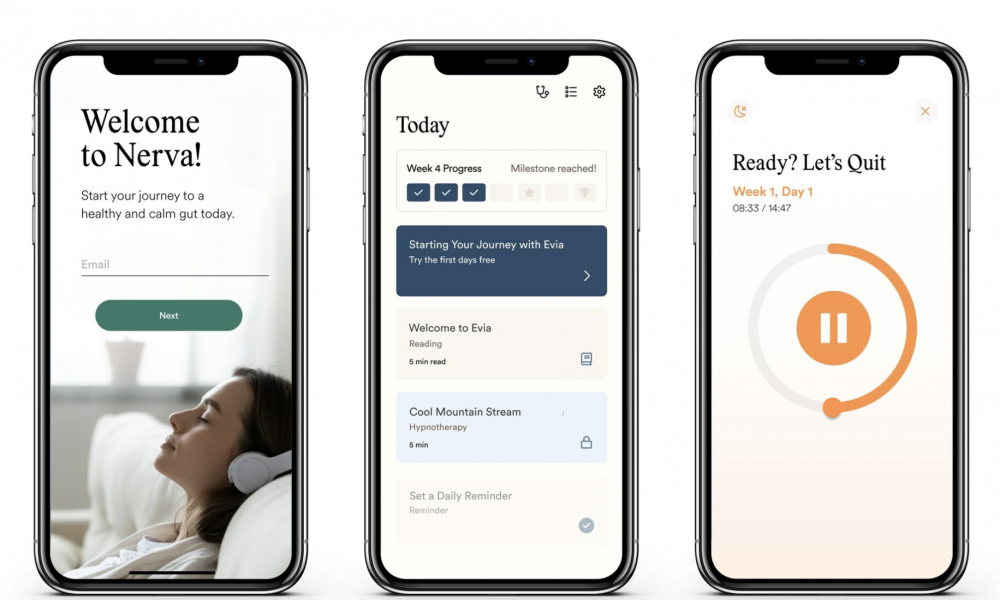
Mindset Health, which currently has three hypnotherapy apps dedicated to addressing irritable bowel syndrome (IBS), menopause and smoking cessation, aims to help people improve their health and live well with “underserved” health conditions.

Funding from this latest round, led by King River Capital, will support the growth and development of its current apps as well as the launch of new apps in response to market demand for solutions for anxiety, depression, sleep and chronic pain.

Additionally, the capital will allow the Australian company to continue its clinical research programmes in partnership with Baylor University and Monash University.

“The global demand for our hypnotherapy programmes – driven by healthcare practitioners, who recognise their effectiveness in supporting patients and recommend their use – has proven our thesis and demonstrated the deep market appetite for easy to use solutions that can help people manage and live well with underserved health conditions,” said Mindset Health co-founder, Alex Naoumidis. 

“This latest financing will support us to continue to meet that demand and in new areas with a broader product offering, as well as funding additional research programmes instrumental to producing high-quality digital programmes backed by clinical rigour.

“Our brains can influence our immune system, our heart health, our habits and our pain perception – our mission is to help unlock this potential of the mind to change how we think, feel and act.”

Referrals from doctors, dietitians and other providers are largely organic via word of mouth but are already driving significant growth, the founder explained.

Not only do healthcare providers act as a scaling growth channel, retrospective studies show that users who are referred by a healthcare practitioner are significantly more likely to adhere to the program long-term.

Studies have shown hypnosis-based therapy to be effective in helping to manage many chronic health conditions, including IBS, menopause and chronic pain.

“By automating hypnosis-based therapies, Mindset Health is utilising the very qualities that have made traditional approaches so successful – efficient scalability, on-demand availability, and clinical rigour – without the side effects, or the billion-dollar R&D price tag,” said Chris Barter, co-founder and partner of King River Capital.

“It’s a total game-changer in the way it’s helping people around the world take control of their health and successfully address a range of chronic conditions naturally and holistically.”


News

Perimenopause may offer “window of opportunity” for heart disease prevention

Published

on

Perimenopause may offer a key window to spot heart disease risk earlier, with women in the transition twice as likely to have low heart health scores, new research suggests.

The findings suggest the transition to menopause could be an important time to reassess risk and prompt lifestyle changes.

Garima Arora is senior author of the study and professor of medicine in the division of cardiovascular disease at the University of Alabama at Birmingham.

Arora said: “Mid-life women should think of the perimenopausal period as a ‘window of opportunity.’

They should be proactive and not wait until they reach menopause to start checking their blood pressure, cholesterol and blood sugar levels.

“Women should talk with their health care team about their reproductive status and any changes they are experiencing. It may be the perfect time to get a baseline for their heart health.”

The analysis included 9,248 women aged 18 to 80 who took part in the National Health and Nutrition Examination Survey between 2007 and 2020.

Researchers used Life’s Essential 8, a heart health score developed by the American Heart Association. It measures diet, physical activity, tobacco use, sleep, blood pressure, cholesterol, body weight and blood sugar on a 100-point scale.

Median scores fell as women moved through reproductive stages, from 73.3 out of 100 in premenopausal women to 69.1 in perimenopausal women and 63.9 in postmenopausal women.

Among the individual Life’s Essential 8 measures, diet consistently had the lowest scores and continued to decline across all reproductive stages.

After accounting for age, perimenopausal women were twice as likely to have a low overall score as premenopausal women.

They were also 76 per cent more likely to have a low cholesterol score and 83 per cent more likely to have a low blood sugar score.

The researchers said fluctuations in oestrogen levels during perimenopause may contribute to lower cardiovascular health because they may affect cholesterol, insulin resistance, blood pressure and weight management.

Insulin resistance means the body does not respond properly to insulin, the hormone that helps control blood sugar.

Sleep duration scores remained high across all reproductive stages, despite perimenopausal women reporting difficulty sleeping, suggesting sleep quality may be more affected than sleep length.

Amrita Nayak, lead author of the study and research fellow in the division of cardiovascular disease at the University of Alabama at Birmingham, said the findings highlight a point where risk may begin to rise.

She said: “Our analysis highlights that perimenopause, women’s reproductive transition period to menopause, is the critical time when the increase in cardiovascular risk seems magnified.

“When we compared women’s LE8 scores to the premenopausal baseline, the perimenopausal group was the first to show a significant jump in the odds of having low heart health.”

Arora added that nutrition could be an important area for early intervention.

“Nutrition can be a central factor for early and proactive intervention.

“Focusing on heart-healthy habits early, especially getting regular exercise and following a healthy eating plan like the DASH diet with a focus on lowering salt can help improve cardiovascular health for perimenopausal women in the years to come.”

Stacey E. Rosen, volunteer president of the American Heart Association, who was not involved in the study, said the findings underline the need to consider women-specific risk factors across life stages.

“This research highlights yet another aspect of the unique factors that increase a woman’s risk of cardiovascular disease throughout the stages of her lifespan.

“Significant health changes during pregnancy, perimenopause and menopause make it particularly important to pay close attention to increases in health risk factors during those times.

“I encourage women to talk with their primary care and specialty health care teams to learn about early detection and modification of traditional and ‘female-specific’ risk factors.

“Women can take proven steps to improve their cardiovascular health at all ages.”

The researchers said the next step is to follow women over several years to track hormone levels and heart health, which may help clarify the long-term impact of perimenopause and how lifestyle changes could reduce risk.

Continue Reading

News

Research project of the year shortlist revealed

Published

on

The Femtech World Awards is proud to reveal the shortlist for Research Project of the Year as part of the third annual global celebration of innovation, impact and leadership across women’s health.

From fertility science and perimenopause research to regional ecosystem analysis, the shortlisted projects reflect the breadth and growing influence of femtech research worldwide.

The category is sponsored by OncoGenomX, with the winner to be selected by a representative from the organisation.

OncoGenomX is dedicated to offering solutions and providing comprehensive support services that empower Drug Developers, Clinical Researchers, Oncologists,NextGenSeq Diagnostics Laboratories, NextGenSeq Service Organisations, Cancer Diagnostics and Therapeutics Companies to achieve their ambitious goals

The shortlisted entries for Research Project of the Year are:

Women’s health remains significantly underserved in South-East Asia, with persistent gaps in access, awareness, and quality of care carrying substantial social and economic costs.

This report examines the femtech landscape in Indonesia, the Philippines, Singapore, Thailand, and Vietnam, highlighting market trends, emerging technologies including artificial intelligence, and the evolving support ecosystem.

It identifies key challenges facing femtech founders, including limited access to finance, low awareness and persistent stigma, marketing constraints linked to content moderation, and gaps in tailored ecosystem support.


Led by Stephanie Willson, MD, of the IVI RMA Global Research Alliance, the study explored whether embryos that show certain chromosome abnormalities during genetic testing may still have the potential to result in a healthy pregnancy and live birth.

The research analysed more than 7,600 frozen embryo transfers and found that some embryos previously considered unlikely to succeed were still capable of leading to successful pregnancies, although at lower rates than embryos without abnormalities.

The findings could help fertility clinics and patients make more informed decisions during IVF treatment, particularly in cases where there are limited embryos available.

Rather than automatically discarding these embryos, the research supports a more evidence-based and personalised approach to fertility care.

For many women, perimenopause can feel confusing and unpredictable, with limited research explaining what is happening in their bodies.

Natural Cycles set out to change that by leading one of the largest studies ever conducted on menstrual and ovulatory patterns, uncovering new insights into how ovulation behaves as women approach menopause.

Conducted in collaboration with researchers from George Washington University, Seattle Clinical Research Center, Gennev and the University of California San Diego, the study analysed nearly one million menstrual cycles from more than 197,000 women aged 18–52 across more than 140 countries.

The scale of this dataset made it possible to explore menstrual patterns and ovulation in far greater detail than has traditionally been possible in women’s health research.

The Femtech World Awards celebrates the innovators, researchers and organisations driving meaningful progress in women’s health.

What happens next

Winners across all categories will be revealed during the virtual ceremony on June 19, with winners receiving a trophy and an interview with a Femtech World journalist.

Continue Reading

Mental health

Women over 40 seeking raves for mental health benefits

Published

on

Women over 40 are seeking raves for mental and physical wellbeing, with a study suggesting the benefits go beyond nightlife.

The findings challenge the idea that nightlife and electronic dance music events are mainly for younger people.

Published in Psychology of Music, the study focused on the common misconception that nightlife is only for younger audiences.

Researchers surveyed 136 female clubbers aged 40 to 65 about their experiences at electronic dance music events.

The study, carried out at the University of Leeds in England, found women reported mental and physical wellbeing benefits from attending these events.

Seeing favourite DJs was the most common motivation, but many women also described dancing as a way to relieve stress and find emotional support.

The research found that 65.9 per cent of participants described attending a rave as “spiritual”, while 62.9 per cent said it offered an escape from everyday life.

A further 58.3 per cent said they felt like a different version of themselves in a club environment.

Nine in ten participants said they felt at home at electronic dance music events, with many pointing to a shared passion for music and the sense of community around it.

The study also suggested physical fitness played a role, with some women saying they had made clubbing part of their regular exercise routine.

However, the findings also highlighted challenges for older women in nightlife spaces.

One fifth of participants said they felt visibly out of place because of their age.

Nearly half reported unwanted physical contact, leading some to seek out different venues or attend only with friends.

Continue Reading

Trending

Copyright © 2025 Aspect Health Media Ltd. All Rights Reserved.
