




Diagnosis
At-home cervical cancer screening device demonstrates comparable performance to clinic-based testing in major US trial
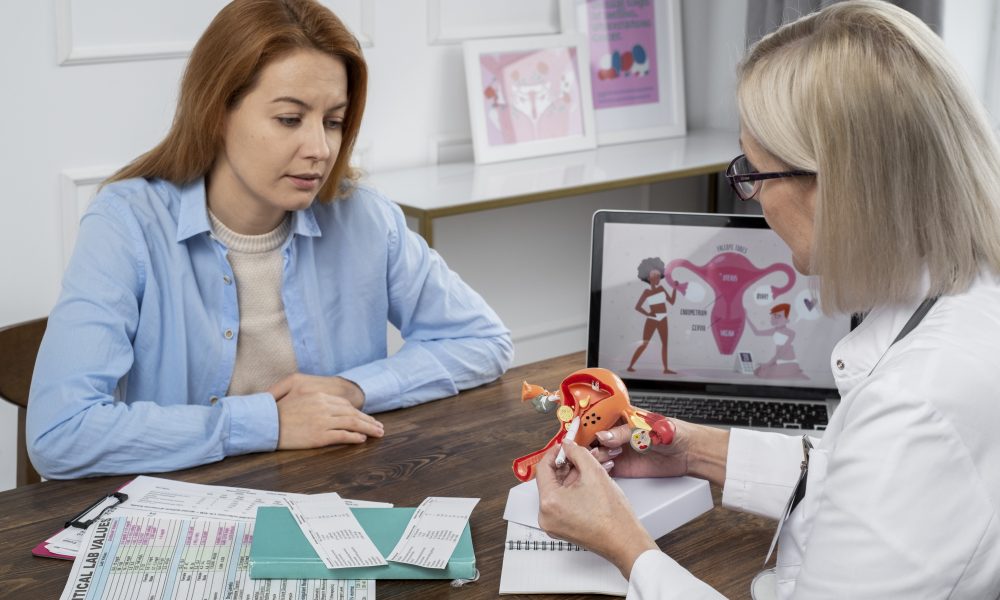
A self-collection device for cervical cancer screening has shown equivalent effectiveness to traditional clinic-based testing, according to new research that could help address screening gaps affecting women’s health outcomes.
The SELF-CERV trial, which validated the Teal Wand device across 16 medical sites in the United States, found that self-collected samples detected precancer 96 per cent of the time with comparable performance to clinician-collected samples.
The study was led by researchers at the University of Colorado School of Medicine.
Christine Conageski is associate professor of obstetrics and gynaecology and principal investigator for the trial.
Conageski said: “Studies have shown that half of new diagnoses of cervical cancer are those that were not screened in the preceding five years.
“That tells us that cervical cancer has really become a disease of access: access to the vaccine for prevention, access to cervical cancer screening, and follow up management of the first abnormal screen.”
The US Food and Drug Administration approved the Teal Wand in early May following completion of the trial, which involved more than 600 participants who received mailed kits with instructions for easy sample collection and return to laboratories.
Researchers estimate that a quarter of women are not up to date on their cervical cancer screening, commonly known as a pap smear.
Current US guidelines recommend screening every three years for women aged 21 to 29 years and every five years for women aged 30 to 65 years.
Conageski, who is also a physician at the CU Cancer Center, said: “We’ve not seen the number of cervical cancer cases in the US budge in the better part of five years, and it’s because screenings are not reaching those who are at greatest risk.”
The trial revealed significant barriers to clinic-based testing, with 32 per cent of participants reporting delays due to time constraints, 32 per cent citing discomfort with examinations, and 32 per cent noting financial issues as reasons for delay.
The at-home device appeared to address many of these concerns, with 86 per cent of participants saying they would be more likely to stay up to date with screening if they could complete it at home. Over 90 per cent said they preferred the self-collection method.
Conageski said: “With the Teal Wand, it took 90 per cent of patients less than five minutes to complete the sample collection and 60 per cent of patients less than two minutes, so it’s a quick and easy process.
“You can fit this into your schedule, whenever that may be, and avoid having to schedule an appointment,”
Cervical cancer is typically linked to certain types of human papillomavirus (HPV), which is transmitted through sexual contact.
“While many people are infected with HPV, only a small percentage develop cervical cancer, making early screening crucial for detection and intervention.
Conageski said: “If we can make screening more accessible to those that we’re not currently reaching, that is ultimately going to drive cervical cancer rates down, because cervical cancer is an almost 100 per cent preventable cancer,”
The researchers suggest that widespread implementation could benefit both patients and healthcare systems, allowing physicians to focus on other aspects of patient care during visits whilst maintaining confidence in screening reliability.
Diagnosis
Being female not a universal stroke risk factor for patients with AF, study finds

Female sex may not raise stroke risk across all atrial fibrillation (AF) patients, with higher risk mainly seen in women aged 75 and older, a study suggests.
Researchers said stroke prevention for women with the condition should be more personalised, especially for patients under 75.
Dr Amitabh C Pandey, director of cardiovascular translational research at Tulane University School of Medicine, said: “For years, female sex has been included as a risk factor along with other factors such as high blood pressure and diabetes, meaning women were more likely to be prescribed anticoagulants.
“Our study shows younger women may not have as much added stroke risk as previously thought, while older women, particularly those over 75, appear to have a higher risk that deserves close attention.”
The new Tulane University study challenges a long-standing assumption in heart care that being female automatically increases stroke risk for patients with atrial fibrillation.
Atrial fibrillation, often called AF, is a common heart rhythm disorder that causes the heart to beat irregularly.
It is associated with a higher risk of stroke and is often treated with anticoagulants, also known as blood thinners.
The study found that stroke risk did not increase equally across all female patients with AF.
Instead, researchers said being female may act more as a risk modifier, with increased stroke risk seen primarily among women aged 75 and older or those with a greater burden of other health conditions.
Clinicians often use a scoring system to decide whether people with AF should be prescribed blood thinners.
The system gives points for factors including age, heart failure, diabetes, previous stroke, vascular disease and high blood pressure.
Women also receive one point for sex alone.
Researchers said this can mean women with AF become eligible for blood thinners earlier or more often than men with otherwise similar risk profiles.
While blood thinners can help prevent clot-related strokes, they can also increase the risk of bruising, prolonged bleeding, gastrointestinal bleeding and other serious complications.
The researchers analysed approximately 950,000 patients with AF using TriNetX, a large anonymised electronic health record database.
They compared stroke outcomes between male and female patients across three age groups: younger than 65, 65 to 74, and 75 and older.
Male and female patients were matched based on age, other health problems and whether they had been prescribed anticoagulation medicine.
Among patients younger than 75, the study found no significant difference in one-year stroke risk between men and women.
However, among patients aged 75 and older, women had a modest but statistically significant increase in stroke risk compared with men.
In patients aged 75 and older with no additional risk factors beyond age, women had about one additional stroke per 629 patients compared with their male counterparts.
The findings support growing interest in a newer AF risk score, known as CHA2DS2-VA, which removes sex as a standalone risk factor.
However, researchers said more studies are needed and medical guidance remains inconsistent.
Han Feng, assistant professor at Tulane University School of Medicine, said: “This general approach came from women being underrepresented in AFib trials and studies comprising only about one-third of study populations.
“Our study shows not all women with AFib have the same risk profile, and these decisions should be individualised.
Pandey said: “These findings highlight the need for modern tools and approaches that can personalise risk profiles to individuals.
“The goal is not to undertreat patients who need stroke prevention, but to better identify who is most likely to benefit from anticoagulation and who may be exposed to unnecessary risk.”
Diagnosis
AI may help accelerate breast cancer diagnosis for high-risk women – study
Pregnancy
Type 2 diabetes raising twice as fast in younger womem, research finds
Menopause1 week agoPerimenopause misinformation ‘putting women at risk’
Insight4 weeks agoNIH Grant terminations disproportionately impact minority scientists, research finds
Adolescent health4 weeks agoWUKA brings Period-Positive Pool Party to London Aquatics Centre to keep girls swimming through puberty
Hormonal health3 weeks agoPCOS renamed after decade-long campaign to end ‘cyst’ misconception
Hormonal health2 weeks agoNHS urged to update website following renaming of PCOS
Menopause4 weeks agoCBT shows promise for menopause insomnia and hot flashes
Entrepreneur1 week agoWomen’s Health Innovation Summit opens submissions for 2026 Innovation Showcase
News7 days agoThree menopause innovators shortlisted for Femtech World Award



