




Features
AI nose detects ovarian cancer early


An electronic nose using machine learning can detect early signs of ovarian cancer in blood samples with 97 per cent accuracy, according to researchers.
The device uses 32 sensors that react to volatile substances released from blood plasma.
Different cancers emit different substances, meaning each effectively has a distinct chemical pattern.

Rather than searching for a single biomarker, the system analyses a wide range of signals using machine-learning models trained to identify ovarian cancer.
The models are trained on known samples from a biobank, a collection of biological specimens used for research.
The approach was developed by researchers in Sweden.
Donatella Puglisi, associate professor at Linköping University, said: “We’re trying to mimic the mammalian sense of smell artificially.
“We’ve now developed an algorithm that can distinguish ovarian cancer from endometrial cancer and healthy control groups, using data from an electronic nose.
“More and more people are being diagnosed with cancer, especially young adults, and this is alarming.
“If screening were more accessible, both in terms of cost and location, it would be possible to improve early diagnosis.
“Our approach could facilitate the adoption of new screening protocols and the development of new diagnostic methods, improving survival rates, quality of life, and overall clinical outcomes.”
Electronic nose technology has existed for around 60 years.
The sensors used in the prototype are relatively simple models already available on the market, but recent advances in artificial intelligence and machine learning have enabled the technology to be used in new ways.
Current blood-based cancer screening typically involves searching for biomarkers specific to the suspected cancer.
However, researchers say these tests are often slow and lack accuracy.
Jens Eriksson, associate professor at Linköping University and chief technology officer at VOC Diagnostics AB, the company developing the electronic nose, said: “Unlike in breast cancer, there is currently no reliable ovarian cancer screening method.
“These tests are often based on a single biomarker and lack the precision required to detect the disease at an early stage.
“Our method is therefore far ahead not only in terms of accuracy but also in the ability to identify early disease.
“It’s a simple test that takes 10 minutes and gives a clear result. Our method can test many people at a low cost and is much more accurate than what’s on the market today.
“This study is a pilot, but we hope it will be used as part of cancer screening within three years. Right now, we’ve focused on detecting cancer, but the applications are endless.
Ovarian cancer often causes vague symptoms similar to those of more common conditions, meaning it is frequently diagnosed at a late stage when survival outcomes are poor.
In 2022, about 325,000 new cases and more than 200,000 deaths were reported globally, with estimates suggesting these figures will rise sharply by 2050.













More than a dozen fertility patients have won a High Court battle to save their embryos, eggs and sperm from destruction after paperwork mistakes.
The ruling followed errors that meant patients did not renew consent to store their biological material within the 10-year window required by law.
In some cases, fertility clinics failed to notify those affected.

Lawyers for 15 groups affected by the errors, including some former cancer patients, asked the court in London to declare it would be lawful for the embryos or cells to remain in storage, despite consent expiring in June 2025.
In an unusual move, the application was unopposed, with no objections from the clinics, the Human Fertilisation and Embryology Authority or the health secretary.
Mrs Justice Morgan ruled that it would be lawful in 14 of the 15 cases for the material to continue to be stored and used. She said laws around human fertilisation and embryology were “unbending” but added that “the rigidity of the scheme is not rigidity for its own sake”.
She continued: “It is surely consent that is important, not consent by an immutable date.
“I find it hard to conclude that parliament intended the possibility of parenthood should be removed by the ticking of a clock, not in the cliched phrase, the ticking of the biological clock, but by the ticking of the clock beyond midnight of the day when existing consent expires, whatever might be the circumstances.”
Under the law, fertility clinics need written consent from clients every 10 years to continue storing biological material.
The rules are intended to prevent cells being kept or used without people’s knowledge or permission.
Because of delays and difficulty accessing fertility treatment during the pandemic, the law allowed a two-year extension, meaning people using the service on 1 July 2020 were granted extra time. Confusion caused by the extension meant some clinic users were not notified when they needed to renew consent, so it lapsed.
In the one case where the judge ruled against the request, the circumstances were legally different.
Morgan said the pair involved had not originally consented to an embryo being stored, but one had been retained accidentally and they now wished to use it.
She said: “There was never, on their case, a consent to renew.
“To be permitted to take advantage of the storage of the embryo which they say ‘contradicted’ their express wishes because the clinic acted on the wrong consent form to change their mind is not in my judgment renewing consent. It is a change of consent.”


A Common Surgery with Outsized Consequences
Hysterectomy and myomectomy are among the most frequently performed surgeries worldwide.
Minimally invasive and robotic approaches have delivered clear benefits at the point of care, including shorter hospital stays, faster recovery, and fewer complications.
To remove the uterus or fibroids through small incisions, surgeons use a technique known as morcellation, in which tissue is cut into smaller pieces for extraction during surgery.
However, when tissue is cut without containment, those short-term gains can be offset by downstream harm.
The risks fall into three interconnected categories:
- dissemination of undiagnosed malignancy
- spread of benign tissue, including endometriosis and parasitic fibroids
- legal and financial exposure linked to off-label device use
Crucially, these costs often surface years after the original procedure and rarely where the original cost savings were realized.
Cancer Dissemination: A Known and Preventable Risk
The risk of occult uterine malignancy in women undergoing surgery for presumed benign fibroids is well documented.
The U.S. Food and Drug Administration has estimated this risk at approximately 1 in 350 women, prompting repeated safety communications recommending tissue containment during morcellation.
When morcellation is performed without containment, undiagnosed cancer will be dispersed throughout the abdominal cavity, effectively upstaging disease from localised to disseminated.
The clinical implications are profound, and so are the economic consequences.
Treatment costs for early-stage uterine cancer typically range from $40,000 to $60,000. Once disease becomes disseminated, costs can exceed $150,000 to $300,000, excluding indirect costs such as lost productivity, long-term disability, and caregiver burden.
Beyond treatment expenses, litigation related to morcellation-associated cancer spread has resulted in multi-million-dollar settlements, particularly during the power morcellation litigation wave of the mid-2010s. Several cases explicitly tied disease progression to tissue dissemination during surgery.
From a system perspective, a single preventable dissemination event can negate the cost savings of hundreds of minimally invasive procedures.
Benign Tissue Seeding: The Long Tail of Surgical Cost
Cancer is not the only concern.
Uncontained morcellation has also been associated with the spread of benign tissue, including parasitic fibroids and iatrogenic endometriosis, conditions that may present years after the index surgery.
Endometriosis alone represents one of the most expensive chronic gynecologic conditions. Multiple health economic studies estimate annual per-patient costs of $12,000 to $16,000, with lifetime costs exceeding $100,000, driven by repeat surgeries, chronic pain management, hormonal therapy, and fertility interventions.
While the financial impact may surface years later, downstream harm is increasingly traced back to the index procedure, including the choice between FDA-cleared containment and off-label alternatives used during tissue extraction.
Off-Label Use and the Quiet Accumulation of Liability
One of the least visible, but most consequential, dimensions of morcellation risk lies in off-label device use.
Many tissue bags currently used during morcellation are not FDA-cleared for prevention of tissue spillage during organ cutting and removal. While off-label use is common in medicine, it carries distinct legal and financial implications when complications occur.
Risk management guidance from MedPro Group, one of the largest medical malpractice insurers in the United States, has repeatedly warned that off-label use increases professional liability exposure in three key ways:
1. Burden of justification
When an FDA-cleared alternative exists, the legal burden shifts to the surgeon to prove that off-label use met the standard of care.
2. Informed consent vulnerability
Standard consent language may be insufficient for off-label device use, increasing exposure to failure-to-warn claims if complications arise.
3. Changed liability dynamics
Off-label use alters traditional liability dynamics, increasing scrutiny on clinical decision-making at the hospital and surgeon level.
Legal scholarship published in Clinical Orthopaedics and Related Research has echoed these concerns, noting that courts increasingly allow off-label status to be considered in malpractice cases, particularly when patient harm occurs and safer alternatives were available.
Recent U.S. court decisions have further reinforced that while off-label use is generally permitted, it is not immune from civil liability and, in rare but serious circumstances, criminal consequences when tied to demonstrable patient harm.
FDA Guidance Exists, Adoption Lags Behind
Regulatory expectations around morcellation are no longer ambiguous. The FDA has consistently called for tissue containment during tissue cutting to mitigate the risks of cancer and tissue dissemination.
Yet real-world adoption remains inconsistent.
A 2025 survey reported by News-Medical found widespread gaps in safe tissue containment during laparoscopic gynecologic surgery.
Respondents cited variability in training, institutional protocols, and access to FDA-cleared containment systems. Many surgeons reported reliance on improvised or non-cleared solutions despite growing awareness of regulatory and legal risk.
The result is a widening gap between guidance and practice, one that is increasingly visible to regulators, insurers, and hospital leadership.
Who Ultimately Pays?
The economic impact of uncontained morcellation does not fall on a single stakeholder.
- Hospitals face litigation exposure, rising malpractice premiums, re-operations, and reputational risk.
- Surgeons shoulder personal liability, heightened scrutiny around informed consent, and evolving standards of care.
- Payers absorb downstream oncology costs, chronic disease management, and repeat interventions.
- Patients bear the heaviest burden, including preventable morbidity, fertility loss, financial toxicity, and erosion of trust.
Taken together, these costs far exceed the price of prevention.
From Clinical Risk to Market Response
This growing recognition of risk has begun to reshape the market.
Before regulatory scrutiny intensified, power morcellation was widely adopted because it saved time, reduced operating room burden, and supported high procedural throughput.
It represented a multi-billion-dollar global market, supported by major surgical device manufacturers and deeply embedded in minimally invasive gynecologic practice.
The withdrawal of power morcellation from many hospitals did not eliminate the clinical need for efficient tissue extraction. Instead, it created a prolonged gap between surgical efficiency and acceptable risk.
That gap is now beginning to close.
With the emergence of FDA-cleared tissue containment systems designed specifically for morcellation, hospitals are reassessing whether power morcellation can be responsibly reintroduced in a manner aligned with regulatory guidance, patient safety, and liability mitigation.
This has significant implications for operating room efficiency, surgeon ergonomics, and system-wide cost management.
One example is Ark Surgical, a U.S.-focused surgical technology company advancing safety-first approaches to tissue extraction.
Its double-wall, airbag-like LapBox containment chamber was developed to support FDA-aligned morcellation while integrating into existing laparoscopic workflows, an increasingly important consideration as hospitals evaluate not just procedural efficiency, but long-term risk exposure.
Ark Surgical is currently in an active investment round, reflecting broader investor interest in technologies that address regulatory-driven risk while unlocking previously constrained markets.
More broadly, capital is flowing toward solutions that make it possible to restore clinical efficiency without reintroducing legacy risk.
The Cost Question Is No Longer “If,” but “When”
Healthcare systems already absorb the cost of uncontained morcellation through litigation, chronic disease management, repeat interventions, and loss of trust.
What has changed is visibility.
As clinical data, regulatory expectations, and market solutions converge, the question is no longer whether containment matters, but whether healthcare systems can afford to continue treating it as optional.


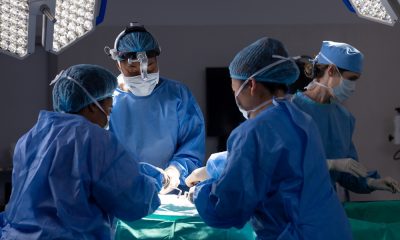
A surgical procedure developed in Canada reduces the risk of the most common and deadly form of ovarian cancer by nearly 80 per cent.
The strategy, known as opportunistic salpingectomy (OS), removes the fallopian tubes during routine gynaecological surgery such as hysterectomy (womb removal) or tubal ligation (having one’s tubes tied).
The study analysed population health data for more than 85,000 people who had gynaecological surgeries in British Columbia between 2008 and 2020, comparing rates of serous ovarian cancer with those who had similar operations without the procedure.
Researchers at the University of British Columbia found that people who had opportunistic salpingectomy were 78 per cent less likely to develop serous ovarian cancer, the most common and deadly subtype.
In the rare cases where ovarian cancer occurred after the procedure, those cancers were found to be less biologically aggressive.
Co-senior author Gillian Hanley is an associate professor of obstetrics and gynaecology at the University of British Columbia.
She said: “This study clearly demonstrates that removing the fallopian tubes as an add-on during routine surgery can help prevent the most lethal type of ovarian cancer,.
“It shows how this relatively simple change in surgical practice can have a profound and life-saving impact.”
British Columbia became the first jurisdiction in the world to offer opportunistic salpingectomy in 2010, after researchers discovered that most ovarian cancers originate in the fallopian tubes rather than the ovaries.
The procedure leaves the ovaries in place, preserving hormone production so side effects are minimal.
The approach was initially developed by Dianne Miller, an associate professor emerita at the University of British Columbia and gynaecological oncologist with Vancouver Coastal Health and BC Cancer.
“If there is one thing better than curing cancer it’s never getting the cancer in the first place,” said Miller.
Since its introduction in British Columbia in 2010, opportunistic salpingectomy has been widely adopted, with approximately 80 per cent of hysterectomies and tubal ligation procedures in the province now including fallopian tube removal.
Professional medical organisations in 24 countries now recommend the procedure as an ovarian cancer prevention strategy, including the Society of Obstetrics and Gynaecology of Canada, which issued guidance in 2015.
“This is the culmination of more than a decade of work that started here in B.C.,” said co-senior author David Huntsman, professor of pathology and laboratory medicine and obstetrics and gynaecology at the University of British Columbia.
“The impact of OS that we report is even greater than we expected.”
British Columbia recently became the first province to expand opportunistic salpingectomy to routine surgeries performed by general and urological surgeons through a project supported by the Government of British Columbia and Doctors of BC.











 Insight4 weeks ago
Parents sue IVF clinic after delivering someone else’s baby

 Entrepreneur2 weeks ago
US startup builds wearable hormone tracker

 Menopause4 weeks ago
HRT linked to greater weight loss on tirzepatide

 Menopause4 weeks ago
Flo Health and Mayo Clinic publish global perimenopause awareness study

 Fertility2 weeks ago
France urges 29-year-olds to start families now

 Menopause3 weeks ago
Study reveals gap between perimenopause expectations and experience

 Menopause2 weeks ago
Menopause specialist Haver joins Midi Health

 Menopause2 weeks ago
Women with ADHD almost twice as likely to experience perimenopause symptoms, study finds
1 Comment