




News
Beyond ‘bikini medicine’: Can femtech help reframe the narrative around women’s health?


From stigma and siloed systems to underinvestment and red tape, women face numerous barriers when it comes to accessing better care, but femtech founders and policy experts say digital innovation could offer a path forward.
In a new report, a panel of global experts from the fields of health, femtech and law have called for digital innovation, life-course care, and the breaking down of outdated silos in medicine to address global gender health gaps.
The group of experts, led by Kate Lancaster, CEO of The Royal College of Obstetricians and Gynaecologists, also agree that women’s health should be seen not as a subset of reproductive care, but as the broader ‘health of women’.

A significant number of chronic health conditions, including neurological disorders such as migraine and autoimmune diseases, are known to affect women more than men.
Yet globally, women continue to face disproportionately high rates of underdiagnosis, delayed treatment, and poorer outcomes.
In the UK, which continues to have the widest gender health inequalities in the G20, women spend an average of nine years in poor health, 25 per cent more of their lives than men.
The panel discussion has informed a three-series report, FemHealth Focus, commissioned by UK law firm Mills & Reeve, highlighting the role of technology and innovation in driving change, and the role that public healthcare systems like the NHS can play in supporting women’s health innovators.
In the second part of the report, published recently, experts highlighted that fragmented commissioning structures, siloed services, and the way women’s health is conceptualised are all obstacles to a more ‘joined-up’ approach that could help to deliver improved outcomes for women.
The global female healthtech market is growing at an annual rate of 16 per cent, and experts agree that digital technologies and AI have a ‘central role’ to play in ‘boosting efficiency’.
Yet healthtech companies struggle to scale due to stigma, underfunding, and the weight of ‘NHS bureaucracy’.
One panellist said it had taken “blood, sweat and tears” to secure a deal with a single NHS Trust. The challenge was not a ‘lack of willingness’, but the ‘weight of bureaucracy and segregated budgets’, they added.
Many early-stage companies enter the market targeting consumers directly, with the hope of securing a future partnership within the NHS, but this often raises concerns about ‘equity and access’.
To address this, the panel called for stronger engagement in women’s health from corporates and insurers, with insurance still a relatively underdeveloped market in femtech.
Some panellists reported ‘growing interest’ in the corporate market, where employers are increasingly aware of the need to address women’s health as part of their recruitment and retention strategies.
At the same time, they say, greater health literacy and education are needed to break down barriers, particularly for startups seeking investment.
Some founders on the panel reported difficulty securing investment due to investor discomfort with women’s health-related topics.
Businesses in this sector are also disproportionately impacted by additional challenges, such as censorship on social platforms and bias in accessing financial services.
CensHERship, a campaign group working to end online censorship of women’s health content, found that many femtech companies not only faced barriers on social media and e-commerce platforms but had been refused bank accounts or were subjected to higher fees by banks and insurance providers, according to the report.
“There remains a stigma attached to women’s health that not only impacts investment opportunities but also leads to a deprioritisation in health budgets and services, and in education,” the report states.
NHS reform – an opportunity for the UK to lead the way in women’s health
The report comes at a pivotal moment for women’s health around the world, and just weeks after the UK Health Secretary unveiled his 10-Year Plan to reform the NHS, introducing shifts from hospital to community, sickness to prevention and analogue to digital.
However, despite promises that the strategy will play a fundamental role in delivering the government’s commitment to women’s health, “never again being ignored”, the plan has been accused of “falling short” for women.
RCOG president Professor Ranee Thakar, said in a statement: “While the plan lays strong foundations, it falls short in pledging to eliminate the gender health gap that is costing women years of life and good health…
“[The] plan must mark a move away from treating women’s health as a collection of niche issues towards offering women excellent, joined-up care across their life course, with investment in the women’s health workforce, Femtech and research.”
The 10-year Women’s Health Strategy, published in 2022, set out a six-point plan which promised to address these inequalities, including expanding women’s health hubs.
Women’s health hubs were intended to address fragmented systems and siloed services by bringing together primary care, diagnostics and specialist consultations under one roof, and were seen as ‘key areas’ for digital transformation, presenting a “major opportunity” for tech innovators.
But their impact has been limited so far, with only 14 of 42 Integrated Care Boards currently offering all core services.
The prospect of NHS reform could present a major opportunity for the UK to address gaps in care – and position itself as a world-leader in women’s health – by adopting solutions that address their unique needs.
“What we need is government-backed sustainable funding, so companies can really grow,” Gayle Curry, partner at Mills & Reeve, commented.
“At the same time, we need cross-sector collaboration to deliver joined-up and accessible services.
“There is a place for the NHS, there is a place for the private sector, and there’s a place for innovation. What we need to do is work together to be able to offer that.”
‘Thoughtful’ innovation based on the needs of ‘real women’
As a GP specialising in women’s health for over 20 years, Dr Nikki Kanani has witnessed the challenges preventing women from accessing better healthcare first hand, and is now designing solutions to deliver back into the system, as co-founder of Aneira Health.
Aneira combines virtual and in-person support with AI and clinical expertise to offer personalised, tech-enabled plans for women throughout their lifespan.
“[Women] are often treated in silos, and dismissed and deprioritised,” Dr Kanani told Femtech World.
“If a woman has to keep explaining her story and moving around the system to find the next bit of her care, that system has failed her.”
While the NHS has typically been “risk-averse” when it comes to partnering with innovators in the femtech sector, the 10-Year plan could well see more public-private collaboration, which Dr Kanani says would be a “huge opportunity” to build ethical, evidence-based tools based on the needs of real women.
“We’ve got this boom in femtech, with hundreds of different point solutions, but without integration regulation… none of those will deliver their promises,” she said.
“There is a nod in the 10-year plan to public private partnerships, and if we can use those to build ethical evidence-based tools rooted in women’s real needs, that’s a huge opportunity to stop forcing women to fit into system that wasn’t designed for them, but instead build a system that is designed around women’s bodies, experiences and lives.”
But while advanced technology can play an important part in bridging some of these gaps, inequalities won’t be addressed by innovation alone; it will take ‘system-wide’ change.
“Digital can be empowering, but only when it’s inclusive and thoughtful,” Dr Kanani says.
“We’ve noticed that as we’ve built our organisation that there needs to be a power shift, from the centre to power-sharing with communities, so women are co-designers of care.
“Health equity for women, particularly those from minoritised, marginalised and underserved communities, won’t be achieved through strategy alone. We need a really deep, system-wide culture shift.”
The latest FemHealth report is both a call to action and a blueprint for change.
Many solutions which could help address the gender health gap already exist, but to see real results, developers and policymakers must reimagine how care is designed in line with women’s real needs.
As Professor Dame Lesley Regan, Women’s Health Ambassador for England, Chair Wellbeing of Women, and Professor of Obstetrics and Gynaecology at Imperial College London, who contributed to the report, puts it: “Women make up 51 per cent of the UK population, undertake 68 per cent of all unpaid caring roles in society and are responsible for 80 per cent of all household health decisions.
“Optimising their health is far from being a niche concern; it is a national imperative.”












A urine and vaginal fluid test could help rule out womb cancer in women with postmenopausal bleeding, potentially reducing invasive checks.
In a study of 1,864 women with postmenopausal bleeding, the test identified 80 of 99 womb cancers and correctly gave a negative result for 93 per cent of women without the disease.
Researchers said the test was not accurate enough to rule out cancer on its own, but could help fast-track women at the highest risk for urgent investigation while reducing immediate invasive testing for those at lower risk.
Professor Emma Davidson, of the University of Manchester and Manchester University NHS Foundation Trust, said: “Bleeding after the menopause is understandably alarming for women because it can be a sign of cancer, but the vast majority of those investigated will not have the disease.
“At the moment, many women face invasive, uncomfortable tests that can be stressful as well as costly for health services before cancer can be ruled out.
“Our study shows that a simple test using urine and vaginal samples could help identify the women most likely to have cancer while safely reassuring many others much earlier in the diagnostic pathway.
“If further studies confirm these findings in routine practice, this approach has the potential to transform care for thousands of women every year.”
Developed at the University of Manchester and Manchester University NHS Foundation Trust, the test examines cells collected from urine and vaginal fluid samples.
Postmenopausal bleeding currently triggers an urgent cancer referral, although only about 5 to 10 per cent of women who report it have an underlying cancer.
Current investigations include an internal ultrasound scan, a biopsy of the womb lining and hysteroscopy, in which a camera is passed into the womb.
Women taking part in the study attended seven hospitals in north-west England and provided urine and vaginal fluid samples before undergoing their routine tests.
Five per cent of participants, 99 of 1,864 women, were diagnosed with womb cancer through biopsy or surgery.
Cytologists assessed the samples without knowing the women’s diagnoses.
Researchers said the test could be used to triage women suspected of having womb cancer, with lower-risk patients monitored through repeat sampling or given a full assessment if symptoms continued.
They cautioned that the samples were assessed by highly trained specialist cytologists, so it is not yet known whether the same accuracy could be achieved in other settings.
The test has also not been studied in women without symptoms.


Nottingham University Hospitals NHS Trust has apologised after a human error caused 11 years of maternity data to be overwritten.
The incident happened during routine technical work on 18 August, when computer instructions intended to create a copy of a radiotherapy database were mistakenly applied to the maternity database.
Most of the affected information has since been recovered, including notes, observations, test results and other information recorded as part of patient care.
However, the trust has been unable to fully restore the historical record showing who viewed maternity records between September 2011 and November 2022.
Current data was not affected and the incident has had no impact on current maternity services or care provided to women and babies, according to the trust.
It also said no information was accessed or used inappropriately as a result of the incident.
Andy Callow, chief digital and information officer at Nottingham University Hospitals, said: “I am sorry for the concern and distress this incident may cause to women and families affected.
“On 18 August 2026, a human error during a routine technical process resulted in a maternity records database being unintentionally overwritten.
“We took immediate action to investigate the incident and recover the affected information.
“The information needed to support patient care has been restored and there has been no impact on current maternity services or the care provided to women and babies today.
“However, to date, we have been unable to fully restore the historical record showing who viewed maternity records between September 2011 and November 2022.
“We have informed the Information Commissioner’s Office, completed a full investigation and strengthened our processes and controls to help prevent a similar incident from happening again.”
The error occurred when pre-written computer instructions previously used for another hospital system were used during the technical work.
A setting that should have been changed was not altered, resulting in work being carried out on the maternity database instead of the radiotherapy database.
The issue was escalated within minutes of being identified and experts were brought in to recover as much information as possible.
The trust has referred the incident to the Information Commissioner’s Office and notified Nottinghamshire Police, which is conducting a separate criminal investigation into maternity care at the trust.
The force is assessing whether the loss of information about who accessed maternity records could affect that investigation.
The incident follows a maternity review led by midwife Donna Ockenden, which concluded in June after examining the cases of 2,500 families over a 20-year period.
The review found more than 500 mothers and babies suffered potentially avoidable harm, with 162 dying following substandard care. Some babies who survived were left seriously disabled.
Nottinghamshire Police announced its separate criminal investigation, Operation Perth, in September 2023.

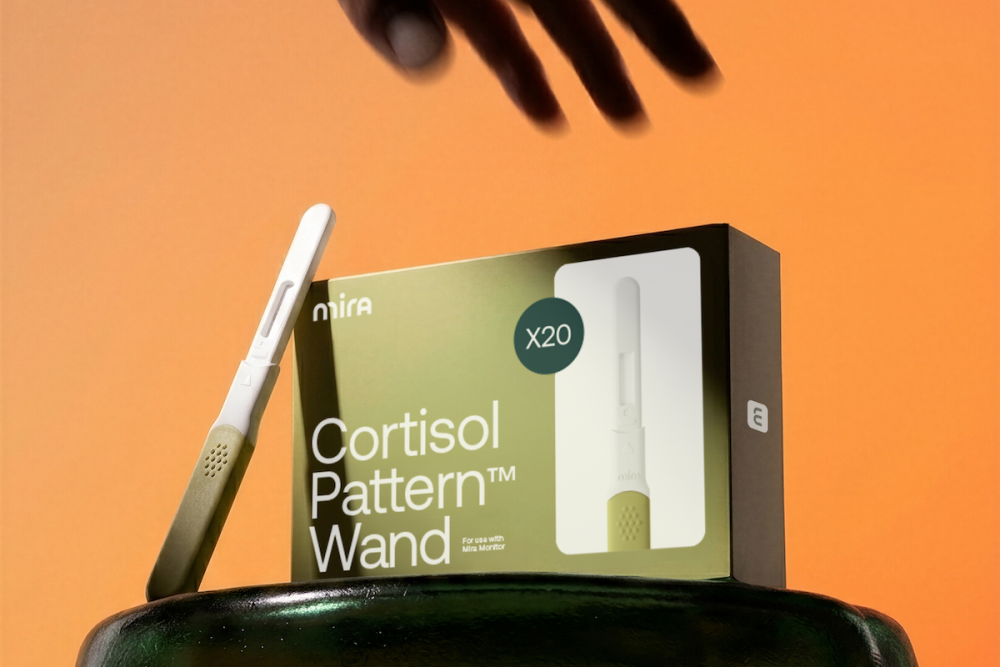
Mira has launched an at-home cortisol tracking kit that allows women to monitor stress-related patterns over time using urine samples.
The Cortisol Pattern Kit measures urinary free cortisol directly from a urine sample and displays results through the company’s existing monitor and app.
The system is intended for repeated testing rather than a single measurement, allowing users to compare results with a personal baseline built from their own data.
Mira said consistent daily testing can establish a baseline in about a week. It recommends testing in the morning and evening to see how cortisol patterns change throughout the day.
Cortisol is involved in the body’s stress response but is not a direct or complete measure of stress. The company said the kit is intended for general wellness use and is not designed to diagnose stress, an endocrine condition or any other medical condition.
The Cortisol Pattern Wands use the same lateral-flow testing format as Mira’s existing hormone tests. Users dip a wand into a urine sample, insert it into the Mira Monitor and view the result in the app within minutes.
The company said cortisol data can be viewed alongside cycle, hormone and daily routine information.
Sylvia Kang, founder and chief executive of Mira, said: “The Cortisol Pattern™ Kit gives women a new way to understand their stress patterns over time, in the context of their own biology.”
She added: “We built Mira to give women answers they had spent far too long searching for, beginning with the TTC journey and expanding into hormone and cycle tracking across life stages, including perimenopause. Now, we’re taking Mira beyond reproductive health and into everyday wellness, bringing personalised stress-pattern tracking directly into women’s homes.”
Mira said more than 350,000 women already use its platform to track their cycle and hormones.
Waitlist sign-ups for the Cortisol Pattern Kit and Cortisol Pattern Wands opened on 22 September, with wand refills available to pre-order in 20- and 30-count options.








 Menopause1 week ago
Menopause may not explain rising heart condition in women – study

 Fertility2 weeks ago
Paracetamol use may impact future fertility, studies suggest

 Insight1 week ago
Women with birth trauma face 2.5x higher healthcare costs – study

 News1 week ago
Medical cannabis may improve endometriosis symptoms – study

 Cancer1 week ago
Study could explain why obesity is a breast cancer risk factor

 Menopause2 weeks ago
Menopause hormone therapy may improve cardiovascular health outcomes, study suggests
 AI1 week ago
Evvy secures US$40m for AI-powered vaginal microbiome testing

 Q&A1 week ago
Innovating breast cancer screening with tears