



Fertility
Klinikk Hausken deploys Fairtility’s CHLOE technology, bringing transparent AI solution to Norway’s largest fertility network
Klinikk Hausken validated CHLOE technology on large data sets in two of its embryology labs prior to implementation

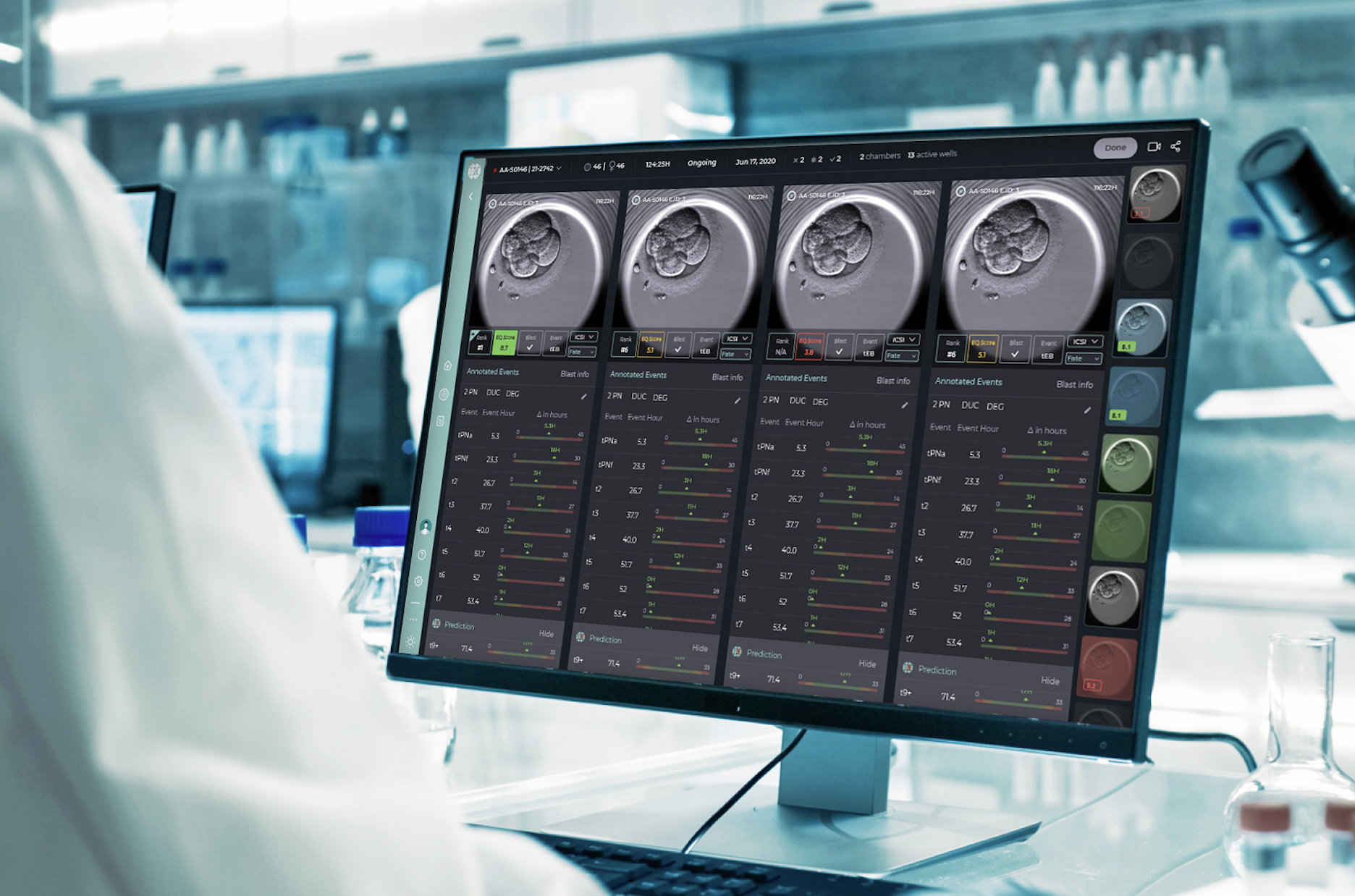
Fairtility, the transparent AI innovator powering reproductive care for improved outcomes, has announced that Klinikk Hausken, part of Medicover and Norway’s largest fertility network, has successfully deployed Fairtility’s CHLOE technology in all five of its embryology labs.
“We selected CHLOE EQ™ for its unmatched ability to provide quantifiable biological data on embryo development in language that our embryologists trust: human biology,” said said Shabana Sayed, senior embryologist and IVF lab manager at Klinikk Hausken, part of Medicover.
“Its transparency and interpretability set it apart from other AI-based decision support tools available.
“CHLOE EQ’s reliability and transparency have been instrumental in both our clinical and embryology teams wholeheartedly embracing AI technology in our routine workflow.
“Offering this transparency to both our internal teams and our patients is transformative to the IVF journey, which has historically been a ‘black box’ process.”
Klinikk Hausken validated CHLOE technology on large data sets in two of its embryology labs prior to implementation. Following this process, Norway’s largest fertility network implemented CHLOE technology into workflows across its clinics.
Despite utilising different time lapse incubator (TLI) systems in its various labs, CHLOE integration was seamless across TLIs and with the network’s electronic medical record system.
“CHLOE technology is bringing standardisation to the subjective and differentiated decision-making that takes place in embryology labs, where protocols and equipment may differ from lab to lab, and with embryologists having varying levels of experience,” explained Eran Eshed, co-founder and CEO of Fairtility.
“CHLOE EQ augments embryologists’ abilities and reduces their administrative time, essentially super-charging each embryologist to be more effective in the lab while reducing risk-factors for burnout.”
CHLOE EQ has augmented and standardised decision-making processes for selecting the most viable embryos for transfer or for cryopreservation.
It provides automated annotations of embryos’ biological development, including morphokinetic timings and provides accurate predictions for blastocyst development and expansion.
Supporting clinical decision-making and streamlining workflows has also resulted in operational benefits. Klinikk Hausken can now more efficiently schedule embryo transfers for patients at the optimal point in embryos’ development process.
Additionally, CHLOE EQ reports are utilised in daily treatment summary meetings with clinical and nursing staff, ensuring patients receive consistent, reliable and accurate information about their embryo quality.
Klinikk Hausken is Norway’s largest private IVF network, supporting over 1,500 IVF cycles annually. The network is committed to investing in its team and its technology, all to support improved patient care, as prospective parents pursue their dreams of having children.


IVFmicro has raised £3.5m to advance its microfluidic device designed to improve IVF success rates in routine clinic use.
The Leeds-based spinout from the University of Leeds, founded in 2024, aims to increase the quality and number of embryos in an IVF cycle.
IVF, or in vitro fertilisation, combines eggs and sperm in a lab before transferring embryos to the womb. A microfluidic device is a chip with tiny channels that move very small volumes of fluid.
The company says its device could raise the number of viable embryos available for transfer and the likelihood that an embryo will implant.
Currently, IVF leads to a successful pregnancy in about 30 per cent of cases for women under 35. A single cycle typically costs around £5,000 in the UK.
“My career has focused on understanding the reproductive biology of eggs and embryos, how they develop and, crucially, why things sometimes go wrong,” said IVFmicro co-founder and scientific director Helen Picton.
“At IVFmicro, we are harnessing years of research into reproductive biology to create a practical, accessible solution that can improve outcomes for patients undergoing fertility treatment. Our goal is to make IVF more effective, more predictable, and ultimately more hopeful for those striving to start a family.”
The investment was led by Northern Gritstone, with support from Innovate UK’s Investment Partnership Programme.
“IVFMicro is a brilliant example of the world-class innovation emerging from the Northern Arc’s universities, combining scientific excellence with a clear commercial vision to tackle the societal challenge of infertility,” said Northern Gritstone chief executive Duncan Johnson.
“Millions worldwide require fertility treatment, but new solutions are needed to overcome the high costs involved and low success rates. We are especially proud that IVFMicro’s journey has been supported through our NG Studios programme and our Innovation Services, which exist to help founders like Virginia and Helen turn pioneering research into real-world impact.”

University of Leeds IVF spinout IVFmicro has raised £3.5m in pre-seed funding.
The investment is led by Northern Gritstone, with support from Innovate UK Investor Partnerships Programme, and will be used by IVFmicro for its next verification and validation phase, leading to trials on human embryos in fertility clinics.
Helen Picton is scientific director and co-founder of IVFmicro.
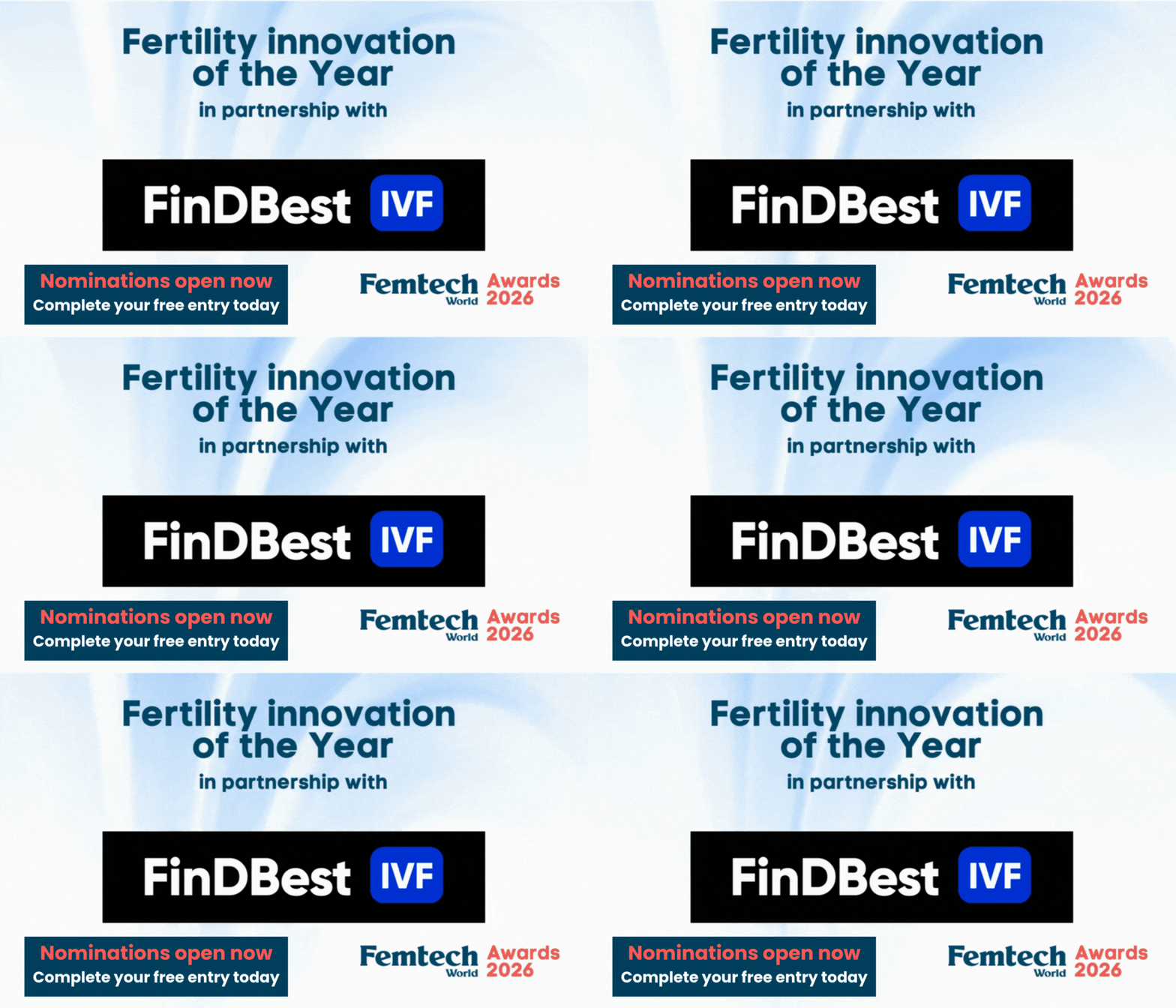
She said: “My career has focused on understanding the reproductive biology of eggs and embryos, how they develop and, crucially, why things sometimes go wrong.
“At IVFmicro, we are harnessing years of research into reproductive biology to create a practical, accessible solution that can improve outcomes for patients undergoing fertility treatment.
“Our goal is to make IVF more effective, more predictable, and ultimately more hopeful for those striving to start a family.”
Globally, 1 in 6 couples will face fertility issues, yet IVF success rates are suboptimal, with only 25-30 per cent succeeding in women under 35 years of age.
This is due in part to limitations of the embryo culture process, which typically involves repetitive handling, subjective selection of the best embryo, and the expense of highly skilled operators.
IVF is an expensive process, costing on average £5,000 for a patient in the UK for one cycle, accompanied by long NHS waiting lists that have selective criteria.
IVFmicro provides the first microfluidic device (a device for safely managing embryo culture and handling with very small amounts of nutrient-rich fluid) that can be used in any IVF treatment cycle.
This precision-engineered solution improves both the number of viable embryos available for transfer and the likelihood that an embryo will implant and result in a pregnancy.
IVFmicro provides a 10-15 per cent improvement in embryo quality and quantity, a significant leap that increases the potential to fall pregnant.
IVFmicro was founded in 2018 by Virginia Pensabene, Ph.D, and Helen Picton, Bsc, Ph.D., both professors at the University of Leeds.
Pensabene has published scientific advancements in microfluidics and brings her technical and scientific expertise to the product design.
Picton is a non-clinical expert in female reproductive biology and embryology, and has generated over £8m in research grant income.
IVFmicro recently took part in the NG Studios life sciences programme, which supports pre-seed life science businesses, and is delivered by accelerator KQ Labs, the Francis Crick Institute, and Northern Gritstone.
Virginia Pensabene, CEO and co-founder, IVFmicro, said: “As a biomedical engineer, I began exploring the potential of this technology in 2017, when Helen and I first met at the University of Leeds.
“From the start, our goal was to translate our research into a real solution for patients.
“Thanks to the combination of grant funding and Northern Gritstone’s support — both through investment and its innovation programmes — we have been able to grow our team in Leeds and take a major step toward bringing this precision-engineered IVF solution to market.”











-

 Features2 weeks ago
Cannabis compounds kill ovarian cancer without harming healthy cells, research finds
-
 Opinion4 weeks ago
Femtech in 2025: A year of acceleration, and what data signals for 2026
-

 Insight3 weeks ago
Meta removes dozens of abortion advice and queer advocacy accounts
-

 Hormonal health4 weeks ago
Round up: First wearable detects symptoms of perimenopause, and more
-

 Insight3 weeks ago
Sperm donor with cancer-causing gene fathered nearly 200 children across Europe
-

 Mental health4 weeks ago
Insomnia combined with sleep apnea associated with worse memory in older women
-

 News3 weeks ago
UK couples exploiting legal loophole to rank embryos based on IQ, height and health
-

 Pregnancy4 weeks ago
Planned birth at term reduces pre-eclampsia in high-risk women – study