News
Digital hypnotherapy company raises US$12m to help women manage their health
Studies have shown hypnosis-based therapy to be effective in managing symptoms of menopause and IBS

An Australian digital hypnotherapy company has raised US$12m to expand its offerings and help women manage their health.
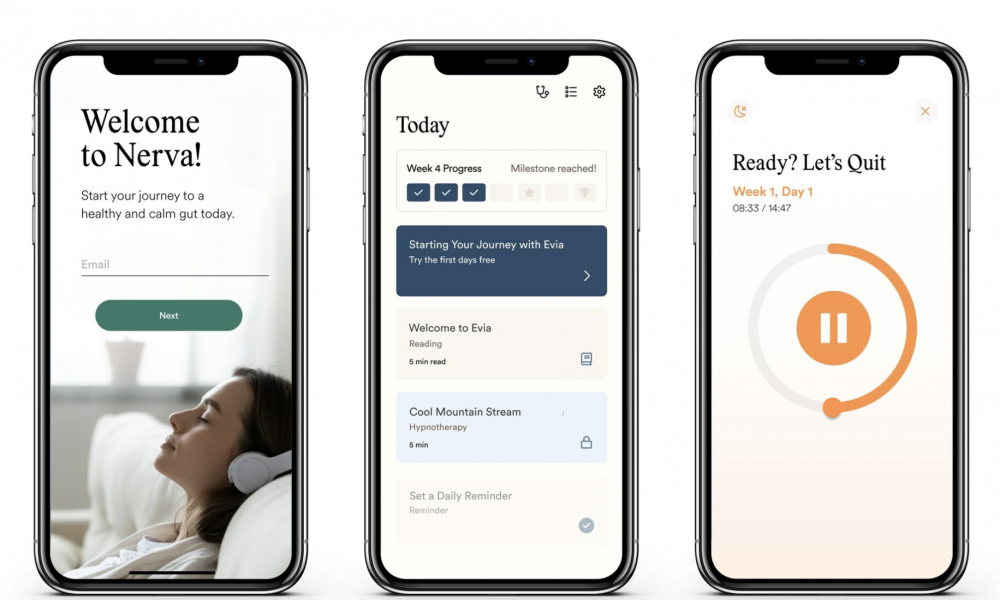
Mindset Health, which currently has three hypnotherapy apps dedicated to addressing irritable bowel syndrome (IBS), menopause and smoking cessation, aims to help people improve their health and live well with “underserved” health conditions.
Funding from this latest round, led by King River Capital, will support the growth and development of its current apps as well as the launch of new apps in response to market demand for solutions for anxiety, depression, sleep and chronic pain.
Additionally, the capital will allow the Australian company to continue its clinical research programmes in partnership with Baylor University and Monash University.
“The global demand for our hypnotherapy programmes – driven by healthcare practitioners, who recognise their effectiveness in supporting patients and recommend their use – has proven our thesis and demonstrated the deep market appetite for easy to use solutions that can help people manage and live well with underserved health conditions,” said Mindset Health co-founder, Alex Naoumidis.
“This latest financing will support us to continue to meet that demand and in new areas with a broader product offering, as well as funding additional research programmes instrumental to producing high-quality digital programmes backed by clinical rigour.
“Our brains can influence our immune system, our heart health, our habits and our pain perception – our mission is to help unlock this potential of the mind to change how we think, feel and act.”
Referrals from doctors, dietitians and other providers are largely organic via word of mouth but are already driving significant growth, the founder explained.
Not only do healthcare providers act as a scaling growth channel, retrospective studies show that users who are referred by a healthcare practitioner are significantly more likely to adhere to the program long-term.
Studies have shown hypnosis-based therapy to be effective in helping to manage many chronic health conditions, including IBS, menopause and chronic pain.
“By automating hypnosis-based therapies, Mindset Health is utilising the very qualities that have made traditional approaches so successful – efficient scalability, on-demand availability, and clinical rigour – without the side effects, or the billion-dollar R&D price tag,” said Chris Barter, co-founder and partner of King River Capital.
“It’s a total game-changer in the way it’s helping people around the world take control of their health and successfully address a range of chronic conditions naturally and holistically.”

Motherhood
Health visitor support helps new mothers stay smoke-free, study finds

Health visitor support may help women who quit smoking during pregnancy remain smoke-free after giving birth, research suggests.
The BabyBreathe programme was designed to help women who stopped smoking before or during pregnancy avoid returning to smoking after childbirth.
The programme was funded by the National Institute for Health and Care Research and tested by a team led by the University of East Anglia.
Professor Michael Ussher of the University of Stirling’s Institute for Social Marketing and Health was a senior investigator on the study and led recruitment at two trial sites.
Ussher said: “This study is the first to show that an intervention focussing on support from a health visitor may help women avoid returning to smoking.
“These findings are important as many women stop smoking in pregnancy but then return to smoking soon after their baby is born.”
BabyBreathe provides one-to-one support from trained health visitors alongside digital tools, text message support, a dedicated website and app and a relapse-prevention kit sent to families after birth.
Women who received the intervention as intended, with support from trained health visitors, were significantly more likely to remain smoke-free 12 months after giving birth than those without health visitor support.
A total of 886 women from England and Scotland who had successfully stopped smoking before or during pregnancy took part in the large-scale randomised controlled trial.
Participants were randomly assigned to receive either BabyBreathe or usual care, which offered no advice or support aimed at preventing smoking relapse.
BabyBreathe was not delivered as intended to around one in five participants because of health visitor workforce pressures, missed appointments or administrative problems.
Health visitors provided tailored one-to-one advice and support to women in the intervention group towards the end of pregnancy and immediately after their baby was born.
The support included advice on alternatives women could try if they experienced urges to smoke again, as well as advice for partners and family members and access to digital resources including the BabyBreathe app and website.
A relapse-prevention kit was also posted to women immediately after their baby was born.
Support continued for up to 12 months after childbirth during routine health visitor appointments.
The intervention followed more than a decade of research and development involving women, families, health professionals and researchers who worked together to design, develop and test the support package.
Among participants who received the intervention as intended, 57.6 per cent remained smoke-free after 12 months, compared with 49.9 per cent of those receiving usual care.
Researchers said the findings suggest health visiting services could play a significant role in providing consistent relapse-prevention support and helping more mothers remain smoke-free after giving birth.
Lead researcher Professor Caitlin Notley, professor of addiction sciences at UEA’s Norwich Medical School, said: “Women of childbearing age who quit and stay non-smoking can reduce their risks of developing a smoking-related disease to almost the same level of risk as non-smokers.
“There are also great benefits for babies and children brought up by parents who do not smoke in avoiding exposure to second-hand smoke, and in helping to prevent the next generation from taking up smoking.
“Until now, health visitors had no training on smoking relapse prevention.
“This meant that when women had made the extremely important and difficult health behaviour change of quitting smoking during pregnancy, no one picked up on this and gave them positive praise and support.
“This new approach extends the intensive support for initially quitting smoking that pregnant women are offered, going one step further to help women to stay smokefree in the long term.”
Researchers noted several limitations that affected the primary analysis, including incomplete delivery of BabyBreathe and low engagement with some parts of the programme.
The participant group was also more highly educated and less socioeconomically deprived than the wider population, which may have affected the programme’s overall effectiveness and limit how broadly the findings can be applied.
The Institute of Health Visiting worked with UEA on the BabyBreathe study.
Vicky Gilroy, director of innovation and research at the Institute of Health Visiting, said: “Health visitors and their teams are uniquely placed to support women in preventing smoking relapse as part of their universal offer.
“It has been a privilege to contribute to the BabyBreathe study and help develop the evidence of the importance of their role. The findings reinforce the need for all health visitors to receive training in this important area.”
News
Women with endometriosis may lose a month’s salary each year – study

Women with endometriosis say menstrual leave and flexible working would help most, as research estimates yearly income losses of €1,757 (£1,502).
Pain and fatigue were linked to more frequent work absences and reduced job performance.
The first large-scale study of its kind in Central and Eastern Europe estimated that women with the condition lose an average of €1,757 in income each year, roughly equal to one month’s average salary in Hungary.
The estimate covers income lost through work absences and does not include reduced productivity while at work or healthcare costs.
Researchers at Semmelweis University analysed data from 566 women with endometriosis and 447 women without the condition.
Using internationally validated questionnaires, they assessed work productivity, absenteeism and work ability.
Women with endometriosis lost an average of 12.7 working hours over four weeks because of health-related problems, compared with 5.7 hours among women in the control group.
Based on the hours missed, researchers estimated an average annual income loss of €1,757 for each affected woman.
Dr Dóra Balogh, assistant professor in the Department of Obstetrics and Gynaecology at Semmelweis University and senior author, said: “The impact of endometriosis is not only a health issue but also a major social and economic one.
“The condition affects women during one of the most active stages of their lives, meaning it can influence employment, career development, and long-term financial security.”
Endometriosis affects about 10 per cent of women of reproductive age worldwide.
It is a chronic gynaecological condition in which tissue similar to the lining of the womb grows outside the womb, causing chronic pelvic pain, painful periods, fatigue and, in some cases, infertility.
Symptoms often persist for many years before the condition is diagnosed.
The study found that 42 per cent of women with endometriosis had poor work ability, compared with 17.9 per cent of women in the control group.
Poor work ability means a person’s health makes it harder to perform their job and increases the risk of prolonged work disability or leaving the workforce.
Dr Dominika Miklós, resident physician in the Department of Obstetrics and Gynaecology at Semmelweis University and first author, said: “The most surprising finding was that nearly half of the women with endometriosis fell into this category.
“Without appropriate support, the condition may not only make day-to-day work more difficult but also threaten women’s ability to remain in the workforce over the long term.”
Researchers also found that many workplaces were not adequately prepared to support employees with endometriosis.
Some 54 per cent of respondents said their employer had little or no knowledge of the condition, while only 17 per cent believed their workplace was sufficiently informed about it.
Participants said they would most value menstrual leave, flexible working hours, remote or hybrid working and greater understanding and support from employers.
Some European countries, including Spain and Portugal, already allow menstrual leave in certain circumstances.
The research formed part of the international FEMaLe, or Finding Endometriosis with Machine Learning, programme, launched in 2020.
At Semmelweis University, the project is led by Dr Attila Bokor, associate professor in the Department of Obstetrics and Gynaecology.
The programme aims to improve understanding of endometriosis, promote earlier diagnosis and investigate its health, social and economic impact.
Researchers said it was the first comprehensive study in Central and Eastern Europe to examine work productivity, work ability and workplace support at the same time.
The findings were consistent with studies from Western Europe and Australia, suggesting the effect of endometriosis on working life is similar across regions.
Researchers concluded that flexible working arrangements and better-informed employers could help women with endometriosis remain in the workforce.
Diagnosis
Adverse pregnancy outcomes linked to greater social needs in Black and Latina women – study

Pregnancy complications are linked to greater health-related social needs among Black and Latina women, a study has found.
Adverse pregnancy outcomes include pre-eclampsia, gestational hypertension, gestational diabetes, low birth weight and preterm birth.
These complications are associated with risks of further complications, chronic disease and cardiovascular disease, and disproportionately affect Black and Latina women.
Researchers from Mass General Brigham found that adverse pregnancy outcomes among Black and Latina women were also associated with substantially greater health-related social needs.
These included education, transport, food security, financial strain, employment and social support.
The researchers said integrating assessments of social needs into postpartum care could help improve long-term maternal health and reduce disparities.
Michael C. Honigberg, cardiologist and researcher with the Mass General Brigham Heart and Vascular Institute and senior author, said: “Pregnancy can offer a critical window of engagement for patients and providers.
“Pregnancy complications should be viewed as an opportunity not only for cardiovascular risk prevention but also for screening for and addressing social needs.”
Honigberg and colleagues from Mass General Brigham’s Heart and Vascular Institute and Department of Obstetrics and Gynecology analysed data from the BUSY-BP cohort study.
The study included Black and Latina women recruited from hospitals and health centres affiliated with Mass General Brigham.
Participants completed a screening tool covering their living situation, food, transport, utilities, safety, financial strain, employment, family and community support, education and other needs.
The study included 883 women who had previously been pregnant, including 400 participants, or 45.3 per cent, who had experienced one or more adverse pregnancy outcomes.
Researchers found that the rate of adverse pregnancy outcomes increased as the burden of health-related social needs rose, particularly for needs related to education.
These included help with starting or completing job training, gaining a high school diploma or obtaining a General Educational Development equivalency certificate.
The authors said further research is needed to separate cause and effect and identify interventions based on the findings that could improve health outcomes.
Honigberg said: “Identifying and testing interventions, such as social support programmes that can help women during the postpartum period, will be critical for improving downstream health outcomes for women and babies.”
News7 days agoUK femtech investment surges 194% in a decade, research finds
Entrepreneur1 week agoTidalSense raises £14m to expand five-minute COPD test across NHS
Wellness2 weeks agoCancer patient receives ‘landmark’ treatment in world-first
News1 week agoCross-Border Impact Ventures raises US$58m for women and children’s health
Insight1 week agoWomen urged to be wary of menopause misinformation on social media
Cancer2 weeks agoJohnson & Johnson offers to pay US$5.5bn to settle talc cancer lawsuits
News1 week agoCultural stigma is a barrier to menopause help, black women say
Motherhood1 week agoOne in eight mothers diagnosed with gestational diabetes, research finds


1 Comment