News
Exposing IVF errors key to improving standard of care, say embryologists

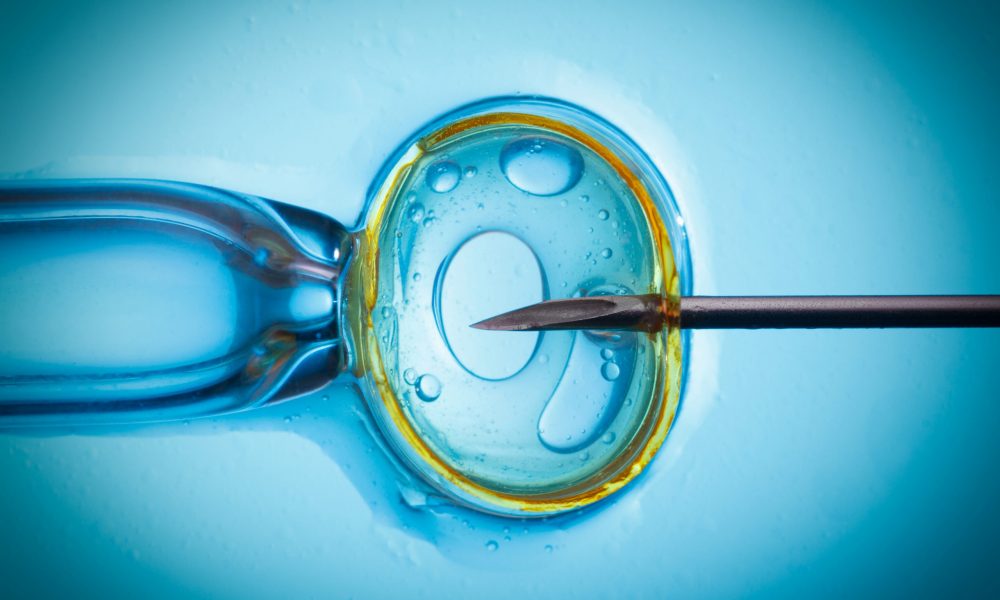
Exposing IVF errors could be key to improving the standard of care, embryologists have said, after a California couple sued their fertility clinic over an embryo carrying a rare cancer gene.
Talking openly about IVF mix-ups could encourage increased regulation and make the treatment “safer”, experts have told Femtech World.
Jason and Melissa Diaz sued HRC Fertility, saying it allegedly implanted an embryo carrying a rare gene that causes deadly stomach cancer and then falsified records to cover up its mistake.
The couple said their son, now a year old, will require total stomach removal surgery as a young adult to prevent or treat the cancer.

Okan Atilan, senior clinical embryologist at Sidra Medicine hospital in Qatar, says while this type of errors are rare, IVF mix-ups can happen.
“It is important for such events to be talked about because we have the obligation to strive for even safer practices and constantly look for ways of improvement,” he explains.
“We need to identify where our precautionary systems may fail, so we can enhance them and take lessons from such reported cases.
“Clinics have the responsibility to be completely transparent to their patients about any non-conformance events and either prevent such mistakes from happening or take immediate action when a mistake is identified.”
A study published in 2020 found that between 2009 and 2019, out of approximately 2.5 million IVF procedures in the US, 133 errors happened that resulted in lawsuits.
However, Cynthia Hudson, embryologist and VP of clinical strategy at TMRW Life Sciences, says there is no US federal requirement for reporting errors and many cases are never brought to light.
“Cases are settled out of court and none of these are being systematically captured.
“IVF remains a viable option, but the number of errors quoted vs the number of cycles performed is low.
“There is no legal mandate for clinics to ensure systems are in place to provide an immutable audit trail for the entire specimen history and there is no federal requirement that clinics must report errors,” she continues.
“The lack of chain of custody – linking results to specimens – is exactly the reason this happened. Humans are fallible. Well meaning, but fallible.
“Ensuring complete chain of custody at the specimen level, with an immutable audit trail, is essential.”
Dr Cesar Diaz Garcia, medical director at IVI London, says in many fields, including IVF, human error is nearly always the culprit behind such incidents.
“During IVF, mix-ups can happen due to a dish containing gametes being incorrectly labelled, or laboratory technicians not following protocol.
“But it’s important to bear in mind that these cases are extremely rare because today, the tracking of gametes is mainly electronic.”
One possible path forward would be to develop international guidelines for IVF treatments to ensure they remain safe, ethical and effective and have universal consistency and transparency, says Atilan.
“Formation of local regulatory bodies should also be a priority,” he adds.
“These can be responsible for issuing licenses to clinics that provide fertility treatments as well as overseeing and regulating every aspect of fertility treatments and the use of gametes and embryos in research, providing statistics on success rates, investigating any reported violations and taking disciplinary action, as necessary.”

News
Scientists turn human skin cells into eggs in IVF breakthrough

Researchers have created human eggs from skin cells, in a breakthrough that could transform IVF treatment for couples who have no other options.
The work remains at an early stage, but if scientists can refine the process it could allow women who are infertile due to age, illness or medical treatment to have genetically related eggs.
The same technique could also be used to make eggs for same-sex male couples.
Prof Shoukhrat Mitalipov, who led the research at Oregon Health and Science University in Portland, said: “The largest group of patients who might benefit would be women of advanced maternal age.
“Another group are those who have been through chemotherapy because that can affect their ability to have viable eggs.”
While women are expected to be the primary beneficiaries, the skin cells used to make eggs need not come from potential mothers.
“We used female skin cells in this study, but you could use skin cells from males as well,” Mitalipov told the Guardian.
“You could make eggs for men, and that way, of course, this would be applicable to same-sex couples.”
The work draws on cloning techniques pioneered in the 1990s at the Roslin Institute in Scotland.
A team led by the late Ian Wilmut used somatic cell nuclear transfer – a process that moves genetic material between cells – to create Dolly the sheep.
The procedure involved removing the nucleus (the cell’s control centre containing genetic information) from an adult sheep cell and placing it into a sheep egg that had had its own nucleus removed.
The resulting embryo was carried to term in a surrogate mother.
The Oregon team took a similar approach by collecting skin cells from women and removing the nucleus from each.
The nucleus, which contains 46 chromosomes carrying around 20,000 genes that make up the human genetic code, was placed into healthy donor eggs that had had their own nuclei removed.
The main challenge for scientists was that healthy human eggs normally contain only 23 chromosomes.
Another 23 come from sperm during fertilisation, producing the full set of 46 required for development into an embryo and eventually a baby.
Writing in Nature Communications, the Oregon team described how they tackled the problem of excess chromosomes.
After fertilising the eggs with sperm, they activated them using a compound called roscovitine.
This caused the eggs to move roughly half of their chromosomes into a structure called a polar body – a small cell formed during egg development – leaving the remaining chromosomes to pair with those from the sperm.
In a healthy fertilised human egg, 23 chromosomes from the mother pair with 23 from the father.
However, the Oregon team found that in their lab-created eggs, the chromosomes paired up at random. This led to embryos with the wrong number of chromosomes or incorrect pairings.
“These abnormal chromosome complements would not be expected to result in a healthy baby,” said Prof Paula Amato, a co-author of the study at Oregon.
The team is now working to refine the process.
Of the 82 eggs created, fewer than 10 per cent developed to the stage at which embryos are typically transferred during IVF.
None were cultured beyond six days, suggesting the process remains inefficient.
Mitalipov described the work as a “proof of concept” with more challenges ahead. Perfecting the method and proving its safety in patients could take another decade.
“I think it’s going to be harder than what we’ve done over the years thus far, but it’s not impossible,” he said.
Other scientists praised the breakthrough.
Prof Richard Anderson of the University of Edinburgh said: “Many women are unable to have a family because they have lost their eggs, which can occur for a range of reasons including after cancer treatment.
“The ability to generate new eggs would be a major advance.
“There will be very important safety concerns, but this study is a step toward helping many women have their own genetic children.”
News
Mothers’, not fathers’, mental health directly linked to their children’s, study shows

Mothers’ feelings of being overwhelmed and unhappiness, not fathers’, are directly associated with their children’s feelings of nervousness, worry and unhappiness, new research has revealed.
The study definitively confirms the mother’s role as central to the emotional wellbeing of the family unit.
Though other researchers have focused on isolated relationships between mother and child, this is the first study of the role that both partners may play in family mental health, both concurrently and over time.
Lead author Dr Yushi Bai from The University of Manchester said: “We do know that children’s mental health is formed by, and within, their family through shared genes, nurturing behaviours of caregivers, and sibling dynamics.
“Our study identified mothers, not fathers, as central to the emotional wellbeing of the family unit.
“We suspect that this can be explained by traditional division of parenting roles, where societal expectations often position mothers as the primary caregivers and organisers within families.
“Mothers are typically more involved in child-rearing and spend considerably more time with their children than do fathers, which means they are more likely to influence children’s lives and development.
“Greater exposure to maternal care might also lead children to copy their mother’s coping mechanisms and behaviours.”
The researchers produced a series of maps – called networks – depicting the way symptoms of anxiety and depression in parents and their children up the age of 16 connect with each other over time.
They based the analysis on data from 3,757 families from the UK Household Longitudinal Study between 2009 to 2022.
Additional cross-sectional network maps of 8,795 families captured independent associations between family members’ mental health.
While fathers’ emotional state was linked to mothers’ mental health in the cross-sectional analysis, they observed an absence of associations with their children.
However, they reported that fathers’ emotional symptoms may influence children’s well-being indirectly, by affecting maternal mental health.
The longitudinal maps also identified how a mother’s feelings of being overwhelmed affected the child’s emotional state—especially worry, and that children’s feeling of worry cycled back, further affecting her own emotional health.
The influence of maternal emotional health on their children waned as they got older, reflecting how adolescents transfer their primary attachment from their parents to others.
Co-author Dr Matthias Pierce from The University of Manchester said: “Emotional disorders in young people are not only increasingly prevalent, but also present at early ages, highlighting the need for early intervention and prevention.
“Given the family’s central role in shaping and sustaining mental health, interventions and policies should consider how the family mental health ecosystem operates.
“This study shows the potential value of interventions that aim to support mothers and reduce maternal anxiety, which may have the greatest impact on improving family dynamics and reduce the risk of poor mental health in children.
“We also suggest that the link between fathers’ and mothers’ mental health presents a further potential avenue for alleviating maternal stress.”
News
Daily pill could delay menopause ‘by years,’ study finds

Women who regularly take fish oil supplements could reduce their risk of early menopause by up to 95 per cent, new research suggests.
The study, which looked at data from more than 3,500 British women, found that those who took fish oil supplements were far less likely to experience early menopause than those who did not.
Researchers from the University of Leeds found that regular fish oil use was linked with a 95 per cent lower likelihood of menopause starting earlier than average.
UK nutritional scientist and adviser to Wiley’s Finest supplements Toral Shah, who was not involved in the study, said: “This research adds to a growing body of evidence showing that what we eat and the supplements we take can influence our long-term health in profound ways.
“Omega-3 fatty acids are essential nutrients that our bodies can’t produce on their own, so we must get them through diet or supplementation.”
Menopause usually occurs between ages 45 and 55, though non-white women often reach it sooner. South Asian women, for example, tend to go through menopause around five years earlier.
When menopause happens prematurely – before age 45 – women face increased risks of heart disease, osteoporosis (a condition that weakens bones) and diabetes. When it occurs later – after 55 – the risk of certain hormone-related cancers rises.
The timing of menopause can influence up to one-third of a woman’s life, making it a key public health concern. Researchers analysed data from women in the UK Women’s Cohort Study, tracking their supplement use and lifestyle factors such as diet, exercise and smoking.
Other supplements were also linked with later menopause. Vitamin B-complex was associated with a 52 per cent lower risk, antioxidant combinations (vitamins A, C, E, selenium and zinc) with a 46 per cent reduction, and vitamin C alone with a 25 per cent reduction.
Women who smoked, ate more red meat or had lower educational attainment were more likely to reach menopause earlier.
Researchers believe fish oil may act through several biological pathways.
Omega-3 fatty acids help reduce inflammation and protect the ovaries from oxidative stress – cellular damage that accelerates ageing – while also supporting DNA repair, which is vital for reproductive health.
Shah said: “While fish oil supplements offer a convenient way to ensure adequate omega-3 intake, especially for women who don’t regularly eat oily fish, it’s important to remember that supplements work best as part of a balanced diet and healthy lifestyle.
“The quality of fish oil matters too – look for supplements that are high-quality and provide high levels of EPA and DHA, the active omega-3s, in a form your body can easily absorb.”
News10 hours agoMothers’, not fathers’, mental health directly linked to their children’s, study shows
Menopause5 days agoNew report exposes perimenopause as biggest blind spot in women’s health
News8 hours agoScientists turn human skin cells into eggs in IVF breakthrough
News3 weeks agoThe Future of femtech: Rebuilding the investment landscape
News1 day agoDaily pill could delay menopause ‘by years,’ study finds
Features4 weeks agoUCL spin-out raises £2.5m to improve infant health with breast milk microbiome
News4 weeks agoWeightWatchers debuts menopause programme with Queen Latifah
News4 weeks agoWomen in UK with PCOS facing widespread failures in treatment, report finds