




Insight
The Future of femtech: Rebuilding the investment landscape


By Melissa Wallace, co-founder, Fierce Foundry
For decades, women’s health was treated as an afterthought, underfunded, under-researched, and often dismissed as “niche.”
Yet the irony is staggering: women make up 51 per cent of the population and drive nearly 80 per cent of consumer purchasing decisions.
The gap is rarely about market potential, because we know it is huge! It comes down to who holds the capital, who sets the governance, and whose lived experiences shape investment decisions.
Many of us see this as an opportunity, and now a growing wave of organisations are working to rebuild the investment landscape with women at the centre. Fierce Foundry, How Women Invest, The Fourth Effect, Female Founders Fund, All Raise, and countless grassroots angel networks are proving that women at the table means change.
The organisations are creating new pathways for women to become investors, supporting founders with more transparent funding relationships, and shifting the narrative on what it means to scale a business.
THIS is what is laying the foundation for the next generation of femtech innovation.
More Women Investors Changes Everything
People invest in what they understand and relate to.
When a woman develops a breakthrough medical device for PCOS patients, a male investor may not immediately recognise its value, even if the numbers are strong.
That’s not about blame, it’s about perspective.
When women step into investment roles, the impact is measurable:
Backing overlooked markets.
Female investors have been early champions of companies once ignored by traditional VCs.
Female Founders Fund backed Maven Clinic when “women’s health” wasn’t on Sand Hill Road’s radar.
Elvie, a pioneer in connected breast pumps and pelvic floor trainers, scaled globally because women investors recognised the scale of the problem and the purchasing power of women.
Without women at the table, these companies may have never broken through.
Bringing a wider lens of critical thinking.
Women tend to evaluate opportunities across multiple dimensions: returns, customer well-being, and long-term sustainability.
This broader perspective surfaces both risks and opportunities that can otherwise be missed. It’s not “soft” thinking; it’s smart investing.

Melissa Wallace
Delivering results through leadership.
Data shows that women-led companies outperform their leadership counterparts.
A BCG study found startups founded and co-founded by women generate 10 per cent more cumulative revenue over a five-year period, despite raising less capital.
Women investors see that performance potential early and help accelerate it.
This isn’t about charity. It’s about smarter bets and the numbers back it up.
The Blueprint for Change
The question isn’t whether FemTech will thrive. It’s what needs to shift for it to thrive faster. From my perspective, three things are critical:
- Pathways for Women to Become Investors. We need more women with capital, and that means more exits for women founders, broader education on accredited investing, and new models that democratise access to wealth.
- A Redesign of Venture Structures. Traditional VC models were never built with women in mind. They reward hypergrowth at any cost, punish flexibility, and replicate outdated power dynamics. At Fierce Foundry, we’re experimenting with venture studio models that align with how women actually lead; embedding shared services, designing with empathy, and even considering how work cycles could align with women’s hormonal cycles for exceptional performance.
- A Culture of Networks, Not Gatekeepers. Fundraising is rarely about one pitch; it’s about the introductions that compound over time. By building “networks of networks,” grounded in transparency and reciprocity, we ensure women founders gain access to capital where it has historically been blocked.
Lessons From the Frontlines
For FemTech founders, the challenge isn’t just finding any investor, it’s finding the right investor.
The wrong money can derail a company just as quickly as no money.
The most successful women founders I know focus on three things:
- Invest in aligned capital. Before taking money, research who your investors are, what they’ve funded, and how they show up for founders. The best partnerships are 10-year marriages, you need conviction on both sides.
- Build with transparency. Women founders are often asked tougher questions, but the best defense is clarity. Own your numbers, your risks, and your strategy. The right investors will respect honesty over spin.
- Leverage networks strategically. Don’t just network for introductions, network for champions. Each “no” can lead to two or three more conversations if you leave the door open. The founders who excel are the ones who convert networks into ecosystems of support.
At Fierce Foundry, I’ve seen this firsthand.
The women we work with not only find capital, but they also attract investors who believe in them as much as in the product.
That’s when the flywheel starts: funded women lead to exits, which lead to new women investors, which fuels the next generation of founders.
A Future Worth Building
If the investment landscape reached true gender balance, FemTech wouldn’t be a “category”, instead, it would simply be part of the mainstream.
We would see more women founders funded, more exits leading to more women investors, and workplaces redesigned to reflect how people actually thrive.
That future is not hypothetical.
I see glimpses of it every day at Fierce Foundry, where women are co-building companies with us from idea to exit.
The more we expand pathways for women investors, reimagine venture models, and build networks of networks, the faster we get there.
The next decade could be the tipping point for FemTech if we choose to rebuild the system with women at its core.
And when we do, the industry won’t just thrive. It will redefine what innovation looks like for everyone.















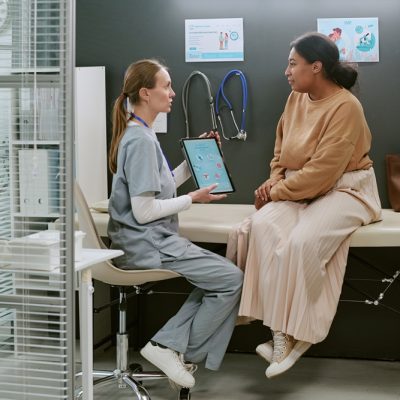
Women face a hidden burden navigating healthcare, with many repeatedly retelling their medical history, a national study suggests.
The findings indicate that Canadian women are taking on cognitive, emotional and administrative work alongside managing their health, including coordinating providers and advocating for care.
More than half of women surveyed, 53 per cent, reported a past or current chronic condition, while 64 per cent said there were health topics they struggled to raise with their doctor.

Sarah Hoffman, president and CEO of Pacific Blue Cross, said: “These findings challenge us to think differently about women’s healthcare and highlight the hidden work required to navigate the system.
“For many women, managing their health has also come to mean managing the healthcare system itself.
“They are acting as project managers of their own care, shouldering the invisible labour of coordinating between providers, retelling their medical history and advocating to be heard.
“The gap between men and women is meaningful and raises important questions about why younger women report lower levels of confidence and support.
“It also challenges us to consider whether we are actually making progress in women’s care, and whether the next generation is being equipped with the confidence and voice to advocate for their health.”
Overall, 71 per cent of Canadians described their doctors as supportive and 88 per cent expected their appointments to go well.
Among women living with chronic conditions, 71 per cent reported having to repeat their complete health history multiple times a year.
Younger women were particularly likely to report difficulties discussing their health. The study found 81 per cent of Gen Z women aged 18 to 30 and 73 per cent of Millennial women aged 31 to 45 had health topics they struggled to raise with their doctor.
Among Gen Z women with chronic illness, 92 per cent reported having to repeat their complete health history.
The study also found differences between young women and men. While 95 per cent of Gen Z men expected a doctor’s appointment to go well, the figure was 82 per cent among Gen Z women.
Similarly, 82 per cent of Gen Z men said they felt supported by their family doctor, compared with 66 per cent of Gen Z women.
Reasons for holding back health concerns varied between generations.
Among Gen Z women, 30 per cent cited fear of dismissal and 29 per cent fear of judgement.
Embarrassment was the most common barrier among Millennial, Gen X and Boomer women, reported by 29 per cent, 27 per cent and 35 per cent respectively.
Women who felt they needed to prove themselves to be taken seriously said they adapted how they approached appointments.
Strategies included researching medical information, repeatedly describing or justifying symptoms, bringing written notes or documentation, tracking symptom timelines, making repeat visits and emphasising how symptoms affected their daily lives.
The study also found an association between feeling supported by a doctor and expecting appointments to go well.
Canadians who described their physician as supportive were nearly four times more likely to expect appointments to go well than those who felt unsupported, at 98 per cent compared with 25 per cent.
Overall, 66 per cent of Canadians said they described their symptoms accurately. This fell to 48 per cent among those who said they felt unsupported by their doctor.
The 2026 Blue Cross Women’s Health Study surveyed 2,045 adult Canadians online in March 2026 through independent research company Research + Knowledge = Insights.
The survey had a reported margin of error of plus or minus 2 per cent, 19 times out of 20.


A study is examining where delays occur in diagnosing endometriosis – a condition that can take seven to twelve years to diagnose.
Endometriosis affects an estimated 1.5 million women and people in the UK, but there is currently no consistent way of measuring where and why diagnostic delays happen.
The research aims to develop the first standardised framework for understanding the diagnostic journey and identifying points where interventions could improve care.
The international project involves researchers from the University of Sheffield, University of Liverpool, University of Oxford, Aarhus University in Denmark and the University of Edinburgh, alongside Endometriosis UK.
Dr Rebecca Mawson, NIHR clinical lecturer in primary care at the University of Sheffield, is part of the research team.
She said: “Our project asks: where exactly are people getting lost or let down on their journey to diagnosis, and how can we map those points in a systematic way to identify where interventions could make a real difference.”
The project is led by Dr Babu Karavadra, NIHR academic clinical fellow in general practice at the University of Liverpool, who has been awarded a World Endometriosis Society Early Career Investigator Award as lead principal investigator at the University of Liverpool.
Researchers will review existing evidence, gather experiences from people living with endometriosis and bring together an international panel to map the diagnostic pathway and agree common definitions for key points along the journey.
The work will focus particularly on people whose experiences are often missing from research, including Black women, people living in rural or deprived areas, LGBTQ+ communities and disabled people.
Primary care will also be central to the research because it is often where people first seek help with symptoms.
Mawson said: “Primary care needs to be at the heart of this work. Primary care is often where people first seek help with their symptoms, so it has a crucial role in understanding diagnostic delay.
“If we only look at what happens once someone reaches specialist gynaecology, we risk missing some of the barriers that shape the journey long before that point.”
Unlike cancer research, where internationally recognised standards exist for studying diagnostic delays, endometriosis research has been more fragmented, with studies measuring different parts of the diagnostic journey in different ways.
The researchers hope to create an ‘Endometriosis Diagnostic Pathway Framework’ to help identify where people are falling through the gaps and where healthcare could be improved.
They will also develop a ‘Snakes and Ladders’ style visual representation showing how systemic barriers, chance and individual experiences can influence whether someone reaches a diagnosis.
The project forms part of the PEARL network, Primary care Endometriosis and Adenomyosis Research and Learning, an international collaboration of primary care and community researchers and clinicians.
Mawson said: “Endometriosis diagnostic delay isn’t inevitable. If we can understand where and why people are experiencing barriers, we have a much better chance of designing interventions that actually make a difference.
“The scale of the problem demands that we look at the whole journey, listen to the people experiencing it and build an evidence base that can lead to real change.”
The framework could provide the foundations for future research, clinical guideline development, healthcare professional training and NHS service improvements, with potential applications to related conditions such as adenomyosis and chronic pelvic pain.










 Hormonal health2 weeks ago
Major UK study could be a ‘game-changer’ for heavy periods and endometriosis

 Entrepreneur7 days ago
KOVE Medical raises €1.7 million to improve safety of foetal surgery
 Fertility2 weeks ago
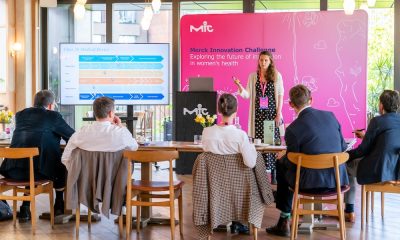
One week left to apply: W Accelerate with Merck KGaA and M Ventures

 Pregnancy1 week ago
UK study aims to transform maternity care for high-risk pregnancies

 Menopause2 weeks ago
Quarter of women miss work due to menstual symptoms, survey finds

 Mental health2 weeks ago
PMDD after SSRIs or hormones: Why the brain may be the missing treatment target

 Diagnosis2 weeks ago
Ark Surgical secures further institutional backing to accelerate US expansion

 Menopause5 days ago
Menopause hormone treatment may ease brain fog, study suggests