




Insight
Bactolife secures over €30m in Series B funding to commercialise


Gut health solutions company Bactolife has successfully raised over €30 million in its Series B investment round.
The funding will enable the company to commercialise its innovative Binding Proteins, a new food, feed and dietary supplement ingredient, and execute its human study programme, aimed at transforming human and animal health for proactive health management.
This significant financing round was led by Cross Border Impact Ventures (CBIV) and EIFO (Danish Export and Investment Fund), alongside continued support from existing investors Novo Holdings and Athos.
With the backing of cornerstone investors, Bactolife is now poised to launch its first Binding Protein products under the ingredient brand, Helm for human health in the United States in 2026.
The company plans to expand into Asia and Europe in the years that follow, with a strong commitment to ensuring the technology is accessible to women and children in low- and middle-income countries (LMICs).
Sebastian Søderberg, CEO of Bactolife, said: “Today’s successful close of our Series B round sets the stage for exciting years ahead as we prepare to launch our innovative products in 2026.
“This funding will enable us to clinically validate, scale, and commercialise our Binding Proteins, taking Bactolife’s solutions to a broad audience.
“We are excited to welcome new investors to the Bactolife family and are deeply grateful to our existing investors, whose continued support reflects their confidence in our mission.
“We are ready to transform gut health with novel Binding Proteins.”
The proceeds from this round will be directed toward several key areas of growth for Bactolife, including the execution of its human study program across the US, EU, Asia, and LMICs.
In addition, the company plans to scale its manufacturing and supply operations to meet global demand with a strong emphasis on commercialisation of both human and animal health ingredients for dietary supplements, functional food and beverages, and feed additives.
Donna Parr, Managing Partner at Cross Border Impact Ventures, said: “We are thrilled to lead Bactolife’s Series B. Bactolife’s Binding Proteins have the potential to strengthen gut resilience for mothers and children in low- and middle-income countries by providing a scalable, food-grade solution that can be integrated into everyday nutrition.
“At the same time, we are excited about the significant growth opportunity across North America, Europe, and Asia where the market opportunity is massive.
“This investment reflects our conviction that evidence-based technologies can reach massive high-growth markets, inclusive of people who need them most, and we look forward to partnering with Bactolife to accelerate clinical validation, scale manufacturing, and expand equitable access globally.”













News
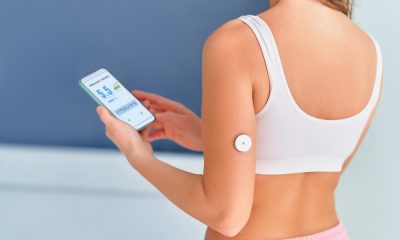
Bridging the metabolic wealth gap: The telehealth platform bypassing insurance to democratise care


As weight-loss treatments remain locked behind prohibitive paywalls, a new direct-pay initiative is cutting costs in half for low-income patients, and it could provide a new blueprint for health equity.
It is one of the most persistent, frustrating paradoxes in modern healthcare: the medical innovations most capable of addressing widespread chronic conditions are overwhelmingly priced out of reach for the populations most vulnerable to them.
Nowhere is this more evident than in the current landscape of metabolic health and weight management.
As state governments and insurance providers increasingly restrict coverage for advanced weight-loss medications due to skyrocketing costs, a stark dividing line has emerged. Clinical need is no longer the primary factor in who receives treatment. Affordability is.
This financial barrier disproportionately impacts women, who not only face high rates of metabolic conditions but also frequently serve as the primary caregivers in their households.
For a single mother managing childcare, grueling work hours, and the relentlessly rising cost of living, personal well-being is often the first casualty of a tight budget.
These patients are forced into a holding pattern, watching their conditions progress year after year while highly effective, life-changing treatments remain separated from them by a paywall.
Now, a telehealth platform called Amble Health is attempting to dismantle that wall by bypassing the traditional insurance apparatus entirely.
A Structural Shift for Access
Today, Amble Health announced the launch of the Amble Cares Program, a national initiative designed to cut the cost of medical weight-loss treatments in half for low-income Americans.
The programme arrives at a critical inflection point.
Today, roughly one in eight U.S. adults have utilized advanced metabolic medications, according to a recent KFF Health Tracking Poll.
This surge in adoption has driven a fundamental shift in preventative care, but the distribution of that care has been deeply uneven.
Through the Amble Cares Program, eligible patients can access comprehensive medical weight-loss programmes, which may include prescription medications if clinically appropriate, at up to 50 per cent below standard rates.
To ensure the discounts reach the intended demographic, eligibility is determined by an independent, third-party verification partner, based on verified financial need.
The programme explicitly prioritises individuals and families with limited disposable income, including parents and guardians whose financial flexibility is tied up in providing for dependents.
Once verified, patients are connected directly to licensed clinicians to begin treatment immediately, stripping away the friction of waiting periods.
“Healthcare should not be a luxury item,” said Joey Stiver, CEO of Amble Health. At Amble, we believe that a patient’s zip code or income shouldn’t dictate their metabolic health outcomes.
“The Amble Cares Program is our direct response to the cost of living crisis, moving beyond talk of ‘affordability’ to actually delivering it to the people the traditional system has left behind.”
The Direct-Pay Trade-Off
However, this rapid, lower-cost access comes with a significant structural trade-off.
To achieve these price reductions and eliminate the administrative delays, denials, and red tape associated with traditional healthcare, Amble Health operates strictly as a direct-pay platform.
This means participants cannot use outside coverage. The programme does not accept Medicaid, Medicare, commercial insurance, or even HSA/FSA funds.
For some patients, being entirely locked out of utilizing their existing health benefits may present a new kind of hurdle.
But for those who have already found themselves abandoned by traditional coverage networks, facing outright denials, unnavigable prior authorisations, or insurmountable deductibles, the direct-pay model offers a predictable, transparent alternative to a broken system.
Ultimately, the Amble Cares Program is making a bold bet: that the most efficient way to deliver equitable healthcare to disenfranchised populations isn’t to fix the traditional insurance system, but to innovate entirely around it.















 Menopause1 week ago
Perimenopause misinformation ‘putting women at risk’

 News4 weeks ago
NIH Grant terminations disproportionately impact minority scientists, research finds

 Events4 weeks ago
WUKA brings Period-Positive Pool Party to London Aquatics Centre to keep girls swimming through puberty

 Insight3 weeks ago
PCOS renamed after decade-long campaign to end ‘cyst’ misconception

 Events4 weeks ago
WHIS 2026 unveils agenda and first speakers for the leading women’s health summit

 Menopause4 weeks ago
CBT shows promise for menopause insomnia and hot flashes

 Hormonal health2 weeks ago
NHS urged to update website following renaming of PCOS

 News6 days ago
Three menopause innovators shortlisted for Femtech World Award
1 Comment