




Motherhood
Frozen embryo transfers in IVF linked to greater risk of maternal hypertension
Implications rise with increasing use of embryo freezing in assisted reproduction


Concerns have been raised that pregnancies derived from frozen embryo transfers in IVF might increase the maternal risk of hypertensive disorders.
Pre-eclampsia is one such condition that causes high blood pressure during pregnancy and after labour and which may have severe consequences for both the mother and the foetus.
The concerns have been raised in recent observational studies comparing the outcomes of fresh and frozen transfers, which, by definition, are subject to statistically confounding variables. Sibling comparisons can remove much of this confounding.
The extensive study based on real-life registry data and a comparison of maternal complications in sibling pregnancies indicate that pregnancies following frozen embryo transfer (FET) do indeed have a substantially higher risk of hypertensive disorders than naturally conceived pregnancies.
This same raised risk was also found in a sub-group analysis of sibling births, which was designed to eliminate the effect of any parental factors in the results.
“Our findings are important because the number of FETs is rapidly increasing throughout the world,” says the study’s first author, Dr Sindre H. Petersen from the Norwegian University of Science and Technology.
He has presented the study results at the 38th annual meeting of ESHRE in Milan on behalf of the Committee of Nordic Assisted Reproductive Technology and Safety group which monitors the health of mothers and children born after assisted reproduction in the Nordic countries.
According to the latest registry report from ESHRE, the proportion of FET cycles relative to fresh is still on the rise in Europe. In 2017 the proportion was 49 per cent, against 38 per cent in 2014. Similar trends are present in the US and most high-income countries.
FETs are increasingly common because of improved cryopreservation methods, facilitation of single embryo transfer, reduction of ovarian hyperstimulation, and the elective freezing of all embryos.
The study analysed more than 4.5 million singleton pregnancies in the registries of three Nordic countries with delivery between 1988 and 2015. Of the conceptions following assisted reproduction, 78, 300 were after fresh embryo transfer and 18,037 were after FET.
The registry birth references – largely unique to the Nordic countries – also allowed the identification of 33,209 sibling deliveries following either fresh or frozen embryo transfer, and natural conception.
“This study was by far the largest sibling analysis to date investigating the association between assisted reproduction treatments and hypertensive disorders in pregnancy,” Dr Petersen adds.
Results of the study showed that the risk of hypertensive disorders in pregnancy were almost twice as high in the pregnancies following FET that in pregnancies following a natural conception. However, the risk of hypertensive disorders in pregnancies following fresh embryo transfer pregnancies was comparable to naturally conceived pregnancies.
Hypertensive disorders in pregnancy comprise gestational hypertension and pre-eclampsia, and the more rare but severe conditions of eclampsia and Hemolysis-Elevated-Liver-enzymes-Low-Platelets (HELLP) syndrome.
Adjustments for maternal body mass index, smoking and time between deliveries did not affect the end results, nor did other methods of assisted reproduction (IVF, ICSI, duration of embryo culture or number of embryos transferred).
Dr Petersen says that the design of the study was not able to assess the relative merits of embryo freezing against the higher risk of hypertensive disorders, but notes that “cryopreservation has facilitated the highly favourable single embryo transfer approach, improving foetal and maternal outcomes by avoiding multiple pregnancies”.
Recent studies have suggested that the risk of hypertensive disorders in FET pregnancies may be associated with therapies to prepare the uterus for embryo implantation. These are usually given in the form of hormone replacement therapy in what has become known as a ‘programmed’ or ‘artificial’ cycle – in which there is no naturally developing corpus luteum to provide hormonal support for the pregnancy.
The presence of a corpus luteum – a mass of cells that forms in an ovary responsible for the production of the hormone progesterone during early pregnancy – is one potentially important difference between natural conception and fresh embryo transfers, on the one hand and FETs, on the other, says Petersen.
He adds: “In our analysis all natural conceptions and fresh embryo transfer pregnancies had a corpus luteum, while a subset of the FET pregnancies did not.
“However, we expect from previous Danish and Swedish publications that in our study, only 15-30 per cent of FET pregnancies were in artificial cycles, which seems unlikely to drive the entirety of the strong association in our results.
“It thus seems possible that some inherent aspect of the freezing and thawing process, for example epigenetic changes, might be responsible as well.”
The doctor has pointed out that it is too early to recommend changes to treatment strategies based solely on this study, and that there are still good reasons why frozen embryo transfers are increasingly used, especially in their facilitation of single embryo transfer.
“I am confident that a well-grounded and individualised decision of whether to go for a fresh or a frozen cycle can be made after dialogue between the clinician and the couple,” he concludes.
“Our study can contribute to informed decision-making for patients and clinicians.”



Pregnant women’s expectations about postpartum sleep may predict sleep quality after birth, outweighing prior sleep and psychiatric history, a study suggests.
The findings suggest attitudes and beliefs about sleep during pregnancy could be a modifiable risk factor for postpartum sleep concerns.
They also indicate that, among women expecting the poorest sleep, higher postpartum anxiety may further worsen sleep quality.
Sammy Dhaliwal, lead author is clinical health psychologist and research fellow in the department of obstetrics and gynaecology at the Perelman School of Medicine at the University of Pennsylvania.
Dhaliwal said: “Most pregnant women in our sample anticipated poor postpartum sleep before it occurred, and it was striking that those expectations predicted worse sleep outcomes even after accounting for factors such as prior sleep disorders, psychiatric history, and number of previous births.
“This suggests that attitudes and beliefs about sleep during pregnancy may represent a modifiable target for early intervention before postpartum sleep problems emerge.”
Sleep disturbance affects an estimated 60 to 80 per cent of postpartum women and is linked to a higher risk of depression and anxiety.
Researchers said it is often regarded as an expected part of life after childbirth rather than a health issue that may be addressed earlier.
The study enrolled 432 pregnant women at about 24 weeks of gestation, meaning around 24 weeks into pregnancy.
Participants completed measures of their expectations about postpartum sleep, current sleep quality using the Pittsburgh Sleep Quality Index, and mood using validated depression and anxiety scales.
Assessments were repeated at six, 12 and 24 weeks postpartum.
A subset of 49 women also wore wrist actigraphy devices at six to eight weeks postpartum.
Actigraphy uses a wearable device, similar to a watch, to estimate sleep and wake patterns based on movement.
The results showed that 70 per cent of pregnant women, or 301 of 432 participants, expected poor sleep in the postpartum period.
Researchers found that predicted sleep disruption during pregnancy was a significant predictor of postpartum sleep concerns.
Among first-time pregnant women without prior health concerns, those who expected greater sleep disturbance had significantly more disrupted sleep after birth, measured by both actigraphy and self-report.
Among women who expected the worst sleep quality, higher postpartum anxiety significantly worsened both measured sleep and self-reported sleep, independent of anxiety levels during pregnancy.
Dhaliwal said the findings point to two possible areas for intervention: addressing sleep-related beliefs during pregnancy and treating postpartum anxiety.
Dhaliwal said: “Postpartum sleep disruption is often treated only after problems develop, but our findings suggest there may be an opportunity to intervene earlier during pregnancy.
“Addressing sleep-related beliefs and postpartum anxiety during prenatal and postpartum care may help improve sleep and emotional well-being in new mothers.”

Pressure to have a natural birth can cause lasting psychological harm when labour does not go to plan, new research shows.
The study found that the messages women receive during pregnancy are directly linked to the shame and self-blame many feel when those expectations are not met.
For the first time, the research provides an explanation for why unmet birth expectations contribute to psychological harm.
Several women involved in the research said they felt they had not given birth “properly”, even when medical intervention had saved their lives.
Rebecca Matthews, lead author and PhD researcher at the University of Reading, said: “These women were not failed by their bodies, they were failed by the messages they were given.
“Birth trauma does not begin with birth. It begins in the ideology sold to women throughout pregnancy.
“For the first time we can explain precisely how, by showing how birth culture creates a moral standard for women that defines what a good mother does and then leaves them to blame themselves when birth does not match that.
“Until we reform the way we prepare women for birth, we will keep seeing the same devastating consequences for mothers and their babies.”
The researchers interviewed 21 first-time mothers in the UK whose births did not go as planned.
From NCT and hypnobirthing classes, to social media to midwives, the researchers heard how women are surrounded by messaging that frames natural, unmedicated vaginal birth as the “gold standard”, not just medically preferable, but as a mark of being a good mother and the first test of maternal worth.
Research shows around half of women report their birth differed significantly from their expectations, and for the women in this study, all of whom experienced exactly that, the psychological consequences were profound.
Women judged themselves against the internalised moral standard that this ideology had created.
The researchers are calling for antenatal education to stop treating one kind of birth as the goal and to present all birth outcomes as equally valid routes to motherhood.
They also call for better postnatal screening for women whose births did not go as expected, specifically targeting the shame, self-blame and identity disruption that this research identifies as mechanisms underlying birth trauma.
The findings align with and extend the conclusions of the Kirkup, Ockenden and Birth Trauma Inquiry reports, all of which documented how the institutional pursuit of “normal birth” contributed to preventable harm.
This research provides the first theoretical explanation of how that ideology generates individual psychological harm and points to antenatal messaging as the primary site of such preventable harm.
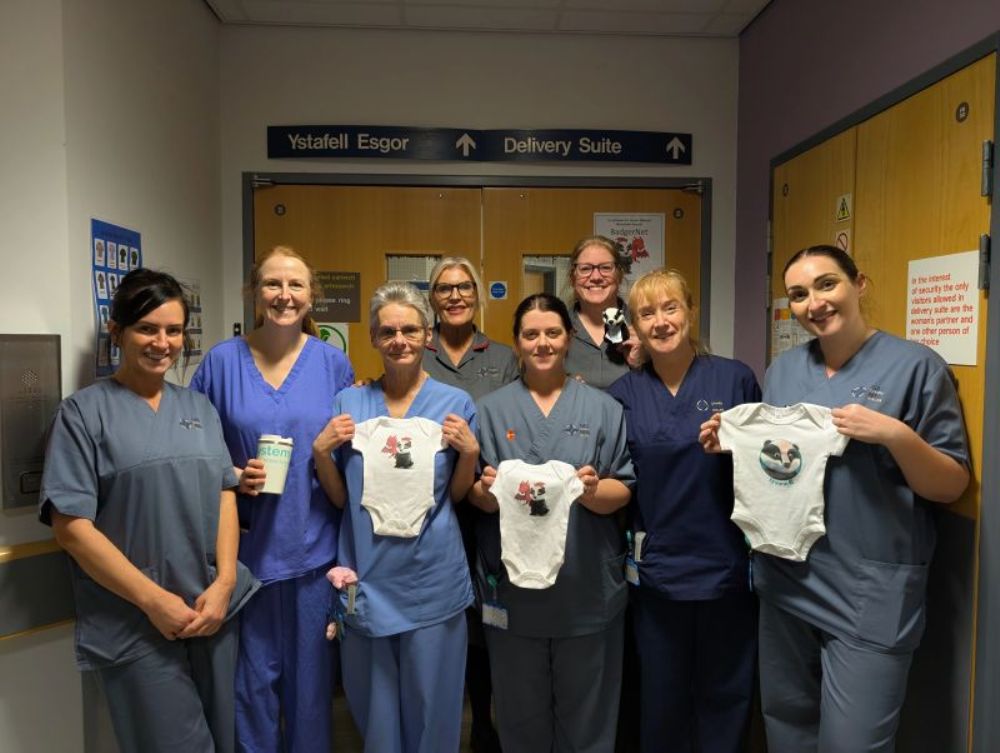
System C has completed the national rollout of BadgerNet Maternity across all seven NHS Health Boards in Wales. This is the first time any UK nation has unified its maternity care under a single digital record and patient-facing app.
With approximately 26,000 babies born annually in Wales, BadgerNet connects maternity information across organisational boundaries in the country.
Expectant parents can access their records, maternity appointments and key updates digitally through a single app, wherever they receive care while clinicians have secure access to the right information at the point of care.
The national three-year agreement across all Heath Boards replaces a patchwork of separate local systems and eliminates the need for paper hand-held notes.
Anthony Tracey is director of digital at Hywel Dda University Health Board, the final of the Welsh Health Boards to go live with BadgerNet.
He said: “The rollout of BadgerNet across Wales is a vitally important step forward in modernising our maternity services and providing a consistent service across the country.
“By giving expectant parents direct access to their information and enabling clinicians to share data more effectively, we are strengthening safety, transparency and consistency in maternity care nationwide.”
For expectant parents, the single digital maternity record transforms how they engage with their care.
Instead of carrying paper notes and repeating information at every appointment, parents can access key details, appointments and updates digitally, supporting more informed conversations and shared decision-making.
The result is greater transparency, fewer administrative frustrations and a more joined-up experience throughout pregnancy and into the postnatal period, regardless of which health board they fall under.
For clinicians and Health Boards, the joined-up approach reduces duplication and streamlines handovers across teams and sites. Information is digitally captured once and made available securely wherever it is needed, helping to minimise errors, reduce time spent tracking down notes and support more efficient multidisciplinary working.
At a national level, linking maternity data across Wales creates a foundation for safer, more consistent care.
Aggregated, standardised information enables earlier identification of trends and variation, supports evidence-based policy decisions and enhances long-term service planning.
With a comprehensive view of maternity activity and outcomes across the country, Wales is now better positioned to raise standards for parents, babies and families.
Guy Lucchi, managing director of healthcare at System C, added: “Delivering a truly national approach across all seven Health Boards is a significant achievement for Wales.
“One shared system means information flows with the patient, not the organisation.
“That reduces duplication, supports earlier identification of risk and frees up valuable clinical time.
“Crucially, linking maternity data at a national level provides powerful insight to drive improvement. Health Boards can benchmark, plan services with greater confidence and ensure resources are targeted where they are needed most, while expectant parents benefit from clearer communication and a more connected experience of care.”












 Menopause3 weeks ago
Perimenopause misinformation ‘putting women at risk’

 Hormonal health4 weeks ago
NHS urged to update website following renaming of PCOS

 News3 weeks ago
Women still being failed when they reach menopause, experts say

 Events3 weeks ago
Women’s Health Innovation Summit opens submissions for 2026 Innovation Showcase

 Mental health2 weeks ago
British women among angriest in Europe, health survey reveals

 News3 weeks ago
Three menopause innovators shortlisted for Femtech World Award

 Menopause3 weeks ago
Sweden eyes domestic production of oestrogen patches amid menopause treatment shortage

 News4 weeks ago
Low insulin diet and avoiding four food groups may prevent menopause weight gain
1 Comment