




Mental health
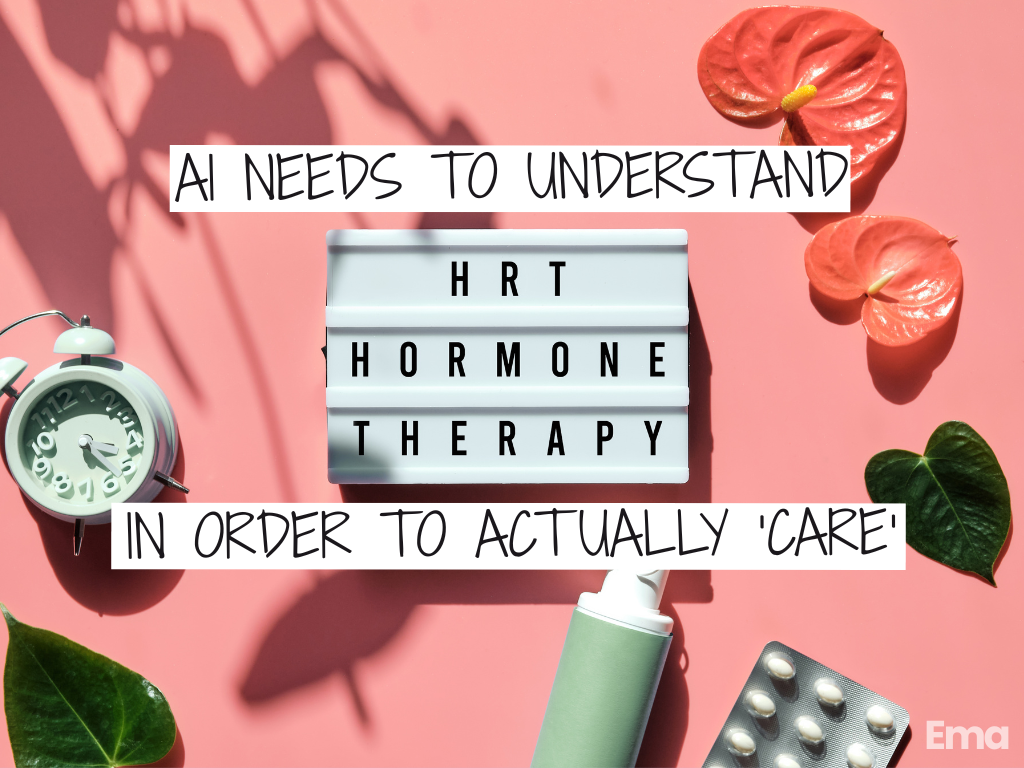
Timing is everything: What AI need to learn about HRT and brain health

By Morgan Rose, CNM, WHNP-BC, and Dr Kudesia, triple board-certified in Reproductive Endocrinology & Infertility (REI), Obstetrics & Gynecology, and Lifestyle Medicine
The timing of when women start hormone replacement therapy (HRT) may matter more than we ever understood.
The “critical window” for starting HRT isn’t just relevant to brain health; timing has also been shown to shape cardiovascular outcomes.
Early analyses of the landmark WHI trial missed this nuance, including women long past menopause and obscuring benefits seen in those who begin therapy sooner.
Recent research presented at the American Neurological Association Annual Meeting found that women who began HRT within five years of menopause had a 32 per cent lower risk of developing Alzheimer’s disease.
Yet those who started HRT more than five years after menopause showed higher levels of tau proteins, a hallmark of Alzheimer’s, in their brains.
This “critical window” concept challenges the one-size-fits-all model of menopause care. It suggests that when we start HRT, it can be just as important as whether we start it.
Researchers at Mass General Brigham found similar patterns: women who began HRT near the onset of menopause did not show increased Alzheimer’s risk, while those who experienced early menopause with longer lifetime estrogen deprivation faced a higher risk overall.
Why Timing Matters
Women face roughly a 1 in 5 lifetime risk of Alzheimer’s disease, compared to 1 in 10 for men of the same age. The sharp drop in estrogen during menopause may help explain that gap.
Estrogen supports energy production, blood flow, and inflammation control in the brain functions that wane as levels decline.
The data suggest that initiating HRT earlier (around perimenopause or early menopause) may preserve some of these neuroprotective effects, while starting too late could heighten risk once neurodegenerative changes have already begun.
One meta-analysis showed that HRT begun soon after menopause reduced Alzheimer’s risk by over 40 per cent compared to non-users, while starting after age 60 doubled the risk.
These findings don’t make HRT a blanket prescription; they make it a precision intervention.
The Clinical Nuances AI Must Understand
If AI is going to support menopause care safely and intelligently, it needs to understand the reasons behind the actions.
1. Timing Is a Risk Modifier
“Time since menopause” is not just a demographic; it’s a clinical determinant.
AI systems must understand that the same therapy can carry opposite implications depending on when it’s initiated.
2. HRT Is Not Monolithic
There are multiple formulations, routes, and combinations.
For women who still have a uterus, adding progesterone helps protect the uterine lining and lowers the risk of endometrial cancer that can occur with estrogen-only therapy.
Topical estrogen, which has much lower absorption into the bloodstream, may be appropriate for perimenopausal women who are still having periods or postmenopausal women with a uterus who need targeted relief of vaginal or urinary symptoms.
For example:
- Estrogen-alone therapy can raise the risk of endometrial cancer and is typically not recommended for women with a uterus.
- Topical estrogen, with much lower systemic absorption, may be appropriate for perimenopausal women still having periods.
These distinctions must be explicitly encoded into AI frameworks to avoid oversimplified or unsafe recommendations.
3. Safety Requires Scope and Referral
Complex topics like HRT timing and neuroprotection should always prompt an automatic follow-up:
“Please consult a menopause specialist or clinician (such as one credentialed through the North American Menopause Society) to discuss the risks, benefits, and best options for you.”
AI logic must mirror how clinicians practice by inviting deeper discussion, not replacing it.
From Symptoms to Systems Thinking
We need to move beyond viewing menopause as a set of symptoms to manage, and instead see it as a neurological and metabolic inflection point in women’s lives.
That means:
- Bringing conversations about HRT earlier, during perimenopause, when neuroprotective benefits may still be possible.
- Designing AI systems that recognise context and chronology, not just keywords.
- Making personalised, evidence-based menopause guidance accessible to every woman by cutting through misinformation and connecting her to trusted care.
The Bigger Picture
For too long, women’s midlife health has been under-researched and under-resourced. The result is a data gap, which can quickly become a bias when encoded into AI.
If we want women’s health AI to truly care, it must be trained on data that understands the complexity of hormonal transitions, not just the vocabulary of them.
Because the difference between “now” and “five years from now” can determine whether a woman ages with clarity or confusion.
AI should know that.
And soon, it will.
Dr Kudesia is nationally recognised for her expertise in fertility awareness, lifestyle, and culinary approaches to reproductive health, and her advocacy for reproductive rights.















Young women are more likely than young men to get health and wellness information from social media influencers, a US survey has found.
Among adults aged 18 to 29, 57 per cent of women said they received health and wellness information from influencers, compared with 47 per cent of men.
The Pew Research Center study surveyed 5,023 US adults and examined how young people consume health and wellness content online.

Local university students said influencer content frequently appeared in their social media feeds.
Kabija Koroma, a local university student, said: “It’s more exercise stuff, more like protein and like meals and like how to get ready and like the outfits of the day of videos on TikTok or lately. My favourite ones.”
About 51 per cent of women under 30 said they often consumed influencer content focused on beauty and personal appearance, compared with 18 per cent of men.
The study also found that 21 per cent of women often saw content about therapies outside mainstream medicine, compared with 10 per cent of men.
At least one-third of both young women and young men often encountered influencer content about mental health and weight loss. Around half or more of both groups regularly saw fitness-related content.
Another local university student, Ania Davis, said: “I see a lot like how to meal prep and how to get your morning started. Affirmations stuff. But I do also ask the adults around me because sometimes the internet is not right.”
Researchers also looked at why young adults sought health and wellness information from influencers.
About 51 per cent of young women said they watched the content because they wanted to change their health or lifestyle.
Women were also more likely than men to say they enjoyed hearing from people who shared their background or beliefs, at 23 per cent compared with 14 per cent.
Nineteen per cent of young women said they used influencer content to learn about topics they did not want to ask their doctors about, compared with 10 per cent of young men.
Despite regularly using social media, some students said they did not rely solely on influencer content when making decisions about their health and wellness.
Koroma said: “I’m always on TikTok 24/7 and Instagram, but I also like to ask people older than me because I don’t know everything.”


A new UK study aims to improve maternity care for pregnant women living with multiple long-term health conditions.
The three-year project, led by the University of Aberdeen and Birmingham City University, brings together experts from academia and the NHS, including King’s College London, the University of Birmingham, Manchester University, Barts Health NHS Trust, Newcastle-upon-Tyne NHS Foundation Trust and Guy’s and St Thomas’ NHS Foundation Trust.
The research is supported by a £1.3m award from the National Institute for Health and Care Research (NIHR), with £70,000 of the funding going to King’s College London.
Recent figures show that more than 80 women die each year in the UK due to complications arising from pregnancy, while more than one in six pregnant women are living with multiple long-term conditions such as diabetes, high blood pressure, heart disease and mental health disorders.
These conditions are becoming increasingly common and are considered an important contributor to poor maternal outcomes.
There are currently no defined care requirements for pregnant women living with more than one long-term health condition.
Women living with multiple conditions can face changes to medication, disjointed care from multiple teams, conflicting advice between healthcare professionals and a lack of appropriate follow-up for their health conditions after birth.
Pregnant women with multiple long-term health conditions are at twice the risk of preterm birth and nine times more likely to die during pregnancy than those without these health complications.
Researchers will develop a “care bundle”, a package of evidence-led care designed to guide safe maternity care for women living with multiple long-term health conditions throughout pregnancy, birth and the postnatal period.
At King’s, Professor Krishnarajah Nirantharakumar and Professor Jane Sandall will be co-investigators on the project, contributing expertise in implementation research and continuity of maternity models of care. Zoe Vowles, an NIHR-funded midwife PhD student, will contribute expertise from her research into the contribution of midwifery to care for women with multiple long-term health conditions.
Sandall, professor of social science and women’s health at King’s College London, said: “Too many women living with more than one long-term health condition are falling through the gaps between different parts of the health system during pregnancy, when they most need coordinated support. This research will bring together expertise from across maternity and specialist care to build a care bundle that gives women and health professionals clear, consistent guidance, before, during and after birth.”
Nirantharakumar, clinical professor of public health and health data science at King’s College London, said: “Our MRC-funded MuM-PreDiCT programme worked directly with women living with multiple long-term conditions and with maternity clinicians to identify the elements of care that matter most in pregnancy. This award takes those elements and builds them into a care bundle that can be tested and delivered in the NHS.”
Over three years, the team will be led by Dr Mairead Black, clinical reader in obstetrics at the University of Aberdeen and honorary consultant obstetrician at NHS Grampian. It will address the challenges these women face and create a package of care aimed at reducing the risks they encounter in pregnancy.
The care bundle will include guidance on medication management, communication between healthcare teams, midwifery care and postnatal handovers. Researchers will also work with people with lived experience of maternity care to help shape and test it.
The researchers hope the project will provide an evidence-led care bundle specifically designed for women living with multiple long-term health conditions and, for the first time, clear guidance to support their complex needs throughout pregnancy and beyond.


Prepared for Femtech World by Dr Emilė Radytė, neuroscientist and co-founder and CEO of Samphire Neuroscience
The short answer
Premenstrual dysphoric disorder (PMDD) does not usually result from abnormal hormone levels.
Research suggests that the brain can respond differently to expected changes in estrogen, progesterone, and the progesterone metabolite allopregnanolone.
This helps explain why blood tests can look typical while a person’s experiences remain severe. It also gives researchers a clear reason to study nervous-system treatments alongside selective serotonin reuptake inhibitors (SSRIs), hormonal treatment, and psychological care.
Why can expected hormone changes cause severe PMDD experiences?
Hormones act as signals. They interact with receptors throughout the brain and influence networks involved in mood, stress, sleep, and emotional regulation.
Two people can have similar hormonal patterns and experience those signals in different ways.
Hantsoo and Epperson (2020) reviewed evidence that PMDD involves an altered response to changing levels of allopregnanolone, which modulates gamma-aminobutyric acid type A (GABA-A) receptors. GABA helps regulate neural activity and the stress response.
In PMDD, the issue may lie in the brain’s adaptation to allopregnanolone fluctuations across the menstrual cycle.
Experimental research supports this sensitivity model. Suppressing ovarian hormone fluctuations can reduce PMDD experiences in susceptible participants, while reintroducing physiologic concentrations can bring them back.
Researchers therefore describe PMDD as a disorder of sensitivity to hormonal change, while recognizing that no single pathway explains every case.
Do normal hormone test results rule out PMDD?
No. A blood test shows whether a hormone concentration falls within an expected range at one point in time.
It cannot show how a person’s brain responds to that signal across the cycle.
Clinicians diagnose PMDD by its timing and impact, using prospective daily ratings across menstrual cycles.
The American College of Obstetricians and Gynecologists (ACOG) recognises PMDD as part of a spectrum of premenstrual disorders and recommends an individualised, multimodal approach.
Which treatments have evidence for PMDD?
ACOG’s 2023 clinical practice guideline includes hormonal and nonhormonal medicines, psychological counseling, exercise, nutritional approaches, patient education, and surgery for selected cases.
SSRIs can work faster in PMDD than they often do in major depression. Hormonal approaches can suppress ovulation or stabilize fluctuations for some patients.
No treatment works for every person. Some patients do not improve, cannot tolerate side effects, have contraindications, or prefer another route.
When that happens, clinicians and researchers need to ask which part of the biological pathway still drives the condition.
Could brain stimulation treat PMDD?
Noninvasive brain stimulation offers a plausible research direction because it can influence neural networks involved in mood regulation.
Evidence from depression cannot establish that it works for PMDD.
Researchers need PMDD-specific randomised trials that measure experiences across the cycle and report safety, adherence, and clinically meaningful outcomes.
The distinction matters. A coherent mechanism creates a hypothesis. Only indication-specific clinical evidence can establish efficacy.
Key takeaways
- PMDD can occur with hormone levels that fall within expected ranges.
- Research points to altered brain sensitivity to hormonal change, including allopregnanolone fluctuations.
- SSRIs and hormonal approaches remain evidence-based options, often as part of multimodal care.
- Brain stimulation is a research target for PMDD, not a conclusion that can be borrowed from depression studies.
Learn more at https://www.samphireneuro.com/en-us/pmdd
Sources:
Hantsoo and Epperson (2020), Allopregnanolone in premenstrual dysphoric disorder.
American College of Obstetricians and Gynecologists (2023), Management of premenstrual disorders.










 Hormonal health2 weeks ago
Major UK study could be a ‘game-changer’ for heavy periods and endometriosis

 Entrepreneur6 days ago
KOVE Medical raises €1.7 million to improve safety of foetal surgery

 Fertility2 weeks ago
One week left to apply: W Accelerate with Merck KGaA and M Ventures

 Pregnancy7 days ago
UK study aims to transform maternity care for high-risk pregnancies

 Menopause2 weeks ago
Quarter of women miss work due to menstual symptoms, survey finds

 Mental health2 weeks ago
PMDD after SSRIs or hormones: Why the brain may be the missing treatment target

 Diagnosis2 weeks ago
Ark Surgical secures further institutional backing to accelerate US expansion

 Insight2 weeks ago
Study to tackle years-long delays in endometriosis diagnosis