




Diagnosis
The #1 complication of childbirth: The crisis hiding in plain sight


By Dr. Jennifer L. Payne and Alisa Marie Beyer
Postpartum depression (PPD) isn’t just the “baby blues.” It’s the most common complication of childbirth, affecting 1 in 5 new mothers, and yet it remains dangerously underdiagnosed, misunderstood, and too often untreated.
Baby blues vs. postpartum depression
Up to 80 per cent of new moms experience the baby blues: brief emotional shifts, crying, irritability, mood swings, that typically resolve on their own within 1–2 weeks after birth. But PPD is different. It’s a serious medical condition that can begin during pregnancy or emerge weeks or months after delivery. It lasts longer, hits harder, and requires clinical care.
The Impact of PPD:
- 50 per cent of women with PPD receive no treatment
- PPD contributes to nearly 1 in 4 maternal deaths
- It costs the United States US$14+ bn annually in healthcare
Many women don’t recognise what they’re experiencing. Others are too overwhelmed, ashamed, or unsupported to seek help. Meanwhile, our healthcare system is still rooted in reactive models that rely on self-reporting, often when a mother is already in crisis.
A predictive breakthrough: Introducing myLuma
At Dionysus Health, we believe mothers and babies deserve better. That’s why we developed myLuma, the first clinically validated prenatal blood test that predicts a woman’s risk of developing PPD as early as 28 weeks into pregnancy.
Why this matters: A shift from reactive to predictive
Traditionally, PPD is diagnosed after symptoms appear often late, inconsistent, and subjective. myLuma changes the timeline. It gives providers a clear, scientific window into risk before birth so they can prepare personalized support and interventions before a crisis hits.
How it works: The science behind the test
The core of myLuma is epigenetics: the study of how stress and environment affect gene expression without changing the DNA itself. During pregnancy, a woman’s body undergoes massive hormonal, neurological, and emotional changes. These shifts leave molecular fingerprints – biomarkers – in the blood. Using these markers, myLuma predicts PPD with up to 85 per cent accuracy.
Our scientific journey:
- 2014–2020: Discovery of epigenetic biosignatures linked to PPD
- 2020–2022: Patent filings, US$4.5m NIH funding, and clinical validation in 600+ patients
- 2022–2024: Biomarker-brain function mapping, U.S. patent secured, and national accelerator support
- 2025: Awarded US$10m by the Department of Defense to expand clinical trials and pursue FDA approval
So… is this really the first blood test to predict PPD?Yes. Thanks to a decade of innovation in molecular diagnostics, AI-powered analytics, and epigenetic discovery, myLuma offers a new lens into maternal mental health that was never before possible.👉 It’s a third-trimester blood test.
👉 It offers early, personalised insights.
👉 It empowers OBs, midwives, and health systems to intervene before it’s too late.
The solution: Prediction + care coordination
Prediction alone isn’t enough. That’s why Dionysus Health has partnered with Mammha, a leading perinatal mental health platform, to ensure every woman flagged as high risk is met with wraparound support: behavioral health, therapy, doula access, medication planning, and more.
This new model combines biological insight + human support: a proactive care plan tailored to each mother’s unique needs.
What Is a clinical study—and what’s live now?
A clinical study is a carefully designed research trial used to evaluate the safety, effectiveness, and real-world impact of a medical test or treatment. Right now, Dionysus Health is leading two major studies, funded by the U.S. Department of Defense, to validate the clinical utility of our test, myLuma™, the first prenatal blood test that predicts a woman’s risk of PPD.
Study #1: PREVAIL (UVA + Inova Health System) is a 1,000-participant study evaluating how the availability of biological risk information for PPD during pregnancy might influence healthcare decision-making and patient outcomes.
The study follows participants from their third trimester through postpart

Study #2: BRAVE: This observational study follows 1,000 pregnant women using both blood and saliva samples, testing the accuracy of the myLuma biomarkers without sharing results with participants or doctors.
It’s designed to validate the algorithm, strengthen the FDA approval pathway, and expand accessibility—especially for underserved populations or those in rural areas.
Together, these studies are paving the way for myLuma to become the first-ever biological test to predict a mental health condition before symptoms appear, a potential game-changer in maternal care.
Setting the standard in maternal mental health
PPD has long been an invisible crisis. With myLuma, we’re finally changing that. This isn’t just a test, it’s a paradigm shift.
Because when we see it coming, we can act sooner, intervene smarter, and help moms thrive, not just survive.
The path ahead
myLuma launches commercially in October 2025, with clinical pilots already underway in OB and IVF clinics in California, Florida, and Texas.
Together, we can rewrite the postpartum story for millions of women.
Because when mothers thrive, families flourish, and the entire healthcare system benefits.
About the authors
Dr. Jennifer L. Payne is the chief medical officer at Dionysus Health and a leading psychiatrist and researcher in reproductive mental health. She is the founder of the Women’s Mood Disorders Center at Johns Hopkins, vice chair of research at the University of Virginia, and director of the Reproductive Psychiatry Research Program at UVA.
Alisa Marie Beyer is a healthcare executive, birthing professional, and entrepreneur with over 20 years of experience bridging birth and business. As chief operating officer of Dionysus Health, she leads commercial strategy for myLuma, a pioneering prenatal test predicting postpartum depression risk. She also founded Let’s Talk Birthy, providing childbirth education for first-time moms.















Women’s health medical device company Ark Surgical has secured further institutional backing from JNF and the Israel Innovation Authority (IIA) as it accelerates the US commercial expansion of its surgical tissue containment technology.
Both organisations have previously backed Ark, making the renewed support a significant vote of confidence in the company’s technology, leadership team and commercial strategy as it moves into its next stage of growth.
The new backing comes alongside Ark Surgical’s ongoing Series A financing round, which has also attracted investment from physicians and experienced medical device executives, adding further industry validation as the company builds its US commercial presence.
The Israel Innovation Authority, Israel’s public agency supporting technological innovation, selected Ark Surgical for additional non-dilutive funding following an extensive evaluation process.
The assessment examined the unmet clinical need addressed by Ark’s technology, its clinical results, business and US go-to-market strategy, Israeli and US teams, execution against milestones and future product pipeline.
JNF, which supports economic development and community-building initiatives in Israel, has also increased its previous backing of Ark Surgical.
The relationship has particular significance given Ark’s roots in northern Israel. The company is headquartered near Nazareth in the Galilee and plans to continue strengthening its manufacturing capabilities in the region as its commercial presence in the US grows.
Together, the continued institutional support and investment from experienced healthcare leaders reflect growing confidence in Ark’s technology and its strategy for US expansion.
Stav Tori, CEO of Ark Surgical, said: “Having organisations that already know Ark, our technology and our team choose to support us again is particularly meaningful.
“It reflects our ability to consistently achieve the clinical, regulatory and commercial milestones we set and gives us additional resources to accelerate our expansion in the US.
“Our ambition goes beyond bringing another medical device to market.
“We want to help establish a higher standard of surgical safety for women undergoing minimally invasive procedures.”
Addressing an overlooked risk in women’s surgery
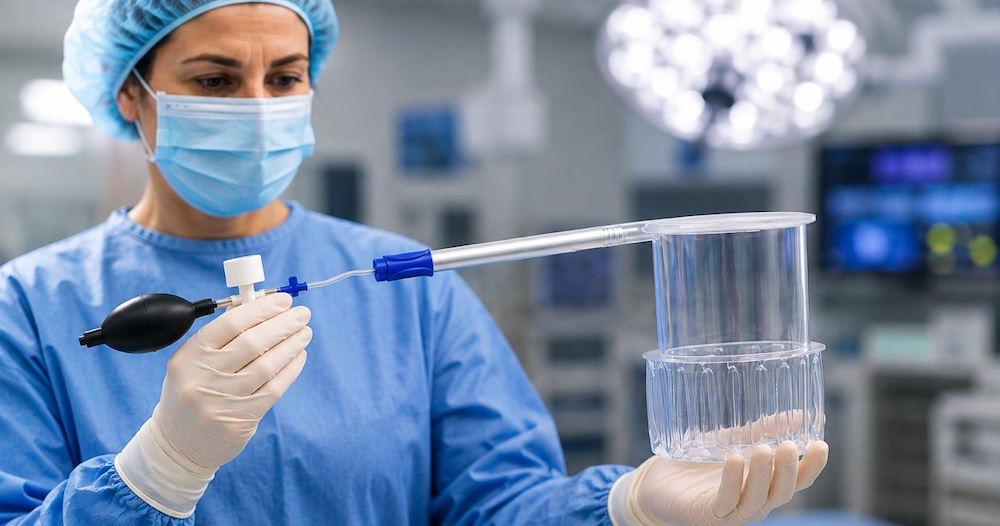
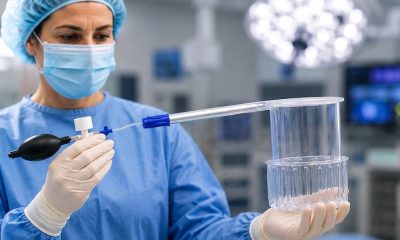
At the centre of Ark’s expansion is LapBox, the company’s FDA-cleared dual-wall tissue containment system developed to address an important safety challenge in minimally invasive gynecologic surgery.
Procedures such as hysterectomy and myomectomy can require large uterine specimens or fibroids to be divided into smaller pieces so they can be removed through small laparoscopic incisions.
This process, known as morcellation, carries a risk of disseminating tissue within the abdominal cavity.
In rare cases where an unsuspected malignancy is present, morcellation can spread malignant tissue and potentially worsen a patient’s prognosis.
But the risk is not limited to cancer.
Even benign uterine tissue can implant elsewhere in the abdominal cavity and grow, potentially resulting in complications such as parasitic fibroids and the need for additional treatment.
LapBox was developed as a dual-wall, bag-in-bag containment system that creates a secured chamber for tissue extraction. The device is FDA-cleared for use with both manual and power morcellation.
From clinical innovation to US adoption
Ark Surgical is now moving beyond its clinical and regulatory milestones to focus on broader commercial adoption.
LapBox™ has already been used in hundreds of procedures, while Ark has been expanding its presence within US hospitals and building relationships with leading minimally invasive gynecologic surgeons.
The latest institutional backing will support the next stage of that strategy, including additional hospital partnerships, key opinion leader engagement, sales leadership and clinical support.
Joseph LaBruzzo, President and CEO of U.S. Operations at Ark Surgical, said: “Ark has reached an important point in its development.
“We have the regulatory clearance, growing clinical experience and increasing engagement from US surgeons and hospitals.
“The focus now is execution and scale.
“What makes this continued backing particularly meaningful is that these are organizations that have followed Ark’s development and seen the team deliver against its objectives.
“Their decision to support the company again provides further validation as we build the commercial and clinical infrastructure needed for broader US adoption.”
That growing adoption is also being reflected in the experience of surgeons using LapBox.
Dr Ramon Yera, a minimally invasive gynecologic surgeon with more than 35 years of experience, said: “Once surgeons use LapBox, they realize this is the bag they should be using for their bread-and-butter procedures.”
Yera believes this reflects a broader shift in expectations around tissue containment in gynecologic surgery.
“Containment is no longer optional. It is an expectation.”
Ark Surgical is continuing its Series A financing round, with additional capital intended to support the next phase of US commercial expansion and development of its broader product pipeline.
Further information for prospective investors is available at ark-surgical.com/investment









 Hormonal health2 weeks ago
Major UK study could be a ‘game-changer’ for heavy periods and endometriosis
 Entrepreneur6 days ago
KOVE Medical raises €1.7 million to improve safety of foetal surgery

 Fertility2 weeks ago
One week left to apply: W Accelerate with Merck KGaA and M Ventures

 Pregnancy7 days ago
UK study aims to transform maternity care for high-risk pregnancies

 Hormonal health2 weeks ago
Quarter of women miss work due to menstual symptoms, survey finds
 Diagnosis2 weeks ago
Ark Surgical secures further institutional backing to accelerate US expansion

 Hormonal health2 weeks ago
PMDD after SSRIs or hormones: Why the brain may be the missing treatment target

 Insight2 weeks ago
Study to tackle years-long delays in endometriosis diagnosis