




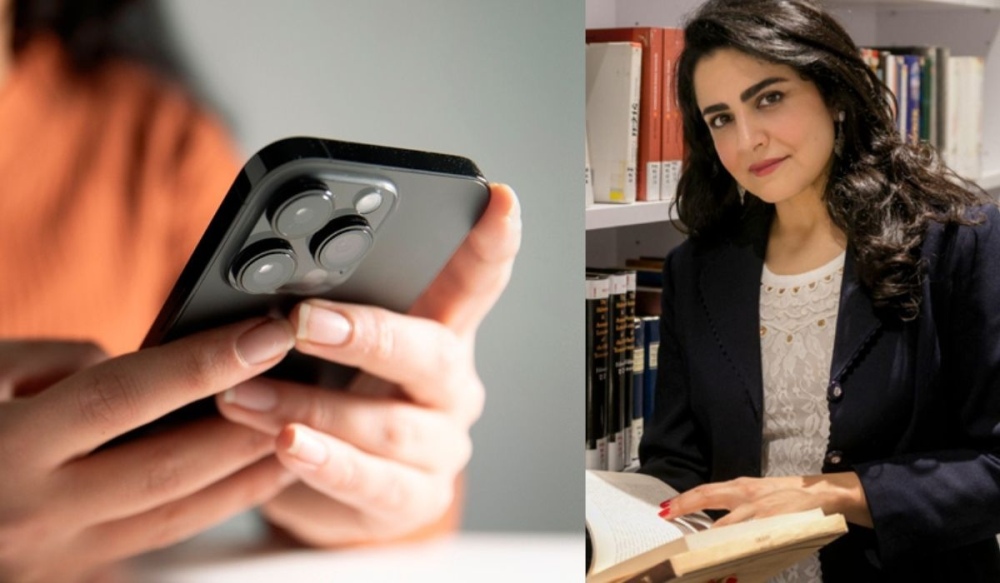
By Somayeh McKian, a member of the clinical advisory board of Vea, the AI-powered mental health journal app
The danger of efficiency culture in women’s mental tech is that we are inadvertently optimizing the very patterns that drive our collective burnout.
When we look at the explosive growth of the femtech sector, the dominant narrative remains focused on speed, tracking, and passive compliance.
We build apps that treat a woman’s emotional state like a broken supply chain or a medical deficit that needs to be optimised, streamlined, or forced into submission.
But true psychological resilience cannot be quantified by a simple mood slider or an algorithmic checkmark.
As a psychotherapist and gender studies scholar, my research into the lived experiences of women, particularly how cultural mandates and bodily surveillance are pathologised, reveals a deep-seated form of suffering.
When women constantly say “yes” while meaning “no,” or ignore a chronically depleted body to maintain a rigid role, they are living out what I call an “inkless life.”
It is a blank manuscript in which their physical and emotional existence has been entirely authored by external critics, medical charts, and the “Discourse of the Other.”
They aren’t suffering from an efficiency problem; they have been stripped of the agency to author their own skin.
If femtech platforms simply digitise these rigid, externalised “shoulds,” they risk becoming high-tech tools of compliance rather than portals of liberation.
The investment community and health tech innovators need to realise that the next frontier of mental health tech isn’t about managing symptoms on the fly; it is about existential archaeology.
We must build digital spaces that serve as a “corporeal pen,” transforming self-reflection from a passive hobby into a defiant, existential act.
True innovation lies in helping women find the meaning, the latent metaphors, and the unique tasks already written into their struggles and transforming inherited pain into a human achievement.
This is exactly the structural paradigm shift we are anchoring at Véa. Instead of building superficial tracking logs, our architecture treats life as a manuscript.
We design clinical narrative journeys that help women decode where their internal boundary scripts were written, recognize how somatic depletion is a truth-teller, and wield phrases like “stop it” not as external policing, but as internal, defiant boundaries.
If we want to build a sustainable ecosystem for women’s health, we must stop funding platforms that merely help women endure their exhaustion more efficiently.
In the intersection of meaningful life and technology, we look at the human spirit not by its current restrictions but by its latent potential for change.
It is time to back technologies that give the fluent soul a sharp new set of instruments to rewrite its own narrative.
Somayeh McKian is a certified psychotherapist, in-training logotherapist, gender studies scholar, published author and part of Véa’s clinical advisory board.



Newsletter
Sign up for free weekly updates
The latest femtech news, research and investment, straight to your inbox.




