




Hormonal health
How digital twins are making clinical trials more inclusive

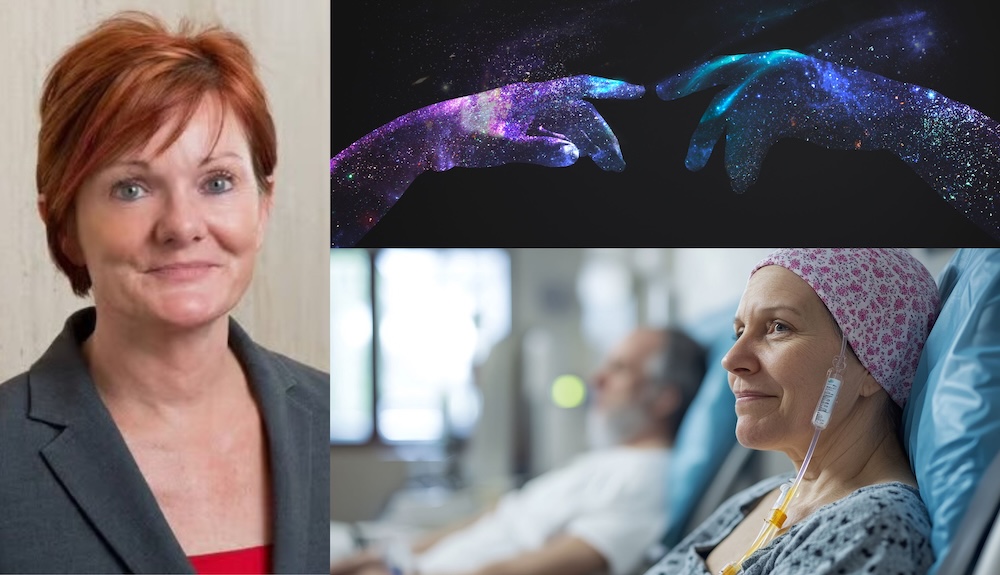
For decades, women have been excluded from clinical research, but AI-powered digital twinning is helping make trials safer, more inclusive, and more representative of real patients.
For Karen Yeo, innovation is not just about technology, but how it is used to change things for the better.
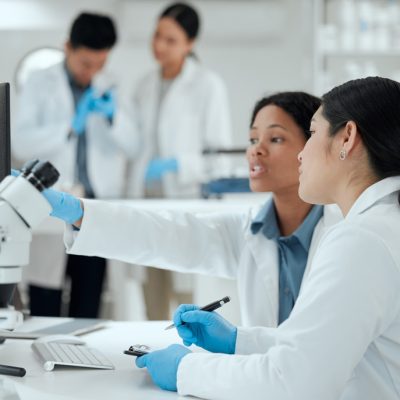
Yeo (pictured top left) is senior vice president of client and regulatory strategy at Certara, a biosimulation company focused on “transforming drug development for good”, which since 2014, has supported 90 per cent of novel FDA drug approvals.

Yeo and her team are using AI to make scientific research more inclusive by creating digital twins, matching the characteristics of a real patient with their digital counterpart to predict optimal dosing.
Women, particularly pregnant women, have typically been excluded from clinical trials for decades.
In 1977, following the thalidomide crisis of the 1950s and 1960s, the US FDA introduced guidelines preventing women of childbearing age from participating in many studies to avoid possible risks to pregnancies.
This was eventually lifted by the FDA in 1993, and the same year, the National Institutes of Health issued its Revitalisation Act, which required the inclusion of women and minorities in federally funded clinical research.
But while these changes opened the door to more representative trials, pregnant women continued to be excluded due to safety and ethical concerns.
“[Researchers] fear that exposing expectant mothers and their babies to experimental medicines could cause harm, so the default has been to leave them out,” Yeo tells Femtech World.
While “well-intentioned”, policies which prevented them from participating in clinical trials have contributed to “major gaps” in our understanding of how treatments work in women, and slowed down access to potentially life-saving treatments, leaving them facing “more risk, not less”, says Yeo.
“The result is a healthcare system where women are underserved,” she adds. “And both mothers and infants miss out on advances that could have been better supported through careful, inclusive trial design.”
The evidence gap
Excluding women from trials has delayed access to lifesaving therapies, and without the right evidence, clinicians often prescribe medications off-label during pregnancy with little understanding of how those drugs behave in women’s bodies.
For years, drug dosing was determined largely from small studies in men, even though women may metabolise and respond to drugs differently, Yeo explains.
“This gap has contributed to higher rates of adverse drug reactions in women and less clarity about the effectiveness of medicines in conditions unique to them, such as pregnancy and postpartum care,” she says.
Yeo points to the example of the antimalarial drug primaquine.
Pregnant and lactating women have typically been excluded from primaquine studies, leaving physicians without the right guidance.
Using biosimulation, Yeo and her team took the findings from a small clinical study conducted in breastfeeding women and were able to predict infant and newborn drug exposures through breast milk.
“The results provided evidence of safe dosing of primaquine in mothers, showing how model-informed methods can begin to close those gaps,” she adds.
Digital twins
By creating virtual representations of women’s physiology, including during pregnancy, biosimulation can predict how a drug will behave in these populations without exposing patients to any unnecessary risk.
This allows regulators and clinicians to access insights early and encourages trial sponsors to include women more confidently.
“Models can estimate how a drug transfers through breast milk, giving trial designers a foundation for guidance before patients are enrolled,” Yeo explains.
“This reduces ethical concerns by minimising direct risk while still advancing inclusive research.
“Over time, it shifts the approach from protecting women from research to protecting them through research.”
These digital twins start as virtual populations, representing typical physiological scenarios. But as more personalised clinical data become available in pregnant women, these can be replaced by digital twins.
These are digital replicas of individual patients reflecting real-time individual physiology.
Yeo says these AI-powered digital twins can provide a safe way to generate evidence in individuals that are difficult to study directly, such as pregnant women with preeclampsia.
While no model has yet perfectly captured human biology, Yeo says biosimulation has advanced to a point where it can reflect many of the complexities of women’s health.
“Virtual populations can account for physiological changes during pregnancy, such as altered metabolism, which can affect the exposure of the drug across each of the trimesters,” she says.
“Rather than oversimplifying, they provide a framework that can help inform decision-making for clinicians.
“As real-world and clinical trial results with personalised data become increasingly available, virtual populations can evolve into more complex digital twins.”
“Safeguards start with data”
But as with any AI-driven technology, poorly designed models or those that rely on narrow datasets risk reinforcing existing biases, rather than correcting them.
Yeo says “safeguards start with data”.
Certara emphasises reproducibility and clear documentation, allowing every assumption to be reviewed, and works closely with regulators, clinicians, and patient advocates.
“Trust grows through representation and openness,” she continues.
“Patients need to see that the data behind digital twins includes people like them, and that models continue to be refined with clinical and real-world evidence.
“Clear communication about how the models work and why they matter helps show that these tools are designed with patients in mind.
“By involving women directly, researchers can ensure the models address concerns that matter most, from pregnancy safety to postpartum care.
“When women see that their priorities influence science, they are more likely to trust and benefit from it.”
Accelerating innovation
Having more inclusive datasets will also accelerate innovation in femtech, ensuring developers design new diagnostic tools and therapies for women’s health based on representative science, while data and insights collected through biosimulation can potentially shorten the timeline to regulatory approval.
“Femtech innovation depends on evidence that reflects women’s realities,” says Yeo.
“Digital twins make this possible by generating early data where traditional studies fall short.”
According to Yeo, AI is already having an impact on diversity in clinical trials, with regulators encouraging trial designs that use biosimulation to fill data gaps.
She believes digital twins could become a standard part of trial planning to ensure underrepresented groups are included within the next five years.
“Inclusivity will take time, but the momentum is here. Each step toward more representative datasets and more confident dosing guidance brings us closer to equitable clinical research.”
So what does success look like? That depends on the stakeholder, says Yeo.
For Yeo and her team, it’s being able to generate virtual subjects that reflect the characteristics of the patients receiving the medicine, giving a more realistic view of how therapies perform in practice.
For regulators, it’s the ability to approve drugs with confidence that dosing and safety information work across diverse groups.
And for patients, it is the assurance that the evidence was generated with their needs in mind.
“Success is not about technology alone,” adds Yeo.
“But about the trust and outcomes it creates for people who were once excluded.”















Manchester City has launched a female athlete health platform covering menstrual, pelvic and breast health, as well as nutrition.
The Her City website is designed for the club’s women’s first-team players, coaches, support staff, academy players and parents.
Manchester City says the platform is the first of its kind in the Women’s Super League and was developed over two years.
The project was led by director of performance services Emma Deakin, physical performance scientist Rosie Anderson and PhD student and first-team nutritionist Sarah Malone.
It grew out of PhD research into menstrual, pelvic and breast health and nutrition, with the team seeking to turn that work into an online educational resource.
The website divides the four areas into separate sections and provides peer-reviewed information that the club says has been critically analysed by experts.
Content will continue to be reviewed and updated as further evidence emerges.
Resources include posters, visual explainers, audio materials and downloadable educational content, with information tailored to different groups including players and parents.
The platform aims to improve knowledge, develop critical analysis skills and strengthen communication within football and at home.
It also includes material to help users assess misinformation they encounter on social media or elsewhere.
A confidential contact form allows users to raise concerns or ask questions directly of experts at Manchester City.
Parents of academy players can also access the platform, with resources intended to help them support their children during a key phase of their development.
Manchester City said its longer-term aim is to make the platform available to all women working across City Football Group.
Michigan State University researchers are launching a novel project to transform how medications are developed and prescribed for women.
A US$4.6m award will fund computer models designed to predict how hormonal changes affect the way medicines move through and act in women’s bodies.
The funding is the first instalment of an award worth up to US$12.8m over three years, supporting work intended to account for hormonal changes throughout women’s lives.
Researchers plan to examine factors including menstrual cycles, pregnancy, contraceptive use, menopause and hormone replacement therapy, which can affect responses to medicines.
Teresa K. Woodruff, lead investigator on the project, said: “Because female hormone levels are constantly shifting, precision medicine allows us to map out these complex interactions.
“This NIH-backed initiative will create the first computationally driven clinical tool designed to guide medical care across every stage of a woman’s life.”
The project is led by researchers at Michigan State University and funded by the National Institutes of Health, with collaborators from Rutgers, Emory, Tulane, the University of Colorado Anschutz, the University of Michigan and the University of Utah.
Thirteen researchers will develop computational models to predict how changes in female hormones influence the way medicines move through and act within the body.
The work is part of the NIH Computational Modeling of Hormone Homeostasis Initiative, which is awarding US$21m nationally to support research into sex-specific hormonal biology.
The team plans to use artificial intelligence to digitise and organise more than 40 years of hormone research data in a publicly accessible database.
Researchers will also develop a standard computer model of a 28-day menstrual cycle, alongside models of how hormones regulate organs and tissues involved in processing nutrients, including the liver, muscle and fat.
Real-world patient data will then be used to expand the models to represent groups including women going through menopause or taking birth control, as well as women with conditions such as diabetes and obesity.
The project will also use three-dimensional human tissue models and lab-grown organoids, including liver, muscle and ovarian tissue, to test and refine the computer predictions.
Researchers plan to examine medicines including metformin, insulin and GLP-1 drugs, with the aim of developing tools that could help clinicians tailor doses and avoid harmful side effects.
Qiang Zhang, associate professor at Emory University, said: “Empowered by AI, novel assays and legacy human data, we will develop mechanistically based computational models of female physiology that can make translational, quantitative predictions for women’s responses to metabolic therapies.”
The researchers said the work could help address differences in how women respond to treatments for metabolic conditions including obesity, type 2 diabetes, cholesterol imbalances and thyroid disorders.
Nanette Santoro, professor at the University of Colorado Anschutz and president of the Endocrine Society, said: “Women experience large shifts in reproductive hormones at several points in their lifespan: puberty, pregnancy and menopause.
“During reproductive years, women also undergo profound day-to-day changes in reproductive hormone levels, giving them a markedly different endocrine backdrop than men.
“Using state-of-the-art computational technology to examine how these changes interact with commonly used medications is a critical pathway toward supporting life-course women’s health.”
The project team said its computer models and data will be made freely available to researchers and healthcare professionals when the work is completed.

Gail’s has unveiled a menopause action plan offering new workplace support to thousands of staff ahead of legal reforms due in 2027.
The high street bakery chain will offer new benefits including 24/7 digital GP access and a new employee assistance programme, according to The Times.
It will also explore new online training for staff, including specific training for management.
Gail’s people director Miranda Burgum told The Times: “All we’re trying to do is talk freely and for it not to be a forbidden subject. It’s helping our managers and teams understand that this isn’t a taboo.”
“We’re going to develop the education with our managers, so it will be threaded through all our policies
“It will look at induction training, it will look at the types of people we need to make sure that we make reasonable adjustments for.
“And if somebody needs some sort of risk assessment, we’re going to be looking at [that].”
The move comes ahead of reforms due to be introduced in spring 2027 under the Employment Rights Act.
UK employers with 250 or more employees will be legally required to publish and update official menopause action plans.
The plans are intended to support employers to take effective action to improve workplace gender equality and support employees experiencing menopause.




 Menopause6 days ago
Menopause may not explain rising heart condition in women – study

 Fertility1 week ago
Paracetamol use may impact future fertility, studies suggest

 Events2 weeks ago
Last chance to save on Women’s Health Week and Women’s Sport Summit: Early Bird pricing ends 11 September

 Insight7 days ago
Women with birth trauma face 2.5x higher healthcare costs – study

 Menopause2 weeks ago
Cancer drug could tackle osteoporosis menopause weight gain

 News6 days ago
Medical cannabis may improve endometriosis symptoms – study
 Cancer6 days ago
Study could explain why obesity is a breast cancer risk factor

 Diagnosis2 weeks ago
FDA approves AstraZeneca breast cancer drug