




News
Dame Lesley Regan vows to ‘revamp’ UK’s Women’s Health Strategy – “we’ve let women and girls down”


The Women’s Health Ambassador for England, Dame Lesley Regan, has promised to overhaul the government’s 10-year strategy, as she revealed the scale and cost of the UK’s gender health gap three years on.
Speaking at Women’s Health Week in London earlier this month, Regan revealed that Health Secretary Wes Streeting has tasked her with “revamping” the government’s Women’s Health Strategy, following the publication of his 10-year plan to reform the NHS.
Promising to “rise to the challenge”, Regan also hinted at plans to streamline pathways for innovators, to fast-track solutions into the NHS, and said that the system must stop “admiring the problem” and start redesigning care around women’s lives.

“We are the only country I know in the world with a national health service free at the point of delivery,” said Regan, during her closing keynote speech on Thursday 16 October.
“Yet we’ve got so complacent about the important things in women’s health that we’ve really let girls and women down.”
Major health challenges for women
A Professor of Obstetrics and Gynaecology at Imperial College London, Regan painted a stark picture of the state of women’s health in 2025.
As well as huge gaps in care for women and girls experiencing menstrual symptoms such as PMS and menopause, women face a raft of wider health challenges.
Contraception has become increasingly difficult to access, resulting in almost half of all pregnancies being unplanned, and as well as having the highest teenage pregnancy rate in Europe, abortion rates are also rising among women over 32.
Meanwhile, cervical screening uptake is at an all-time low, with marginalised women at greatest risk despite cervical cancer being preventable with HPV vaccination and smear tests.
The number of high-profile maternity scandals in recent years reflects a flawed system, where the annual amount spent on litigation costs by NHS Resolution exceeds the allocated total funding for maternity care.
Maternal mortality is three times higher in Black women and twice as high in Asian women, with suicide now a leading cause of direct maternal death, one in four among teenage girls.
According to Regan, many of those are known to mental health services.
“In the last maternal mortality report, every single woman who died was known to mental health services,” she said.
“I have to conclude that we let them down.”
Regan also highlighted gender disparities and inequalities in chronic health conditions, which often go undetected or misdiagnosed in women.
Conditions like Parkinson’s and Alzheimer’s, for example, present differently in females, who are twice as likely to be diagnosed with dementia.
And while women are twice as likely to die from cardiovascular disease as from cancer (52 per cent deaths annually), they are often diagnosed later than men, due to a lack of understanding of their symptoms.
Major causes of morbidity and mortality, frailty and osteoporosis, also disproportionately affect women.
More than a fifth of females (21 per cent) are affected, compared to six per cent of men, with women typically experiencing twice as many fractures.
There are vast geographical inequalities, too.
Every year, 500,000 fragility fractures occur throughout the UK, but less than 53 per cent of the population can access Fracture Liaison Services in the community, with quality and standards varying significantly.
“Until very recently, most politicians across the globe viewed women’s health as maternity,” said Regan.
“But women spend most of their lives post-reproductive, and we have never really catered for that… We’ve got to look after women’s health across their life course.”
Delivering on women’s health hubs
The Women’s Health Strategy, first published in 2022, was shaped by the largest ever call for evidence in a Department of Health consultation, gathering a total of 100,000 responses. Out of these, 84 per cent of women reported not being listened to by healthcare professionals.
In response, the strategy set out a six-point plan which promised to address these inequalities, including through the establishment of women’s health hubs.
Regan believes hubs are crucial for delivering on the promises of the 10-year plan, including shifting from hospital to community care, moving from analogue to digital, and pivoting from treatment to prevention.
Successful case studies from hubs in some of the most deprived areas of England have demonstrated early benefits of these hubs, including reduced secondary-care referrals, shorter waiting lists, improved access and equity, workforce retention, more specialised training, and fewer adverse outcomes.
But not all Integrated Care Boards across England are offering all core services.
Delivering more Women’s Health hubs is part of a five-point plan moving forward, according to Regan, which also includes improving maternity and menstrual care, tackling inequalities and funding more research.
“We’ve continued to admire the problem, but that’s what we’ve got to stop,” Regan said.
“The most important thing to be able to do things better is that you have to be willing to do it differently.”
A “front door” for change
Building on this, Regan expressed her “frustration” at some of the challenges faced by startups trying to bring solutions to market, hinting at plans for a hub or a “big front door” to streamline regulatory approval processes.
“Almost every time I talk to entrepreneurs or investors, they tell me the same story: ‘We’ve been knocking on the door of government, and we always get pushback’,” she said.
“I want to paint that door bright yellow so you’ll never miss it, and when it opens, I want people to be welcoming. We need to stop sending people off to navigate endless pathways. There should be a hub that sorts it.”
Benefit to the UK economy
There’s a strong economic argument for the UK government to deliver on these promises.
Global life expectancy is increasing, and while women typically live longer than men, they spend more of their lives in poor health.
A woman will experience ill health for an average of nine years throughout her life, impacting her ability to be present and/or productive at home, in the workforce, and in the community.
Regan shared analysis from McKinsey Health Institute, which shows that more than half of the women’s health gap affects women during their working-age years, significantly impacting the UK’s GDP.
At least 56 per cent of Disability-Adjusted Life Years stem from conditions which impact women differently or disproportionately.
Taking this into account, closing the gender health gap in the UK could generate more than £36bn in annual GDP by 2040, a figure that could exceed $1 trillion globally.
A 2024 report published by the NHS Confederation estimates that the economic cost of absenteeism due to severe period pain and heavy periods, alongside endometriosis, fibroids and ovarian cysts, is nearly £11 billion per year, while 60,000 women are thought to be unemployed due to menopause symptoms.
The findings suggest that for every additional £1 invested in obstetrics and gynaecology per woman in England, the return on investment is estimated at £11.
Dutch collaboration
Regan has now been invited to the Netherlands to help officials there develop their own Women’s Health Strategy.
In conversation with Dutch Minister Judith Tielen, Regan highlighted the need for international collaboration to accelerate wider global change when it comes to women’s health.
The Netherlands is already collaborating across ministerial department’s including employment and social security, with education next.
Tielen shared the outcomes from an initiative at Amsterdam University Medical Centre, which offered free gynaecology consultations to female staff to reduce sick leave.
“Hundreds of women signed up in days, and sickness absence dropped significantly,” she said.
“It’s a societal question, not one for women to solve alone.”
Regan agreed, adding: “We cannot afford for women not to be part of the solution.”


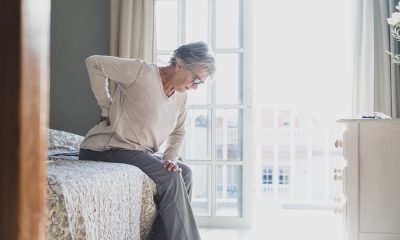









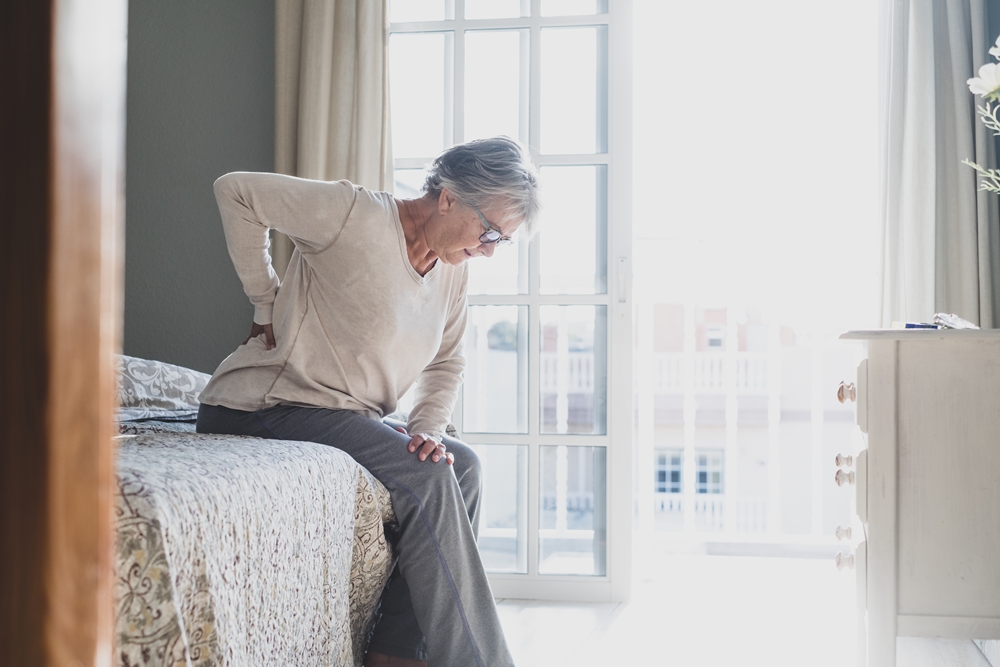
Women who do not use menopausal hormone therapy have a greater risk of developing osteopenia or osteoporosis, conditions that weaken bones and can lead to fractures, disability and loss of independence, new research suggests.
The retrospective cohort study included 387 postmenopausal women who underwent DXA scans between 2021 and 2025. A DXA scan is an imaging test used to measure bone mineral density.

Participants were classed as menopausal hormone therapy users, who made up 33 per cent of the group, or non-users, who made up 67 per cent.
Low bone mineral density was defined as osteopenia, where bones are weaker than normal, or osteoporosis, where bones become more fragile and more likely to break.
Women taking menopausal hormone therapy had about 69 per cent lower risk of low bone mineral density in the spine and hip compared with those not using it.
The association remained after researchers accounted for age, time since menopause, vitamin D levels, smoking and other health conditions.
Diego Espinoza-Peralta, vice president of the Mexican Society of Nutrition and Endocrinology and principal investigator at Investigación Médica Sonora, said: “For years, many women have avoided menopausal hormone therapy because of safety concerns and warning labels.
“This study revisits that narrative and shows that menopausal hormone therapy may have an important added benefit: protecting bone health. That shifts the conversation from ‘avoid if possible’ to ‘reconsider in the right patient.’
“In simple terms: menopausal hormone therapy appears to independently protect bones, not just by coincidence.”
The findings suggest hormone therapy could help some women find relief from menopausal symptoms while preventing bone loss or lowering fracture risk.
Espinoza-Peralta said: “Clinicians may begin to weigh its benefits more carefully, especially in women early after menopause, potentially improving long-term health and quality of life.”
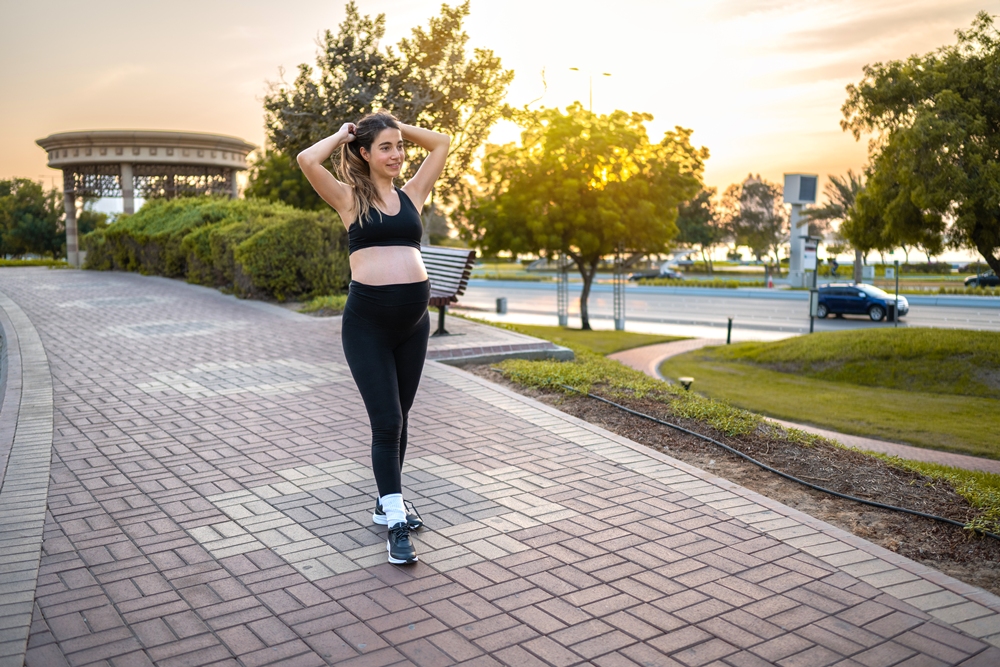
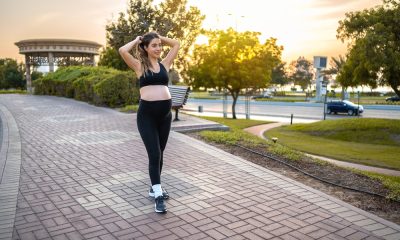
Light exercise and less sitting may reduce pregnant women’s risk of serious blood pressure complications, according to a new study.
Researchers have proposed a daily activity and sleep guide that they say was linked to a nearly 30 per cent lower risk of hypertensive disorders of pregnancy.
The suggested pattern includes fewer than eight hours of sedentary time, at least seven hours of light physical activity, around 22 minutes of more intense activity and nearly nine hours of sleep.

The University of Iowa-led study examined the daily behaviours of 470 pregnant women across all stages of pregnancy.
Participants wore monitors that measured physical activity over 24-hour periods and recorded how long they spent asleep.
Hypertensive disorders of pregnancy include chronic high blood pressure, gestational hypertension and pre-eclampsia.
Gestational hypertension is high blood pressure that develops during pregnancy, while pre-eclampsia is a potentially serious condition involving high blood pressure and signs that organs may be affected.
Sedentary behaviour means being mostly inactive, such as sitting or lying down.
Light physical activity can include casual walking, moving around the home or standing.
Moderate to vigorous activity includes movement such as brisk walking, where breathing and heart rate increase.
Kara Whitaker, associate professor in the department of health, sport, and human physiology at Iowa and corresponding author of the study, said: “We are identifying the optimal composition of movement behaviours across the day associated with the lowest risk of developing HDP and the most improved health outcomes.
“This blueprint holds for each and every trimester of pregnancy.”
Study participants were enrolled at sites in Iowa City, Pittsburgh and Morgantown, West Virginia.
The women wore activity and sleep monitors for at least one week during each trimester of pregnancy.
Four in five participants were non-Hispanic white and nearly a quarter lived in rural areas.
The data showed a steep rise in risk among pregnant women who were sedentary for more than 10 hours a day.
Women who increased light physical activity to at least four hours a day reduced their risk of hypertensive disorders of pregnancy to 15 per cent from 30 per cent.
Whitaker said: “Just moving around more seems to have significant health benefits.
“And I think it also may be a more feasible target for women who are pregnant who are not exercising regularly.”
The researchers said they were surprised that longer durations of moderate to vigorous physical activity did not appear to provide additional benefit.
Sleep beyond a certain duration also did not appear to bring major further benefits.
Whitaker said: “Through this study, we are providing evidence that reducing sedentary behaviour and engaging in light physical activity are important, and maybe more important, when it comes to pregnancy and health.”
The findings may be relevant beyond pregnancy because clinical research has shown that women who develop hypertensive disorders of pregnancy are more than twice as likely to develop heart disease later in life.
Cardiovascular disease includes conditions affecting the heart and blood vessels, such as heart disease and stroke.
Whitaker said: “We know that cardiovascular disease is the number one killer of women, and if we can intervene in pregnancy and prevent women from developing a hypertensive disorder of pregnancy, we are putting them on a better trajectory, away from cardiovascular disease and toward more optimal cardiovascular health.”
The study was published online on June 10.
A second study, published online on May 27, looked more closely at the ratio and type of sedentary behaviour and light physical activity linked to a lower risk of hypertensive disorders of pregnancy.
Whitaker is a lead co-author on that study.
Co-authors in the June 10 study include Alex Crisp, Jaemyung Kim, Karina Smith, Donna Santillan, Mark Santillan and Bridget Zimmerman, from Iowa; Jacob Gallagher, from Iowa State University; Melissa Jones, from Oakland University in Michigan; Bethany Barone Gibbs, Katrina Wilhite, Alexis Thrower and Iqra Sheikh, from West Virginia University; and Sabera Rahman, Janet Catov, Christopher Kline and Maisa Feghali, from the University of Pittsburgh.
The National Institutes of Health, the University of Iowa Institute for Clinical and Translational Science, the University of Pittsburgh Clinical and Translational Science Institute and the West Virginia Clinical and Translational Science Institute funded the research.

We are excited to reveal the winners of the third annual Femtech World Awards.
The winners were announced at a virtual event this afternoon attended by shortlisted companies, along with sponsors and judges.
The event welcomed guests from the UK, Europe, Asia, Africa and North America.
Thank you to all 174 entries, as well as the sponsors for making the event possible.
See you in 2027!
Femtech World Awards 2026 Winners

Winner:
Shortlisted:
IVI RMA x Juno Genetics
Natural Cycles

Winner:

Highly commended:
U-Ploid
Shortlisted:
Hello Inside
Winner:

WISE HF, led by Prof. Mary Ryder
Highly commended:
Cardiac College for Women
Shortlisted:
Hyvelle Ferguson-Davis
CognitiveCare

Winner:

Highly commended:
Youterus
Shortlisted:
ŌURA
Winner:

Shortlisted:
LeanShield by ParrotPal Group
Perigen

Winner:

Shortlisted:
Body Moody
Looop

Winner:

Shortlisted:
Owning Your Menopause
Womeno

Winner:

Shortlisted:
The Blue Box
Celbrea

Winner:

Shortlisted:
HealCycle
Mor

Winner:
Shortlisted:
HRC Fertility
Mira











 Menopause3 weeks ago
Perimenopause misinformation ‘putting women at risk’

 Hormonal health4 weeks ago
NHS urged to update website following renaming of PCOS

 News2 weeks ago
Women still being failed when they reach menopause, experts say

 Entrepreneur3 weeks ago
Women’s Health Innovation Summit opens submissions for 2026 Innovation Showcase

 Insight2 weeks ago
British women among angriest in Europe, health survey reveals

 News3 weeks ago
Three menopause innovators shortlisted for Femtech World Award
 Menopause3 weeks ago
Sweden eyes domestic production of oestrogen patches amid menopause treatment shortage

 Menopause4 weeks ago
Low insulin diet and avoiding four food groups may prevent menopause weight gain