




Menopause
Oral GLP-1 shows significant weight loss in all menopause stages – study

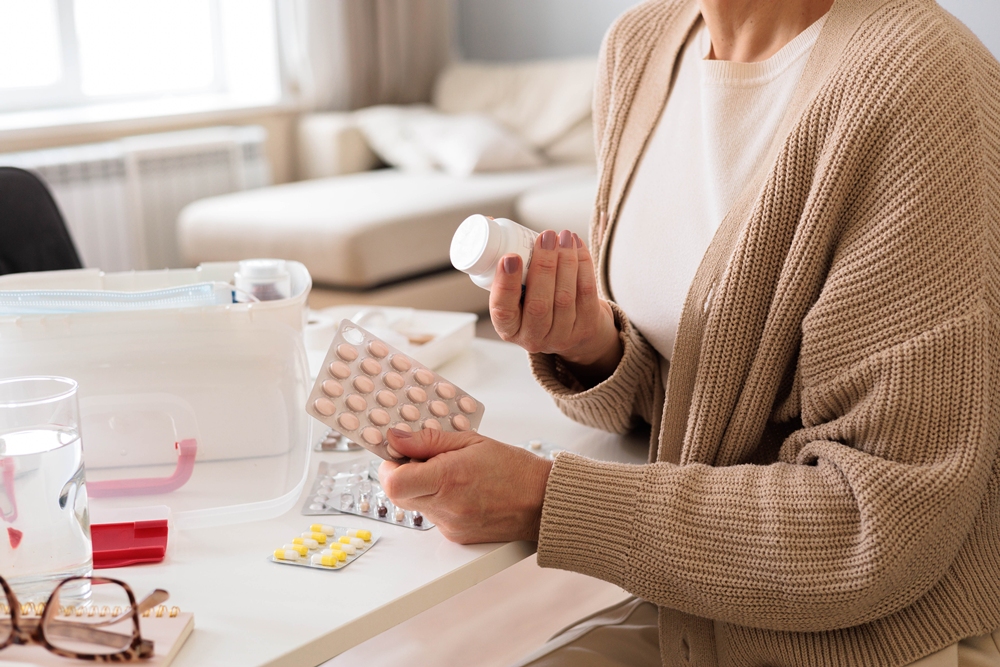
The highest dose of an oral GLP-1 was linked to significant weight loss across menopause stages in post-hoc analyses of two late-stage trials.
The results suggest Foundayo may help women with obesity or overweight lose weight during premenopause, perimenopause and post-menopause.
Women taking the highest dose also saw reductions in waist circumference, a measure linked to abdominal fat and cardiometabolic risk.

The analyses were based on more than 1,500 female participants in the ATTAIN-1 and ATTAIN-2 clinical trials.
GLP-1 medicines mimic a hormone that helps regulate appetite and blood sugar. They are used in weight management and diabetes care.
Cardiometabolic risk means the likelihood of developing conditions such as heart disease, high blood pressure or type 2 diabetes.
The findings were presented at the American Diabetes Association’s 86th Scientific Sessions.
Eli Lilly and Company said women taking the highest dose of Foundayo, the brand name for orforglipron, achieved significant weight loss at every stage of menopause.
Orforglipron is a once-daily oral GLP-1 receptor agonist. Unlike injectable GLP-1 medicines, it is taken as a tablet.
Menopause is the point at which menstrual periods have permanently stopped. Perimenopause is the transition before menopause, when hormone levels and periods can change.
The company said menopause can contribute to weight gain, particularly around the abdomen, and may make weight loss harder to achieve and maintain.
Rachel Batterham, senior vice-president of medical innovation and external engagement at Lilly, said: “Menopause can be an incredibly frustrating time for many women, partly because weight gain often feels beyond their control, and the biology of menopause can undermine even the most determined efforts to manage weight.
“These findings show that Foundayo was associated with meaningful weight loss in women at every stage of menopause.
“For women who have seen their weight become harder to manage precisely when their health is more at risk, this is what progress could look like.”
In ATTAIN-1, women without diabetes who were premenopausal lost up to 12.8 per cent of their body weight after 72 weeks on the highest dose.
Women in perimenopause lost up to 14.4 per cent, while post-menopausal women lost up to 14.1 per cent.
This was equivalent to 28.0 lbs, 30.4 lbs and 28.2 lbs respectively.
At the highest dose, up to 51.5 per cent of women in ATTAIN-1 achieved at least 15 per cent weight loss.
Waist circumference fell by up to 4.9 inches in the trial.
In ATTAIN-2, which involved adults with obesity or overweight and type 2 diabetes, women also lost weight across menopause stages.
Premenopausal women lost up to 11.3 per cent of their body weight, perimenopausal women lost up to 8.9 per cent and post-menopausal women lost up to 13.6 per cent.
This was equivalent to 23.4 lbs, 18.5 lbs and 27.8 lbs respectively.
At the highest dose, up to 44.2 per cent of women in ATTAIN-2 achieved at least 15 per cent weight loss.
Waist circumference reductions reached up to 4.3 inches.
ATTAIN-1 was a 72-week phase 3 trial comparing three doses of Foundayo with placebo in adults with obesity, or overweight with at least one weight-related condition, who did not have diabetes.
ATTAIN-2 was a 72-week phase 3 trial in adults with obesity or overweight and type 2 diabetes.
A placebo is an inactive treatment used for comparison in a clinical trial.
Both trials tested the drug alongside lifestyle measures, including diet and physical activity.
The analyses were post-hoc, meaning they looked at the data after the trial results had already been collected.
Post-hoc analyses can help identify patterns, but they are generally considered less definitive than findings from trials designed specifically to answer that question.
Foundayo is approved by the FDA in the US for adults with obesity, or some adults with overweight and weight-related medical problems, to reduce excess body weight and maintain weight reduction alongside diet and physical activity.
The source material states that the drug should not be used with other GLP-1 receptor agonist medicines and that it is not known whether it is safe and effective in children.
It also states that oral birth control pills may not work as well while taking Foundayo, and that healthcare professionals may recommend another form of contraception for 30 days after starting the drug and for 30 days after each dose increase.
Common side effects listed in the source material include nausea, constipation, diarrhoea, vomiting, indigestion, abdominal pain, headache, swollen belly, tiredness, belching, heartburn, gas and hair loss.
The company said orforglipron is also being studied for type 2 diabetes, obstructive sleep apnoea, osteoarthritis knee pain, hypertension, peripheral artery disease and stress urinary incontinence.











Menopause care remains fragmented and unequal worldwide, leaving many women without evidence-based support, a major review has found.
The review identified significant gaps in care despite menopause affecting millions of people around the world.
Drawing on 89 studies from several countries and diverse populations, it found that many women experience fragmented services, limited access to evidence-based treatment and inadequate support from healthcare providers.

Women often reported feeling dismissed, unsupported and uninformed about menopause and the treatments available.
The review also found persistent inequalities in access to menopause support.
Race, socioeconomic status, cultural background and geography often shaped the barriers women faced when seeking care.
Researchers found that healthcare professionals often receive insufficient training on menopause.
National clinical guidelines were also applied inconsistently, while culturally responsive care remained limited.
These gaps were particularly evident among marginalised groups, including LGBTQ+ people, Indigenous communities, migrant women and those experiencing surgical menopause.
The review found that telehealth could improve access to menopause care, although the authors said it was not a universal solution.
They said its acceptability and suitability varied across different populations and settings.
The review called for better education and training for healthcare providers, clearer roles and responsibilities across health services and patient-centred, culturally competent models of care.
It also highlighted the need for a greater focus on equity to ensure everyone can access high-quality menopause support.
The findings were based on a review of 4,056 published records, with 89 studies meeting the inclusion criteria.
Most of the evidence came from the UK, US and Australia and included qualitative, quantitative, mixed-methods and intervention studies.
News
Disadvantaged neighbourhoods linked to faster heart health decline in midlife women, research shows

Women in disadvantaged areas may face poorer heart health and faster decline as they approach menopause, new research suggests.
Researchers followed 1,200 women in eastern Massachusetts for more than 20 years, from pregnancy into midlife.
The study measured heart health at five points using a score based on eight health and lifestyle factors, including blood pressure, cholesterol, sleep, diet and physical activity.

Women living in the most socially vulnerable neighbourhoods scored about six to 10 points lower on heart health across more than two decades of follow-up than those in the least disadvantaged neighbourhoods.
The differences were already clear three years after enrolment and continued into midlife.
Researchers also found that women in these neighbourhoods had faster declines before menopause, the stage when periods stop and cardiovascular risk can rise. Cardiovascular health means the health of the heart and blood vessels.
Socioeconomic factors also appeared to shape outcomes. Women with lower income, less education, or who identified as non-Hispanic Black had lower heart health scores throughout the study.
The findings highlight how long-term exposure to social and environmental conditions may affect cardiovascular risk over time.
Even modest differences in heart health scores may matter, as previous research has linked small decreases in these scores with higher risks of cardiovascular disease and death.
Senior author Izzuddin Aris, associate professor at Harvard Medical School and the Harvard Pilgrim Health Care Institute, said: “Our study shows that heart health in midlife is shaped by more than personal choices. Income, education, and neighbourhood conditions may all play a role.”
Neighbourhood conditions continued to affect heart health even after researchers took income and education into account.
Women who lived for years in highly vulnerable neighbourhoods had persistently lower scores and poorer cardiovascular health trajectories.
Aris added: “The years before and around menopause may be an important time to support women’s heart health.
“This is especially true for women living in under-resourced neighbourhoods.”
The findings suggest prevention efforts could include better access to healthy food, safe places to be active and quality healthcare, particularly for women seeking to protect their heart health over time.
The study used data from Project Viva, a long-term research study that has followed women since pregnancy in the early 2000s through midlife.
Researchers collected repeated health data over more than two decades, allowing them to track long-term patterns in heart health.

One in three US women older than 35 are no sure whether they are in perimenopause, new research has revealed.
The findings suggest uncertainty remains common, largely because of knowledge gaps, symptom confusion and difficulty getting confirmation or care.
Perimenopause is the transitional stage before a woman’s final period, when hormone levels fluctuate and symptoms can change over time.
It usually begins in the mid-40s, although timing varies widely, and can last for around four to eight years.
Symptoms can include hot flushes, psychological symptoms and urogenital symptoms, which affect the urinary and genital areas.
Dr Stephanie Faubion, medical director for The Menopause Society and one of the study authors, said: “This large study showed that one in three US women aged older than 35 years are not sure whether they are in perimenopause.
“Further, the study highlights that symptom confusion, misconceptions, and barriers to care are leaving many women without the clarity and support they need during the menopause transition.
“Recognising perimenopause uncertainty as a common experience can help shift the conversation from searching for a diagnosis to providing women with the information, validation, and support they need to navigate this natural life transition with confidence.”
More than 7,600 US women aged 35 and older took part in the study, which looked at how common uncertainty around perimenopause is and what may be driving it.
Overall, 34 per cent of participants said they were unsure of their reproductive stage.
Uncertainty varied by age and symptom burden, reaching 42 per cent among women aged 40 to 44 and 37 per cent among those with severe symptoms.
Symptom confusion was the most common factor, cited in 56 per cent of responses.
This included difficulty making sense of bodily changes and telling perimenopause apart from other possible causes, such as premenstrual syndrome, thyroid disease or mental health conditions.
Knowledge gaps and information-seeking made up 28 per cent of responses, reflecting limited awareness, age-based assumptions and attempts to find reliable information.
Barriers to confirmation and care made up 16 per cent, including dismissive healthcare encounters and reluctance to acknowledge perimenopause.
Younger women aged 35 to 39 were more likely to cite knowledge gaps, while healthcare barriers were most common among women aged 40 to 44.
The researchers said clinicians should take a more flexible approach to recognising the emotional, cognitive and physical symptoms that can occur during perimenopause.
They said healthcare professionals should not rely too heavily on irregular periods as the main sign, because some women have symptoms before major cycle changes.









 News2 weeks ago
New menopause drug approved for use by NHS in Scotland

 Hormonal health2 weeks ago
Stardust period tracker shares health data, study reveals

 Entrepreneur7 days ago
Zero Candida market set to reach over US$2 billion by 2030 – report

 News2 weeks ago
Women’s health draws record $1.55bn in equity as capital spreads beyond the mega-rounds

 Entrepreneur2 weeks ago
Onto Health acquires diagnostics software company Levy Health

 News2 weeks ago
Congress urged to invest over $20bn to close women’s health gap

 Mental health1 week ago
Nearly 60% of young women get health advice from influencers, research finds

 Insight5 days ago
From Hologic to Ark Surgical: Why Joseph LaBruzzo is betting on the future of women’s surgical innovation
2 Comments