





Connect with us

Insight

Report makes the case for an incentive change in health data

Published

on

In a new report, “The Case for Incentive Change in Healthcare Data,” WHIS Lead Producer Poppy Howard-Wall explores why healthcare’s biggest data challenge may not be technical but economic.

Integrating learnings from Poppy’s conversations with senior leaders at the ViVE Summit, the report highlights how fragmented data and misaligned incentives continue to limit the industry’s ability to deliver truly longitudinal care.

Howard-Wall writes: “For the women’s health industry, where many conditions have historically been under-researched and longitudinal datasets remain incomplete, the consequences of fragmented data infrastructure are even more pronounced.

“Artificial intelligence promises to accelerate discovery, improve diagnosis and enable more proactive care. But its potential is inseparable from the data ecosystems that support it.

“In the absence of strong economic incentives for deeper integration, the question becomes how the industry is beginning to navigate this constraint and what signals are emerging about the future of healthcare data and AI in women’s health.”

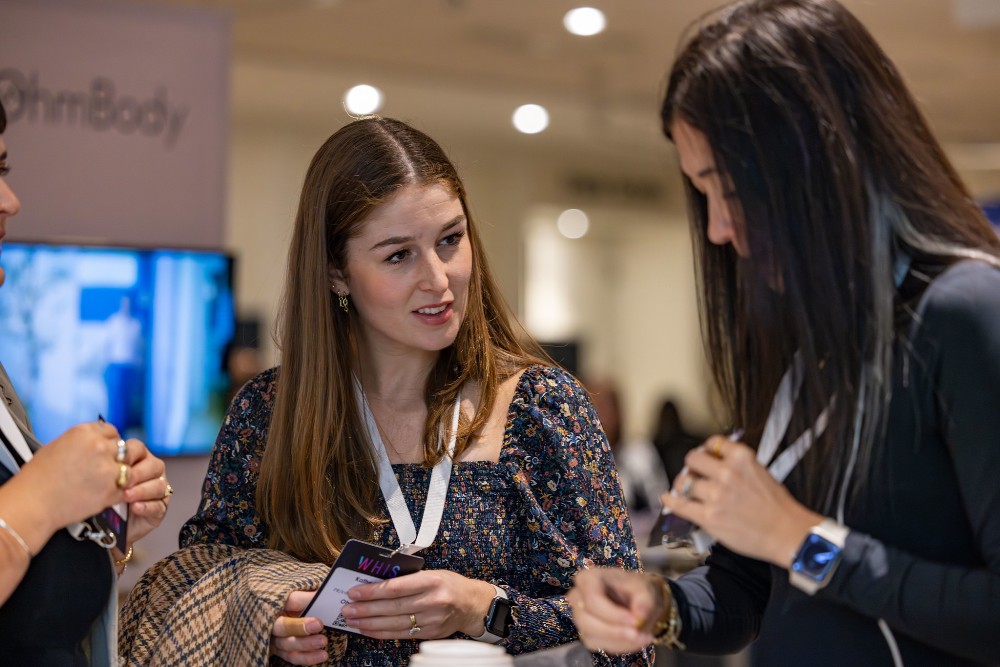
Read the report here.

Opinion

The technology exists: Why are women still waiting?

Published

on

By Jane Lewis, chief operating officer, chief financial officer and women’s health lead, ABHI

For years, the conversation around women’s health has rightly focused on recognition.

Recognition that women wait longer for diagnosis. Recognition that symptoms are too often dismissed or normalised. Recognition that healthcare systems have historically been designed around male biology, leaving gaps in research, evidence and care.

That recognition matters. But awareness alone will not improve outcomes.

The challenge facing women’s health today is no longer simply identifying the problem. It is acting on the solutions already available.

At ABHI’s Women’s Health Summit earlier this year, leaders from across healthcare, government, academia and industry came together to discuss the future of women’s health.

One message emerged repeatedly throughout the day: we do not have an innovation problem.

Across medical devices, diagnostics, digital health and genomics, there are already technologies capable of transforming outcomes for women.

From self-sampling approaches for cervical screening and non-invasive diagnostics to AI-enabled tools and advanced imaging, innovation is happening. The question is whether healthcare systems can adopt it quickly enough.

Too often, promising technologies become trapped in pilot programmes, fragmented procurement processes or lengthy implementation pathways. Evidence generation, commissioning and adoption are frequently treated as separate challenges rather than part of a single journey.

The consequence is that innovations capable of improving quality of life and reducing pressure on health services take years to reach the women who could benefit from them.

This matters because women’s health extends far beyond reproductive health.

Historically, many discussions have centred on fertility, pregnancy and gynaecological conditions. These remain critically important, but they represent only part of the picture.

Women experience cardiovascular disease differently to men. They are disproportionately affected by autoimmune conditions. They face distinct health challenges throughout their lives, from adolescence to healthy ageing.

                            Jane Lewis

Yet healthcare systems often continue to approach these issues in isolation.

A woman does not experience her health in separate compartments. Pregnancy, cardiovascular risk, menopause, mental health and musculoskeletal conditions are interconnected.

Healthcare systems need to reflect that reality through more integrated, life-course approaches to care.

There has never been a better opportunity to do so.

Across the NHS, the shift towards prevention, community-based care and digital transformation aligns closely with the needs of women’s health.

Women’s Health Hubs are already demonstrating the benefits of bringing services together around the needs of women rather than organisational boundaries. Digital technologies are helping to identify risk earlier and support more personalised care.

Innovation can help deliver all three of the NHS’s major transformation ambitions: moving from treatment to prevention, from hospital to community, and from analogue to digital care.

But innovation alone is not enough.

Closing the women’s health gap also requires us to address longstanding gaps in research and evidence.

Women remain underrepresented in many areas of clinical research, and sex-disaggregated analysis is not always applied consistently. The result is that clinical pathways and treatment decisions are often based on evidence that does not fully reflect female physiology.

Better data, stronger research participation and greater focus on female-specific and female-predominant conditions will be essential.

There is also a compelling economic case for action.

Women’s health is often framed as an equality issue, and equality remains central. But poor health affects workforce participation, productivity and economic growth.

Improving outcomes for women benefits not only patients, but employers, healthcare systems and wider society.

Yet despite this, women’s health innovation continues to attract only a fraction of the investment directed towards other areas of healthcare.

That is beginning to change.

Across the UK and internationally, momentum is building. Governments, investors, researchers and innovators increasingly recognise that women’s health is both a societal necessity and an economic opportunity.

The conversation has moved on significantly in recent years. Topics that were once overlooked are now firmly on the policy agenda.

The next challenge is ensuring that awareness translates into action.

The technologies exist. The evidence is growing. The policy direction is increasingly clear.

ABHI is increasingly taking this agenda beyond national boundaries. Through our engagement with international industry associations, policymakers and healthcare leaders, we are working to ensure that women’s health is recognised as both a health and economic priority.

We are helping to shape discussions on innovation, regulation, investment and adoption, while sharing lessons from the UK with partners around the world.

Whether addressing the gender health gap, improving access to diagnostics or accelerating the uptake of new technologies, international collaboration will be essential.

The challenge now is not recognising the need for change, but delivering it.

Women have waited long enough for acknowledgement of the problem. They should not have to wait any longer for the benefits of the solutions that already exist.

ABHI is the UK’s leading industry association for HealthTech. Its members, ranging from multinationals to small and medium-sized enterprises (SMEs), develop and supply technologies spanning everything from syringes and wound dressings to surgical robots, diagnostics, and digitally enabled healthcare solutions. ABHI’s 400 member companies represent approximately 80% of the UK HealthTech sector by value.

Continue Reading

Insight

Women with PMOS should have annual NHS checks, new guidance says

Published

on

Women with PMOS should receive annual NHS checks to spot related health risks sooner, according to new draft guidance.

Polyendocrine metabolic ovarian syndrome (PMOS) is a complex condition that can have wide-ranging effects across the body.

It affects around one in eight women and was formerly known as polycystic ovary syndrome. It was renamed in May to better reflect its broader effects.

Draft guidance from the National Institute for Health and Care Excellence (NICE) calls for quicker diagnosis and better monitoring.

Marie Anne Ledingham, consultant clinical adviser for women’s and reproductive health at NICE, described the recommendation for a “simple” annual review as an “important step”.

She said: “This new guideline will help improve consistency of care, increase awareness of the condition, and support earlier diagnosis and management.”

PMOS is a major cause of female infertility. Symptoms can include irregular or absent periods, difficulty becoming pregnant, excessive facial or body hair, weight gain, hair loss, oily skin and acne.

An estimated three million to four million women have the condition in the UK, but NICE says it remains underdiagnosed and inconsistently managed.

The proposed annual reviews would cover current symptoms and longer-term health risks linked to the condition, including diabetes and heart disease.

NICE says lifestyle changes and treatment could help prevent more serious illness.

There is no cure for PMOS, but NHS treatments can help manage its symptoms. These include hormone support and fertility drugs.

The draft guideline does not recommend laser or light therapies for hair reduction because of the cost.

Many women report difficulty understanding the possible cause of their symptoms or experience delays before receiving a diagnosis.

When doctors suspect PMOS, they may use blood tests to assess hormone levels and ultrasound scans to look for the multiple follicles often seen on the ovaries of those affected. Follicles are small, fluid-filled sacs in which eggs develop.

The draft guideline sets out when healthcare professionals should suspect the condition and how women should be assessed and diagnosed.

It also says PMOS should not be ruled out in women who have been through the menopause.

The condition is thought to be more common among black, Asian and mixed-ethnicity women. NICE says healthcare professionals should consider this when assessing symptoms.

PMOS can also have a significant effect on mental health and quality of life, with depression and anxiety described as common among women with the condition.

Women planning a pregnancy should receive advice on weight, diet, nutrition, exercise, sleep and mental health, according to the guidance.

The draft guideline is open for consultation from 1 July to 11 August 2026, with feedback invited from healthcare professionals, patients and the public.

The final guideline is expected to be published in December 2026.

Continue Reading

Insight

The danger of ‘efficiency culture’ in women’s mental tech

Published

on

By Somayeh McKian, a member of the clinical advisory board of Vea, the AI-powered mental health journal app

The danger of efficiency culture in women’s mental tech is that we are inadvertently optimizing the very patterns that drive our collective burnout.

When we look at the explosive growth of the femtech sector, the dominant narrative remains focused on speed, tracking, and passive compliance.

We build apps that treat a woman’s emotional state like a broken supply chain or a medical deficit that needs to be optimised, streamlined, or forced into submission.

But true psychological resilience cannot be quantified by a simple mood slider or an algorithmic checkmark.

As a psychotherapist and gender studies scholar, my research into the lived experiences of women, particularly how cultural mandates and bodily surveillance are pathologised, reveals a deep-seated form of suffering.

When women constantly say “yes” while meaning “no,” or ignore a chronically depleted body to maintain a rigid role, they are living out what I call an “inkless life.”

It is a blank manuscript in which their physical and emotional existence has been entirely authored by external critics, medical charts, and the “Discourse of the Other.”

They aren’t suffering from an efficiency problem; they have been stripped of the agency to author their own skin.

If femtech platforms simply digitise these rigid, externalised “shoulds,” they risk becoming high-tech tools of compliance rather than portals of liberation.

The investment community and health tech innovators need to realise that the next frontier of mental health tech isn’t about managing symptoms on the fly; it is about existential archaeology.

We must build digital spaces that serve as a “corporeal pen,” transforming self-reflection from a passive hobby into a defiant, existential act.

True innovation lies in helping women find the meaning, the latent metaphors, and the unique tasks already written into their struggles and transforming inherited pain into a human achievement.

This is exactly the structural paradigm shift we are anchoring at Véa. Instead of building superficial tracking logs, our architecture treats life as a manuscript.

We design clinical narrative journeys that help women decode where their internal boundary scripts were written, recognize how somatic depletion is a truth-teller, and wield phrases like “stop it” not as external policing, but as internal, defiant boundaries.

If we want to build a sustainable ecosystem for women’s health, we must stop funding platforms that merely help women endure their exhaustion more efficiently.

In the intersection of meaningful life and technology, we look at the human spirit not by its current restrictions but by its latent potential for change.

It is time to back technologies that give the fluent soul a sharp new set of instruments to rewrite its own narrative.

Somayeh McKian is a certified psychotherapist, in-training logotherapist, gender studies scholar, published author and part of Véa’s clinical advisory board.

Continue Reading

Trending

Copyright © 2025 Aspect Health Media Ltd. All Rights Reserved.

