




Wellness
New study shows a link between caregiver and infant cognition


New research using experimental and brain imaging tools has shown that there is an association between caregiver and child cognition.
Researchers from the University of Nottingham’s School of Psychology examined infant visual cognition – important for how they navigate the world around them, engage with objects, and learn new concepts.
The team explored whether caregiver cognitive functions would be associated with infant visual cognition.
Around 90 families from East Midlands area who had infants between the ages of six and 10 months took part in the study in the Infant and Toddler Lab in the School of Psychology at the University of Nottingham.
During their visit, both caregivers and their infants participated in experimental tasks while the researchers measured their behavioural responses and brain function using functional near-infrared spectroscopy (fNIRS).
In this technique, caregivers and infants wear caps with sensors that shine near-infrared light to measure brain function. Infants and caregivers were presented with colourful changing shapes on a TV screen and researchers examined how they both looked at and switched their gaze between the shapes.
Caregivers also completed an inhibitory control task (how they respond to some stimuli and inhibit their response to others) and questionnaires that assessed how they regulated their behaviours.
The team found that infant visual cognition was linked to two aspects of caregiver cognition – their own visual cognition and behavioural regulation. Specifically, infants’ abilities to detect change was linked to their caregivers’ abilities to also detect change and efficiently monitor and/or inhibit their behaviours.
In addition to behavioural links, the team also found a link between caregiver and infant brain function – in regions in the parietal cortex, an area important for attending to objects in space, working memory and attention.
Dr. Sobana Wijeakumar, Assistant Professor in the School of Psychology who led the research, said: “We are excited about these findings. We know from later in development that there are links between caregiver cognition and child cognition.
“It is promising to see these associations in the first year of life both in behaviour and brain function. In the future, these findings could potentially be used to customise interventions based on caregiver behavioural preferences.
We are also excited about the next stage of our work which tackles whether these associations are linked to how caregivers and infants interact with one another during play time.”
One of the families commented: “Learning that there is a link between my own and my baby’s behaviour and brain development is fascinating. We know that as they get older, they start to ‘copy’ our behaviours but trying to examine how our brains could also be similarly wired – blows my mind.”
The research has been published in the journals – Infant Behaviour and Development and Infant and Child Development.



Young women are more likely than young men to get health and wellness information from social media influencers, a US survey has found.
Among adults aged 18 to 29, 57 per cent of women said they received health and wellness information from influencers, compared with 47 per cent of men.
The Pew Research Center study surveyed 5,023 US adults and examined how young people consume health and wellness content online.

Local university students said influencer content frequently appeared in their social media feeds.
Kabija Koroma, a local university student, said: “It’s more exercise stuff, more like protein and like meals and like how to get ready and like the outfits of the day of videos on TikTok or lately. My favourite ones.”
About 51 per cent of women under 30 said they often consumed influencer content focused on beauty and personal appearance, compared with 18 per cent of men.
The study also found that 21 per cent of women often saw content about therapies outside mainstream medicine, compared with 10 per cent of men.
At least one-third of both young women and young men often encountered influencer content about mental health and weight loss. Around half or more of both groups regularly saw fitness-related content.
Another local university student, Ania Davis, said: “I see a lot like how to meal prep and how to get your morning started. Affirmations stuff. But I do also ask the adults around me because sometimes the internet is not right.”
Researchers also looked at why young adults sought health and wellness information from influencers.
About 51 per cent of young women said they watched the content because they wanted to change their health or lifestyle.
Women were also more likely than men to say they enjoyed hearing from people who shared their background or beliefs, at 23 per cent compared with 14 per cent.
Nineteen per cent of young women said they used influencer content to learn about topics they did not want to ask their doctors about, compared with 10 per cent of young men.
Despite regularly using social media, some students said they did not rely solely on influencer content when making decisions about their health and wellness.
Koroma said: “I’m always on TikTok 24/7 and Instagram, but I also like to ask people older than me because I don’t know everything.”

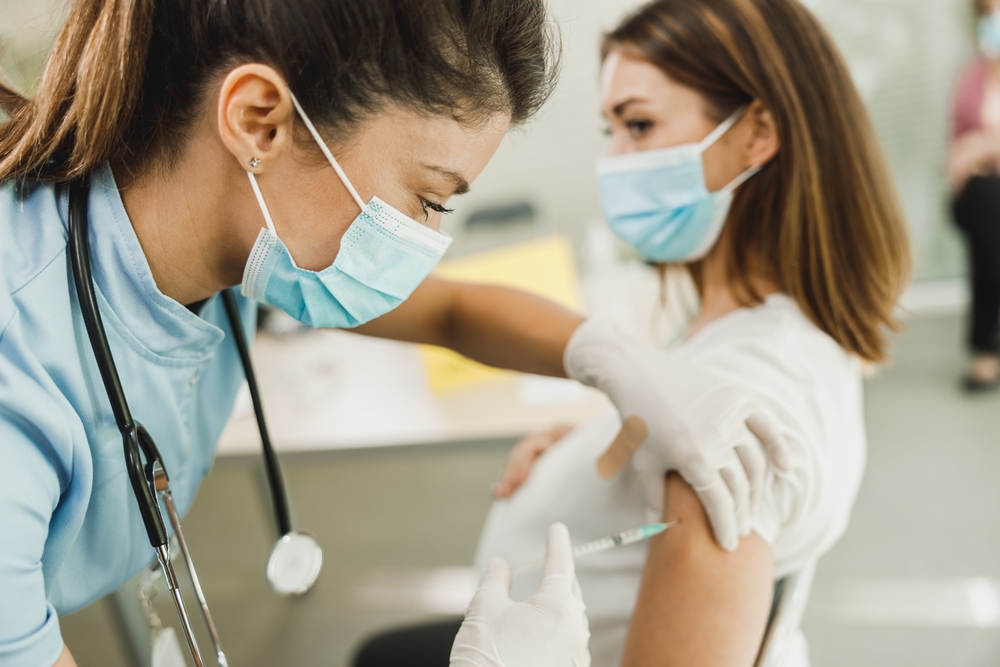
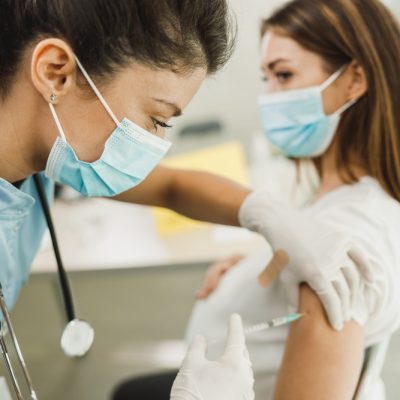
Pregnant women are among the first groups offered the NHS flu vaccine this winter, which has been updated to better match the subclade K strain.
Schoolchildren are also being prioritised and, like pregnant women, can receive the vaccine from September because they can catch and spread flu easily.
Protecting them also helps others, including younger siblings and grandparents.
Other eligible groups, including people aged 65 and over, will be able to receive a free NHS flu vaccine from October and should receive an invitation by phone or post.
Dr Amanda Doyle from NHS England said: “Last year’s flu season came early and was made worse by a new variant, which had a major impact for patients and put enormous pressure on urgent and emergency care services across the country.
“With the NHS experiencing its busiest summer on record, staff have started preparing for this winter earlier than ever – and with services already under significant pressure, it is vital that everyone offered the vaccine comes forward.”
Last winter’s flu season began more than a month earlier than usual as a new mutated strain circulated.
The strain was sometimes referred to as “Super flu”, although this is not a medical term and does not mean the virus is harder to treat. The name reflected that people had yet to build up immunity against it.
Flu vaccines are updated each year to better match the influenza viruses expected to circulate. These viruses continually mutate, so experts must predict how they are likely to change.
This winter’s vaccine includes changes intended to provide a better match for subclade K.
It remains unclear when flu will begin circulating widely this winter or how severe the season will be. Experts often look at flu activity in southern hemisphere countries such as Australia and New Zealand for indications of how the UK season could develop.
Their flu season peaks in July or August. Australia has recorded fewer cases than last year, while New Zealand has experienced high numbers.
Everyone is at risk of catching flu, regardless of age or how fit and healthy they are.
Doyle said: “Flu can really knock you for six, and for some children and pregnant women it can mean becoming seriously ill or ending up in hospital.”
The flu vaccine cannot give you flu. Instead, it helps the body know how to fight the virus.
Children aged two and over receive a nasal spray version, while adults receive an injection. One dose is needed ahead of winter.
Free NHS flu vaccines are available through pharmacies, GPs and schools. People who are not eligible for a free vaccination can pay around £10 to £20.
Schoolchildren and pregnant women can receive a free NHS flu vaccine from September onwards.
From October, free vaccination will also be available to children aged two or older who have not yet started school, people aged 65 and over, those with certain long-term health conditions, care home residents and carers of older or disabled people, including those receiving a carer’s allowance.
It will also be available to people living with someone who has a weakened immune system and those experiencing homelessness or staying in a homeless hostel or night shelter.
More adults will also be offered vaccination against respiratory syncytial virus (RSV), a virus that attacks the lungs, this winter.
From September, adults with certain pre-existing health conditions, such as chronic lung disease, will be invited for the RSV vaccine when they turn 65 rather than waiting until 75.








 Hormonal health2 weeks ago
Major UK study could be a ‘game-changer’ for heavy periods and endometriosis

 Entrepreneur5 days ago
KOVE Medical raises €1.7 million to improve safety of foetal surgery

 Pregnancy2 weeks ago
One week left to apply: W Accelerate with Merck KGaA and M Ventures

 Pregnancy6 days ago
UK study aims to transform maternity care for high-risk pregnancies

 Menopause2 weeks ago
Quarter of women miss work due to menstual symptoms, survey finds

 Hormonal health1 week ago
PMDD after SSRIs or hormones: Why the brain may be the missing treatment target

 Diagnosis1 week ago
Ark Surgical secures further institutional backing to accelerate US expansion

 Insight2 weeks ago
Study to tackle years-long delays in endometriosis diagnosis