




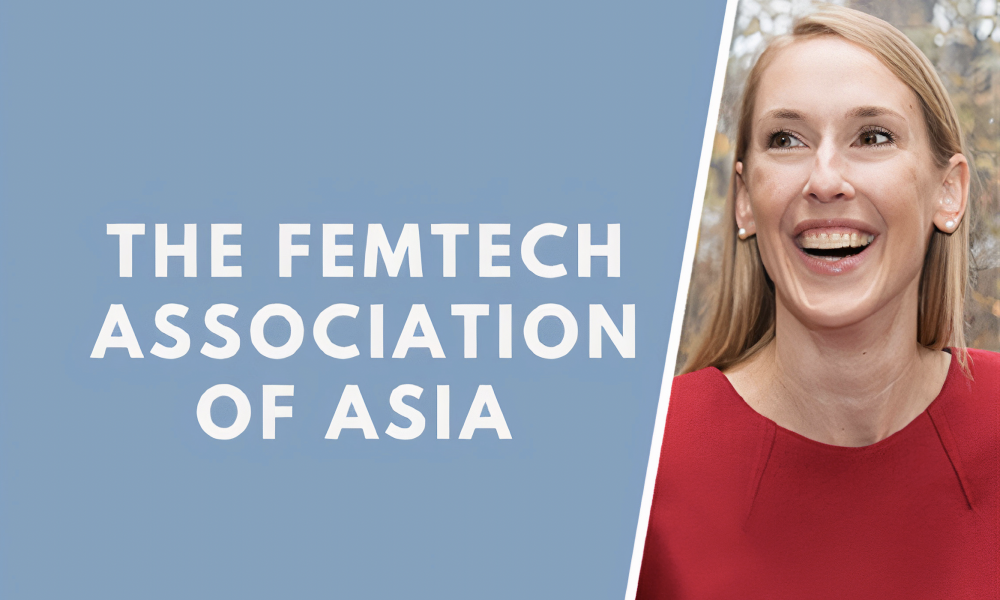
Femtech analytics predicts that the Asia-Pacific region will be seeing the world’s fastest growth in women’s health apps by 2026. We sat down with Lindsay Davis, co-founder of the FemTech Association of Asia, to find out how femtech is growing across Southeast Asia.
Hi, Lindsay. Tell us a bit more about the FemTech Association of Asia.
FemTech Association of Asia is the region’s first network for femtech founders, professionals, investors and enthusiasts uniting with a core focus on improving women’s health through technology solutions. Currently, FemTech Association of Asia members come from over 30 femtech companies across Southeast Asia, Japan and South Korea and members operate across over 10 categories – from menstrual care to menopause.

What is the role of the association?
The FemTech Association of Asia provides four key pillars for the femtech community in Southeast Asia: thought leadership, programming, amplification and community-building.
Women’s health has been under-researched, under-served and under-funded, so we work to address these challenges via our four pillars.
To narrow the research gap, we have our first consumer survey out in market, focusing on Singapore first to start. Our goal is to get critical mass of responses, so that we can provide a better understanding of the consumer landscape – how women manage their personal health, level of understanding of their healthcare needs, what they spend and what qualities are most important for consumers when selecting their treatment plans or providers.
Next, we have programming, which is an effective way of engaging the community and
focusing on what consumers need. We have everything from entrepreneur networking events – to get to know other people in the femtech space – to panels and guest speakers. These include topics like menopause and fertility, as well as founder training in strategic tech start-ups to help starting businesses with less experience.
Amplification is an important pillar, as it allows us to share our message and learnings with more people through media partnerships, thereby raising awareness of the industry and educating more consumers about what healthcare options can look like with the support of technology.
Finally, the critical pillar is community-building. If we don’t support our femtech community, then, of course, we would not have an association. Our goal is to have a growing and inclusive community for all to build networks and fulfil our mission to inspire collaboration.
What was the reason you established the association?
I heard about “femtech” through my network and wanted to learn more, but when I was researching how to get involved in the industry, I spotted the gap – there was not a professional association for femtech available.
With a strong sense of purpose fulfilled by supporting businesses that are creating women’s healthcare solutions through technology, building the FemTech Association of Asia felt like a perfect space to make immediate impact.
Upon further research and networking, I found high-growth potential companies, a dynamic founder community and untapped investment ecosystem. There has never been a better time to work in femtech and I believe Asia is the next significant industry growth opportunity – whether by investing in our regional start-ups, entrepreneurs launching new femtech businesses, local brands expanding into the region or overseas brands extending their reach and launching in Asia.
Where is the femtech sector more developed in Asia?
We are a small market. We only represent about 14 per cent of global femtech businesses, but Singapore has the most femtech companies in the region, with Japan and South Korea also with advanced femtech ecosystems. However, it’s exciting to see the rapid pace by which Asia is growing.
We see evidence of great potential with more founders starting femtech businesses and also geographical expansion. Several femtech businesses in Singapore are starting to expand into markets around us, into countries like Indonesia, Malaysia, and the Philippines and that’s exactly what we like to see – femtech building ecosystems across countries with inclusive solutions.
It is also worth noting the increased outreach in recent months from brands in Western markets looking to explore opportunities in Japan and Singapore.
Do you think that having an association is a powerful move to expand femtech?
Yes, voices being raised together are stronger than one. We have been motivated by so much powerful data coming out of the USA and so many incredible companies based in the UK and Europe. Sharing Asia’s femtech voice and brands globally- as we haven’t had as much presence in the femtech landscape before – is extremely important. We are able to say ‘Here are Asia’s leading femtech companies, market opportunities, regional trends, localised cultural nuances and more that need to be considered’.
In hindsight, how would you say the femtech sector has changed since establishing the association?
The work that we have done with the FemTech Association of Asia has created an awareness that wasn’t there before. Worth highlighting is corporate engagement about of what the FemTech Association of Asia can offer originated by individuals who are taking our mission back to their companies and saying: ‘This is valuable and impactful work and I’d like to partner with them to raise awareness of women’s healthcare needs’.
Community awareness has a ripple effect that is making a huge difference. For Singapore in particular (where we are starting our research), 49.8 per cent of current responses to our ongoing 2022 Consumer Survey say that they treat their health and wellbeing as a priority.
Around 29 per cent of women in Singapore say they would like to take better care of themselves, but do not know how. This indicates that women are prioritising their health more than ever and are pursuing solutions to do so, but also require education on healthcare needs and solutions available.
Much awareness comes from our content, through social media and our programming events. They are certainly not restricted to just people in the femtech space. We have enthusiast members from pharmaceutical and health companies, VCs and angel investors and any other industry you can think of. People are now aware that we have businesses with a central network through the FemTech Association of Asia, and it’s easier for interested parties to reach out to and learn more about our members.
We’ve seen more amplification since the FemTeh Association of Asia has launched and more collaboration and partnerships. The industry in Singapore and globally has been incredibly inclusive, for example, inviting us to events, to partake in panels or contribute to media features and to meet with various investment networks.
What’s next for the FemTech Association of Asia?
We have a few key milestones in our roadmap for 2022. We want to continue to strengthen our four pillars to inspire more entrepreneurs to start businesses and more corporate partnerships, given the support of the FemTech Association of Asia community and we also want to explore launching the FemTech Association of Asia further, as well as encourage more investment in femtech by bringing more research-led thought leadership.
It will certainly be a busy rest of the year!
For more info, visit the FemTech Association of Asia.


Newsletter
Sign up for free weekly updates
The latest femtech news, research and investment, straight to your inbox.




