



News
NHS approves new treatment for advanced womb cancer
The combination has been shown to stimulate the body’s immune system and kill off cancer cell growth


Hundreds of women with advanced womb cancer in England are to be offered a new “lifeline” option, as the NHS rolls out a new combination therapy that could halt the progression of the disease.
The NHS has agreed landmark commercial deals for two drugs from different manufacturers, which will be used in combination to treat advanced endometrial cancer in between 500 and 750 women each year.
Clinical trials have shown that pembrolizumab and lenvatinib used together can double the time taken for cancer to progress compared with the existing chemotherapy treatment, from just over three and half months to more than seven months.
In the trial, overall survival was also significantly longer for patients taking the combination therapy compared to existing chemotherapy treatments, with those taking pembrolizumab and lenvatinib living on average almost 19 months compared just under 12 months on existing chemotherapy.
Set for approval today by the National Institute for Health and Care Excellence (NICE), the combination has been shown to stimulate the body’s immune system and kill off cancer cell growth.
As part of the combination treatment, pembrolizumab is delivered intravenously every three or six weeks while lenvatinib is two pills taken once a day.
Currently, patients undergo chemotherapy treatment every three weeks, but unlike with chemotherapy, there is a far less significant risk of hair loss as a side effect of the new combination treatment.
Around 9,400 women are diagnosed with cancer in the womb every year, making it the fourth most common cancer in UK women.
While the treatment was initially rejected in draft guidance by NICE on the grounds of cost-effectiveness, the NHS has been able to use its commercial capabilities to negotiate a deal with the manufacturers, allowing the treatment to be made available to patients.
“It is fantastic news that this innovative combination therapy can now offer a new lifeline to hundreds of women living with advanced endometrial cancer, giving hope of precious extra time to live with a better quality of life,” said NHS national cancer director Professor Peter Johnson.
“Now in its 75th year, the NHS is leading the world in making the latest treatments available through its unique commercial capabilities and commitment to innovation on behalf of patients and their families across the country.”
Grace Teeling, a 33-year-old from Bristol who was diagnosed with advanced stage three womb cancer in 2019, said: “I have been incredibly fortunate to receive treatment for the past two years and I had a really good response, which means there is currently no evidence of cancer on my recent scans,” she said.
“It has enabled me to thrive despite having an advanced and incurable cancer diagnosis.
“I am able to work, travel, socialise and exercise, including paddleboarding, which I may not have been able to do on chemotherapy. I am delighted others will now be able to access this treatment as I don’t think I would be alive today if I hadn’t.”
Professor Emma Crosbie, chair of trustees of Peaches Womb Cancer Trust, said: “This innovative new treatment regimen will benefit patients with advanced or recurrent endometrial cancer, who currently have very few effective anti-cancer treatments available to them.
“Every year, many people are facing a diagnosis of advanced or recurrent womb cancer, and the frightening reality of very few treatment options that can improve their survival and quality of life.
“Those affected by womb cancer deserve more treatment options, but we hope that this is just the first step towards wider availability of more effective treatment options for those affected by this devastating cancer.”
David Long, head of oncology at MSD UK, which manufactures pembrolzimab, said: “Endometrial cancer is one of the few cancers with rising incidence and mortality, and historically there has been limited treatment options for people with advanced stages of the disease.
“We are therefore very pleased that a new treatment option has been made available to patients which will help address this unmet need.
“We are proud to have worked alongside Eisai, NICE and NHS England to ensure patients can access this treatment.”
The combination treatment will be funded by the NHS and will be offered to all eligible women who have previously received treatment for advanced or recurrent endometrial cancer.








Analysis of fluid flushed through a fallopian tube holds promise for providing insights into molecular changes linked to early ovarian cancer development, new research has revealed.
The University of Manchester analysis revealed molecular signals that in one case prompted re-examination of archived fallopian tube tissue and led to the retrospective identification of a pre-invasive or very early cancerous lesion.
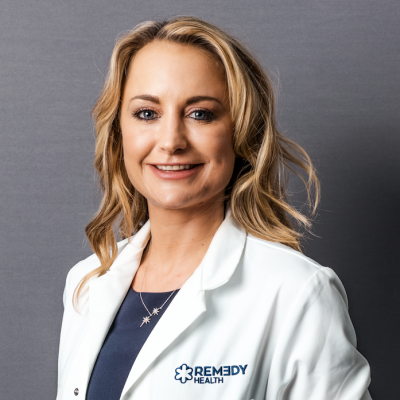
Dr Christine Schmidt is senior lecturer at the University of Manchester’s Division of Cancer Sciences.
She said: “This is important as it is now known most ovarian cancers don’t start in the ovary itself.
“Instead, they start from pre-cancer lesions which develop in the fallopian tube before spreading to the ovary and beyond.”
The findings from the study could in the longer term form the basis for future approaches aimed at informing ovarian cancer risk assessment and contributing to less invasive interventions for some high-risk women.
Surgery to remove the tubes and ovaries is often currently used to reduce risk for high-risk women.
However, the study raises the prospect of delaying risk-reducing surgery for some women, preserving their fertility.
This could be particularly beneficial for the 1 in 250 women in the UK who are at high genetic risk of ovarian cancer because they carry a BRCA1 or BRCA2 gene mutation.
Though uncommon in women with an average risk, existing research shows that roughly half to three-quarters of women with a high genetic risk of ovarian cancer currently choose surgical removal of the ovaries.
Despite evidence suggesting a prolonged window between pre-cancer lesions inside the fallopian tube and more serious cancer in the ovaries and other tissues, there are currently no clinical tests available to help detect these early pre-cancer changes without invasive surgery.
However, the team in Manchester have shown that fluid washed through the inside of the fallopian tube could be used to test for broad patterns of molecular changes associated with early tumour development using a technique known as proteomic analysis.
The researchers used the approach in an exploratory study of the fallopian tubes of 27 women who had had them surgically removed.
The women were divided into different groups. The first group were either high-risk BRCA1 and BRCA2 gene mutation carriers or they had an abnormal ovarian growth. A second group had other gynaecological conditions unrelated to ovarian cancer.
The researchers took the samples from the soft, frilly, finger-like edge at the open end of the tube next to the ovary known as the fimbriae.
They were able to detect different patterns of proteins in the washes from high-risk fallopian tubes and tubes associated with ovarian cancer compared to normal.
Some of these proteins overlap with previously proposed biomarkers for advanced disease stages and some may form the basis for future exploratory studies to identify potential targets for ovarian cancer prevention.
Dr Schmidt added: “While further exploration and validation in larger cohorts is needed, our findings point to a promising direction for less invasive ovarian cancer risk management strategies that could – in the longer term – help reduce reliance on invasive prophylactic surgeries while preserving fertility in some high-risk women.
“We look forward to taking this novel approach forwards and hope that one day the findings can contribute to the development of an approach that might eventually be used in the clinic.”

Gut health solutions company Bactolife has successfully raised over €30 million in its Series B investment round.
The funding will enable the company to commercialise its innovative Binding Proteins, a new food, feed and dietary supplement ingredient, and execute its human study programme, aimed at transforming human and animal health for proactive health management.
This significant financing round was led by Cross Border Impact Ventures (CBIV) and EIFO (Danish Export and Investment Fund), alongside continued support from existing investors Novo Holdings and Athos.
With the backing of cornerstone investors, Bactolife is now poised to launch its first Binding Protein products under the ingredient brand, Helm for human health in the United States in 2026.
The company plans to expand into Asia and Europe in the years that follow, with a strong commitment to ensuring the technology is accessible to women and children in low- and middle-income countries (LMICs).
Sebastian Søderberg, CEO of Bactolife, said: “Today’s successful close of our Series B round sets the stage for exciting years ahead as we prepare to launch our innovative products in 2026.
“This funding will enable us to clinically validate, scale, and commercialise our Binding Proteins, taking Bactolife’s solutions to a broad audience.
“We are excited to welcome new investors to the Bactolife family and are deeply grateful to our existing investors, whose continued support reflects their confidence in our mission.
“We are ready to transform gut health with novel Binding Proteins.”
The proceeds from this round will be directed toward several key areas of growth for Bactolife, including the execution of its human study program across the US, EU, Asia, and LMICs.
In addition, the company plans to scale its manufacturing and supply operations to meet global demand with a strong emphasis on commercialisation of both human and animal health ingredients for dietary supplements, functional food and beverages, and feed additives.
Donna Parr, Managing Partner at Cross Border Impact Ventures, said: “We are thrilled to lead Bactolife’s Series B. Bactolife’s Binding Proteins have the potential to strengthen gut resilience for mothers and children in low- and middle-income countries by providing a scalable, food-grade solution that can be integrated into everyday nutrition.
“At the same time, we are excited about the significant growth opportunity across North America, Europe, and Asia where the market opportunity is massive.
“This investment reflects our conviction that evidence-based technologies can reach massive high-growth markets, inclusive of people who need them most, and we look forward to partnering with Bactolife to accelerate clinical validation, scale manufacturing, and expand equitable access globally.”



The hashtag #TurkeyTeeth often showcases extreme transformations on social media, but behind the viral content lies a more nuanced reality particularly relevant to women’s health and autonomy.
Dent Ordu, a dental clinic in Turkey, represents a new generation of healthcare facilities where advanced technology is reshaping the patient experience and empowering women to take control of their wellness decisions.
Addressing women’s healthcare anxiety through technology
Medical anxiety disproportionately affects women, who often report concerns about pain management, being dismissed by healthcare providers, and lack of agency in treatment decisions.
Dent Ordu’s technology-driven approach directly addresses these barriers, creating a care model that prioritises patient involvement and comfort.
The clinic has moved away from traditional methods that often left women feeling passive in their care.
By replacing uncomfortable impression molds with fully digital workflows, including 3D Intraoral Scanners and Digital Smile Design (DSD) technology, patients become active participants in their treatment planning.
This visual, collaborative approach allows women to see and approve their results before any procedure begins, restoring decision-making power that is often lacking in traditional medical settings.
Efficiency that respects women’s time
One of the clinic’s distinguishing features is its use of CAD/CAM (Computer-Aided Design and Manufacturing) technology for creating veneers and implants on-site.
This system carves dental restorations from high-grade porcelain blocks with microscopic accuracy, often completing the process in minutes rather than weeks.
For women juggling careers, caregiving responsibilities, and personal commitments, this efficiency represents more than convenience. It’s a recognition that their time has value.
The immediate turnaround eliminates extended waiting periods with temporary prosthetics and multiple appointments that can disrupt work and family schedules.
Dental health as women’s wellness
Dent Ordu positions dental care within the broader context of women’s overall health and wellness.
The clinic’s advanced imaging technology can identify issues that conventional X-rays might overlook, enabling preventive interventions that address problems before they escalate.
This preventive approach is particularly significant for women, who are more susceptible to certain oral health conditions due to hormonal fluctuations during pregnancy, menopause and monthly cycles.
Comprehensive dental imaging can also detect early signs of osteoporosis and other systemic conditions that disproportionately affect women, making oral health screening an important component of overall wellness monitoring.
Empowerment through medical tourism
As technology advances in international healthcare hubs, more women are reclaiming agency over their healthcare choices.
Facilities like Dent Ordu demonstrate that cutting-edge equipment and expertise are not confined to traditional medical capitals, giving women alternatives when local options are unaffordable, inaccessible or unsatisfactory.
This shift in medical tourism represents a form of healthcare feminism – women refusing to accept limited options and instead researching, travelling, and investing in care that meets their standards.
The decision to seek treatment abroad reflects informed consumer choice rather than desperation, particularly as these facilities often provide more transparent pricing and personalized attention than overcrowded domestic systems.
Looking Forward
Dent Ordu represents a snapshot of how digital technology is transforming dental healthcare while simultaneously addressing systemic issues in women’s medical experiences: lack of agency, dismissal of concerns and time constraints.
As these innovations become standard practice, they’re reshaping expectations about what quality, patient-centred care looks like and empowering women to make informed decisions about where and how to access it.
For women considering treatment abroad, thorough research into a facility’s technological capabilities and patient-centred approach can reveal options that not only match or exceed domestic standards but also restore the control and respect that should be fundamental to all healthcare experiences.
Discover more and explore real patient experiences by following Dent Ordu on:









-

 Features3 weeks ago
Cannabis compounds kill ovarian cancer without harming healthy cells, research finds
-

 Insight4 weeks ago
Meta removes dozens of abortion advice and queer advocacy accounts
-

 Fertility4 weeks ago
Sperm donor with cancer-causing gene fathered nearly 200 children across Europe
-

 News4 weeks ago
UK couples exploiting legal loophole to rank embryos based on IQ, height and health
-

 Features3 weeks ago
University of Leeds IVF spinout raises £3.5m
-

 News2 weeks ago
Can biotech help close the fertility gap? Inside the race to improve egg quality
-

 Insight3 weeks ago
AI-driven digital tool delivers sustained blood pressure reductions, study finds
-

 News4 weeks ago
NHS maternity care delivered ‘unacceptable’ treatment, report finds