




Connect with us

Mental health

Postpartum depression discovery opens door to blood test and earlier treatment

Published

on

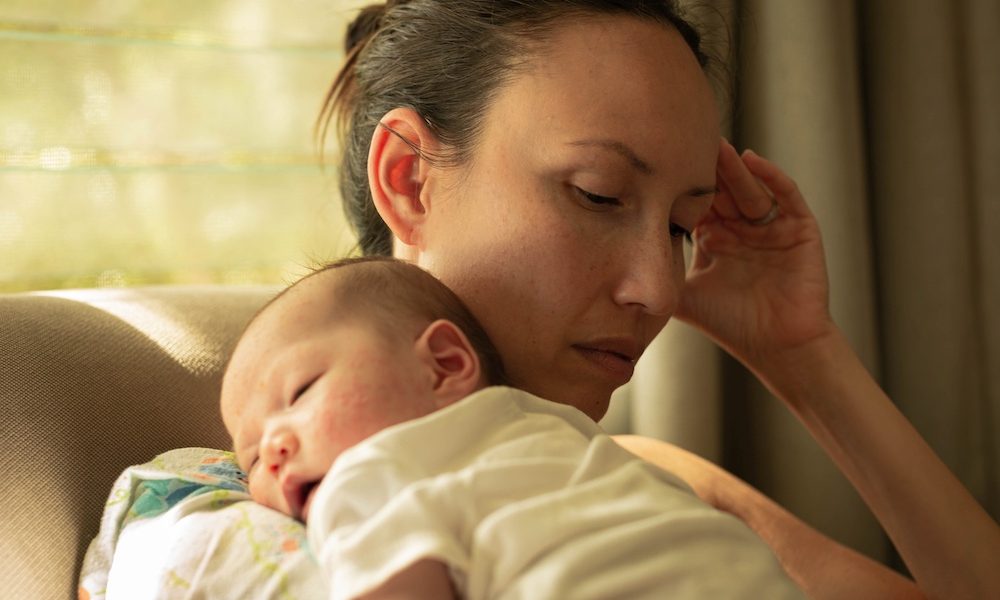
New postpartum depression research could lead to a blood test to identify women at risk and possibly even to a preventive treatment.

The research suggests that pregnant women may have characteristic levels of certain molecules in their blood that can warn that they are at risk of developing postpartum depression (PPD).

These molecules, called neuroactive steroids, are derived from progesterone, a hormone that plays critical roles in pregnancy and menstruation.

Measuring those molecules via a simple blood test could let doctors get women treatment for PPD sooner – possibly even before symptoms appear, the researchers said.

Jennifer Payne, MD is an expert in reproductive psychiatry at UVA Health and the University of Virginia School of Medicine.

She said: “Studying postpartum depression gives us a way to identify biological changes that occur before someone becomes depressed because the timing of postpartum depression is predictable.”

Postpartum depression affects 10 per cent to 15 per cent of new mothers.

While many new mothers suffer mild, temporary “baby blues,” PPD is a long-term condition that can leave moms with persistent sadness, stifling anxiety, a stubborn sense of hopelessness and the feeling that they can’t bond with their baby.

This can take a terrible toll on both mother and child – a toll that can last for years.

Weill Cornell’s Lauren Osborne, MD co-led the study with Payne.

The researcher said: “Postpartum is the only time in people’s lifespans when we know there is a biological trigger which guarantees that a certain percentage of people will become ill.

“If we can untangle this biology and find predictors for it, not only will we be helping women, but it may give us a step up in trying to find predictors for other psychiatric illnesses also.”

It’s unclear why some women develop postpartum depression, but the new findings suggest that an imbalance in the body’s metabolism of progesterone may be a factor.

To better understand the role of progesterone, the researchers focused on the hormone and on its “metabolic pathway” in the body.

The scientists measured levels of neuroactive steroids derived from progesterone in the blood of 136 women during their second and third trimesters.

Of these, 33 went on to develop postpartum depression after giving birth.

Two neuroactive steroids seem to affect the risk of developing PPD – pregnanolone and isoallopregnanolone.

Pregnanolone acts on a particular cellular receptor to reduce stress. Isoallopregnanolone, on the other hand, acts on the same receptor to increase stress.

In the third trimester, women who went on to develop PPD had a lower pregnanolone/progesterone ratio and a higher isoallopregnanolone/pregnanolone ratio compared with those who did not, the researchers found.

Elevated progesterone levels in late pregnancy were also associated with a higher risk of PPD.

The researchers plan to attempt to replicate their results in a larger, more diverse group of women in hopes of developing a clinical test to predict the risk of PPD.

Further, they say their work could lead to a preventive treatment – possibly one of two prescription drugs, brexanolone and zuranolone, already available to treat PPD.

Osborne said: “We don’t know if these drugs would work as a preventive measure for people who are at risk of developing postpartum depression, but based on our findings, they have the potential to prevent [its] development.”

Insight

Scaling startups risk increasing gender gaps, study finds

Published

on

Rapidly scaling startups often make rushed hiring choices that disadvantage women, a recent study has found.

The findings draw on more than 31,000 new ventures founded in Sweden between 2004 and 2018.

Researchers at the Stockholm School of Economics report that in male-led startups, scaling reduces the odds of hiring a woman by about 18 per cent, and the odds of appointing a woman to a managerial post by 22 per cent.

Mohamed Genedy is co-author and postdoctoral fellow at the House of Innovation, Stockholm School of Economics.

Genedy  said: “During those moments of rapid growth, even well-intentioned leaders can fall back on familiar stereotypes when assessing who they believe is best suited for the role.”

The patterns emerge even in Sweden, regarded as a highly gender-equal national context.

Founders with human resources-related education counteract these challenges.

In ventures led by founders with HR training, the odds of hiring a woman increase by more than 30 per cent, and the odds of appointing a woman to a managerial role increase by 14 per cent for the same level of growth.

Genedy said: “When founders have experience with structured hiring practices, the gender gaps shrink, and in some cases even reverse.

“This shows that getting the basics of HR right early on really pays off.

“When things start moving fast, founders with HR knowledge are less likely to rely on biased instincts and more likely to hire from a broader talent pool.”

Prior experience in companies with established HR practices also helps, though to a lesser degree.

It raises the likelihood of hiring women as ventures scale, but does not significantly affect managerial appointments.

The study additionally shows these patterns are not driven by founder gender alone.

Even solo female-led ventures display similar tendencies when growing rapidly, though to a somewhat lesser degree.

In female-dominated industries, rapid growth increases the hiring of women for regular roles but still reduces the likelihood that women are appointed to managerial positions.

“When scaling accelerates, cognitive bias kicks in for everyone. Female founders are not immune to these patterns,” said Genedy.

Continue Reading

Diagnosis

Study reveals why women more likely to develop PTSD

Published

on

High brain oestrogen may raise women’s PTSD risk if severe stress strikes during high oestrogen phases, causing memory problems and stronger fear responses, new research has revealed.

The study found that exposure to several simultaneous stressors can lead to persistent memory problems, difficulty recalling events and stronger reactions to trauma reminders.

Tallie Baram is distinguished professor of paediatrics, anatomy and neurobiology, and neurology at UC Irvine’s School of Medicine, and led the research.

Baram said: “High oestrogen is essential for learning, memory and overall brain health.

“But when severe stress hits, the same mechanisms that normally help the brain adapt can backfire, locking in long-lasting memory problems.”

Oestrogen, which usually supports learning and memory, can increase vulnerability when levels are high in the hippocampus, a brain region central to memory formation and retrieval.

Researchers reported that female mice stressed during cycle phases with high oestrogen developed enduring memory loss and heightened fear of reminders, while lower levels were protective. Males, who also have high hippocampal oestrogen, were susceptible more mildly and through different receptor pathways.

High oestrogen loosens the packaging of DNA in brain cells, known as permissive chromatin.

This normally helps learning, but under extreme stress it can allow harmful, lasting changes in memory circuits.

Memory problems were driven by different oestrogen receptors in men and women, alpha in men and beta in women.

Blocking the relevant receptor prevented stress-related memory issues even when oestrogen stayed high. Vulnerability depended on hormone levels at the time of stress, not afterwards.

Co-author Elizabeth Heller is associate professor of pharmacology at the University of Pennsylvania Perelman School of Medicine.

She said: “A lot of what determines vulnerability is the state your brain is already in.

“If a traumatic event hits during a period when oestrogen is already unusually high, the biology can amplify the impact in lasting ways.

“This study shows that a state of high oestrogen in a specific brain region promotes vulnerability to stress in both male and female subjects.”

Continue Reading

Mental health

Wysa awarded £5.3m to address girls’ mental health in rural India

Published

on

Wysa has secured £5.3m to adapt a digital mental health programme for adolescent girls in rural India.

The funding comes from Wellcome and will support a scale-up study to tailor a clinically validated digital intervention for girls facing limited autonomy, restricted access to technology, lower literacy, stigma and family gatekeeping.

Digital interventions are app-based programmes that deliver guided tools to manage anxiety and low mood, and are tested to show clinical benefit.

The study will map cultural and practical barriers to access, adapt Wysa’s content and delivery to those realities, and then test effectiveness in real-world low-to-middle-income settings.

Wysa is a global platform that combines artificial intelligence and human support to provide psychological wellbeing services.

It is used by more than seven million users across 105 countries and works with healthcare providers, employers and governments including the UK’s NHS, the Ministry of Health in Singapore, and programmes in India.

“This funding allows us to go far beyond simple translation,” said Chaitali Sinha, chief clinical and research and development officer at Wysa and the study’s principal investigator.

“By working closely with academic and community partners, we aim to co-design a digital intervention that is not only clinically effective, but genuinely usable and relevant for adolescent girls living in rural India.”

India has more than 253 million adolescents, the largest such population globally.

Around half of mental health conditions begin before age 14, and suicide is among the leading causes of death for young people.

The study team includes Aparna Joshi from Tata Institute of Social Sciences, Ceire Costelloe and Patrick Kierkegaard from Imperial College London, Dhirendra Pratap Singh from Milaan Foundation, and Becky Inkster from the University of Cambridge.

Miranda Wolpert is director of mental health at Wellcome.

She said: “We are delighted to support Wysa in their work to adapt and scale up this evidence-based digital intervention to address anxiety and depression in adolescent girls across rural India.

“This funding was awarded as part of our call to find the best ways to develop and scale digital innovations for early intervention.”

Continue Reading

Trending

Copyright © 2025 Aspect Health Media Ltd. All Rights Reserved.

