




Hormonal health
Endometriosis-sufferer wins landmark tribunal case on workplace discrimination


A former Accenture employee has won an appeal tribunal ruling after a judge said her endometriosis may amount to a disability under the Equality Act 2010.
A senior employment law judge last month quashed a 2022 tribunal decision that rejected claims brought by Sanju Pal, 43, against the consulting firm.
The judge found the original ruling did not properly consider whether Pal’s endometriosis, a condition where tissue similar to the womb lining grows elsewhere and can cause chronic pain, amounted to a disability under the Equality Act 2010.

The decision also said the ruling mischaracterised her reasons for dismissal and lacked evidence for some claims.
Pal has previously described how Accenture terminated her contract in 2019 despite her having a “cyst the size of a Coke can” on one of her ovaries, in what was a severe and chronic case of the condition.
For Pal, however, the fight is not over. The judgement ordered a fresh employment tribunal to reconsider her claims, and Accenture reserves the right to appeal.
The case has drawn attention since the appeal decision, with Pal appearing on BBC News and Radio as well as ITV News.
Pal said: “Whilst my faith was shaken after the initial employment tribunal, this judgement has restored it somewhat.
“Luckily, I got an appeals judge who finally heard me.
“A line one of my close friends said was ‘the system failed Pal’. Oh my God, just to hear and see that.”
She added: “I’m not surprised my case is making waves in the media, as there is no other case in the UK that has gone to this level of court, for a respondent that refused to concede.
“Of course it’s going to gain traction now, and I think women are absolutely outraged that this could be possible.”
Emma Cox, head of Endometriosis UK, suggested on BBC Radio 5 Live that Pal’s case will make a “real difference”.
She said: “It yet again highlights that endometriosis and its impact are not properly understood in the workplace, and the appeal ruling makes it quite clear that those living with endometriosis may be protected, and it should be considered.
“I also hope it gives a push to our campaigns, one of the things we are pushing for is to have menstrual health included in the employment’s rights act.”
Pal, who also referenced a government petition to introduce menstrual leave for those with endometriosis and adenomyosis, a related condition where tissue grows into the muscular wall of the womb, due to be debated in parliament, said far more needs to be done to acknowledge the reality of workplace discrimination.
She commented: “Those with endometriosis are hearing from their employer: ‘What do you mean you can’t come into work? What do you mean you can’t do this shift’? Or ‘what do you mean that you need to take time off for X, Y and Z?’
“It’s happening every day across this country to millions of women, and that’s just endometriosis before you start talking about other conditions.”














Differences in immune cells may explain why chronic pain lasts longer in women than men, according to new research.
The study identified a subset of monocytes, a type of white blood cell, that release interleukin-10, or IL-10, a molecule that signals pain-sensing nerves to switch off pain. These cells were found to be more active in males, linked to higher levels of sex hormones such as testosterone.
Females experienced longer-lasting pain and slower recovery because their monocytes were less active. The same pattern was observed in both mouse models and human patients.

Researchers first detected unexpectedly higher levels of IL-10 in males during a small pilot project. When a second test confirmed the finding, they used high-dimensional spectral flow cytometry, a laboratory technique that allows detailed analysis of immune cells, to investigate further. Blocking male sex hormones produced the opposite effect.
Geoffroy Laumet, associate professor of physiology at Michigan State University, said: “The difference in pain between men and women has a biological basis. It’s not in your head, and you’re not soft. It’s in your immune system.”
Pain occurs when specialised neurons throughout the body respond to stimulation. In people with chronic pain, these sensors can be activated by mild stimulation or even none at all. Doctors often rely on patients rating pain on a scale of one to 10, and when more women report persistent pain, the difference has often been attributed to perception or reporting rather than biology.
The team carried out at least five types of tests in mouse models to confirm the findings. They then worked with Sarah Linnsteadt at the University of North Carolina at Chapel Hill, who was studying psychological outcomes in people involved in car accidents. Her research showed a similar pattern, with men having more active IL-10-producing monocytes and resolving pain faster.
Jaewon Sim, a former graduate student in Laumet’s laboratory, said: “I feel extremely fortunate that we trusted those early, uncertain findings and chose to pursue them further.”
Laumet said: “This study shows that pain resolution is not a passive process. It is an active, immune-driven one.”
The findings shift attention from how pain begins to why it persists. The next step is to investigate whether treatments could target this pathway and boost IL-10 production. While any new treatment is likely to be decades away, the research could eventually support non-opioid approaches to managing chronic pain.
“Future researchers can build on this work,” Laumet said. “This opens new avenues for non-opioid therapies aimed at preventing chronic pain before it’s established.”
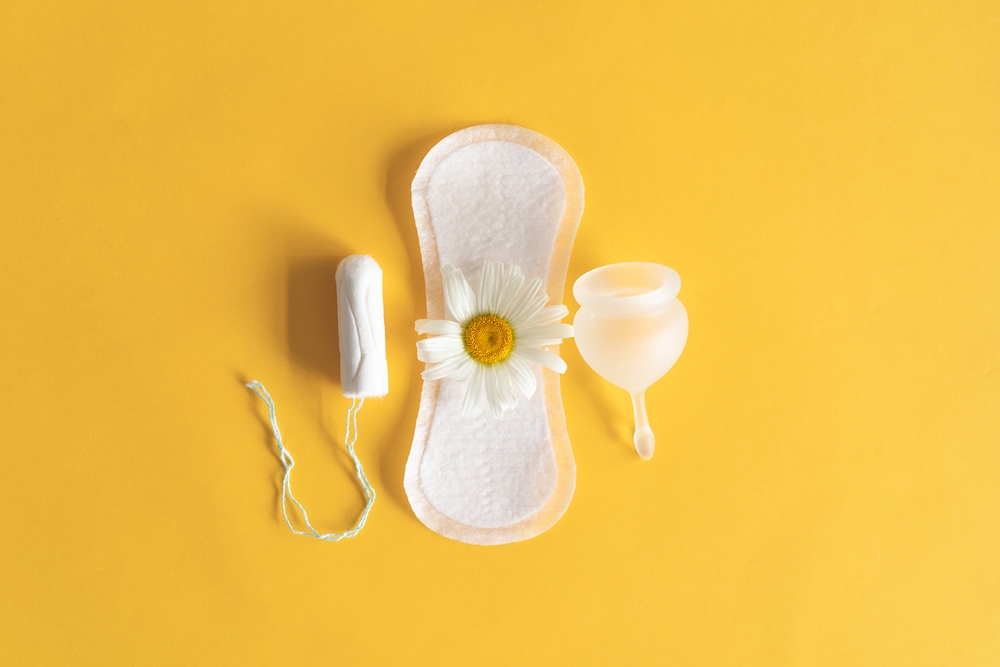
Very heavy or very light periods may be linked to underlying health problems that affect quality of life and can influence fertility, according to medical experts.
Heavy menstrual bleeding is reported to have a major impact on daily life, with around two thirds of affected women seeking medical help. Beyond anaemia, which can cause fatigue, dizziness, pallor and a rapid heartbeat, heavy bleeding can lead to social and practical difficulties such as stained clothing, higher use of menstrual products and work limitations.
Doctors stress that the amount of bleeding itself does not directly affect fertility. Instead, abnormal bleeding can reflect underlying conditions, some of which can make it harder to become pregnant.
Raúl Villasevil, a specialist in obstetrics and gynaecology at San Carlos Clinical Hospital in Madrid, Spain, said: “The most frequent causes of heavy periods are polyps, fibroids, adenomyosis, some malignant tumours, ovulatory and coagulation problems, endometrial disorders, and certain medications.”
Very light periods can also signal problems, including uterine malformations, intrauterine adhesions, where scar tissue forms inside the womb, and anatomical abnormalities of the vagina. They may also point to ovulatory and hormonal disorders such as hyperprolactinaemia, which involves excess production of the hormone prolactin, or polycystic ovary syndrome. Once confirmed, these conditions can lead to symptoms including infertility.
To identify the cause of abnormal bleeding, Villasevil said doctors begin with a detailed personal and gynaecological history, followed by a physical examination and usually an ultrasound to assess the uterus and ovaries. Blood tests are also used to check for anaemia, coagulation status and hormonal function.
“This basic evaluation is often sufficient to establish the cause of the bleeding abnormality and to propose solutions. If this basic workup does not identify the cause, additional tests such as hysteroscopy or magnetic resonance imaging can be performed,” he added.
Hysteroscopy involves inserting a small camera into the womb to examine it from the inside.
In most cases, the cause of menstrual abnormalities can be identified and treated. A range of treatments allow a personalised approach for each woman, taking into account whether she wishes to have children, her age and her individual needs at different stages of life.

Almost 80 per cent of private weight loss jabs such as Mounjaro are prescribed to women, according to analysis of 113,630 patients.
The analysis, covering private prescriptions issued between November 2024 and October 2025, found take-up was concentrated among women and middle-class patients.
Uptake was highest in those aged 30 to 49 and dropped sharply after 60.
The medicines are GLP-1 receptor agonists, drugs that mimic a hormone released after eating, helping people feel fuller.
Samantha Field, senior fellow in prevention at the Health Foundation and co-author of the research, said: “With an estimated 2.4m people in the UK already prescribed weight loss medications, our findings reveal a stark divide.
“The groups bearing the greatest burden of obesity are seeking GLP-1 treatments less frequently, and often at higher BMIs.
“The NHS should be taking these findings into account as the rollout of these medications progresses, to ensure they are reaching the people who are most in need of them.
“Ensuring fair public provision is essential, but these medications address a problem that is preventable.
“It’s more important than ever that government retains focus on making the changes to our food environment that will prevent obesity occurring in the first place.”
The research, carried out by the Health Foundation with online weight management provider Voy, found people in the most deprived areas were about a third less likely to receive the injections than those in the least deprived areas, despite higher obesity rates.
It also found patients in more deprived areas tended to start treatment at a higher body mass index (BMI), a measure of weight for height.
Among 30 to 49-year-olds in the most deprived areas, about 45 per cent began treatment with a BMI of 35 or above, compared with about 30 per cent in the least deprived areas.
The Health Foundation said this suggested people were accessing treatment later, risking poorer health in the meantime.
NHS England has set out a phased rollout of Mounjaro over up to 12 years, with about 220,000 patients prioritised in the first three years, meaning most people currently pay privately.
Eligible patients in the first year have included those with a BMI over 40 and other complicating conditions such as high blood pressure, obstructive sleep apnoea (breathing repeatedly stopping and starting during sleep), cardiovascular disease and type 2 diabetes.
NHS England has previously said that if all eligible patients, thought to number more than 3m, sought the drug in the first year and 70 per cent were started on treatment, the impact on primary care would be profound, taking up 18 per cent of GP appointments.
The GLP-1 drug semaglutide, marketed as Wegovy, can be accessed on the NHS for people with health problems caused by their weight and a high BMI.
Dr David Huang, director of clinical innovation at Voy, said: “By providing real-world patient insights we can bring greater visibility and awareness to the barriers within the UK’s health system, and ultimately inform measurable steps to address the obesity crisis.
“Weight loss medication can have a life-changing impact for eligible patients.
“Private providers like Voy play a crucial role in delivering clinically-led and safe treatment to those looking for immediate care and as NHS rollout evolves, we’re aware of our responsibility to enhance access to this type of care and this extends beyond our private offering too.”
An NHS spokesperson said: “The NHS is rightly prioritising the rollout of weight-loss drugs for those in the greatest clinical need and is exploring ways to accelerate the offering so that eligible people can benefit from safe and effective treatment wherever they live in England.
“The NHS also offers a wide range of other support for people to lose weight, which has helped tens of thousands of people achieve a healthier weight and wider lifestyle benefits.”











 Insight4 weeks ago
Parents sue IVF clinic after delivering someone else’s baby
 Entrepreneur2 weeks ago
US startup builds wearable hormone tracker

 Menopause4 weeks ago
HRT linked to greater weight loss on tirzepatide

 Menopause4 weeks ago
Flo Health and Mayo Clinic publish global perimenopause awareness study
 Fertility2 weeks ago
France urges 29-year-olds to start families now

 Menopause3 weeks ago
Study reveals gap between perimenopause expectations and experience

 Menopause2 weeks ago
Menopause specialist Haver joins Midi Health

 Menopause2 weeks ago
Women with ADHD almost twice as likely to experience perimenopause symptoms, study finds