




Diagnosis
Belfast startup launches AI period tracking tool


A Belfast-based femtech company has launched what it claims is the world’s first AI-powered menstrual tracking system that provides clinical-grade insights into period volume, clotting and cycle trends.
Joii’s technology, unveiled in Dublin, combines a specially designed menstrual pad with a mobile app to measure blood volume and clot size in millilitres – offering users more objective data than subjective terms like “heavy” or “normal” flow.
Heavy menstrual bleeding affects one in three women, yet diagnosis is often delayed due to vague language used to describe symptoms. While other femtech apps track symptoms and cycles, they do not directly measure menstrual flow.

Founder and chief executive Justyna Strzeszynska created Joii after experiencing her own challenges navigating menstrual health.
“Doctors would ask me about my menstrual flow, but I had no benchmark, much less a reliable way to measure it,” she said.
Joii’s system uses pad-scanning volume analytics – a first in women’s health. Users wear disposable pads, then scan them using the free app. Images are analysed using computer vision technology to assess blood volume, clot size and composition. Results are available instantly in millilitres, with reports on average flow and cycle trends.
“For too long, women have been told to just ‘track their period’ without any real tools to measure what’s actually happening. With Joii, we’re changing that,” said Strzeszynska. “We’re helping people see their periods clearly, for the first time.”
The company’s AI model was trained largely on synthetic data due to the lack of available real-world images. It was then tested across a range of lighting conditions and usage scenarios to ensure reliable results.
How Joii works:
Wear Joii Pads – Specially designed for comfort and visual clarity.
Scan with the Joii App – Users scan used pads through the mobile app.
Get Insights – Immediate readings show menstrual volume (in millilitres), clot detection and flow trends.
Over time, the app builds personalised data that can support healthcare appointments and inform diagnoses. Joii is particularly aimed at people with heavy bleeding or those facing long diagnostic delays for conditions such as endometriosis, which can take up to 10 years to diagnose.
Joii is also the only product of its kind currently on the market. While some researchers have attempted to track flow manually using menstrual cups in small studies, there has been no consistent or scalable tool for widespread menstrual health monitoring – until now.
The technology is registered as a Class I medical device in the UK and protected by multiple patents.
Joii’s impact has been tested in two clinical and real-world studies, including one funded by the National Institute for Health and Care Research (NIHR). Users reported:
62 per cent improvement in communication with GPs
288 per cent increase in symptom screening efficacy
134 per cent rise in menstrual health literacy
A separate feasibility study found:
33 per cent improvement in abnormal symptom screening
52 per cent increase in period health literacy
36 per cent improvement in discussing symptoms with GPs
Among healthcare professionals:
88.6 per cent of GPs said Joii improved period-related conversations
87.6 per cent found it easier to identify abnormal or heavy bleeding
93 per cent said it supports diagnosis of heavy menstrual bleeding
88.6 per cent said they would use it in practice if NHS-approved
Dr Fatema Mustansir Dawoodbhoy, NHS doctor and clinical adviser to Joii, said: “This app will definitely offer me better insights into how the patient is feeling as I will be able to understand their symptoms variation throughout the month.”
Dr Kushal Chummun, consultant in obstetrics and gynaecology at the Rotunda and Connolly Hospital, added: “I think the app is really, really good.”
To date, Joii has raised €2.4m and is backed by EIT Digital through its equity portfolio. As part of the EIT Digital Open Innovation Factory, Joii worked with Finnish software studio Ikune to enhance user experience, integrating gamification features to improve retention and data quality.
Joii is also collaborating with research institutions to explore menstrual blood as a non-invasive diagnostic tool. Predictive AI models are being developed to support earlier detection of conditions such as endometriosis, polycystic ovary syndrome (PCOS) and anaemia.
Strzeszynska said the research “helps build a crucial bridge between data and the healthcare system, offering credibility to patient healthcare monitoring apps. It generates clinically relevant insights that can support more meaningful, evidence-based conversations with healthcare providers.”
The Joii app is free to download on iOS and Android. Joii Evaluation Pads retail at €6.95 and are available online at www.joiicare.com and in selected pharmacies and health stores.














A vaccine trial will test whether an mRNA jab can help stop precancerous cells developing into bowel and ovarian cancer in people with Lynch syndrome.
The first stage is due to launch this summer and will assess whether the jab can train the immune system to recognise and eliminate precancerous cells before cancer develops.
Around 175,000 people in England have Lynch syndrome, but only five per cent, or around 10,000 people, know they have it.

The inherited condition increases the risk of developing bowel cancer by 80 per cent and is linked to around 1,100 bowel cancer cases each year.
Lynch syndrome is also linked to a far higher risk of bowel, womb and ovarian cancer, alongside other types including stomach, pancreatic, kidney and skin cancer.
While the syndrome does not directly cause cancer, the genetic changes can lead to more abnormal cells developing, which then multiply and increase the risk of cancers such as bowel, prostate and endometrial cancer.
It is caused by an alteration in a mismatch repair gene. Carriers do not have any symptoms.
The new Intercept-Lynch trial is part of a scientific collaboration between the University of Oxford and Moderna, while Cancer Research UK has backed the vaccine’s development.
Once patients receive the new mRNA-4194 jab, experts will analyse their immune responses, assess the best dose and check whether the jab is safe.
The second phase of the study will include multiple centres across the UK, including Oxford, and is expected to begin in 2027.
The aim of the trial is to train the immune system with a vaccine to recognise abnormalities and stop them developing into cancer.
Professor David Church, Cancer Research UK senior cancer research fellow in the University of Oxford’s centre for human genetics and lead investigator of the trial, said: “People with Lynch syndrome are at risk of cancers over their entire lives.
“So, it’s very common, for instance, a woman to have a first cancer of her womb, and then some years later have a bowel cancer, or vice versa.
“The targets we’ve chosen for the vaccine were chosen based on their sharedness across multiple cancer types in Lynch syndrome, so we think they should provide broad protection, if the vaccine works.”
In people with Lynch syndrome, mutations can build up, making the cells containing them more likely to turn into cancerous cells.
However, those mutations can be made visible to the immune system and, with enough stimulation, the immune system can attack the abnormal cells and stop cancer from forming.
Professor Church said the mRNA jab acts as “an instruction manual” for the body to attack precancerous cells.
He added that, as with many vaccines, patients may need a booster jab at some stage.
On whether similar approaches could help prevent cancers not caused by Lynch syndrome, Professor Church said: “In terms of proof of principle that we can train the immune system to recognise these cancer-associated alterations and enhance the immune response against them to prevent these pre-cancers or prevent the progression of pre-cancer to cancer, that proof of principle should give us insights that are generalisable.”
David Berman, chief development officer at Moderna, said: “By applying mRNA technology earlier in the patient journey, we aim to harness the immune system when it can have the greatest impact.
“We are proud to bring this innovation to the UK, building on our long-standing collaboration with leading UK institutions to advance mRNA research and development.”
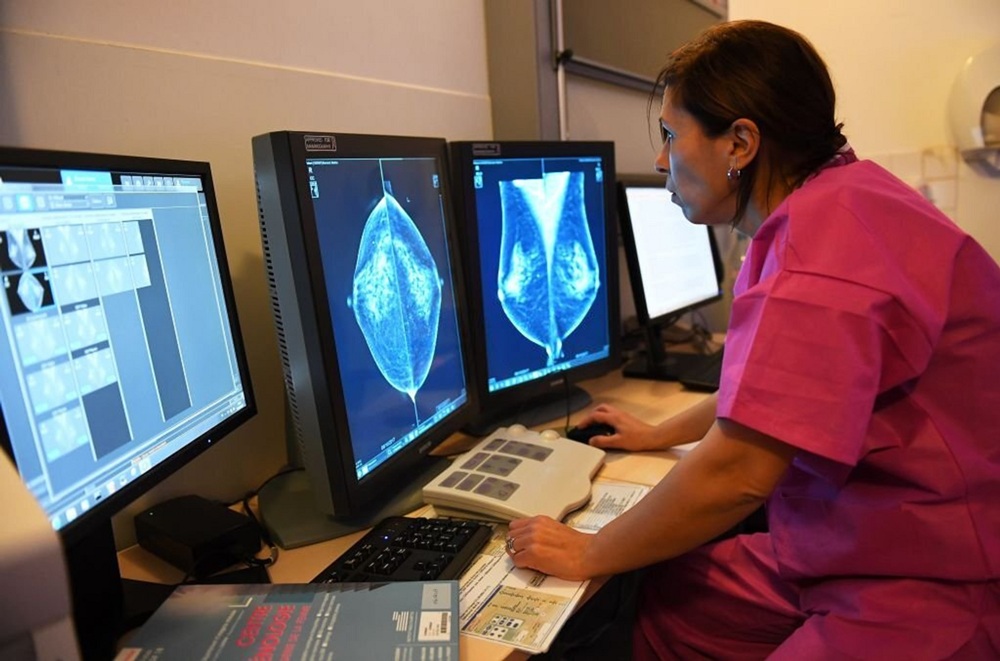
Changes in lymph nodes may help show which breast cancer patients face higher or lower risk of the disease spreading, researchers have found.
The findings could support more tailored care, new treatments and help more people avoid unnecessary treatment.
Dr Simon Vincent is chief scientific officer at Breast Cancer Now, which funded the research:
He said: “These findings suggest that changes to the structure of the lymph nodes are more than just a consequence of the cancer. They can also play an active role in helping breast cancer progress.
“With one person tragically dying from breast cancer every 45 minutes in the UK, we urgently need research like this so that we can better understand who is most at risk of their cancer progressing and becoming incurable. Only then we can find ways to stop it.
“With a better understanding of how lymph nodes change as breast cancer spreads, we could find new targets for future treatments for types of breast cancer that are harder to treat.”
Lymph nodes, a key part of the immune system, help the body fight infections and cancer. In breast cancer, the lymph nodes in the armpit are often the first place the disease spreads to.
At the moment, everyone with invasive breast cancer has to undergo surgery to remove lymph nodes so doctors can check for cancer cells.
Invasive breast cancer means cancer that has spread beyond where it first developed in the breast into nearby tissue.
While this is effective, it can lead to long-term side effects such as swelling of the arm, known as lymphoedema, and may be unnecessary for some patients, particularly those with early-stage disease or those whose cancer responds well to treatment.
The study analysed 331 lymph node samples from people with different types of breast cancer and compared them with healthy lymph nodes from people free from the disease.
It found that breast cancer could change the structure of a network that supports the lymph nodes.
Crucially, some of these changes could occur before doctors were able to spot any cancer cells in the network.
Some changes were linked to a better chance of survival, while others were associated with a poorer prognosis.
Dr Amy Llewellyn and Dr Kalnisha Naidoo from King’s College London, together with professor Sophie Acton at University College London, compared the 331 samples with healthy lymph nodes in people free from the disease.
They looked at fibroblastic reticular cells, known as FRCs, a group of cells in lymph nodes that provide their structure, control fluid flow and activate different immune cells.
The study showed that the structure of this FRC network could change before the cancer had spread and differed depending on the type of breast cancer, any spread and whether someone had received chemotherapy.
Chemotherapy uses medicines to kill cancer cells or slow their growth.
The researchers said the findings could help doctors better understand who is most at risk of breast cancer spreading.
Dr Llewellyn said the first large-scale analysis of FRC in human lymph node tissue from breast cancer patients was addressing the “urgent need” for a better understanding of the area’s biology.

Article produced in association with Spital Clinic
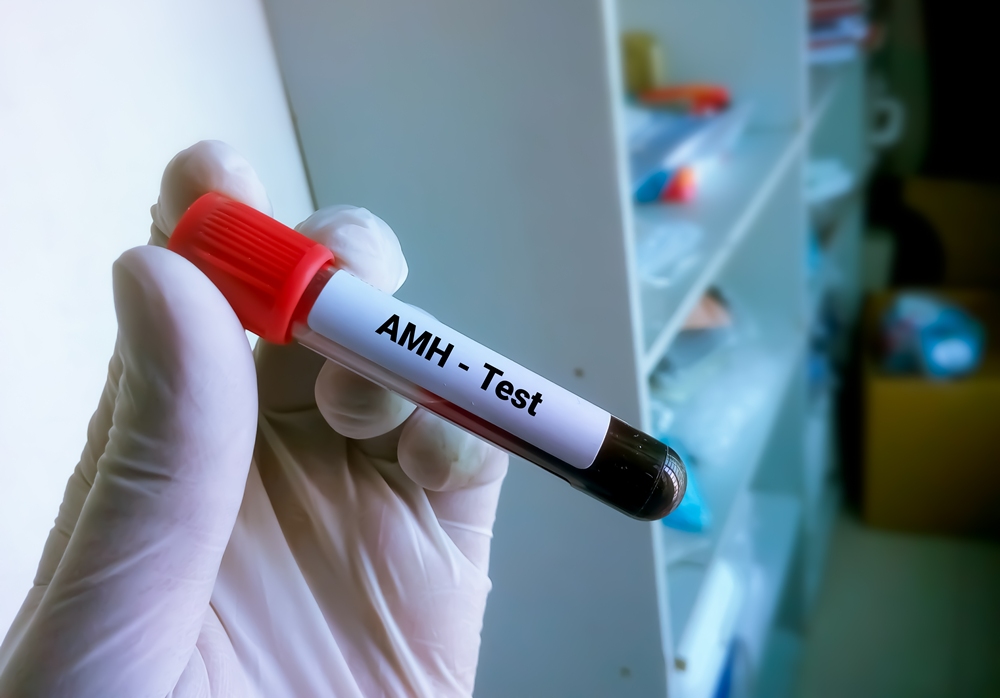
AMH has become one of the most-requested blood tests in private women’s health. The number it gives back is useful, but only when it is read in context.
AMH testing in the UK has gone mainstream over the past few years. Home-testing kits sell it as a snapshot of “your fertility”.
Private clinics include it in screening packages. On social media, individual AMH results are now routinely treated as a verdict on whether a woman will be able to have children.
That reading isn’t accurate. Anti-Müllerian Hormone (AMH) does carry useful information, but only inside a wider clinical picture.
Looked at on its own, it produces a lot of unnecessary anxiety, and often hides the questions that matter more.
What AMH measures
AMH is a hormone produced by the small follicles in the ovaries, the ones that haven’t yet been recruited for ovulation. Because these follicles are relatively stable across the menstrual cycle, the test can be done on any day, without needing to be timed to a period.
A higher AMH level tends to indicate a larger pool of these follicles. A lower level suggests the pool is smaller. That, broadly, is what the result shows.
The HFEA, the UK’s independent regulator of fertility treatment, describes AMH as an indicator of ovarian reserve, while making clear that fertility test results of this kind “are not guaranteed” as a predictor of fertility outcomes.
Put simply: AMH is a count of what is there. It says nothing about how well the body will use it, and it cannot predict if or when conception will happen.
Where AMH fits in a modern fertility assessment
In current UK private practice, AMH is rarely tested in isolation. A meaningful fertility assessment will pair it with a fuller hormone profile (FSH, LH, oestradiol, prolactin and thyroid function), along with markers such as Day 21 progesterone, vitamin D and rubella immunity where relevant.
This is the structure used in a trying-to-conceive screening, and there is a reason for it: each of these tests answers a different question that AMH on its own cannot.
It is this combination, not the AMH number on its own, that gives a clinician enough information to say anything meaningful about an individual’s reproductive picture.
Misconception 1: “A low AMH means natural pregnancy isn’t possible”
This is the misconception that causes the most distress, and it is consistently wrong.
Several large prospective studies of women in their 30s and 40s trying to conceive naturally have found that women whose biomarkers, including AMH, pointed to a diminished ovarian reserve were no less likely to conceive within twelve cycles than women with reassuring results.
That is why neither UK regulators nor national guidance treat AMH as a test that can predict natural fertility in women who have no known infertility issue.
The reason is simple. Natural conception only requires one good egg, released in a normal cycle, in the right window.
AMH doesn’t measure egg quality, and it doesn’t reveal whether ovulation is happening. A woman with low AMH may still ovulate every month with high-quality eggs.
A woman with high AMH (often the pattern seen in polycystic ovary syndrome) may not be ovulating regularly at all.
The NHS emphasises that age is the strongest single predictor of natural fertility. A 35-year-old with a low AMH and regular cycles is, on average, more likely to conceive naturally than a 40-year-old with a normal AMH and irregular ones.
If AMH comes back low for someone who is trying to conceive, the more useful question isn’t whether pregnancy is still possible (the answer is almost always yes), but whether there is reason to investigate the wider picture now rather than waiting twelve months.
Misconception 2: “A normal AMH means everything is fine”
The opposite assumption is just as risky.
AMH tells you about egg quantity. It does not tell you about:
- Egg quality, which is closely tied to age
- Whether ovulation is happening regularly
- Whether the fallopian tubes are open
- Whether there are structural issues such as fibroids, polyps, ovarian cysts or endometriosis
- Sperm parameters in a male partner
- Whether implantation will succeed
A reassuringly normal AMH at 38 still sits alongside age-related changes in egg quality. A slightly lower-than-average AMH at 28 may carry no real-world implications at all.
That is why no UK clinical body recommends AMH as a routine screening test for healthy women who have no fertility concerns. NICE’s fertility guideline, NG73, treats AMH as one component of a broader investigation, not as a verdict in itself.
Imaging is the natural counterpart to the blood test. A transvaginal pelvic ultrasound directly visualises the small follicles that produce AMH, the antral follicle count. It also picks up structural findings a blood test will never reveal, including ovarian cysts, fibroids, polycystic ovarian morphology, and abnormalities in the uterine cavity. A full ovarian reserve assessment normally includes both.
Where the AMH number actually matters
There are three settings in which AMH carries real, decision-relevant information.
Before IVF or egg freezing. AMH is one of the better predictors of how the ovaries are likely to respond to stimulation medication.
A higher AMH usually predicts more eggs collected per cycle, and a very low AMH may shape decisions about protocol or whether to bank cycles before treatment.
During a fertility investigation. If a couple has been trying for twelve months, or six months if the woman is over 35, AMH becomes part of a wider assessment that should also include ovarian ultrasound, a fuller hormone profile, semen analysis and an assessment of tubal patency.
As context for women planning ahead. Women who want to understand their reproductive options before they are ready to conceive (for example, ahead of a decision about egg freezing) can find AMH informative, provided it is interpreted alongside age, antral follicle count, and other markers, by a clinician who can place the number in context.
Reading the number properly
For anyone who has had an AMH test, three things make the result more useful:
- Pair it with age. A “normal” AMH at 25 means something very different from the same number at 38. Age is doing more work in the equation than the AMH value itself.
- Pair it with imaging. Ultrasound shows what is actually in the ovaries today, rather than relying on a single biochemical marker.
- Read it with a clinician. A number on a screen, with no context, no follow-up and no plan, is the worst way to use a test that, properly interpreted, can be very informative.
AMH is a useful tool. It just isn’t the headline it has often been turned into.
Disclaimer
This article is produced for informational purposes only and does not constitute medical advice, diagnosis or treatment. Clinical guidance referenced reflects published HFEA, NHS and NICE information available as at May 2026. Individual circumstances vary; readers are advised to consult a qualified healthcare professional before acting on any information in this article. This piece was produced in association with Spital Clinic, which provided background clinical information for editorial purposes. Hyperlinks to external sources are included for reference only and do not represent an endorsement of any product, service or organisation.












 Menopause3 weeks ago
Perimenopause misinformation ‘putting women at risk’

 Hormonal health4 weeks ago
NHS urged to update website following renaming of PCOS

 News3 weeks ago
Women still being failed when they reach menopause, experts say

 Entrepreneur3 weeks ago
Women’s Health Innovation Summit opens submissions for 2026 Innovation Showcase

 Insight2 weeks ago
British women among angriest in Europe, health survey reveals

 News3 weeks ago
Three menopause innovators shortlisted for Femtech World Award

 Menopause3 weeks ago
Sweden eyes domestic production of oestrogen patches amid menopause treatment shortage

 News4 weeks ago
Low insulin diet and avoiding four food groups may prevent menopause weight gain