




News
Femtech versus ovarian cancer – an update


Ovarian cancer is the sixth most common cancer in women, with around 7,500 new cases per day.
According to Cancer Research UK statistics, ovarian cancer survival is improving, having almost doubled in the last 40 years. In the 1970s, less than a fifth of women diagnosed with ovarian cancer survived their disease beyond ten years, now it’s more than a third.
However, with a range of non-specific symptoms, including feeling full quickly, bloating and stomach pain, it can be hard to diagnose.
In some cases, it can also cause unexplained tiredness or weight loss, or changes in your bowel habit especially if this starts after the age of 50.
However, as technology is constantly evolving to help us detect, treat and cure more diseases than ever before, can femtech helping to continue the fight against ovarian cancer?
Femtech World reports.
Screening
Recent research has led scientists to believe that the cervical screening programme could also be used to screen for both ovarian and breast cancers.
Experts say they may have found tell-tale signatures in these neck-of-the-womb cells linked to other cancers, although further research is needed.
Cells that turn cancerous often show distinctive early changes at the molecular level.
And researchers believe they have found some in smear-test samples that could help identify women at higher risk of specific other cancers, not just of the cervix.
Dr Julie Sharp, from Cancer Research UK, said: “Screening for cervical cancer is already an invaluable tool, so it’s interesting to see if cell samples taken through screening could be used in future to detect other cancers.
“However, we need further research to see how accurate this method is at detecting women with ovarian and breast cancer.
“Like the authors of this research, we look forward to seeing larger trials over longer periods to establish whether cervical cells could diagnose other cancers at an earlier stage.”
The work was funded by The Eve Appeal research charity that hopes to drive improved treatments for gynecological cancers.
Early detection
When diagnosed at its earliest stage, almost all women with ovarian cancer will survive their disease for one year or more, compared with slightly more than one in two people when the disease is diagnosed at the latest stage – highlighting just how important early detection is.
Israeli femtech start-up GinaLife is developing a platform of biomarker strategies, supported by artificial intelligence and data science, for the early detection of problems in women’s health.
It was set up by research scientist Inbal Zafir-Lavie, after her 38-year-old sister died from colorectal cancer, which, due to her young age, remained undiagnosed until it was too late.
GinaLife is currently developing a test that can analyse vaginal fluids, using artificial intelligence and data science to search for specific cancer biomarkers. While it is being tested at first in-clinic, the company envisions one day it will be available for home or remote use, increasing accessibility and potentially saving more lives.
In another early detection breakthrough, Boston-based start-up AOA is developing the first non-invasive ovarian cancer diagnostic liquid biopsy test, which could save the lives of half the women who are diagnosed with ovarian cancer.
That’s because, by the time they are diagnosed, in many cases the cancer has already spread.
AOA’s Akrivis GD is a liquid biopsy test that shows promising results in the early diagnosis of ovarian cancer through analysis of tumour marker gangliosides, which can therefore lead to earlier diagnosis and earlier treatment.
Research
University of Arizona researchers have developed a new device to help learn more about ovarian cancer, as well as supporting earlier diagnosis.
The university’s BIO5 Institute Director Jennifer Barton has developed a high-resolution falloposcope, which has a diameter of only 0.8 mm, small enough to image the fallopian tubes – narrow ducts that connect the uterus to the ovaries – and search for signs of early-stage cancer.
Since September last year, human trial, Dr John Heusinkveld has been using the device to image the fallopian tubes of volunteers who are already having their tubes removed for non-cancer reasons. This will allow researchers not only to test the effectiveness of the device, but also to start establishing a baseline of what “normal” fallopian tubes look like.
Researchers believe ovarian cancer usually starts in the fallopian tubes, and many medical professionals recommend that at-risk women have their ovaries and fallopian tubes removed.
However, the procedure pushes women into surgically induced menopause, with side effects including hot flushes, mood swings, and higher risk of heart and bone disease
Barton cited one example of a study in which 122 patients who were known to carry genes that increased their risk for cancer had their fallopian tubes removed as a precaution. Analysis of the tubes later showed that only seven of the women were in the process of developing cancer.

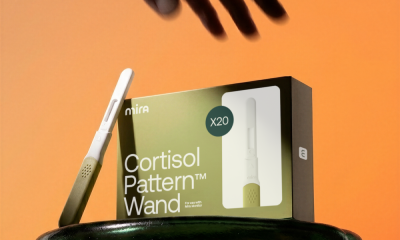










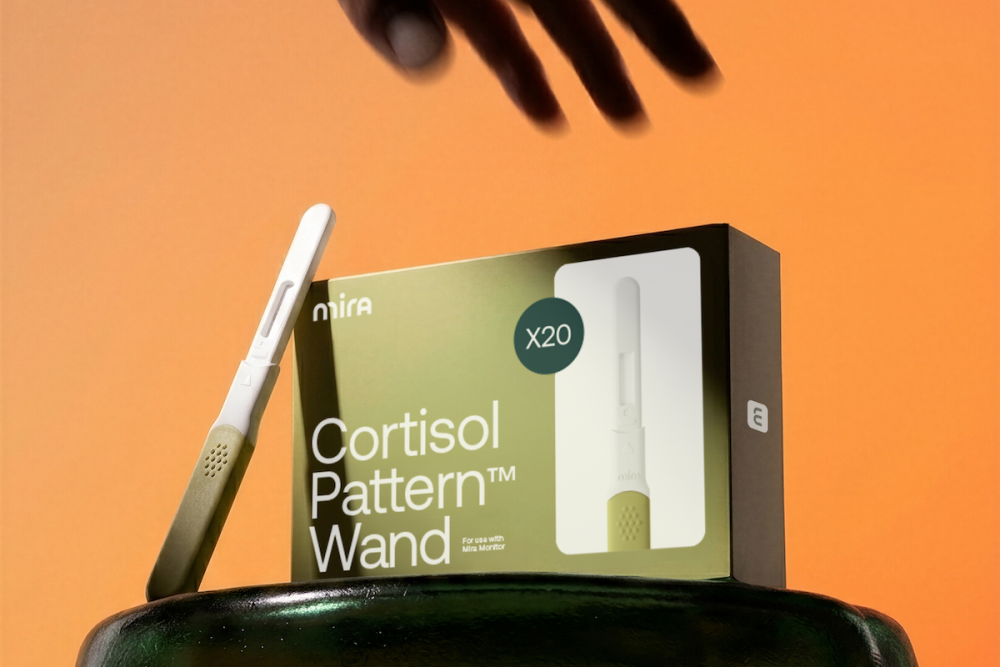
Mira has launched an at-home cortisol tracking kit that allows women to monitor stress-related patterns over time using urine samples.
The Cortisol Pattern Kit measures urinary free cortisol directly from a urine sample and displays results through the company’s existing monitor and app.
The system is intended for repeated testing rather than a single measurement, allowing users to compare results with a personal baseline built from their own data.
Mira said consistent daily testing can establish a baseline in about a week. It recommends testing in the morning and evening to see how cortisol patterns change throughout the day.
Cortisol is involved in the body’s stress response but is not a direct or complete measure of stress. The company said the kit is intended for general wellness use and is not designed to diagnose stress, an endocrine condition or any other medical condition.
The Cortisol Pattern Wands use the same lateral-flow testing format as Mira’s existing hormone tests. Users dip a wand into a urine sample, insert it into the Mira Monitor and view the result in the app within minutes.
The company said cortisol data can be viewed alongside cycle, hormone and daily routine information.
Sylvia Kang, founder and chief executive of Mira, said: “The Cortisol Pattern™ Kit gives women a new way to understand their stress patterns over time, in the context of their own biology.”
She added: “We built Mira to give women answers they had spent far too long searching for, beginning with the TTC journey and expanding into hormone and cycle tracking across life stages, including perimenopause. Now, we’re taking Mira beyond reproductive health and into everyday wellness, bringing personalised stress-pattern tracking directly into women’s homes.”
Mira said more than 350,000 women already use its platform to track their cycle and hormones.
Waitlist sign-ups for the Cortisol Pattern Kit and Cortisol Pattern Wands opened on 22 September, with wand refills available to pre-order in 20- and 30-count options.
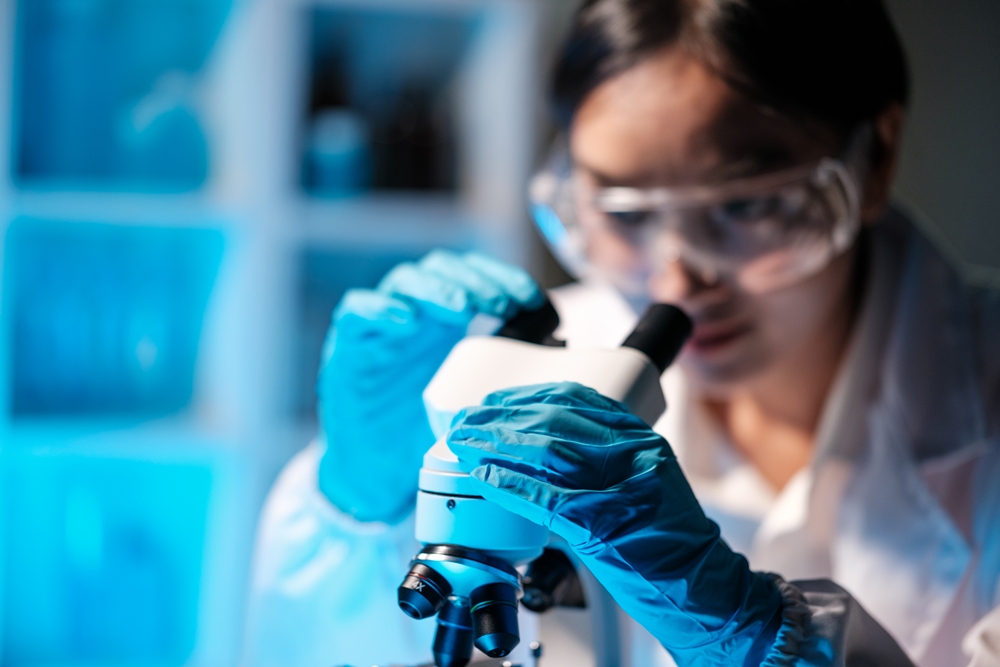
A targeted nanotherapy reduced endometriosis lesions and pain sensitivity after a single dose in mice, early research has found.
The experimental treatment uses a nanoparticle to deliver an existing drug to immune cells associated with endometriosis.
Researchers hope the approach could eventually lead to a treatment for people with the chronic condition, but it has not yet been tested in humans.

Kanako Hayashi, professor in Washington State University’s School of Molecular Biosciences in the College of Veterinary Medicine and a corresponding author of the research, said: “We found the disease-specific immune cell, and then we had a drug, but we couldn’t target the cell with the drug alone.
“So we used this nanocarrier that delivers the drug specifically to the disease site.”
The Washington State University team developed the therapy after previously identifying a distinct population of macrophages associated with endometriosis. Macrophages are white blood cells involved in immune defence.
They designed a nanocarrier, a specialised molecule used to transport drugs to the disease site, to target these cells without affecting surrounding cells and tissue.
The treatment uses niclosamide, a drug approved to treat intestinal tapeworms that is also being studied for other potential uses, including cancer treatment.
Previous research by the team found that niclosamide could reduce endometriosis lesions. However, the drug has low solubility, meaning large amounts are needed for it to work and limiting how long it can safely be taken.
The researchers engineered a nano-sized molecule called a dendrimer to bond with niclosamide and deliver it in a more soluble form.
In a mouse model, a single injection reduced the size and number of endometriosis lesions as well as sensitivity to pain.
Endometriosis affects roughly 190 million women worldwide and occurs when lesions similar to tissue inside the uterus grow outside it.
Symptoms can include chronic pain, severe cramps, pain during sex and infertility. Hormonal therapies can help manage symptoms but may affect fertility and bone density, while surgery can remove lesions but its effectiveness may be short-term.
Recent research has focused on immune system dysfunction in endometriosis, particularly problems involving macrophages.
The researchers are working with the WSU Office of Entrepreneurship and Innovation as they pursue patenting and commercialisation opportunities and seek support to test the technology in human trials.
Hayashi said: “Although we still need to clear multiple phases, this study is telling us the efficacy is strong, and this nanocarrier is stable, so far, for two weeks—and we think we can go longer.
“The idea is that if it’s stable for a month, you could go to the doctor once a month, get the shot, either IV or muscle injection, and then go home.”

Chest Heart & Stroke Scotland has launched a three-year Women’s Health Plan setting out actions to improve prevention, diagnosis, treatment and support for women in Scotland.
The 2026 to 2029 plan includes commitments on health information, prevention and early detection, professional training, peer support, post-diagnosis care, policy and research.
It comes amid disparities affecting women with chest, heart and stroke conditions, including differences in diagnosis, testing and treatment.
Figures cited by the charity show women in Scotland are 50 per cent more likely than men to receive an initial misdiagnosis after a heart attack.
Jane-Claire Judson, chief executive of Chest Heart & Stroke Scotland, said: “Women have been telling us for years that their symptoms aren’t being taken seriously, and the evidence backs them up.
“When we talk about women’s health, we need to look beyond reproductive and maternal health alone.
“Women experience inequalities across a wide range of conditions, including chest, heart, stroke and Long Covid conditions, and they deserve equitable access to the information, support and care they need.
“Our CHSS Women’s Health Plan is about listening to those experiences and turning them into meaningful action.”
Across the UK, women are twice as likely to be misdiagnosed with heart failure, with many waiting an average of 20 weeks for a diagnosis, compared with 3.6 weeks for men.
There are more than 4,600 incidences of stroke in women in Scotland each year, with more than 1,200 dying as a result.
Asthma and chronic obstructive pulmonary disease (COPD) are also more common among women, while women are nearly twice as likely as men to die from asthma.
Women are less likely to be offered diagnostic testing within 72 hours of a heart attack and less likely to be prescribed medication that reduces the risk of a second heart attack, according to the charity.
CHSS also said conditions that predominantly affect women, including Long Covid and heart conditions such as coronary microvascular dysfunction, remain under-researched and under-diagnosed.
Four in five women say they are not listened to by healthcare professionals, while UK female life expectancy has fallen from 20th to 26th place among 38 OECD countries in recent years.
The Women’s Health Plan includes developing women-specific health information and launching a prevention and early detection programme through CHSS’s Health Defence and Community Healthcare Support Service.
Other commitments include raising the visibility of women’s health, strengthening training for healthcare professionals, CHSS colleagues and volunteers, expanding peer support and post-diagnosis care, and campaigning for changes to policy, funding and women’s inclusion in research.
The charity also plans to drive continuous improvement in its women’s health work, shaped by lived experience.
CHSS said it will seek to address inequalities through prevention programmes, professional education, policy influence and improved support for women across Scotland.
The plan builds on CHSS’s women’s health work launched in 2021 and its wider No Life Half Lived strategy. It also aligns with phases one and two of the Scottish Government’s Women’s Health Plan.
More than 140 responses to a national survey helped shape the plan, alongside consultation with health and social care professionals and people with lived experience through CHSS’s Voices of Experience Panel.
Judson said: “By improving awareness, supporting earlier detection and diagnosis, and ensuring women are heard when they seek help, we can begin to address inequalities that have persisted for far too long.
“Our first plan, launched in 2021, established important foundations.
“This next phase builds on that progress and reflects our commitment to a Scotland, where nobody is left behind because of their sex or gender.
“At Chest Heart & Stroke Scotland, our No Life Half Lived mission means working towards a future where everyone can live well with their condition. By bringing together women with lived experience, health professionals, policymakers and partners, we can create lasting change and help build a fairer, healthier Scotland for women.”









 Menopause1 week ago
Menopause may not explain rising heart condition in women – study

 Fertility2 weeks ago
Paracetamol use may impact future fertility, studies suggest

 Insight1 week ago
Women with birth trauma face 2.5x higher healthcare costs – study

 Menopause2 weeks ago
Cancer drug could tackle osteoporosis menopause weight gain

 News1 week ago
Medical cannabis may improve endometriosis symptoms – study
 Cancer1 week ago
Study could explain why obesity is a breast cancer risk factor

 Menopause2 weeks ago
Menopause hormone therapy may improve cardiovascular health outcomes, study suggests
 AI1 week ago
Evvy secures US$40m for AI-powered vaginal microbiome testing
3 Comments