



Entrepreneur
Women’s HealthX brings together leading pharma innovators advancing the future of women’s healthcare


Women’s HealthX is convening a powerful lineup of pharmaceutical and biotech leaders, uniting global organisations including AstraZeneca, Bayer, Gilead, Chiesi, Eli Lilly, Alexion, and Daré Bioscience alongside 750+ senior clinicians, hospital leaders, insurers, and policy makers shaping the future of women’s health.
As the women’s health market continues to evolve, the event provides a unique platform for pharma leaders to share how they are leveraging clinical trial data, real world evidence, and digital innovation to reduce regulatory risk, improve representation in research, and unlock new opportunities for partnership and pipeline growth.
Across seven dedicated stages covering the full lifecycle of care, attendees will gain direct insight into how industry leaders are driving measurable change in outcomes, access, and equity.
Confirmed sessions and trailblazers include:
Maternity & Maternal Care
- Empowering Mothers, Advancing Equity, and Improving Outcomes in Premature Care
Erica Smith, Vice President, Value & Market Access, US, Chiesi
Evidence, Data & Innovation
- Addressing Design Barriers: Paving the Way for Sex Specific Data Clarity
Julieta Jimenez, Executive Director, Program Management Clinical Operations, V&I, AstraZeneca
- Design Trials That Generate Clinically Meaningful Evidence for Women
Luba Soskin, Global Clinical Lead, Women’s Health, Bayer
Chronic Disease Management
- Improving Outcomes in Obesity Through Evidence Based Person Centred Care
Tracy Sims, Executive Director, Corporate Affairs, Cardiometabolic Health, Eli Lilly
- Tackling Sex Based Health Inequities by Breaking Down Barriers and Bias
Adrian Kielhorn, Senior Director, Global Head HEOR Neurology, Alexion
Sexual Health & Wellness
- The Clinical Impact of Internal Stigma in Sexual Health
Kesha O’Reilly, Director Medical Affairs, HIV Franchise, Gilead
- Explore Innovative Product Manufacturing Pathways Beyond Conventional Regulatory Models
David Friend, Chief Science Officer, Daré Bioscience
We have also just announced Endometriosis Advocate Padma Lakshmi as a keynote speaker, bringing one of the most influential voices in women’s health advocacy to the stage.
See full list of confirmed trailblazers here
Together, these leaders represent the organisations driving innovation across research, development, and commercialisation, offering practical insight into how to bring safer, more effective solutions to women worldwide.
The program moves beyond discussion into delivery, equipping attendees with the latest clinical evidence, regulatory strategies, and innovation frameworks needed to accelerate impact across the healthcare ecosystem.
With senior decision makers from across pharma, biotech, and healthcare in attendance, women’s healthX is where partnerships are formed, strategies are shaped, and the future of women’s health is defined.


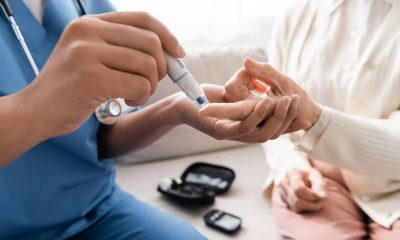






In countries where the gender playing field still steeply tilts toward male advantage, women-led businesses that participated in accelerators showed no financial improvement, or even did worse, compared to ventures that applied but weren’t accepted, a study revealed.
The researchers drew on data for more than 1,400 ventures across 65 countries that had applied to 33 different accelerators between 2013 and 2015.
The study built on data from the Global Accelerator Learning Initiative, which tracks follow-on impacts of accelerator programmes around the world, including comparative information between applicants admitted and rejected from programmes.

Sarah Kaplan is professor emerita in strategic management at the University of Toronto’s Rotman School of Management as well as founding director for its Institute for Gender and the Economy.
She said: “Ironically, this was especially true for those that participated in accelerators focused on women’s empowerment.”
Prof. Kaplan wanted to know whether promises that accelerators could help narrow the gender divide in entrepreneurial success were bearing out.
Joined by Nilanjana Dutt of Bocconi University, the researchers honed in on social innovation accelerators because these tend to attract more women over more Silicon Valley-style programmes.
At first glance, the researchers found that women-led businesses did not benefit as much from accelerator participation as male-led businesses did.
But a more nuanced picture emerged once they layered in other information about the contexts in which accelerators were operating, including a World Economic Forum index on gender equality and surveys to get at details about the accelerator programs.
“In more gender-egalitarian countries, accelerators were doing a great job of supporting women entrepreneurs and especially when they focused on women’s empowerment,” said Prof. Kaplan.
In financial terms, “it was a pretty dramatic difference and one that should make everyone pause.”
In less gender egalitarian settings, accelerators may not be benefitting women-led ventures because, the researchers wrote, they may not have delivered programming women could really use, given the context in which they would be operating.
In countries with starker gender inequality, “oftentimes women can’t even get a loan without their husband signing,” said Prof. Kaplan.
“When accelerators go in, they can’t treat it like a one-off intervention but need to also work on the ecosystems that surround the ventures.”
Still, even in more egalitarian contexts, women entrepreneurs had lower acceptance rates into accelerators than men and that was true even when the accelerator prioritised women’s empowerment, or where it had higher numbers of women on selection committees.
Whether the selection criteria were biased or the female selectors were better at identifying which women entrepreneurs would benefit most is an open question for future research, Prof Kaplan said.
As for women entrepreneurs, her advice is to treat accelerator applications as a two-way street: be just as choosy about which programs to commit to:
“Focus on what specifically this accelerator would help me achieve and whether it’s a match from your side too.”

The women’s health sector is no longer just building a case for itself.
Capital is moving, consolidation is accelerating, and the companies that understood the opportunity early are now focused on one thing: scale.
The conversations happening at Women’s Health Week USA on May 13-14 at the New York Academy of Medicine reflect exactly that shift.
Three sessions in particular cut to the heart of where the industry is right now, and where it’s going next. Here’s a closer look at what’s on the full programme.
Key Panel Discussions
Who’s Backing the Boom: Inside the Capital Surge in Women’s Health
Capital is flowing into women’s health at record levels.
The question is no longer whether the sector will attract institutional investment, but where that capital is coming from, who it’s going to, and what it takes to unlock the next wave of commercial growth.
This session puts those questions to a panel with direct experience of deploying and raising capital in the sector.
Nicole Mooljee Damani (EY-Parthenon) moderates a conversation between Tara Bishop (Black Opal Ventures), Trish Costello (Portfolia), and Ramiz Khan (Wellcome Leap), three investors with distinct mandates and a shared focus on what actually moves the needle.
For founders and operators in the room, this session is a direct window into how the people writing the cheques are thinking.
What they’re backing, what they’re passing on, and what the current capital environment means for the companies building in women’s health right now.
Mergers & Acquisitions: Who’s Buying, Who’s Building, and Why
The M&A landscape in women’s health is heating up. Strategic acquisitions, consolidation plays, and corporate partnerships are reshaping the competitive map, and the decisions being made now will define the structure of the industry for years to come.
This panel examines the logic behind who’s acquiring and who’s holding, from the perspective of people operating at the sharp end of those decisions.
Oriana Papin-Zoghbi (AOA Dx), Monica Cepak (Wisp), Gabrielle de Briey (Hologic), and Johanna Grossman (New York Stock Exchange) bring a combined view that spans diagnostics, digital health, medtech and the capital markets infrastructure that underpins it all.
For anyone building a company with an eye on strategic exits, partnerships or acquisitions, this is the session that maps the terrain.
The Economics of Equity: How Inclusion Equals Growth Strategy
Inclusion isn’t a tickbox. It’s a growth lever. And the data increasingly backs that up.
This session makes the commercial case for equity in women’s health, examining how addressing underserved populations and closing health disparities doesn’t just serve social goals, it creates the biggest commercial opportunities in the sector.
The shift from impact metric to market strategy is already underway. This panel is where that argument gets made in full.
Annie Theriault (Cross Border Impact Ventures) moderates a conversation between Sharon Meers (Midi Health), Lauren Makler (Cofertility), Tanvi Patel (Amazon Pharmacy), and Julia Berenson (World Health Organisation). The breadth of that panel, spanning venture, fertility, pharma and global health policy, is itself a signal of how far the conversation has moved.
These three sessions are part of a broader two-day programme bringing together 700+ senior decision makers across investment, innovation, policy and medtech.
The event is built around curated 1:1 matchmaking, with introductions structured around each attendee’s commercial priorities.
Early Bird Pricing for Women’s Health Week USA is ending Friday April 17, to save up to $600 on your ticket to the Global Stage for Scale, book now!
Secure your place at Women’s Health Week USA
The women’s health sector is no longer just building a case for itself.
Capital is moving, consolidation is accelerating, and the companies that understood the opportunity early are now focused on one thing: scale.
The conversations happening at Women’s Health Week USA on May 13-14 at the New York Academy of Medicine reflect exactly that shift.
Three sessions in particular cut to the heart of where the industry is right now, and where it’s going next. Here’s a closer look at what’s on the full programme.
Key Panel Discussions
Who’s Backing the Boom: Inside the Capital Surge in Women’s Health
Capital is flowing into women’s health at record levels.
The question is no longer whether the sector will attract institutional investment, but where that capital is coming from, who it’s going to, and what it takes to unlock the next wave of commercial growth.
This session puts those questions to a panel with direct experience of deploying and raising capital in the sector.
Nicole Mooljee Damani (EY-Parthenon) moderates a conversation between Tara Bishop (Black Opal Ventures), Trish Costello (Portfolia), and Ramiz Khan (Wellcome Leap), three investors with distinct mandates and a shared focus on what actually moves the needle.
For founders and operators in the room, this session is a direct window into how the people writing the cheques are thinking.
What they’re backing, what they’re passing on, and what the current capital environment means for the companies building in women’s health right now.
Mergers & Acquisitions: Who’s Buying, Who’s Building, and Why
The M&A landscape in women’s health is heating up. Strategic acquisitions, consolidation plays, and corporate partnerships are reshaping the competitive map, and the decisions being made now will define the structure of the industry for years to come.
This panel examines the logic behind who’s acquiring and who’s holding, from the perspective of people operating at the sharp end of those decisions.
Oriana Papin-Zoghbi (AOA Dx), Monica Cepak (Wisp), Gabrielle de Briey (Hologic), and Johanna Grossman (New York Stock Exchange) bring a combined view that spans diagnostics, digital health, medtech and the capital markets infrastructure that underpins it all.
For anyone building a company with an eye on strategic exits, partnerships or acquisitions, this is the session that maps the terrain.
The Economics of Equity: How Inclusion Equals Growth Strategy
Inclusion isn’t a tickbox. It’s a growth lever. And the data increasingly backs that up.
This session makes the commercial case for equity in women’s health, examining how addressing underserved populations and closing health disparities doesn’t just serve social goals, it creates the biggest commercial opportunities in the sector.
The shift from impact metric to market strategy is already underway. This panel is where that argument gets made in full.
Annie Theriault (Cross Border Impact Ventures) moderates a conversation between Sharon Meers (Midi Health), Lauren Makler (Cofertility), Tanvi Patel (Amazon Pharmacy), and Julia Berenson (World Health Organisation). The breadth of that panel, spanning venture, fertility, pharma and global health policy, is itself a signal of how far the conversation has moved.
These three sessions are part of a broader two-day programme bringing together 700+ senior decision makers across investment, innovation, policy and medtech.
The event is built around curated 1:1 matchmaking, with introductions structured around each attendee’s commercial priorities.
Early Bird Pricing for Women’s Health Week USA is ending Friday April 17, to save up to $600 on your ticket to the Global Stage for Scale, book now!
Secure your place at Women’s Health Week USA












 Diagnosis4 weeks ago
Blood test shows promise in endometriosis

 Insight4 weeks ago
Women’s health leaders warn of censorship

 Insight4 weeks ago
Blood test predicts dementia 25 years before symptoms begin

 Menopause4 weeks ago
Study reveals hidden menopause tech privacy concerns

 News3 weeks ago
Femtech World Awards announces deadline extension

 News3 weeks ago
Luna and Kindbody partner to bring data-driven insight to women’s health and fertility care

 News4 weeks ago
Pregnancy may shed brain’s grey matter to prepare women for motherhood – study

 Menopause4 weeks ago
Non-hormonal menopause pill approved for NHS use