




“I had no idea how to set up a company”- the founder tackling the burden of preterm birth
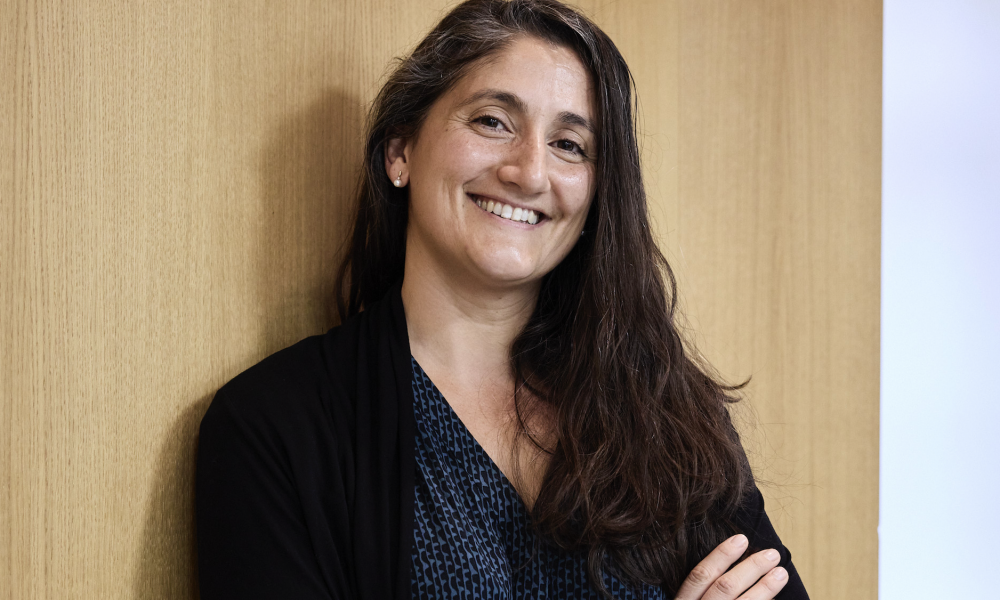
An estimated 13.4 million babies were born pre-term in 2020, with nearly one million dying from preterm complications. Sabrina Badir, founder and CEO of Pregnolia, is on a mission to change that.
The medical device she’s developed, the result of years of academic research at ETH Zürich and University Hospital Zürich, allows healthcare providers to measure the stiffness of the cervix to identify women at risk for premature birth.
Her innovation is not just about supporting gynaecologists in making key decisions, but about addressing the health and economic challenge of preterm birth worldwide. She tells us all about it below.

Hi Sabrina, could you tell us a bit more about your background?
I am a biomechanical engineer from ETH Zurich (Federal Institute of Technology Zurich) in Switzerland. During my PhD at the Institute for Mechanical System my colleagues and I from ETH and University Hospital Zurich developed a device to measure cervical stiffness to support the risk assessment of premature birth. After completing this research project, I translated our prototype into a medical device and founded Pregnolia.
What inspired you to create Pregnolia?
The fact that I became an entrepreneur just happened. When I had completed my doctoral thesis, I was faced with the question of how to proceed with my research project. At the time, I attended a project management course and the course instructor said: “That’s very interesting, what you’ve done there. Why don’t you set up a company?”
I was immediately hooked. But I had no idea how to set up a company. I then applied for the Pioneer Fellowship at ETH Zurich, where you learn how to turn research results into a potential product. I was accepted and that’s how Pregnolia was born. Now, seven years later, the first Pregnolia measuring devices are in doctors’ practice and clinics.
When I founded Pregnolia in 2016, people weren’t talking about women’s health yet. Something that was very close to my heart even before the founding and where I wanted to actively make a difference. And now seeing this topic gaining more and more importance encourages me even more to have made the right decision and to help millions of mothers and their babies around the world.
How would you describe Pregnolia in a few words?
Pregnolia is a medtech company focused on preterm birth detection. We have developed a CE-marked and patented measurement device to assess the stiffness of the cervix which serves as a crucial indicator for estimating the risk of preterm birth.
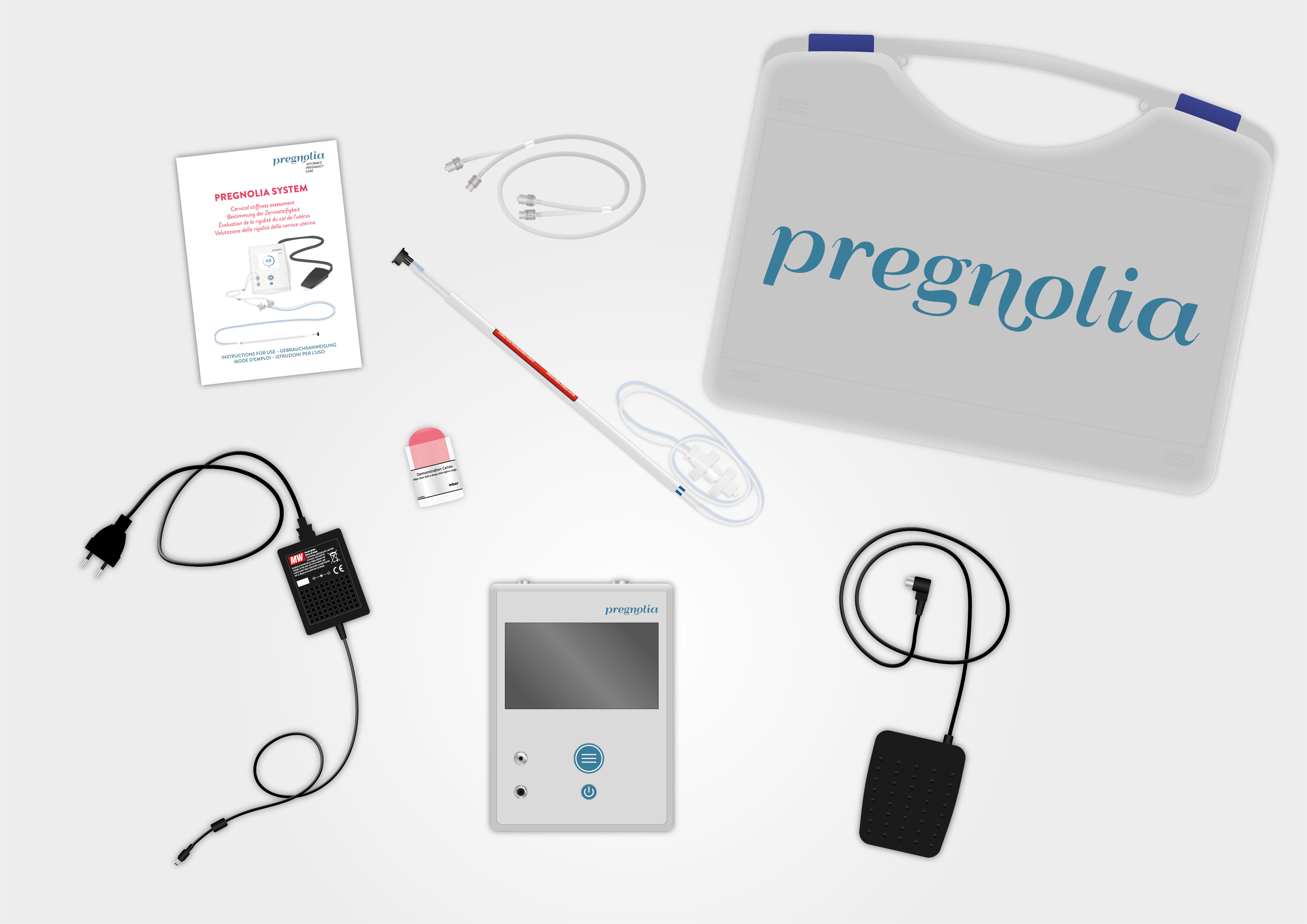
Our product, the Pregnolia System, consists of a control unit and a probe. The probe is inserted into the vagina with the help of a speculum and the probe head is placed on the cervix. The control unit creates a vacuum, which sucks the tissue of the cervix up to the probe by a maximum of four millimetres. The measurement takes just a few seconds and at the end of the measurement, the control unit displays a value in millibars.
The lower this value is, the less vacuum was needed to displace the tissue up to four millimetres, which means the softer the tissue is. A soft cervix in combination with other clinical factors can be an indicator of a premature birth, so based on the result on the display, the doctor can take immediate clinical actions to delay or prevent the baby from being born too early.
What makes Pregnolia different?
The Pregnolia System is the world’s first patented and CE-marked medical device to measure cervical stiffness. Existing proof-of-concept data confirm that cervical stiffness correlates with earlier births and the diagnostic capabilities are significantly better than the cervical length measured by ultrasound, which is the golden standard in preterm birth diagnosis today.
Our device offers immediate results and enables healthcare professionals to take prompt interventions. Our technology is scalable, highly deployable, including in locations with low levels of material and human resources and aims to create a pregnancy care platform that can be used at different stages in pregnancy and beyond.
Women’s health comes with a lot of stigma. How has this impacted you as a founder?
The awareness around women’s health has increased significantly in recent years and is perceived as a trend, but little has changed behind the scenes.
With 13.4 million premature babies born each year, tackling the unmet need for accurate premature births is a global problem. The 15th World Prematurity Day on November 15, 2023 drew attention to the ongoing fight against preterm births and also the latest WHO report is a reminder that preterm birth rates have not fallen significantly over the past decade.
The alarming statistics that make preterm birth the second leading cause of infant deaths worldwide emphasises the urgency to improve preterm birth detection and intervention. However, bringing new solutions to market is a lengthy process.
For me, it is still remarkable, how much we still don’t know about the event that generates every single human life and that basic understanding of pregnancy itself is full of gaping scientific holes and mysteries.
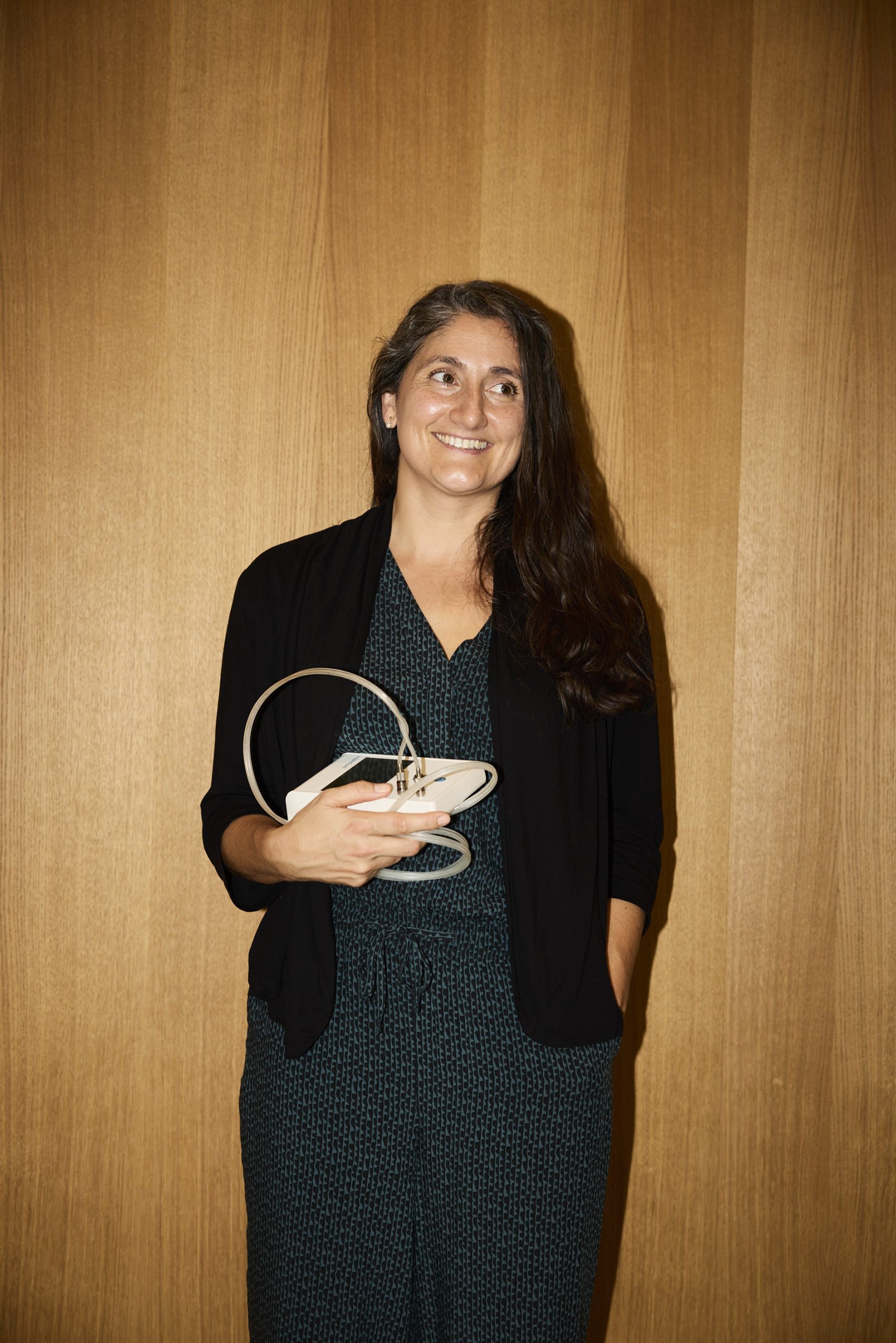
Sabrina Badir, Pregnolia founder and CEO / source: Markus Bertschi / ETH Zurich
This means we first have to conduct basic research and collect sufficient data, because the results of clinical trials are central in order to gain the interest and trust of the professional community. But carrying out investigations takes a lot of time and is costly. Therefore, external funding is important.
However, venture capitalists still prefer to invest in areas they are familiar with and this is particularly challenging when it comes to fundraising. VCs often mistakenly consider the pregnancy market a niche market, a view that does not do justice to the true dynamics of the market.
There is a scepticism about the potential return of investment from women’s health companies. This is because a) there have not been many company sales (exits) in women’s health yet because the industry is relatively new – but they do exist, for example the deal between Organon and Alydia, and b) in the medtech industry, it is well known that companies have to achieve double-digit million-dollar revenues before they are even considered as portfolio assets by potential industry giants such as J&J.
This overlooks the fact that in the coming years the demand for assets in women’s health will be significantly greater than the available products! And this, of course, has an impact on the valuation of a deal and the timing of when a deal is even struck. So, you have to become quite creative to raise the necessary funds and luckily, so far, we have done a good job.
What obstacles have you encountered on this journey?
In addition to the difficulties associated with collecting clinical data during pregnancy and the fundraising, as mentioned before, there were other challenges on our journey.
We went through an extensive start-up phase, during which we transformed the prototype into a medical device and we had to navigate the complex landscape of regulatory approval procedures. It took four years for the device to receive CE certification – a milestone achieved amidst the turmoil of the Covid pandemic.
Especially adapting to the dynamic changes in the medical device industry became an enduring aspect of our journey. For example, the lack of an institutional agreement with the European Union and the impact of the new EU Medical Devices Regulation on Swiss companies that export medical devices also presented hurdles.
Nevertheless, we successfully overcame these obstacles, which culminated in the successful completion of MDR certification in October of this year.
What lessons have you learned?
I have learned a lot over the last few years and I am still learning. One lesson was realising how important it is to actively listen to others and be open to their perspectives. Based on all information and feedback you receive you can draw conclusions and make your own decisions.
It takes visionary thinking to bring a breakthrough idea to market and not everyone immediately understands and agrees with your idea when they first hear it. But being patient and sticking to my convictions eventually led to others following my lead.
Networking has also been invaluable on my journey so far. Even today, it still takes me courage and sometimes a bit of cheek to approach important or even famous people, but building meaningful connections opens doors to opportunities and insights that may not have been possible otherwise.
Last but not least, an open and transparent communication has proven its worth in order to pull together in the same direction. In my opinion, a clear statement of goals and expectations not only promotes understanding and trust between your employees, but also with other stakeholders such as customers, investors and other interest groups.
Where are you with Pregnolia now?
In November we successfully closed our funding round of CHF2.2m in funding despite the difficult market environment. I am grateful to our generous investors for their commitment as it is a sign of their trust in our hard work.
We will use the new funds to cover the costs of the ongoing clinical trials currently being conducted in Europe, where extensive data is being collected to develop actionable clinical guidance for prediction and diagnosis of preterm birth.
This will allow us to eventually transform our measuring device into a risk assessment device that directly indicates a pregnant woman’s risk for preterm birth.
Where do you see the company in the future?
My vision for the future of Pregnolia is to become the new standard for detecting premature birth, and wouldn’t it be great to have a Pregnolia System next to the ultrasound machine in every gynaecologist’s practice?
My aim is to help reduce the preterm birth rate, reduce the emotional and financial burden as well as to minimise overtreatment. I truly believe that our medical device has the potential for widespread use and will improve pregnancy care worldwide as it requires few resources and training.
Personally, I also want to be a role model and motivate other entrepreneurs to tackle unmet needs in pregnancy care and women’s health in general. With the significant mass, we will also generate the success stories and by that attract more investors investing in women’s health.
To receive the Femtech World newsletter, sign up here.

Newsletter
Sign up for free weekly updates
The latest femtech news, research and investment, straight to your inbox.




