



News
Ditching white shorts “only touches” on the support women need in sport, say experts
The Lionesses had previously worn white shorts with their home kits, but will now have blue shorts


The Football Association’s decision to switch the colour of the Lionesses’ shorts from white to blue “only touches” on some of the considerations sports governing bodies should be looking at to support female athletes, experts have warned.
Last week England’s women’s football team unveiled a new kit, with blue shorts instead of white, a change encouraged by players’ longstanding concerns about wearing white while on their periods.
However, experts have said that switching to blue shorts does not do enough to address women’s period concerns in sport.
Dr Nicky Keay, honorary clinical lecturer at UCL, says: “While this is a step in the right direction why is it happening only now in 2023 when women have been having periods for millennia and at a time when more and more women are playing professional sport?
“Changing colour of shorts or skirts only touches on some of the considerations we should be looking to address to support women doing sport and staying in sport.
“We need more education about menstrual cycles, contraception choices and other female health issues not just for professional athletes, but for all women and young girls. Professional sports bodies could lead the way.”
Hélène Guillaume, ultra runner and founder of the training and nutrition app Wild AI, thinks it is a good step to help women in sports, but she says it’s also a great marketing play.
“It’s visible so they can argue that they are really acting to help women in sports. But seeing it from the other side, clubs have so much more work to do.”
Dr Ali Bowes, senior lecturer in sociology of sport at Nottingham Trent University, says: “If we think about women’s involvement in sport, not just at an elite level, but across the spectrum of women’s sport, the fact that these decisions are being made is drawing attention to how self-conscious women are about periods.
“But there is another side to the coin and that is how we can get to a point where we normalise menstrual blood in the same way we normalise blood from an injury so that women won’t have concerns about the clothes they wear any more.”
The menstrual cycle remains among the least studied aspects of human biology.
Multiple studies have concluded that to optimise performance and management of female athletes, there is a need for further research to quantify the impact of menstrual cycle phase on perceived and physical performance outcomes.
“Sports science research is renowned for ignoring the experiences of women, especially in a physiological or biomechanical sense,” Bowes explains.
“Because men have historically dominated – and still dominate – the percentage of people that make governing body boards and sit in the highest positions of power, issues that only affect women have not been prioritised or even recognised in some cases.”
While more women are tracking their symptoms and measuring hormone levels, she says normalising the conversation around periods will only be possible when more women hold positions of power in sport.
“Having more women in positions of power within sport who can put these issues into the cultural makeup of their clubs and sports more generally, is what is going to really shift the narrative.”









High brain oestrogen may raise women’s PTSD risk if severe stress strikes during high oestrogen phases, causing memory problems and stronger fear responses, new research has revealed.
The study found that exposure to several simultaneous stressors can lead to persistent memory problems, difficulty recalling events and stronger reactions to trauma reminders.
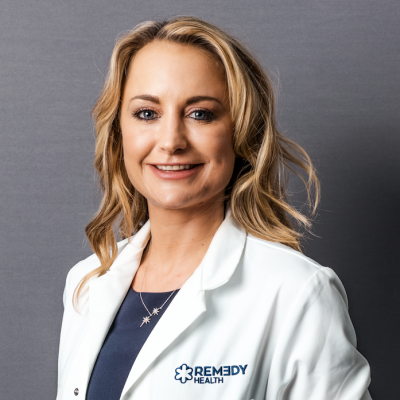
Tallie Baram is distinguished professor of paediatrics, anatomy and neurobiology, and neurology at UC Irvine’s School of Medicine, and led the research.
Baram said: “High oestrogen is essential for learning, memory and overall brain health.
“But when severe stress hits, the same mechanisms that normally help the brain adapt can backfire, locking in long-lasting memory problems.”
Oestrogen, which usually supports learning and memory, can increase vulnerability when levels are high in the hippocampus, a brain region central to memory formation and retrieval.
Researchers reported that female mice stressed during cycle phases with high oestrogen developed enduring memory loss and heightened fear of reminders, while lower levels were protective. Males, who also have high hippocampal oestrogen, were susceptible more mildly and through different receptor pathways.
High oestrogen loosens the packaging of DNA in brain cells, known as permissive chromatin.
This normally helps learning, but under extreme stress it can allow harmful, lasting changes in memory circuits.
Memory problems were driven by different oestrogen receptors in men and women, alpha in men and beta in women.
Blocking the relevant receptor prevented stress-related memory issues even when oestrogen stayed high. Vulnerability depended on hormone levels at the time of stress, not afterwards.
Co-author Elizabeth Heller is associate professor of pharmacology at the University of Pennsylvania Perelman School of Medicine.
She said: “A lot of what determines vulnerability is the state your brain is already in.
“If a traumatic event hits during a period when oestrogen is already unusually high, the biology can amplify the impact in lasting ways.
“This study shows that a state of high oestrogen in a specific brain region promotes vulnerability to stress in both male and female subjects.”

Pregnancy and breastfeeding are linked to stronger cognition in postmenopausal women, a long-term study suggests.
Greater cumulative time spent pregnant and time spent breastfeeding correlated with higher overall scores in the study, including verbal and visual memory, in later life.

Researchers analysed annual assessments of more than 7,000 women aged about 70 for up to 13 years using data from the Women’s Health Initiative Memory Study and the Women’s Health Initiative Study of Cognitive Aging.
On average, those who were pregnant for around 30.5 months were expected to have a 0.31 per cent higher global cognition score than those who had never been pregnant.
A lifetime average of 11.6 months of breastfeeding was linked to a 0.12 per cent higher global score.
Each additional month spent pregnant was associated with a 0.01-point rise in overall ability.
Each extra month of breastfeeding showed the same increase, and a 0.02-point gain in verbal and visual memory. Although small, these effects are similar to known protective factors such as not smoking and high physical activity.
The work was led by Molly Fox, an anthropology professor at the University of California, Los Angeles.
Fox said: “Any ways in which we can focus public health outreach or clinical interventions towards higher-risk populations leads to more effective and efficient efforts.”
Participants who had ever been pregnant scored, on average, 0.60 points higher than those who had never been pregnant.
Those who had breastfed scored 0.19 points higher overall and 0.27 points higher for verbal memory than those who had never breastfed.
Women are disproportionately affected by Alzheimer’s disease, a progressive condition that impairs memory and thinking skills, and this is not fully explained by life expectancy differences.
The authors say biology and social factors may both play roles.
They noted that more adult children could contribute to cognitive health by buffering stress, supporting wellbeing or encouraging healthy behaviour.
“If we can figure out, as a next step, why those reproductive patterns lead to better cognitive outcomes in old age, then we can work towards figuring out how to craft therapies, for example, new drugs, repurposed drugs or social programmes, that mimic the naturally occurring effect we observed,” said Fox.
The study team is now working to identify the mechanisms that link reproductive histories to cognitive resilience.

IBSA UK has introduced Hyaluxelle, a non-hormonal menopause treatment for vulvo-vaginal atrophy, easing vaginal dryness and pain during intercourse.
Hyaluxelle is given as deep intradermal injections to the vulvar vestibule, the area at the vaginal opening, in two sessions one month apart, followed by clinical reassessment.
IBSA UK is the UK subsidiary of Swiss pharmaceutical company IBSA.

Vulvo-vaginal atrophy is a key feature of genitourinary syndrome of menopause, a long-term condition caused by low oestrogen that affects genital, urinary and sexual health.
At least half of post-menopausal women are affected, yet many do not seek help, often assuming symptoms are part of ageing.
The condition stems from thinning and drying of vaginal and vulval tissues linked to low oestrogen, leading to symptoms such as dryness, discomfort, altered pH and pain during intercourse.
Hyaluxelle combines high and low molecular weight hyaluronic acid, a moisture-retaining substance found naturally in the body.
The company says this creates a lower-viscosity injection at what it describes as the highest concentration available in the UK, supporting tissue hydration, firmness and elasticity.
The formulation is said to rehydrate the vulvar vestibule and create conditions for restoring tissue structure through collagen and elastin production.
Clinical studies indicate Hyaluxelle improves several vulvo-vaginal symptoms, including reductions in discomfort and pain during intercourse.
Studies also report gains in sexual function domains and a positive trend in some aspects of health-related quality of life.
Histological analyses suggest increased epithelial thickness, enhanced tissue regeneration and reduced inflammatory infiltration after the procedure. In studies, the treatment was well tolerated with no reported major complications.
Joanna, a 59-year-old woman living with severe symptoms, described the personal impact of delayed diagnosis.
She said: “I lived for years with pain, UTIs, cystitis and a loss of sensation, but every visit to my GP, even a female GP, was treated as a bladder issue.
“Nobody suggested it might be linked to the menopause or joined the dots, and none of the treatments I was given helped. Without the right information or support, I became desperate for answers.
“The symptoms affected everything, what I wore, how I exercised, how I slept, but the hardest part was the impact on intimacy with my husband.
“I withdrew from our relationship because I was scared sex would hurt, and the loss of closeness was devastating, and I no longer felt like myself.
“Women deserve clear explanations and real options when their symptoms are not getting better.”
IBSA says Hyaluxelle offers clinicians an option for women whose symptoms persist despite first-line therapies, or for those who cannot receive or choose not to receive hormonal treatments.









-

 Insight3 weeks ago
Designer perfumes recalled over banned chemical posing fertility risk
-

 Hormonal health3 weeks ago
Women’s health enters a new era – the trends shaping femtech in 2026
-

 Insight4 weeks ago
2025: The year IVF innovation went from lab to life
-

 Features3 weeks ago
Best menopause apps and products for 2026
-

 Insight5 days ago
Parents sue IVF clinic after delivering someone else’s baby
-

 Menopause2 weeks ago
Women’s health could unlock US$100bn by 2030
-

 Insight4 weeks ago
‘Rejuvenated’ eggs raise hopes for improved IVF outcomes
-

 Insight3 weeks ago
Higher maternal blood pressure increases risk of pregnancy complications, study finds
Pingback: Is education the missing piece in the puzzling world of women’s sport? - FemTech World
Pingback: Women’s World Cup: what still needs to be done to improve the lot of elite female footballers – newsbige
Pingback: Women’s World Cup: what still needs to be done to improve the lot of elite female footballers – News Update Hub
Pingback: Women's World Cup: What Still Needs To Be Done To Improve The Lot Of Elite Female Footballers - Daily News Tabe
Pingback: what still needs to be done to improve the lot of elite female footballers – ColorMag
Pingback: Women’s World Cup: what still needs to be done to improve the lot of elite female footballers – Johansen.se
Pingback: Women’s World Cup: what still needs to be done to improve the lot of elite female footballers – newsonetop.com
Pingback: what still needs to be done to improve the lot of elite female footballers – All Recipes
Pingback: Women's World Cup: what still needs to be done to improve the lot of elite female footballers - Inergency
Pingback: what still needs to be done to improve the lot of elite female footballers – Up Lons
Pingback: what still needs to be done to improve the lot of elite female footballers – Apkhant
Pingback: what still needs to be done to improve the lot of elite female footballers – apkwizs
Pingback: Women's World Cup: what still needs to be done to improve the lot of elite female footballers - Chique Magazine
Pingback: Africa: Women’s World Cup – What Still Needs to Be Done to Improve the Lot of Elite Female Footballers - Kenya Diaspora Movement
Pingback: Women’s World Cup: what still needs to be done to improve the lot of elite female footballers - George Onin Lending Mortgage Services