




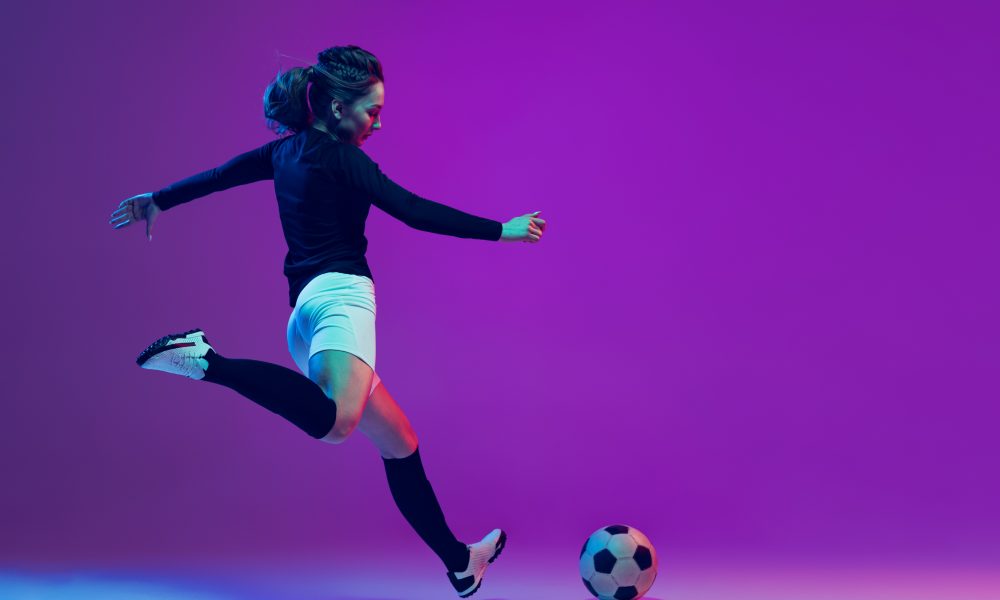
The Football Association’s decision to switch the colour of the Lionesses’ shorts from white to blue “only touches” on some of the considerations sports governing bodies should be looking at to support female athletes, experts have warned.
Last week England’s women’s football team unveiled a new kit, with blue shorts instead of white, a change encouraged by players’ longstanding concerns about wearing white while on their periods.
However, experts have said that switching to blue shorts does not do enough to address women’s period concerns in sport.

Dr Nicky Keay, honorary clinical lecturer at UCL, says: “While this is a step in the right direction why is it happening only now in 2023 when women have been having periods for millennia and at a time when more and more women are playing professional sport?
“Changing colour of shorts or skirts only touches on some of the considerations we should be looking to address to support women doing sport and staying in sport.
“We need more education about menstrual cycles, contraception choices and other female health issues not just for professional athletes, but for all women and young girls. Professional sports bodies could lead the way.”
Hélène Guillaume, ultra runner and founder of the training and nutrition app Wild AI, thinks it is a good step to help women in sports, but she says it’s also a great marketing play.
“It’s visible so they can argue that they are really acting to help women in sports. But seeing it from the other side, clubs have so much more work to do.”
Dr Ali Bowes, senior lecturer in sociology of sport at Nottingham Trent University, says: “If we think about women’s involvement in sport, not just at an elite level, but across the spectrum of women’s sport, the fact that these decisions are being made is drawing attention to how self-conscious women are about periods.
“But there is another side to the coin and that is how we can get to a point where we normalise menstrual blood in the same way we normalise blood from an injury so that women won’t have concerns about the clothes they wear any more.”
The menstrual cycle remains among the least studied aspects of human biology.
Multiple studies have concluded that to optimise performance and management of female athletes, there is a need for further research to quantify the impact of menstrual cycle phase on perceived and physical performance outcomes.
“Sports science research is renowned for ignoring the experiences of women, especially in a physiological or biomechanical sense,” Bowes explains.
“Because men have historically dominated – and still dominate – the percentage of people that make governing body boards and sit in the highest positions of power, issues that only affect women have not been prioritised or even recognised in some cases.”
While more women are tracking their symptoms and measuring hormone levels, she says normalising the conversation around periods will only be possible when more women hold positions of power in sport.
“Having more women in positions of power within sport who can put these issues into the cultural makeup of their clubs and sports more generally, is what is going to really shift the narrative.”
Newsletter
Sign up for free weekly updates
The latest femtech news, research and investment, straight to your inbox.




