




News
Scientists urge action on plastic additives linked to sperm decline


Scientists have warned that chemicals in plastics are driving falling sperm counts, after talks on a global pollution treaty collapsed over disputes about chemical regulation.
Last week, after nearly two weeks of negotiations, delegates left Geneva on Friday without agreement, after oil- and gas-producing nations objected to production limits and chemical curbs.
Almost 100 nations signed a declaration calling for a “legally binding obligation to phase out those most harmful plastic products and chemicals of concern”.

But both texts drafted by Luis Vayas Valdivieso, chair of the negotiating committee, omitted any reference to chemical controls.
Global sperm counts have dropped by about one per cent each year for 50 years, with fertility declining at similar rates, studies show.
Obesity, sedentary lifestyles and ageing populations have been cited as possible causes, but reproductive health experts say environmental factors are most significant.
Dr Shanna Swan, professor of environmental medicine and public health at the Icahn School of Medicine at Mount Sinai in New York City, said the decline was “largely, but not entirely due to toxins in the environment that have the ability to interfere with steroid hormones”.
In 2017, Swan and colleagues published a meta-analysis showing sperm counts had fallen by nearly 60 per cent among men in North America, Europe and Australia between 1973 and 2011.
When they repeated the research in 2023, extending the period to 2018 and adding data from Africa, Asia and South America, the findings were even more shocking.
Swan said: “We separated the countries into western and non-western for analytic purposes, and in both we found a significant decline.
“And the other thing that we found, which was at least as alarming, was that if you looked at all of the studies going back to 1973 you see a one per cent per year decline.
“But if you look at studies published after 2000, you see an over two per cent decline.
“So the rate of decline had increased, and had increased significantly in recent years.”
The warning comes after a report published two weeks ago by Deep Science Ventures, reviewed by Swan, described chemical pollution as “a threat of a similar order as climate change”, though it receives far less attention.
Falling sperm rates since around 1950 correlate with rising plastics use. Swan highlighted strong evidence linking common plastic additives to reduced sperm counts.
Swan explained: “Phthalates are chemicals that are put into plastic to give it flexibility and make it soft and flexible.
“So any time you pick up a soft water bottle or tubing, like medical tubing, or a food container that’s soft, you’re going to be touching phthalates.
“Then, on the other side, the evil twin of phthalates are the bisphenols.
“While phthalates make plastic soft and flexible, bisphenols make it hard and inflexible. And phthalates lower testosterone and the bisphenols increase oestrogen.”
These endocrine-disrupting chemicals – substances that disturb hormone systems – particularly affect foetuses and embryos developing in the womb.
Swan had previously studied the effects of phthalates on unborn male babies, finding that exposure at critical points in pregnancy could cause subtle deformities in sexual development.
The adverse effects, known as “phthalate syndrome”, included smaller penises, a shorter distance between the genitals and anus, and, later in life, lower sperm counts at sexual maturity.
“We showed the link between the exposure and fertility,” Swan said.
“And when you see that total sperm count going down worldwide, what I believe is you’re seeing an important effect of early exposure to these chemicals.”
Swan would not be drawn into commenting on the treaty talks under way in Geneva, but said urgent action was needed on plastic additives and safer replacements.
She said: “In the meantime, yes people can be careful,.
“They can reuse materials. They should try to look at what they use in their takeout containers and carry little glass bottles around to get their drinks.
“It’s very important. But it’s not solving a bigger problem, which is how do we make these things that we have become dependent on in a safer way?”





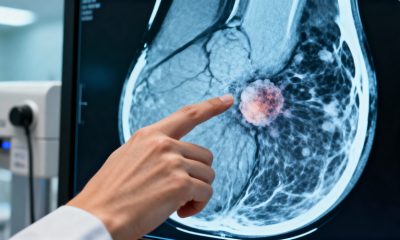








Pregnant women are being advised to avoid runny or under-cooked eggs when eating out amid a developing salmonella outbreak.
The advice also applies to freshly made products that may contain uncooked eggs, including mayonnaise, soufflé and hollandaise sauce.

The FSA said well-cooked eggs served in restaurants, cafés and takeaways remain safe to eat.
The warning follows the UK Health Security Agency declaring a national outbreak of salmonella food poisoning after one person died and hundreds more fell ill.
Imported eggs or dishes containing them are thought to be behind the outbreak.
FSA chief scientific adviser Ian Young said: “If people are eating out or consuming eggs or egg-containing products from cafes and restaurants then for those people in particular who are young, elderly, pregnant or vulnerable, it’s important to make sure that any eggs or egg products that you consume in those settings have been very well cooked.”
He described the outbreak as “unusually large and rapidly increasing”, adding that “people need to be careful”.
The FSA said British eggs bought from supermarkets are not linked to the current outbreak because chickens bred in the UK are vaccinated against common strains of salmonella.
“There is no link to those eggs to this current outbreak,” Young said.
Mark Williams, chief executive of the British Egg Industry Council, said British eggs were safe to eat when runny, including for vulnerable people, and were widely available in restaurants and cafés.
“Customers who want to enjoy a runny egg should simply ask whether British Lion eggs are being used,” he said.
More than 200 cases in the UK have been linked to the outbreak, with the majority across England.
Genetic testing suggests the infections are part of the same outbreak and show similarities with previous outbreaks involving imported eggs.
Investigations into individual cases also suggest the eateries involved were buying eggs from abroad.
Salmonella are a family of bacteria that typically live harmlessly in the digestive systems of animals including cattle, pigs and chickens, which is why eggs and poultry are among foods commonly associated with infection.
People can become infected by eating contaminated food that has not been properly cooked, through cross-contamination between raw and cooked food or by coming into contact with infected animals.
Symptoms can include stomach cramps, diarrhoea, vomiting and fever.
Most people recover without further treatment, but older people, babies and people with weakened immune systems are at greatest risk of severe illness.
Hospital treatment with fluids and, in some cases, antibiotics may be needed for severe infections.
People who are concerned are being advised to contact their GP or out-of-hours service in the first instance.


A study is examining where delays occur in diagnosing endometriosis – a condition that can take seven to twelve years to diagnose.
Endometriosis affects an estimated 1.5 million women and people in the UK, but there is currently no consistent way of measuring where and why diagnostic delays happen.
The research aims to develop the first standardised framework for understanding the diagnostic journey and identifying points where interventions could improve care.
The international project involves researchers from the University of Sheffield, University of Liverpool, University of Oxford, Aarhus University in Denmark and the University of Edinburgh, alongside Endometriosis UK.
Dr Rebecca Mawson, NIHR clinical lecturer in primary care at the University of Sheffield, is part of the research team.
She said: “Our project asks: where exactly are people getting lost or let down on their journey to diagnosis, and how can we map those points in a systematic way to identify where interventions could make a real difference.”
The project is led by Dr Babu Karavadra, NIHR academic clinical fellow in general practice at the University of Liverpool, who has been awarded a World Endometriosis Society Early Career Investigator Award as lead principal investigator at the University of Liverpool.
Researchers will review existing evidence, gather experiences from people living with endometriosis and bring together an international panel to map the diagnostic pathway and agree common definitions for key points along the journey.
The work will focus particularly on people whose experiences are often missing from research, including Black women, people living in rural or deprived areas, LGBTQ+ communities and disabled people.
Primary care will also be central to the research because it is often where people first seek help with symptoms.
Mawson said: “Primary care needs to be at the heart of this work. Primary care is often where people first seek help with their symptoms, so it has a crucial role in understanding diagnostic delay.
“If we only look at what happens once someone reaches specialist gynaecology, we risk missing some of the barriers that shape the journey long before that point.”
Unlike cancer research, where internationally recognised standards exist for studying diagnostic delays, endometriosis research has been more fragmented, with studies measuring different parts of the diagnostic journey in different ways.
The researchers hope to create an ‘Endometriosis Diagnostic Pathway Framework’ to help identify where people are falling through the gaps and where healthcare could be improved.
They will also develop a ‘Snakes and Ladders’ style visual representation showing how systemic barriers, chance and individual experiences can influence whether someone reaches a diagnosis.
The project forms part of the PEARL network, Primary care Endometriosis and Adenomyosis Research and Learning, an international collaboration of primary care and community researchers and clinicians.
Mawson said: “Endometriosis diagnostic delay isn’t inevitable. If we can understand where and why people are experiencing barriers, we have a much better chance of designing interventions that actually make a difference.
“The scale of the problem demands that we look at the whole journey, listen to the people experiencing it and build an evidence base that can lead to real change.”
The framework could provide the foundations for future research, clinical guideline development, healthcare professional training and NHS service improvements, with potential applications to related conditions such as adenomyosis and chronic pelvic pain.
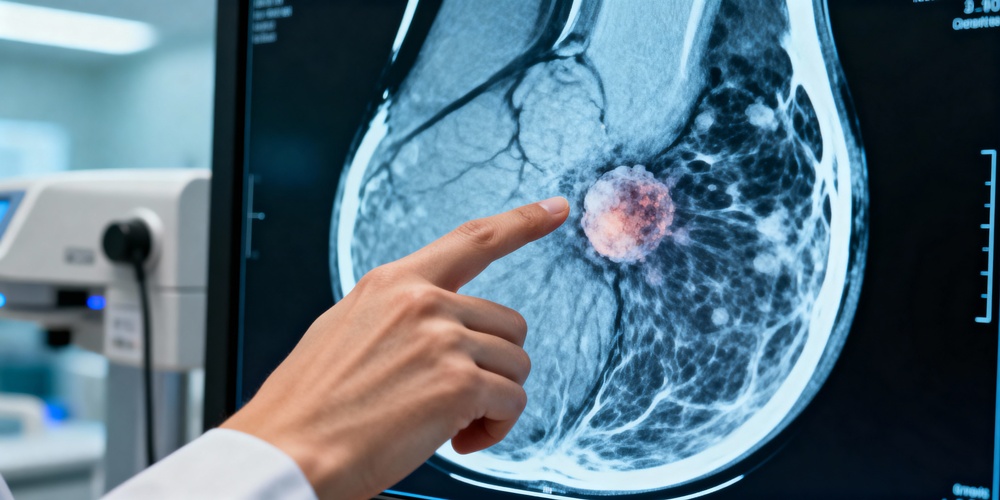
A drug targeting a key regulator in triple-negative breast cancer reduced tumour growth and cancer stem cell viability in laboratory models.
Triple-negative breast cancer is an aggressive subtype that disproportionately affects women under 40 and accounts for about 15 to 20 per cent of breast cancers.
The disease lacks receptors for oestrogen, progesterone and the HER2 protein, which are targeted by several cancer drugs, making it particularly difficult to treat.
Researchers from the National University of Singapore’s Yong Loo Lin School of Medicine investigated mechanisms that allow triple-negative breast cancer cells to spread and resist treatment.
They examined regulators of Wnt signalling, a pathway involved in processes including cell growth and movement, and identified a master regulator called DP103.
DP103 is a gene that controls a major biological process. The researchers found it creates a cycle in which cancer cells continue to grow and spread while resisting treatment and maintaining cancer stem cells linked to disease recurrence.
The team then investigated whether a targeted drug known as Supinoxin, or RX-5902, could block DP103 and its effects in triple-negative breast cancer.
Analysis of 21 samples, including patient tumour tissue, laboratory-grown breast cancer cells and organoids derived from local cancer patients, found that the drug reduced cancer stem cell viability by 40 to 60 per cent.
Tumour growth in laboratory-grown tumour models fell by about 50 per cent.
In laboratory models, treatment also reduced tumour size by around 90 per cent while largely sparing healthy cells.
It also extended survival, with half of the treated laboratory models reaching 70 days and beyond, compared with none in the untreated group.
DP103 had previously been identified as a biomarker for triple-negative breast cancer by a team led by Alan Prem Kumar, an assistant professor with the NUS Centre for Cancer Research and principal investigator for the new study.
RX-5902 is already being studied as a treatment for breast cancer, and Kumar said the findings could help identify patients who may be more likely to benefit.
“Our findings suggest that DP103 could potentially serve as a diagnostic biomarker to identify the patients most likely to benefit from RX-5902 treatment, paving the way for a more precise, personalised approach to treating triple-negative breast cancer,” he said.
“Instead of treating all patients the same, future clinical trials could focus on those whose tumours have high levels of DP103, where the therapy is expected to have the greatest impact,” said Kumar.
First author Cai Wanpei said RX-5902 could prevent beta-catenin, a protein whose mutation is associated with various cancers, from entering the nucleus of human cells and switching off genes that drive cancer growth and spread.
“This slows tumour progression and triggers apoptosis – the natural death of cancer cells,” said Cai, who was a PhD student at the NUS Centre for Cancer Research and NUS Medicine’s pharmacology department during the research.
Study co-author Celestial T. Yap said triple-negative breast cancer remains particularly difficult to treat because conventional treatments such as surgery, chemotherapy and immunotherapy may not work for all patients.
She said DP103 could represent a “biological vulnerability” in the disease.
“This discovery offers new insights that could support more precise patient selection and open the door to better targeted strategies for durable disease control and improved clinical outcomes,” said Yap, an associate professor with the NUS Centre for Cancer Research and NUS Medicine’s physiology department.
The researchers said abnormal Wnt signalling also drives several other cancers, meaning the findings could offer avenues for treating other aggressive cancers.
Their next steps include validating DP103 as a predictive biomarker in larger patient groups and further developing therapies targeting the regulator for clinical testing.
The team will also investigate combining RX-5902 with existing therapies to further improve treatment outcomes.










 Events2 weeks ago
Applications close August 18 for Women’s Health Innovation Summit 2026 Innovation Showcase

 Menopause2 weeks ago
Third of women unaware of perimenopause mental health impact

 Fertility7 days ago
Chelsea FC Women to launch first-of-its-kind player fertility fund

 Entrepreneur2 weeks ago
Women’s Health Week Europe 2026 releases fully populated agenda ahead of October summit

 Menopause2 weeks ago
Menopausal hormone therapy may lower dementia risk, study suggests

 Hormonal health2 weeks ago
We are wrapping our children in plastic and calling it care

 Opinion7 days ago
anna perimenopause app launches across 39 markets

 Pregnancy2 weeks ago
Chemicals in plastics may be linked to high blood pressure during pregnancy
6 Comments