




News
Custom Web Application Development Trends


In a world where digital transformation isn’t just a buzzword but a necessity, businesses are moving beyond off-the-shelf software solutions and embracing custom web applications. These tailored applications cater to specific business needs, offering flexibility, scalability, and a competitive edge.
But the landscape of custom application development is evolving—new technologies, shifting user expectations, and market demands are pushing businesses to rethink how they build web solutions.
For any company for application development, staying ahead means leveraging cutting-edge tools, agile methodologies, and user-centric design to create software that not only meets current needs but is also future-proof.
So, what’s shaping the future of custom web application development? Let’s dive into the latest trends that are redefining how businesses approach software creation
The Role of a Custom Application Development Company in Modern Business
Building a custom web application isn’t just about coding—it’s a strategic process that requires deep industry insight, an understanding of user behavior, and the ability to integrate emerging technologies seamlessly.
These companies don’t just write code; they architect digital solutions that align with business goals. The best firms focus on building applications that are not only functional but also scalable, secure, and optimized for performance. In today’s market, agility is everything—businesses need development partners who can quickly adapt to changing requirements and integrate modern tech stacks.
Custom development firms are also leveraging AI-driven analytics to predict user behavior, automate workflows, and enhance personalization. It’s no longer enough for an application to simply “work”—it has to anticipate user needs and deliver seamless experiences. From healthcare to finance, businesses are relying on application development firms to bring AI, automation, and cloud technologies into their digital infrastructure.
How Custom Application Development is Evolving
The demand for custom application development is skyrocketing as businesses look for solutions that go beyond generic software. Today’s development trends are driven by a need for speed, security, and flexibility.
One of the biggest shifts in custom web development is the rise of low-code and no-code platforms. These platforms enable businesses to develop applications with minimal coding, accelerating deployment times and reducing dependency on large development teams. While custom applications traditionally took months to build, modern development approaches allow businesses to launch products in weeks, or even days.
Security is another major concern. With cyber threats becoming more sophisticated, businesses are prioritizing applications with built-in security measures. Modern custom applications integrate AI-driven threat detection, blockchain-based authentication, and end-to-end encryption to prevent vulnerabilities before they happen.
Scalability is no longer optional. Businesses need applications that can handle growth without compromising performance. Cloud-native development has become the standard, allowing applications to scale dynamically based on demand. Instead of relying on traditional hosting, companies are leveraging containerization, microservices, and serverless architectures to build applications that grow seamlessly with their user base.
Why Businesses Prefer Custom Application Development Companies Over Off-the-Shelf Solutions
While pre-built software solutions offer convenience, they often fail to meet the unique needs of businesses. This is why more companies are turning to custom application development companies to build tailor-made solutions that align with their operational goals.
One of the key advantages of working with a custom development firm is flexibility. Unlike off-the-shelf software that forces businesses to adapt their processes to the software, custom applications are designed around a company’s specific workflows. This means businesses don’t have to compromise on features or functionality—they get exactly what they need.
Another critical factor is integration. Businesses today use a wide range of digital tools, from CRMs to ERPs and analytics platforms. Custom applications are designed to seamlessly integrate with existing systems, ensuring smooth data flow and operational efficiency. Off-the-shelf solutions often lack this level of adaptability, forcing businesses to use workarounds that reduce efficiency.
Custom applications also give businesses greater control over their data. With growing concerns about data privacy and compliance, companies need to ensure their applications meet regulatory requirements. Custom-built applications offer enhanced security, compliance, and data governance features that generic software often lacks.
Conclusion
The landscape of custom web application development is shifting fast, with businesses demanding more flexibility, security, and scalability than ever before. Pre-packaged software solutions may work for some, but for those who want a competitive edge, custom development is the only way forward.
A custom application development company doesn’t just build software—it creates solutions that evolve with your business. Whether it’s integrating AI-driven automation, leveraging cloud-native architectures, or enhancing security with blockchain, the right development partner can transform how a business operates.
For companies that want to stay ahead in an increasingly digital world, investing in custom application development isn’t an expense—it’s a strategic move that defines success. The future belongs to businesses that can adapt, innovate, and build software that meets their unique needs, and custom web application development is at the core of that transformation.


Natural Cycles has received its sixth FDA clearance for an updated fertility algorithm designed to personalise digital contraception.
The regulator cleared the company’s next-generation NC° Fertility Algorithm, which combines statistical modelling with machine learning to predict fertile and non-fertile days.

Natural Cycles said the algorithm was trained on tens of millions of real-world fertility data points and adapts to individual cycle patterns.
“People don’t just want effective birth control; they want a method that fits naturally into their lives,” said Dr Elina Berglund Scherwitzl, chief executive and co-founder of Natural Cycles.
“One of the unique advantages of a software-based contraceptive is that it can continue to evolve.
“As our scientific understanding of fertility grows and we continue to learn from more than a decade of real-world data, we can responsibly refine the technology through rigorous research, clinical validation, and FDA review.
“This latest clearance is the result of that work, helping us give many users more flexibility while maintaining the effectiveness they rely on.”
Evidence supporting the FDA clearance showed that the updated system maintained the app’s established safety and effectiveness while giving many users more Green Days.
Green Days are those on which the app confirms that pregnancy protection is not needed.
The birth control app remains 98 per cent effective when used as intended and 93 per cent effective with typical use, according to the company.
Natural Cycles said these rates place it in the same effectiveness category as the combined oral contraceptive pill.
Typical use includes mistakes or inconsistent use, while intended use means following the method correctly.
Digital contraception uses technology and physiological data, such as body temperature, to provide personalised fertility predictions.
Natural Cycles said its updated algorithm can identify fertile and non-fertile days more precisely than traditional fertility awareness methods, which may classify larger parts of the cycle as potentially fertile.
The changes provide more Green Days while maintaining effectiveness, improve performance for people with irregular cycles and better handle lower-quality temperature or biomarker data, the company said.
A biomarker is a measurable biological signal, such as body temperature, that provides information about processes taking place in the body.
Natural Cycles also said the system can personalise its predictions more quickly as a user’s menstrual cycle changes over time.
“Years ago, the question was whether digital contraception could work. Today, Natural Cycles has demonstrated robust clinical and real-world evidence that it can,” said Dr Kerry Krauss, senior medical adviser at Natural Cycles.
“The next chapter for digital contraception is making it more personalised and easier to use while maintaining the same high standard of safety.
“This FDA clearance demonstrates how advances in AI and machine learning can improve the user experience while preserving the scientific rigour expected of a regulated medical device.”
Natural Cycles has filed a patent application covering key innovations in the updated algorithm.
The decision follows the FDA’s first De Novo clearance of the company’s birth control app in 2018.
Later clearances allowed the app to integrate with the Oura Ring in 2021 and Apple Watch in 2023.
In 2024, the FDA cleared a Predetermined Change Control Plan, creating a regulatory pathway for future hardware integrations.
Natural Cycles said the plan has since enabled the launch of its NC° Band and other hardware integrations, including a Garmin connection introduced in March 2026.
A further clearance in 2025 allowed the birth control app to be offered both over the counter and by prescription.
The company has also received regulatory authorisations in more than eight markets worldwide, including Europe, Canada, Brazil, Australia, South Korea and Singapore.
Insight
Experimental treatment significantly slows progression of fatal brain disease in women, study finds
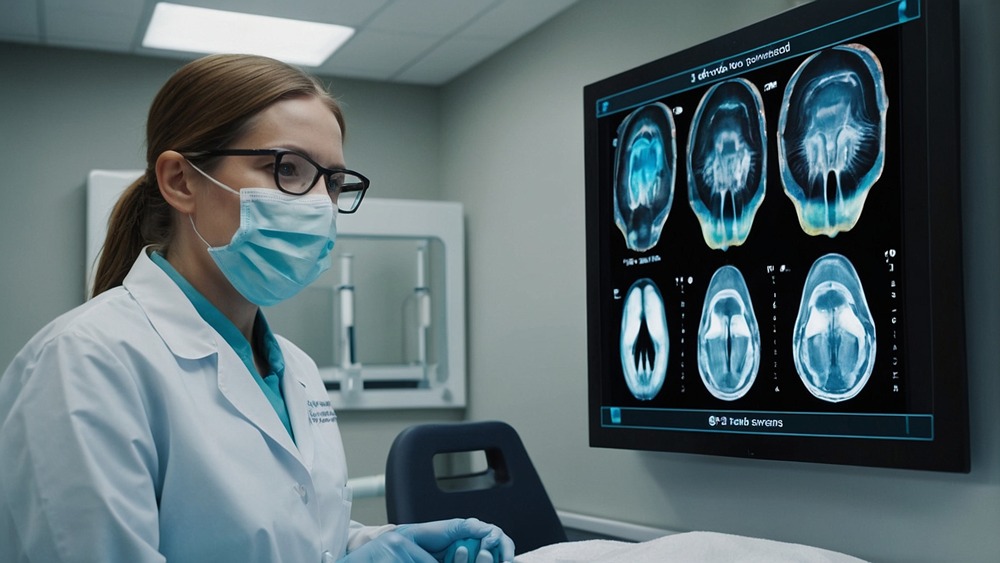
Davunetide may significantly slow the progression of a fatal brain disease in women, according to a new analysis of clinical trial data.
The findings indicate that women and men with progressive supranuclear palsy (PSP) may respond differently to the experimental treatment.
Progressive supranuclear palsy, or PSP, is a rare and fatal neurodegenerative disease.
Researchers at Tel Aviv University led the analysis and said the results reinforce the need for sex-specific approaches to neurodegenerative diseases.
Neurodegenerative diseases are conditions in which nerve cells in the brain or nervous system gradually lose function and die.
The team reanalysed data from a 52-week international clinical trial involving more than 300 people with PSP.
The disease is caused by the abnormal accumulation of tau protein in the brain. Tau is a protein found in nerve cells that builds up abnormally in people with PSP.
There is currently no effective drug treatment for the disease.
The work was led by professor Illana Gozes of the Sagol School of Neuroscience and the Gray Faculty of Medical and Health Sciences at Tel Aviv University.
The research team included current and former students Dr Guy Shapira, Jason Blatt and Liri Guz, together with professor Noam Shomron.
The original clinical trial found that Davunetide was safe but ineffective.
However, the researchers separated female and male participants and re-examined the data using updated assessment measures recommended by the FDA.
Women treated with Davunetide experienced a significant slowing of disease progression, while no similar effect was observed in men.
The treatment helped preserve essential movement and functional abilities, including balance, fine motor skills and everyday tasks such as using cutlery, buttoning clothes and washing the face and hands.
Fine motor skills are the small, precise movements needed for tasks involving the fingers and hands.
Treated women also showed significant improvements in language ability, working memory and overall cognitive function.
Cognitive function covers mental abilities such as memory, attention, language and problem-solving.
The analysis also identified profound molecular differences between women and men.
The relationship between levels of pathological tau in cerebrospinal fluid and clinical symptoms was completely reversed between the sexes.
Cerebrospinal fluid is the clear liquid surrounding the brain and spinal cord. A biomarker is a measurable sign that can indicate disease activity.
For example, language abilities declined significantly as tau pathology increased in women, but not in men.
The researchers said this suggests the disease mechanisms may work differently in women and men, potentially explaining their different responses to treatment.
According to professor Gozes, overlooking biological differences between the sexes may hide a genuine treatment effect.
“Our data show that analysing women and men separately is not merely a statistical exercise, but an essential tool for developing more effective treatments for neurodegenerative brain diseases,” she said.
The researchers believe the findings provide a strong scientific basis for future clinical trials and treatment protocols designed from the outset to account for patients’ sex.
These trials could evaluate Davunetide as a targeted treatment for women with PSP.
They said the approach may also pave the way for more precise treatments for tau-related diseases, including Alzheimer’s disease and other neurodegenerative brain disorders.
The study was supported by ExoNavis Therapeutics, which is developing Davunetide for brain diseases under licence from Ramot, Tel Aviv University’s technology transfer company.


A preeclampsia study has found unusual cell activity in mothers and babies that could reveal new targets for treatment.
The condition affects 2 to 4 per cent of pregnancies worldwide and is a leading cause of maternal and foetal mortality.
There is currently no cure, and severe cases can put both the mother and baby at risk.
Scientists from UCL and University College London Hospitals found that stressed placental cells, poorly functioning blood vessels and an overactive immune response all contribute to the condition.
Preeclampsia causes high blood pressure during pregnancy. It can affect blood flow to the baby and cause symptoms such as swelling, headaches, blurred vision and pain under the ribs.
Without treatment, it can damage the mother’s health, slow the baby’s growth and, in severe cases, become life-threatening.
Previous research has focused only on the placenta, the organ that develops during pregnancy to support the baby’s growth, rather than the tissues around it.
The researchers said the findings could reveal new therapeutic targets, which are biological processes that future treatments could be designed to alter.
Senior author professor Sara Hillman, of the UCL EGA Institute for Women’s Health, said: “We studied individual cells from both the mother and the baby to see how their activity changes in healthy pregnancies compared with preeclampsia.
“This helped us to confirm some changes already suspected in the condition and also discover new ones.”
The team studied 20 pregnant women recruited at UCLH, including 10 with severe preeclampsia and 10 without the condition.
They used genomic testing to examine individual cells in the placenta and other tissues where cells from the developing baby and mother come into contact.
Genomic testing examines genetic information to help researchers understand how cells behave and the roles they may play.
The other tissues studied were the myometrium, the muscular layer of the womb, and the chorioamniotic membranes, which surround the baby during pregnancy.
The team compared cells from healthy pregnancies and those affected by preeclampsia at different gestational ages, meaning different stages of pregnancy.
They used technology that can read the genetic information of thousands of individual cells at the same time, allowing them to see what each cell was doing and where it was located in the tissue.
In preeclamptic pregnancies where babies were born prematurely, before 37 weeks, during the third trimester, placental cells showed signs of stress and low oxygen levels.
The cells also did not use energy in the normal way.
Some cells responsible for reshaping the mother’s blood vessels were not working properly, the researchers found, which may affect blood flow to the baby.
There were also signs of an overactive immune response in the placenta, nearby tissues and the mother’s blood.
The researchers said this response, together with other stress molecules released by the placenta, helps explain why preeclampsia affects the whole body and can become serious.
They hope the findings will help researchers find treatments for the condition and potentially save lives.
Co-lead author Dr Yara Sanchez Corrales, of the UCL Great Ormond Street Institute of Child Health, said: “These findings point to specific biological processes that could be targeted with treatments. Acting early in pregnancy, especially in more severe early-onset cases, could help improve outcomes and reduce the high risks associated with severe preeclampsia.
“We hope that our findings may set us on the path to reducing premature births and fatalities associated with preeclampsia.”
Co-lead author Mr Theodoros Xenakis, of the UCL Great Ormond Street Institute of Child Health, said: “Future studies may provide an even clearer picture of the biological changes linked to the disease by including more participants and using even more precise methods.”












 News2 weeks ago
New menopause drug approved for use by NHS in Scotland

 Hormonal health2 weeks ago
Stardust period tracker shares health data, study reveals

 News7 days ago
Zero Candida market set to reach over US$2 billion by 2030 – report

 News2 weeks ago
Women’s health draws record $1.55bn in equity as capital spreads beyond the mega-rounds

 Entrepreneur2 weeks ago
Onto Health acquires diagnostics software company Levy Health

 Wellness2 weeks ago
Congress urged to invest over $20bn to close women’s health gap

 Mental health1 week ago
Nearly 60% of young women get health advice from influencers, research finds

 News5 days ago
From Hologic to Ark Surgical: Why Joseph LaBruzzo is betting on the future of women’s surgical innovation