




News
Comment: Achieving culturally competent care
Gloria Kolb, co-founder and CEO of Elitone on addressing the unique needs of women from diverse backgrounds


Personalised medicine has gained a lot of attention as of late. It can mean suiting a treatment to the genetic makeup of the patient. In a broader sense, it means competent care that is not one-size-fits-all and more than acknowledges a patient’s background, but care that takes into account cultural identity, values, and health beliefs.
Especially in women’s health, women from different cultural, ethnic, and socioeconomic backgrounds often face unique health challenges and additional barriers that require culturally competent care.
In this ever-evolving field, and as medical innovations advance, practitioners must take the time to understand and respect each woman’s cultural differences that influence health behaviors, perceptions, and communication. This approach fosters trust and improves health outcomes by improving understanding and compliance with treatments. As we continue to innovate in women’s health, addressing these differences is crucial to bridging the gap between access and outcome disparities that have disproportionately affected women from diverse communities.
Understanding the unique needs of diverse women
Women from different cultural backgrounds often face distinct health challenges that are shaped by factors such as genetics, lifestyle, and societal expectations. These disparities highlight the importance of tailoring healthcare to meet the specific needs of each group.
The traditional “one-size-fits-all” approach in medicine does not account for the significant differences in how certain conditions manifest across various populations. Cultural identity is just one of many factors that shape an individual’s health needs and experiences. Within any given ethnic group, there is significant diversity in terms of lifestyle, socioeconomic status, education, and personal health beliefs.
Assumptions based solely on ethnicity can lead to stereotyping and the risk of overlooking personal nuances that are critical to effective healthcare. For example, while a Latina woman may statistically be at higher risk for diabetes, assuming that every Latina shares the same risk profile ignores the reality that individual behaviors, family history, and access to resources play crucial roles.
In another example, black women at one time were thought to have lower incidences of incontinence. Only after further research was conducted did it show that black women under-reported their conditions more than other races, and when black women did present with incontinence, their conditions were already much worse.
Regarding certain socio-economic statuses, prescribing weekly pelvic floor physical therapy or neurostimulation office visits has led to poor compliance. Often, these women can’t hire a babysitter for every office visit or take time off from work in the middle of the day. Poor compliance is often simply due to a lack of transportation.
Healthcare providers must balance recognising common trends within ethnic groups and treating each patient as an individual with unique circumstances. This approach not only builds trust but also allows for more effective diagnosis and treatment, as patients are more likely to feel heard, engage in open communication, and collaborate in their healthcare when they feel understood on a personal level.
The role of healthcare providers in culturally competent care
Healthcare providers play a crucial role in delivering culturally competent care by actively educating themselves about the communities they serve. This includes being aware of the social determinants of health — factors such as income, education, and environment — that disproportionately affect women from marginalized communities.
It’s understood that healthcare providers are woefully busy. On average, OBGYNs spend about 13 minutes with each patient to understand issues, examine them, and give diagnoses and treatments. During this time, women, as family health caretakers, may bring up issues other than their own.
Cultural differences can influence their perceptions of illness and treatment, delay decisions until the family is included, or avoid needed taboo topics such as pelvic, mental, and sexual health. Providers who are sensitive to these nuances can navigate conversations with empathy and respect, leading to better communication and patient adherence to treatment plans.
Innovative approaches to culturally competent care
Innovation in healthcare is not only about developing new treatments or technologies but also about rethinking how care is delivered to ensure it meets the needs of diverse populations. One promising approach is integrating community health workers (CHWs) into healthcare teams. CHWs are often members of the communities they serve, making them well-positioned to provide culturally relevant health education, support, and advocacy.
Another innovative solution is using telemedicine to reach women in underserved areas. Telemedicine allows healthcare providers to connect with patients who may face geographical, financial, or even social barriers to in-person, mid-day care.
For women from rural or immigrant communities, telemedicine offers a way to access culturally competent care from providers who may not be physically accessible. Lower-paid workers often have jobs that are more inflexible regarding taking time off during work time. By breaking down these barriers, telemedicine can help bridge the gap between diverse populations and quality healthcare.
Additionally, healthcare institutions can leverage technology to create tailored health education materials in multiple languages and formats. Digital platforms that deliver culturally specific content about preventive care, maternal health, and chronic disease management can empower women from different backgrounds to take control of their health.
Similarly, at-home treatments can allow for easier treatments on your own time without taking transportation time or time off from work.
The future of culturally competent care in women’s health
The demand for culturally competent care in women’s health will only grow as the population does. Yet, the future of healthcare cannot rest solely on broad generalizations about ethnicity or culture.
Ultimately, the future of culturally competent care in women’s health lies in moving away from a one-size-fits-all model and embracing a patient-centered approach that respects each woman’s unique combination of cultural, social, and personal factors.
By doing so, healthcare providers can ensure that women from all backgrounds receive the quality care they deserve, leading to improved health outcomes and a more equitable healthcare system.
Gloria Kolb is the CEO and co-founder of Elitone, the first non-invasive, FDA-cleared, wearable treatment for women with urinary incontinence. Elitone’s accolades include winning Best New Product by My Face My Body, Sling Shot 2020, finalist in the Women Startup Challenge, and many startup pitch competitions. As an inventor with 30+ patents, Gloria has been featured in Forbes as a Top Scientist Driving Innovation in Women’s Health. Her creative designs and problem-solving abilities have earned her recognition, such as Boston’s “40 Under 40” and MIT Review’s “World’s Top Innovators under 35.” She has engineering degrees from MIT and Stanford, as well as an MBA in entrepreneurship from Babson College.










Xella Health has integrated Oura wearable data into its women’s health platform, allowing members to share trends with clinicians alongside diagnostic results.
Members can choose to share information including sleep, heart rate variability, resting heart rate, temperature trends, recovery, activity and menstrual-cycle data.
The integration is intended to help clinicians investigate biological factors that may explain changes in members’ wearable data and symptoms.

Kelly Lacob, chief executive and co-founder of Xella Health, said: “Wearables detect that something in the body has changed, but wearable data alone can’t tell a woman why or what to do next with that information.”
“By pairing continuous physiological monitoring from Oura with Xella’s multiomic diagnostics and physician-guided care, we enable women to understand how specific health concerns are impacting her biometrics, and vice versa how her daily habits are impacting her overall health and specific conditions or life stages she is navigating.
“Further, we are able to track how her relevant vitals and biometrics respond to specific interventions or treatment plans, so we can optimise her care more efficiently.
“Ultimately, this partnership helps us better address her symptoms today whilst also proactively optimising her long-term health trajectory for decades to come.”
Xella Health combines AI, multiomic testing and physician-guided telehealth care through a membership platform.
Multiomic testing analyses several types of biological information.
Xella said its testing assesses hormonal and metabolic health, inflammation, nutritional status, reproductive health and cardiometabolic risk.
Physicians use those findings to develop personalised care plans that may include clinical treatments.
Clinicians can then review shared Oura trends alongside diagnostic results and member check-ins to monitor progress and adjust care over time.
The company said providers interpret biometric data in the context of each member’s health conditions, goals and treatment plan.
The integration focuses on fertility, perimenopause, hormonal and cardiometabolic health, as well as women’s longer-term health.
Oura has expanded its women’s health offerings through integrations connecting wearable measurements with other sources of health data.
In February, it partnered with at-home hormone tracking company Mira, allowing users to view hormone test results alongside sleep, temperature and readiness data in the Mira app.
The integration is intended to help users track patterns related to fertility, menstrual cycles and perimenopause.
That month, Oura also introduced a women’s health AI model for testing through Oura Labs.
Integrated into Oura Advisor, the model combines biometric data with clinician-reviewed medical information to provide guidance on menstrual cycles, pregnancy and menopause.
In May, the company launched menopause insights and hormonal birth control support.
Its Menopause Insights offering uses a questionnaire covering 22 symptoms of menopause alongside wearable data, while birth control support helps users understand their biometric trends in the context of hormonal contraception.


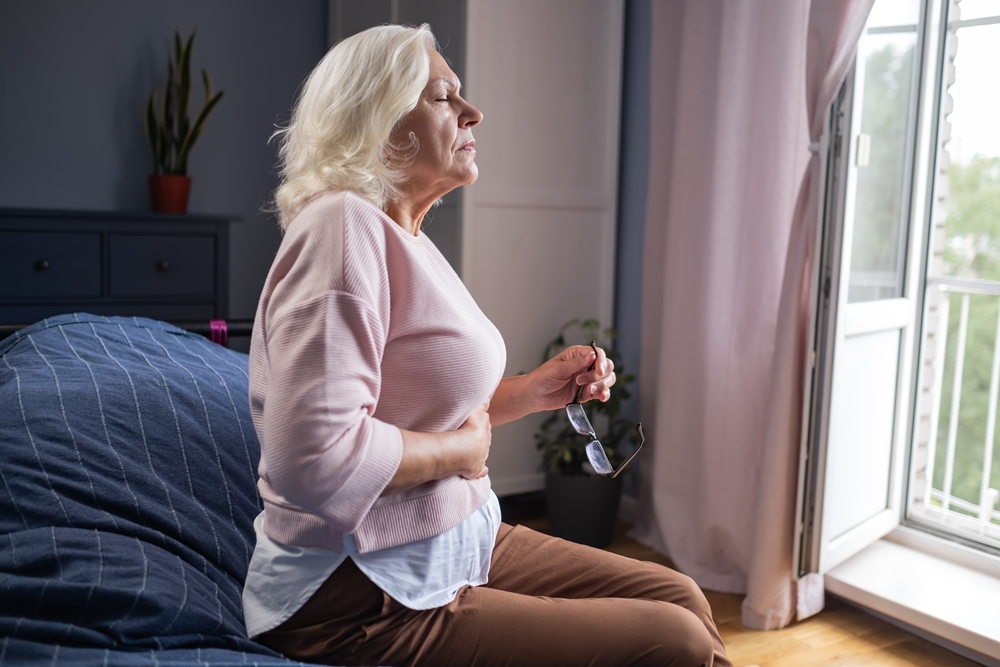
Partners of women going through menopause will be invited to experience hot flushes using a menopause simulator at a support event in Hull next month.
Health group Over The Bloody Moon will bring one of its MenoVests to the Menopaus’ull Support Network event, allowing people to experience a hot flush.
Sarah Weichardt, who co-manages the project, said: “We’re particularly interested in getting men along to come and experience the MenoVest, just so that they can understand what women go through.
“It’s not just a hot flush, it’s what the hot flush brings with it.
“So it could be panic, it could be anxiety. It’s experiencing it all at the same time.”
MenoVest is billed as the ‘world’s first’ wearable menopause simulator – a garment worn over regular clothing that generates realistic, intense hot flush sensations while the wearer carries on with everyday work tasks.
After just a few minutes wearing it, people gain a genuine sense of what these symptoms feel like, building empathy and highlighting why better support matters during this transition.
Weichardt said she hoped the vest would give people a “better understanding of what women are going through”.
“The more people we can get to experience it, the better,” she added.
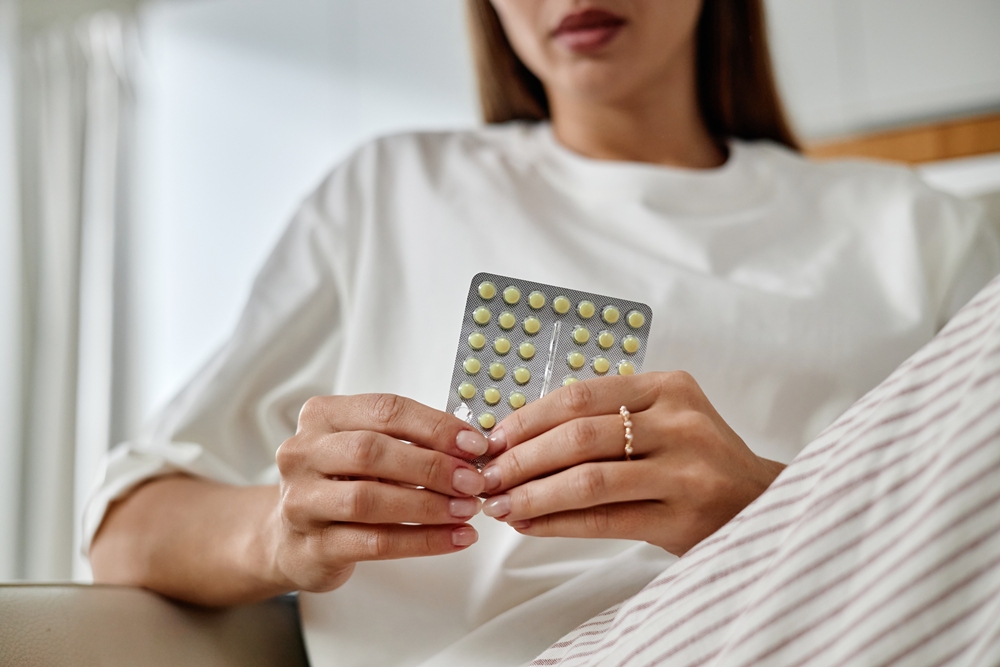
Short-term oral HRT was linked to a 60 per cent higher rate of serious blood clots in women aged 50 to 69, a large study found.
The increased rate was seen among women using oral hormone replacement therapy for less than a year as well as those treated for more than five years.
By contrast, transdermal HRT, delivered through skin patches, gels or sprays, was not associated with the same increased clot risk.
Researchers at North Zealand Hospital in Denmark analysed health registry data from more than one million Danish women aged 50 to 69 between 2003 and 2021.
During the study period, 9,807 women experienced venous thromboembolism, a serious blood clot in a vein. A further 18,460 had a stroke and 11,974 had a heart attack.
Each affected woman was matched by age with five women who had not experienced the same condition. Researchers adjusted the analysis for other factors, including medical history, that could influence risk.
They then examined HRT prescriptions, including the dose and duration of treatment, and looked for associations with blood clots, stroke and heart attack.
Overall, oral HRT was associated with a 60 per cent higher rate of venous thromboembolism, with increased rates seen for both oestrogen-only therapy and treatment combining oestrogen with progestogen.
Venous thromboembolism occurs when a blood clot forms in a vein. A clot in a deep vein can break away and travel to the lungs, causing a potentially fatal pulmonary embolism.
Women taking oral HRT for less than a year had the same raised blood clot risk as those using it for more than five years.
Even a daily oral dose below 1mg was found to significantly increase blood clot risk.
Women taking a daily oral dose above 1mg for more than five years had an 80 per cent higher risk of both heart attack and stroke.
For women taking a high oral dose for more than one year, the study found a 40 per cent higher risk of heart attack and a 50 per cent higher risk of stroke.
The researchers highlighted the importance of choosing the type, dose and duration of treatment carefully, particularly for patients vulnerable to blood clots.
Dr Robert Storey, professor of cardiology at the University of Sheffield, who was not involved in the research, said the findings demonstrated the importance of ensuring cardiovascular risk factors were “well controlled” in women taking oral HRT.
He added: “The study emphasises the superior safety of patches over oral treatment.”







 Diagnosis2 days ago
Trust to decide how far back to review unnecessary breast cancer surgeries

 Diagnosis3 days ago
New test could cut need for invasive womb cancer checks
 Healthy ageing5 days ago
Higher BMI in early adulthood linked to lower breast cancer risk after menopause

 Tech & devices4 days ago
Personalising women’s health with AI

 Pregnancy2 days ago
UK commits £254m to boost women’s maternal healthcare choices
 Menstrual & gynaecological health4 days ago
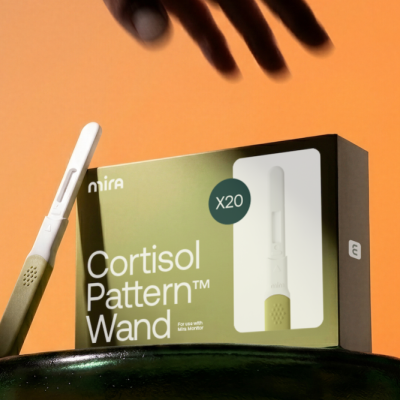
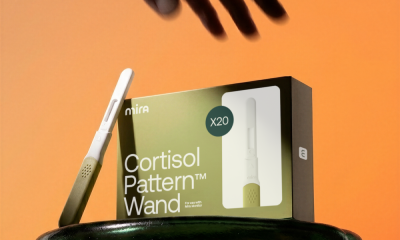
Mira launches at-home cortisol tracking kit

 Pregnancy2 days ago
Parents given new right to two weeks’ leave after pregnancy loss

 Researcher / academic4 days ago
Targeted nanotherapy shows endometriosis promise
2 Comments