




Menopause
Herself and Midi unite on Minnesota women’s care


Herself Health and Midi Health will deliver hybrid care in Minnesota, linking virtual menopause support with in-person primary care across the Twin Cities.
The collaboration connects Midi’s virtual services for midlife women, including perimenopause and menopause care, hormone therapy and mental health, with Herself Health’s primary care available online and at five clinics in Minneapolis–St Paul. Perimenopause is the transition before menopause when hormone levels fluctuate. Hormone therapy uses prescribed hormones to help manage symptoms such as hot flushes.
Patients may use both providers, accessing hormonal care via Midi and primary care via Herself Health as needed.
Herself Health, historically focused on women aged 65 and over, will expand in January 2026 with a paid membership for women aged 50 to 64. The plan includes on-site mammography and dual X-ray absorptiometry (DEXA) scans at select clinics, available to both Herself Health and Midi Health patients. A DEXA scan is a low-dose X-ray that measures bone density to assess osteoporosis risk.
“Women deserve ongoing support and providers who understand their changing needs at every stage of life. Our vision for women’s health shouldn’t be limited to fertility and maternity care. We’ve designed primary care for women who are 50 and older to truly change the way we diagnose, treat, and care for women throughout their lives. That’s what this offers,” said Kristen Helton, CEO of Herself Health. “Women are demanding more from their healthcare — they are seeking trusted guidance from well-trained providers who are focused on their needs. By combining the clinical expertise of Midi Health and Herself Health, we’re serving women in the Twin Cities through a first-of-its-kind women’s health alliance that reflects the kind of proactive, connected care women expect. Together, we are ensuring women get the best care from two dedicated, women-focused organizations united in the mission to advance women’s health.”
The partners say demand for life-stage-specific services is rising as awareness of perimenopause and healthy ageing grows. The US women’s health market was valued at US$18.82bn in 2024 and is projected to reach US$24.36bn by 2030.
Midi supports more than 200,000 women nationwide through telehealth and 24/7 messaging. Herself Health offers annual wellness, gynaecological care, behavioural health support and management of chronic conditions at its Twin Cities clinics. Patients in Minnesota receiving virtual care through Midi who want in-person primary care can speak with their Midi clinician, and those with Herself Health seeking hormonal support can consult their provider about Midi.

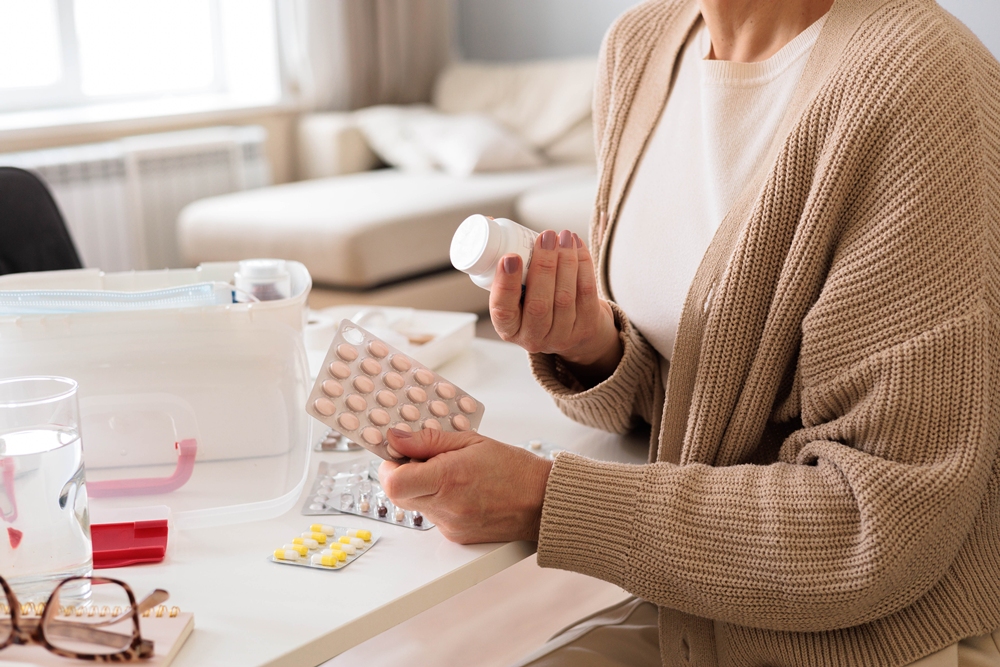
The highest dose of an oral GLP-1 was linked to significant weight loss across menopause stages in post-hoc analyses of two late-stage trials.
The results suggest Foundayo may help women with obesity or overweight lose weight during premenopause, perimenopause and post-menopause.
Women taking the highest dose also saw reductions in waist circumference, a measure linked to abdominal fat and cardiometabolic risk.

The analyses were based on more than 1,500 female participants in the ATTAIN-1 and ATTAIN-2 clinical trials.
GLP-1 medicines mimic a hormone that helps regulate appetite and blood sugar. They are used in weight management and diabetes care.
Cardiometabolic risk means the likelihood of developing conditions such as heart disease, high blood pressure or type 2 diabetes.
The findings were presented at the American Diabetes Association’s 86th Scientific Sessions.
Eli Lilly and Company said women taking the highest dose of Foundayo, the brand name for orforglipron, achieved significant weight loss at every stage of menopause.
Orforglipron is a once-daily oral GLP-1 receptor agonist. Unlike injectable GLP-1 medicines, it is taken as a tablet.
Menopause is the point at which menstrual periods have permanently stopped. Perimenopause is the transition before menopause, when hormone levels and periods can change.
The company said menopause can contribute to weight gain, particularly around the abdomen, and may make weight loss harder to achieve and maintain.
Rachel Batterham, senior vice-president of medical innovation and external engagement at Lilly, said: “Menopause can be an incredibly frustrating time for many women, partly because weight gain often feels beyond their control, and the biology of menopause can undermine even the most determined efforts to manage weight.
“These findings show that Foundayo was associated with meaningful weight loss in women at every stage of menopause.
“For women who have seen their weight become harder to manage precisely when their health is more at risk, this is what progress could look like.”
In ATTAIN-1, women without diabetes who were premenopausal lost up to 12.8 per cent of their body weight after 72 weeks on the highest dose.
Women in perimenopause lost up to 14.4 per cent, while post-menopausal women lost up to 14.1 per cent.
This was equivalent to 28.0 lbs, 30.4 lbs and 28.2 lbs respectively.
At the highest dose, up to 51.5 per cent of women in ATTAIN-1 achieved at least 15 per cent weight loss.
Waist circumference fell by up to 4.9 inches in the trial.
In ATTAIN-2, which involved adults with obesity or overweight and type 2 diabetes, women also lost weight across menopause stages.
Premenopausal women lost up to 11.3 per cent of their body weight, perimenopausal women lost up to 8.9 per cent and post-menopausal women lost up to 13.6 per cent.
This was equivalent to 23.4 lbs, 18.5 lbs and 27.8 lbs respectively.
At the highest dose, up to 44.2 per cent of women in ATTAIN-2 achieved at least 15 per cent weight loss.
Waist circumference reductions reached up to 4.3 inches.
ATTAIN-1 was a 72-week phase 3 trial comparing three doses of Foundayo with placebo in adults with obesity, or overweight with at least one weight-related condition, who did not have diabetes.
ATTAIN-2 was a 72-week phase 3 trial in adults with obesity or overweight and type 2 diabetes.
A placebo is an inactive treatment used for comparison in a clinical trial.
Both trials tested the drug alongside lifestyle measures, including diet and physical activity.
The analyses were post-hoc, meaning they looked at the data after the trial results had already been collected.
Post-hoc analyses can help identify patterns, but they are generally considered less definitive than findings from trials designed specifically to answer that question.
Foundayo is approved by the FDA in the US for adults with obesity, or some adults with overweight and weight-related medical problems, to reduce excess body weight and maintain weight reduction alongside diet and physical activity.
The source material states that the drug should not be used with other GLP-1 receptor agonist medicines and that it is not known whether it is safe and effective in children.
It also states that oral birth control pills may not work as well while taking Foundayo, and that healthcare professionals may recommend another form of contraception for 30 days after starting the drug and for 30 days after each dose increase.
Common side effects listed in the source material include nausea, constipation, diarrhoea, vomiting, indigestion, abdominal pain, headache, swollen belly, tiredness, belching, heartburn, gas and hair loss.
The company said orforglipron is also being studied for type 2 diabetes, obstructive sleep apnoea, osteoarthritis knee pain, hypertension, peripheral artery disease and stress urinary incontinence.

Apple announced menopause and perimenopause tracking for its Health app at WWDC 2026, with symptom logging and cycle alerts for some users.
The update expands the app’s cycle tracking beyond fertility and menstrual periods.
If logged cycle patterns suggest a user may be experiencing perimenopause, the app will send a notification prompting a conversation with a doctor.

However, this perimenopause-specific cycle deviation notification is only for users aged 40 and over and is not intended to replace a doctor’s diagnosis or treatment.
Stacey Ford, Apple’s vice-president of OS management, said users will also be able to log menopause and perimenopause symptoms in the Health app.
Educational content will also be available to help users learn more about these life stages and understand changes in their bodies.
Every year, about 2 million women enter perimenopause, the stage before menopause when levels of the hormone oestrogen decline.
According to a February 2025 survey involving 4,432 participants aged over 30, more than half of women aged 30 to 35 experienced moderate or severe perimenopause symptoms.
The findings suggest perimenopause does not affect only older adults.
About 6,000 women in the US enter menopause every day, according to the Society for Women’s Health Research.
Given the number of women affected by perimenopause and menopause, the update broadens the Health app’s scope.
The app launched in 2019, meaning it has gone seven years without these women’s health tracking features, which could help users better understand their bodies and prepare for informed conversations with doctors.

A new free menopause toolkit has been launched to help UK employers respond better to menopause at work, improve wellbeing and retain experienced staff.
Wellbeing of Women has launched MENO-Kit in partnership with Lancaster University, which it describes as the UK’s first evidence-based menopause workplace toolkit.
The online resource translates more than a decade of academic research into practical guidance for employers.
It is designed for managers, human resources and occupational health teams, equality, diversity and inclusion leads, trade unions and employees.
Its four modules cover menopause awareness, symptom management, menopause champion training and cognitive behavioural strategies.
These are techniques that help people spot and change thought or behaviour patterns that can make symptoms harder to manage.
Amanda Griffiths, emeritus professor of occupational health psychology at the University of Nottingham, said: “I am so pleased the Wellbeing of Women’s toolkit is now available.
“It presents the culmination of many years’ research by Claire Hardy, Myra Hunter and myself at our three universities.
“It’s a clear story: women represent nearly half the working population and menopause is a normal event in their lives.
“Those who experience difficulties appreciate understanding and support. And it’s not difficult to provide.
“I really hope that the next generation of working women, their colleagues and their managers will find the toolkit helpful.”
MENO-Kit was informed by research studies conducted by Lancaster University, the University of Nottingham and King’s College London.
This included the UK’s first large-scale study of women’s experience of menopause at work, carried out at the University of Nottingham, which identified fatigue, poor concentration, low mood and hot flushes as symptoms affecting working life.
It also highlighted the kinds of employer support working women said they would find helpful.
The toolkit has been tested in eight UK organisations across the public, private and charity sectors.
A total of 2,162 people, mostly women in their mid-40s and 50s, contributed across the studies.
The launch comes at a time of growing urgency for employers.
Research from McKinsey & Company highlights the economic opportunity of closing the women’s health gap, estimating it could unlock up to £11bn a year for the UK economy.
The NHS Confederation has also highlighted the economic case for investing in women’s health, linking better support to improved workforce retention and reduced pressure on employers and public services.
Alongside this, research has continued to show the impact of menopause at work.
Separate polling by Benenden Health found that 28 per cent of women had considered leaving work because of symptoms, while 31 per cent reported reduced productivity.
MENO-Kit has been developed to help organisations respond with practical, evidence-based tools that build confidence, reduce stigma, improve wellbeing and help retain experienced staff.
The launch is being marked by an online event featuring a keynote from the Rt Hon Dame Diana Johnson, minister of state for employment, a live demonstration of MENO-Kit by Dr Abigail Morris, and a discussion on practical approaches to creating menopause-supportive workplaces.
Janet Lindsay, chief executive at Wellbeing of Women, said: “Too many women still struggle in silence during menopause at work, with many employers lacking the tools to respond effectively.
“MENO-Kit addresses this gap, offering practical, evidence-based ways for organisations to better support their people.
“It helps women stay working, thrive, and realise their potential at work.
“We’re hugely grateful to the research teams whose expertise has made this possible.”
Dr Abigail Morris, lecturer in workplace health and wellbeing at Lancaster University, said: “We’re delighted to launch Meno-Kit which represents an important step forward in supporting organisations across the UK to take a proactive and informed approach to menopause in the workplace.
“By providing practical tools, evidence-based guidance and a structured framework for action, the resource will help organisations develop effective menopause action plans, foster more inclusive and supportive workplace cultures, and better support women experiencing menopause to remain healthy, engaged and thriving at work.
“We believe Meno-Kit has the potential to drive meaningful organisational change while improving the everyday working lives and wellbeing of women across the UK workforce.”
Davina McCall, Wellbeing of Women ambassador, said: “Menopause shouldn’t be something women hide or struggle with alone at work or anywhere.
“It’s a normal life stage, not a personal failing.
“By talking about menopause openly and putting the right support in place, workplaces can make a huge difference to women’s wellbeing, confidence and careers enabling them to thrive at work.”











 Menopause3 weeks ago
Perimenopause misinformation ‘putting women at risk’

 Hormonal health3 weeks ago
NHS urged to update website following renaming of PCOS

 News2 weeks ago
Women still being failed when they reach menopause, experts say

 Entrepreneur2 weeks ago
Women’s Health Innovation Summit opens submissions for 2026 Innovation Showcase

 Insight1 week ago
British women among angriest in Europe, health survey reveals

 News2 weeks ago
Three menopause innovators shortlisted for Femtech World Award
 Cancer4 weeks ago
AI could transform ovarian care through personalisation, study finds

 News3 weeks ago
Low insulin diet and avoiding four food groups may prevent menopause weight gain