




Insight
Tour de France 2022 – how tech is closing the gender gap in cycling


Michele McGuire, vice president of managed services delivery at NTT, official IT partner of Tour de France tells Femtech World about technology’s power to close cycling’s gender gap.
Contributing factors to the gender-based financial divide in sports include disproportionate sponsorship deals, unequal representation in sports governance and gaps in media coverage of women’s competition.
In the world of cycling, however, things are changing through an approach which is harnessing the potential of technology to drive change.
“We are actually driving digital equality across women’s and men’s races, and this is happening for the very first time,” says Michele McGuire, vice president of managed services delivery at NTT, official IT partner of Tour de France.
“If you ever tried to watch women’s cycling you must have noticed that you get no information about it: you only know what you see on television.”
NTT helped to bring about a digital transformation of this year’s Tour de France Femmes enabling, for the first time in history, the same level of media coverage and standard of technology as the men’s race.
This year’s Tour de France Femmes saw the creation of the world’s largest connected stadium, where data helped race organisers monitor key locations, assets, crowd information, and live race data to enable more smooth race operations.

An image of the Tour de France Femmes 2022 in Paris
Data also provided a rich experience to fans at the event and around the world. This included data-driven insights and AI predictions across social media and TV and a race centre bringing together commentary and social media.
“Thanks to technology solutions, advanced analytics and machine learning, we created a deeper experience for fans showing them how the race actually plays out,” says McGuire, who had a front row view of the tour.
“To do so, we created various ways of getting information to the fans which bring them closer to the cyclists.
“We know that not anybody can seat in front of a TV to watch the race, so we created an immersive reality for fans to use on their phones.”
NTT created an augmented reality available on the Apple and Android app stores that allowed fans to trace the races in 3D.
“Fans can angle their phones at 45 degrees and have a 3D view of the profile of the cyclists, of the route they’re on, of the tracks etc. ,” says McGuire.
The overwhelming favourite for today @AvVleuten? almost left the race due to illness at the start of the week.
There was no trace of weakness yesterday as she powered to a solo victory and her profile suggests she could do the same on the final stage? #TDFF #TDFFdata pic.twitter.com/9o5dspUcZM— letourdata (@letourdata) July 31, 2022
To enhance the fans’ experience, the Tour de France Femmes 2022 was accompanied by “digital human” Marianne; who takes her name from the winner of the first race in 1984, Marianne Martin.
Fans can ask Marianne any questions about the race, about the favourites of the day and about the winners of the past races.
NTT also brought many innovations in the field of race operations. These included IT sensors that have been placed on tracks, on race routes and race vehicles.
By placing these sensors, and by collecting the data from it, NTT was also able to create a complete view of the entire race operations.
“What this means is that we can actually see on the screen who is where and what’s happening in and around the race,” says McGuire.
“We’re doing this to lift the profile of women cyclists. We’re showing people what they’re capable of doing. This means that women are actually getting a true view of what women cycling is about.”
McGuire explains that the future goal is to attract as many women as possible to the sport: “The key part is digital equality. Creating equality and inclusivity will allow women sports to flourish.”














Breast cancer rates have risen rapidly among Asian American women over the past two decades, with some of the steepest increases among women under 50, new research has revealed.
Rates rose by more than three per cent a year in nearly every Asian American ethnic group studied, much faster than in any other US ethnic group.
The increase was particularly marked among women under 50 and in cases involving advanced-stage disease or certain aggressive subtypes of the cancer.

The study found even larger increases among Chinese and Vietnamese women.
Breast cancer rates among Native Hawaiian women were already among the highest recorded among US women, but rose by about one per cent a year, less than the increases seen in Asian American groups.
The researchers said increased screening was unlikely to explain the trend because screening would be expected to identify more cancers at an earlier stage.
Instead, cancers that had already spread increased at the fastest rate.
Triple-negative breast cancer, considered the most aggressive subtype, rose by more than six per cent a year among Chinese American women between 2017 and 2022.
Scarlett Lin Gomez, senior author and professor of epidemiology and biostatistics at the University of California, San Francisco, said: “These patterns are highly concerning from a disparities standpoint.
“They underscore why it is so important to move beyond treating Asian Americans, Native Hawaiians, and Pacific Islanders as a single population.”
Researchers analysed about 150,000 cases of invasive breast cancer diagnosed between 2000 and 2022 using data from the National Cancer Institute’s Surveillance, Epidemiology, and End Results Programme.
The analysis covered nine Asian American, Native Hawaiian and Pacific Islander populations across 14 states. Together, these states account for about two-thirds of the US population within these groups.
Except for Native Hawaiian women, Asian American women have historically had lower breast cancer rates than non-Hispanic white women.
However, the gap has narrowed rapidly. By 2022, incidence among Asian American women under 50 was comparable with that recorded among white women.
The reasons for the increase among women under 50 remain unclear.
Changes in reproductive patterns, diet and other lifestyle factors may play a part, but researchers said they did not fully explain the findings.
They said previously unidentified risk factors may also be contributing to the rises in some Asian American communities.
Researchers hope two UCSF-based studies, the CRANE breast cancer study and the ASPIRE cohort study, will provide insights into these factors.
Gomez said: “Understanding why breast cancer is increasing so rapidly in these communities is critical.
“At the same time, we need to ensure that women across all Asian American, Native Hawaiian, and Pacific Islander communities have access to culturally appropriate education, screening, and timely follow-up care.”
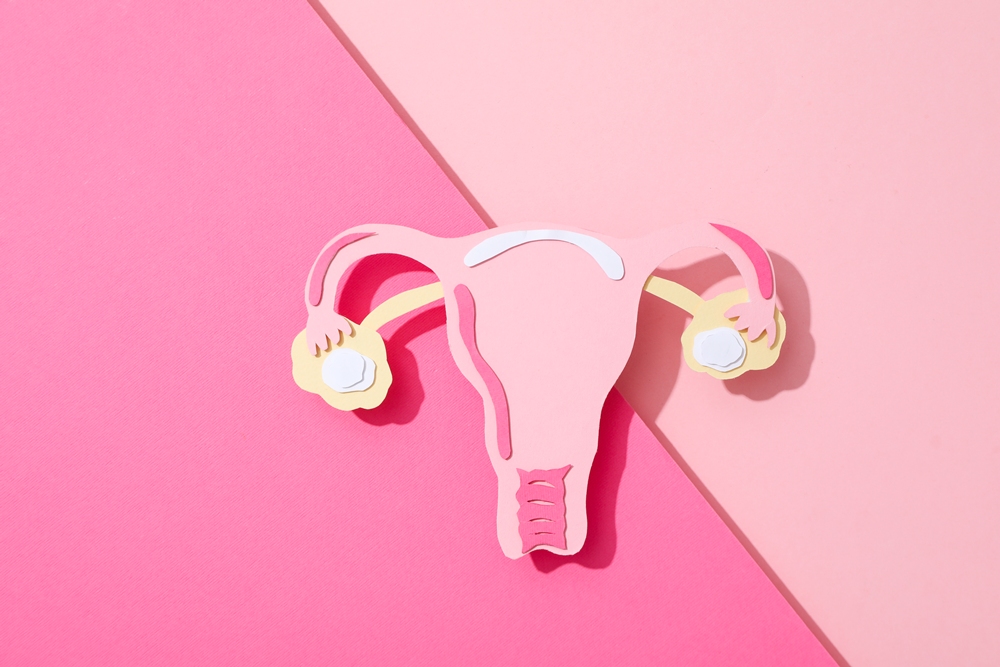
Softening ageing ovaries could help women remain fertile for longer, early animal research suggests.
Fertility declines with age for several reasons, including poorer egg quality, fewer ovarian follicles and the gradual stiffening of ovarian tissue.
Existing fertility treatments, including hormone therapy and in vitro fertilisation, mainly address hormonal imbalances or help eggs mature or become fertilised.

Scientists are now examining whether changing the physical structure of the ovaries could provide another route for future fertility treatments.
Stuart A. Cook, of the Cardiovascular and Metabolic Disorders Programme at Duke-National University of Singapore Medical School, published an accompanying commentary on the research.
Researchers led by Shixuan Wang at Huazhong University of Science and Technology in Wuhan, China, collected healthy ovarian tissue from younger, middle-aged and older women.
They also examined samples from patients with polycystic ovary syndrome, known as PCOS, premature ovarian insufficiency, or POI, and endometriosis.
PCOS is a hormonal condition that can disrupt ovulation. POI occurs when the ovaries stop working normally before the age of 40, while endometriosis causes tissue similar to the womb lining to grow elsewhere in the body.
Tests of protein levels and gene activity found higher levels of the inflammatory protein interleukin-11, or IL-11, in ageing and diseased ovaries.
In laboratory experiments, the researchers exposed ovarian fibroblasts to IL-11. Fibroblasts are cells that produce connective tissue.
The protein caused the cells to produce excess collagen, a structural material that can build up during scarring and make tissue stiffer.
The researchers then genetically modified mice so they could not respond to IL-11. The animals developed less ovarian stiffening and maintained better ovarian function as they aged.
Similar results were seen in mouse models of PCOS and POI caused by chemotherapy.
In the final part of the experiment, older mice and rats were injected with a nanoparticle treatment containing small interfering RNA, or siRNA, designed to switch off IL-11.
The treatment made the animals’ ovaries less stiff and improved fertility.
Pregnancy rates among older mice rose from 25 per cent to 50 per cent, while average litter sizes also increased.
More rats treated with the therapy became pregnant and produced larger litters.
The approach remains highly speculative and will require considerably more research before its safety or effectiveness in women can be established.
However, the researchers said blocking the inflammatory pathway could eventually form the basis of new fertility treatments.
They said: “We propose that anti-IL-11 therapy represents a promising translational strategy for delaying ovarian ageing.”


By Jane Lewis, chief operating officer, chief financial officer and women’s health lead, ABHI
For years, the conversation around women’s health has rightly focused on recognition.
Recognition that women wait longer for diagnosis. Recognition that symptoms are too often dismissed or normalised. Recognition that healthcare systems have historically been designed around male biology, leaving gaps in research, evidence and care.
That recognition matters. But awareness alone will not improve outcomes.
The challenge facing women’s health today is no longer simply identifying the problem. It is acting on the solutions already available.
At ABHI’s Women’s Health Summit earlier this year, leaders from across healthcare, government, academia and industry came together to discuss the future of women’s health.
One message emerged repeatedly throughout the day: we do not have an innovation problem.
Across medical devices, diagnostics, digital health and genomics, there are already technologies capable of transforming outcomes for women.
From self-sampling approaches for cervical screening and non-invasive diagnostics to AI-enabled tools and advanced imaging, innovation is happening. The question is whether healthcare systems can adopt it quickly enough.
Too often, promising technologies become trapped in pilot programmes, fragmented procurement processes or lengthy implementation pathways. Evidence generation, commissioning and adoption are frequently treated as separate challenges rather than part of a single journey.
The consequence is that innovations capable of improving quality of life and reducing pressure on health services take years to reach the women who could benefit from them.
This matters because women’s health extends far beyond reproductive health.
Historically, many discussions have centred on fertility, pregnancy and gynaecological conditions. These remain critically important, but they represent only part of the picture.
Women experience cardiovascular disease differently to men. They are disproportionately affected by autoimmune conditions. They face distinct health challenges throughout their lives, from adolescence to healthy ageing.

Jane Lewis
Yet healthcare systems often continue to approach these issues in isolation.
A woman does not experience her health in separate compartments. Pregnancy, cardiovascular risk, menopause, mental health and musculoskeletal conditions are interconnected.
Healthcare systems need to reflect that reality through more integrated, life-course approaches to care.
There has never been a better opportunity to do so.
Across the NHS, the shift towards prevention, community-based care and digital transformation aligns closely with the needs of women’s health.
Women’s Health Hubs are already demonstrating the benefits of bringing services together around the needs of women rather than organisational boundaries. Digital technologies are helping to identify risk earlier and support more personalised care.
Innovation can help deliver all three of the NHS’s major transformation ambitions: moving from treatment to prevention, from hospital to community, and from analogue to digital care.
But innovation alone is not enough.
Closing the women’s health gap also requires us to address longstanding gaps in research and evidence.
Women remain underrepresented in many areas of clinical research, and sex-disaggregated analysis is not always applied consistently. The result is that clinical pathways and treatment decisions are often based on evidence that does not fully reflect female physiology.
Better data, stronger research participation and greater focus on female-specific and female-predominant conditions will be essential.
There is also a compelling economic case for action.
Women’s health is often framed as an equality issue, and equality remains central. But poor health affects workforce participation, productivity and economic growth.
Improving outcomes for women benefits not only patients, but employers, healthcare systems and wider society.
Yet despite this, women’s health innovation continues to attract only a fraction of the investment directed towards other areas of healthcare.
That is beginning to change.
Across the UK and internationally, momentum is building. Governments, investors, researchers and innovators increasingly recognise that women’s health is both a societal necessity and an economic opportunity.
The conversation has moved on significantly in recent years. Topics that were once overlooked are now firmly on the policy agenda.
The next challenge is ensuring that awareness translates into action.
The technologies exist. The evidence is growing. The policy direction is increasingly clear.
ABHI is increasingly taking this agenda beyond national boundaries. Through our engagement with international industry associations, policymakers and healthcare leaders, we are working to ensure that women’s health is recognised as both a health and economic priority.
We are helping to shape discussions on innovation, regulation, investment and adoption, while sharing lessons from the UK with partners around the world.
Whether addressing the gender health gap, improving access to diagnostics or accelerating the uptake of new technologies, international collaboration will be essential.
The challenge now is not recognising the need for change, but delivering it.
Women have waited long enough for acknowledgement of the problem. They should not have to wait any longer for the benefits of the solutions that already exist.
ABHI is the UK’s leading industry association for HealthTech. Its members, ranging from multinationals to small and medium-sized enterprises (SMEs), develop and supply technologies spanning everything from syringes and wound dressings to surgical robots, diagnostics, and digitally enabled healthcare solutions. ABHI’s 400 member companies represent approximately 80% of the UK HealthTech sector by value.












 Insight7 days ago
Women with PMOS should have annual NHS checks, new guidance says

 Diagnosis6 days ago
Two “gamechanger” tests set to speed up endometriosis diagnosis on the NHS

 Cancer5 days ago
Thousands of women could avoid painful cancer exam with new AI blood test

 Entrepreneur2 weeks ago
Korea’s Femtech Industry Goes Global as Vespexx Hosts Korea Femtech Summit 2026

 AI1 week ago
Breast cancer biosensor and low-cost ultrasound startups win women’s health AI competition

 News1 week ago
Clue spotlights seven women’s health journeys in new campaign

 Fertility6 days ago
Older women face lower chance of fertility treatment working, even with donor eggs, study finds

 Fertility4 days ago
Applications open for the third W Accelerate with Merck KGaA and M Ventures
1 Comment