




Insight
How to protect your data in a post-Roe world


Femtech World meets James Walker, CEO of Rightly, to understand what women can do to protect their health data after the Roe overturn.
In June 2022, the US Supreme Court overturned Roe v. Wade which previously gave women a federally guaranteed right to abortion across all US States.
Since then, experts have urged women to delete their period tracking apps fearing that the user’s data may become incriminating if seeking for an abortion.
Statistics from Rightly show a 4400 per cent increase in the number of requests for data deletion from women’s health apps such as Period Tracker, MyFlo and My Calendar, compared to the weeks prior to the Roe decision.
After the overturn there has been a “strong upsurge with women thinking about who’s got their data,” explains James Walker, CEO of Rightly. “There has been a sudden growth, both from the UK and from the US, after Roe v. Wade.
“People have started to think ‘I don’t necessarily want all of my health data being held by a health app’ or ‘who could they share my data with?’.”
Is ‘anonymous’ really anonymous?

In response to these concerns, numerous women’s health apps have introduced an anonymous mode that “allows users to use the services without any personally identifiable information, such as name, email address, and technical identifier being associated with the account,” wrote period tracking app Flo.
“The anonymous mode is the way to go,” says Walker. “But I think there is a step further, which is understanding how algorithms are used and how we are being marketed.
“I can have you as an anonymous user but I can still classify you and I can still work out how to market you. So, the anonymous mode is actually preventing your data being shared to a wider audience but it still doesn’t mean that you’re not being profiled or marketed by the app.
“I would still be wary of how my data is being used even if in anonymous mode.”
‘The first thing to do is reading the terms and conditions’

Wariness about how ‘anonymous’ these apps really are, is backed by the fact that every activity carried out online leaves a digital trace that tech companies collect in form of data. These may have a functional purpose – essential information needed to provide the services – or they may be sold for commercial reasons.
In response to the Dobbs decision, several femtech companies released statements assuring users that the data entered is ‘private and safe’. But, evidence gathered so far suggested the contrary.
For example, a study showed that nearly 90 per cent of the top 23 women’s health apps in the US share data with third parties, with only 50 per cent requesting users permission to do so.
“The first thing to do is reading the terms and conditions,” suggests Walker. “Most people don’t spend any time doing it.”
Walker explains that carefully reading the terms and conditions is the only precaution that can be taken as he explains that any other solution is only applied after the data breach has already happened.
‘Every data is health data’

Data protection in the EU is covered by the GDPR which stands for General Data Protection Regulation. This regulation went into effect in 2018 and it places limits on what organisations can do with users’ personal data.
“GDPR is pretty open on the way that your data can be used,” says Walker. “But the way your data is actually used is blurred with it.
“The UK government is looking more and more into how firms can use anonymised health data to be able to build better algorithms and better services. They see the value in the commercial services that can be delivered from this.
“I think that leaving data privacy to governments will leave us in a situation where many people will be shocked and horrified in the future about how their data has been used and what’s been done with it.”
Walker suggests taking action, not only with women’s health apps, but with any online app as he explains that “every data is health data”.






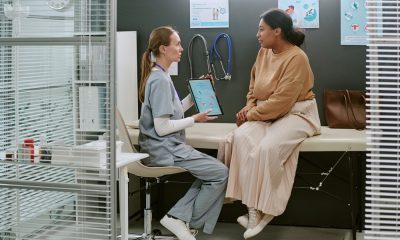





Women face a hidden burden navigating healthcare, with many repeatedly retelling their medical history, a national study suggests.
The findings indicate that Canadian women are taking on cognitive, emotional and administrative work alongside managing their health, including coordinating providers and advocating for care.
More than half of women surveyed, 53 per cent, reported a past or current chronic condition, while 64 per cent said there were health topics they struggled to raise with their doctor.

Sarah Hoffman, president and CEO of Pacific Blue Cross, said: “These findings challenge us to think differently about women’s healthcare and highlight the hidden work required to navigate the system.
“For many women, managing their health has also come to mean managing the healthcare system itself.
“They are acting as project managers of their own care, shouldering the invisible labour of coordinating between providers, retelling their medical history and advocating to be heard.
“The gap between men and women is meaningful and raises important questions about why younger women report lower levels of confidence and support.
“It also challenges us to consider whether we are actually making progress in women’s care, and whether the next generation is being equipped with the confidence and voice to advocate for their health.”
Overall, 71 per cent of Canadians described their doctors as supportive and 88 per cent expected their appointments to go well.
Among women living with chronic conditions, 71 per cent reported having to repeat their complete health history multiple times a year.
Younger women were particularly likely to report difficulties discussing their health. The study found 81 per cent of Gen Z women aged 18 to 30 and 73 per cent of Millennial women aged 31 to 45 had health topics they struggled to raise with their doctor.
Among Gen Z women with chronic illness, 92 per cent reported having to repeat their complete health history.
The study also found differences between young women and men. While 95 per cent of Gen Z men expected a doctor’s appointment to go well, the figure was 82 per cent among Gen Z women.
Similarly, 82 per cent of Gen Z men said they felt supported by their family doctor, compared with 66 per cent of Gen Z women.
Reasons for holding back health concerns varied between generations.
Among Gen Z women, 30 per cent cited fear of dismissal and 29 per cent fear of judgement.
Embarrassment was the most common barrier among Millennial, Gen X and Boomer women, reported by 29 per cent, 27 per cent and 35 per cent respectively.
Women who felt they needed to prove themselves to be taken seriously said they adapted how they approached appointments.
Strategies included researching medical information, repeatedly describing or justifying symptoms, bringing written notes or documentation, tracking symptom timelines, making repeat visits and emphasising how symptoms affected their daily lives.
The study also found an association between feeling supported by a doctor and expecting appointments to go well.
Canadians who described their physician as supportive were nearly four times more likely to expect appointments to go well than those who felt unsupported, at 98 per cent compared with 25 per cent.
Overall, 66 per cent of Canadians said they described their symptoms accurately. This fell to 48 per cent among those who said they felt unsupported by their doctor.
The 2026 Blue Cross Women’s Health Study surveyed 2,045 adult Canadians online in March 2026 through independent research company Research + Knowledge = Insights.
The survey had a reported margin of error of plus or minus 2 per cent, 19 times out of 20.


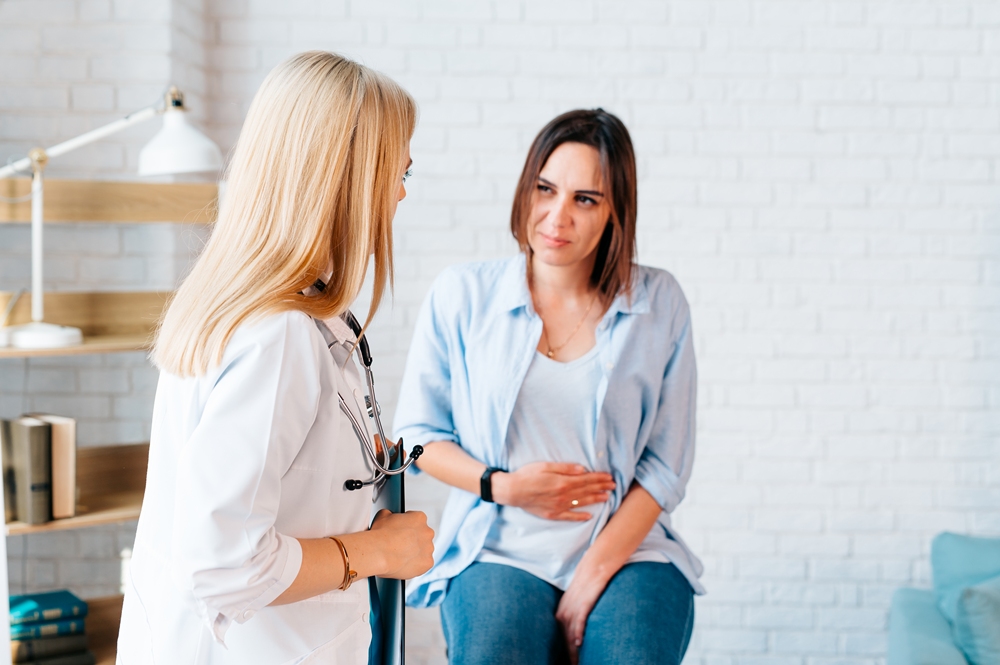
A study is examining where delays occur in diagnosing endometriosis – a condition that can take seven to twelve years to diagnose.
Endometriosis affects an estimated 1.5 million women and people in the UK, but there is currently no consistent way of measuring where and why diagnostic delays happen.
The research aims to develop the first standardised framework for understanding the diagnostic journey and identifying points where interventions could improve care.
The international project involves researchers from the University of Sheffield, University of Liverpool, University of Oxford, Aarhus University in Denmark and the University of Edinburgh, alongside Endometriosis UK.
Dr Rebecca Mawson, NIHR clinical lecturer in primary care at the University of Sheffield, is part of the research team.
She said: “Our project asks: where exactly are people getting lost or let down on their journey to diagnosis, and how can we map those points in a systematic way to identify where interventions could make a real difference.”
The project is led by Dr Babu Karavadra, NIHR academic clinical fellow in general practice at the University of Liverpool, who has been awarded a World Endometriosis Society Early Career Investigator Award as lead principal investigator at the University of Liverpool.
Researchers will review existing evidence, gather experiences from people living with endometriosis and bring together an international panel to map the diagnostic pathway and agree common definitions for key points along the journey.
The work will focus particularly on people whose experiences are often missing from research, including Black women, people living in rural or deprived areas, LGBTQ+ communities and disabled people.
Primary care will also be central to the research because it is often where people first seek help with symptoms.
Mawson said: “Primary care needs to be at the heart of this work. Primary care is often where people first seek help with their symptoms, so it has a crucial role in understanding diagnostic delay.
“If we only look at what happens once someone reaches specialist gynaecology, we risk missing some of the barriers that shape the journey long before that point.”
Unlike cancer research, where internationally recognised standards exist for studying diagnostic delays, endometriosis research has been more fragmented, with studies measuring different parts of the diagnostic journey in different ways.
The researchers hope to create an ‘Endometriosis Diagnostic Pathway Framework’ to help identify where people are falling through the gaps and where healthcare could be improved.
They will also develop a ‘Snakes and Ladders’ style visual representation showing how systemic barriers, chance and individual experiences can influence whether someone reaches a diagnosis.
The project forms part of the PEARL network, Primary care Endometriosis and Adenomyosis Research and Learning, an international collaboration of primary care and community researchers and clinicians.
Mawson said: “Endometriosis diagnostic delay isn’t inevitable. If we can understand where and why people are experiencing barriers, we have a much better chance of designing interventions that actually make a difference.
“The scale of the problem demands that we look at the whole journey, listen to the people experiencing it and build an evidence base that can lead to real change.”
The framework could provide the foundations for future research, clinical guideline development, healthcare professional training and NHS service improvements, with potential applications to related conditions such as adenomyosis and chronic pelvic pain.







 Hormonal health2 weeks ago
Major UK study could be a ‘game-changer’ for heavy periods and endometriosis

 Entrepreneur6 days ago
KOVE Medical raises €1.7 million to improve safety of foetal surgery

 Events2 weeks ago
One week left to apply: W Accelerate with Merck KGaA and M Ventures

 Pregnancy1 week ago
UK study aims to transform maternity care for high-risk pregnancies

 Menopause2 weeks ago
Quarter of women miss work due to menstual symptoms, survey finds

 Mental health2 weeks ago
PMDD after SSRIs or hormones: Why the brain may be the missing treatment target

 Diagnosis2 weeks ago
Ark Surgical secures further institutional backing to accelerate US expansion

 Hormonal health4 days ago
Menopause hormone treatment may ease brain fog, study suggests
2 Comments