




News
Outpost Bio raises €2.9m for microbiology platform


Outpost Bio has raised €2.9m (US$3.5m) in pre-seed funding to develop a platform aimed at making human microbiology computable.
The London and Boston-based startup, founded in 2025 by Dr Jenny Yang and Alex Merwin, says it is working to decode interactions between microbes and human biology that it believes are often overlooked by existing biological models.
The company says most frontier biological models focus on elements encoded in human DNA. However, many biological processes arise from interactions between multiple biological systems.

Outpost Bio’s platform aims to address this by modelling what it calls the “interaction layer”, focusing on human microbiology, the study of micro-organisms that live in and on the human body.
Its Lab-in-the-Loop platform combines automated laboratory experiments with machine learning, a form of artificial intelligence that enables computer systems to improve as they process data. The platform creates a feedback loop in which models learn from experiments and guide what should be tested next.
The company says this approach generates proprietary human-derived functional data at scale, which it claims could help pharmaceutical partners reduce risk in clinical development, design safer formulations and support regulatory evidence. It also says food and consumer companies could use the system to test how prebiotics, botanicals and other ingredients affect microbial communities.
The startup says its platform could help partners developing molecules intended for use in or on the human body predict microbe-mediated metabolism, toxicity and response.
Dr Yang, co-founder and chief executive, holds a PhD from the University of Oxford and is a former Marie Curie Fellow with a background in clinical machine learning.
Co-founder and chief operating officer Alex Merwin previously served as head of growth for health and bio startups at AWS.
The pre-seed funding round was co-led by Merantix Capital and Seedcamp, with participation from OpenSeed VC, Defined and strategic family offices and angel investors.
Dr Yang said: “We’re building what we believe to be the most comprehensive dataset in human microbiology.
“Microbial communities can dramatically alter drugs and other interventions, yet this layer has been largely ignored because the data hasn’t existed at scale.
“For the first time, we can move beyond correlations to reveal causal pathways.”
Adrian Locher, co-founder and general partner at Merantix Capital, added: “What took decades to build for earlier biological models can now be achieved in years.
“Faster wet-lab data generation, lower sequencing costs, and more powerful machine learning make this the right moment to build predictive models of the microbes that live within and on us.”
With the new funding, Outpost Bio plans to expand its experimental and modelling platforms as it seeks to develop new approaches to designing drugs, ingredients and consumer health products.



An experimental drug slowed triple-negative breast cancer in mice by flooding tumour cells with toxic fats.
Triple-negative breast cancer lacks three common drug targets, making it one of the hardest-to-treat and most aggressive forms of the disease.
The compound, known as DH20931, appears to push cancer cells past their limits by triggering a surge in ceramides, fat-like molecules that place the cells under intense stress until they self-destruct.

In lab experiments, the drug also made standard chemotherapy more effective. When combined with doxorubicin, researchers were able to reduce the dose needed to kill cancer cells by about fivefold.
The drug targets an enzyme known as CerS2 to sharply increase production of these lipids and stress cancer cells. Healthy cells, by contrast, showed lower sensitivity to the drug in lab tests.
While the early results are promising, further preclinical and clinical trials would still be needed to determine the safety and effectiveness of DH20931 in humans.
Satya Narayan, a professor in the University of Florida’s College of Medicine, led the study with an international group of collaborators.
The researchers published their results on human-derived tumours on 21 April and presented their findings on combination therapy at the annual meeting of the American Association for Cancer Research in San Diego.
Narayan likened the drug’s effects to a home’s electrical system handling a power surge.
While healthy cells act like a properly grounded and installed circuit, cancer cells are more like a jumble of mismatched wires and faulty fuses. DH20931 overwhelms cells not with electricity, but with fats.
He said: “When that surge goes into the cancer cells, they cannot handle the amount of power they are getting. The fuses burn out, the cell can’t handle the surge and it dies.”
The compound was developed at the University of Florida in the lab of Sukwong Hong.
Hong, now a professor at the Gwangju Institute of Science and Technology in South Korea, created DH20931 as one of many drug candidates tested for efficacy in Narayan’s lab.
In the study, researchers implanted human triple-negative breast cancer tumours into mice and treated them with DH20931.
The drug significantly slowed tumour growth without causing noticeable weight loss or signs of toxicity in the animals. In separate lab experiments, it also showed activity against other breast cancer subtypes.
In addition to increasing lipid levels, DH20931 triggers a second stress signal by flooding cells with calcium.
Together, these effects disrupt the mitochondria, the structures that produce a cell’s energy, ultimately leading to cell death.
Narayan said: “It does not just follow one pathway but it goes through multiple pathways. It’s a two-hit hypothesis.
“These pathways are common in all breast cancer types and other solid tumours, so we think this drug can be useful not only in triple-negative breast cancer but potentially other cancers as well.”
Entrepreneur
Future Fertility raises Series A financing to scale AI tools redefining fertility care worldwide
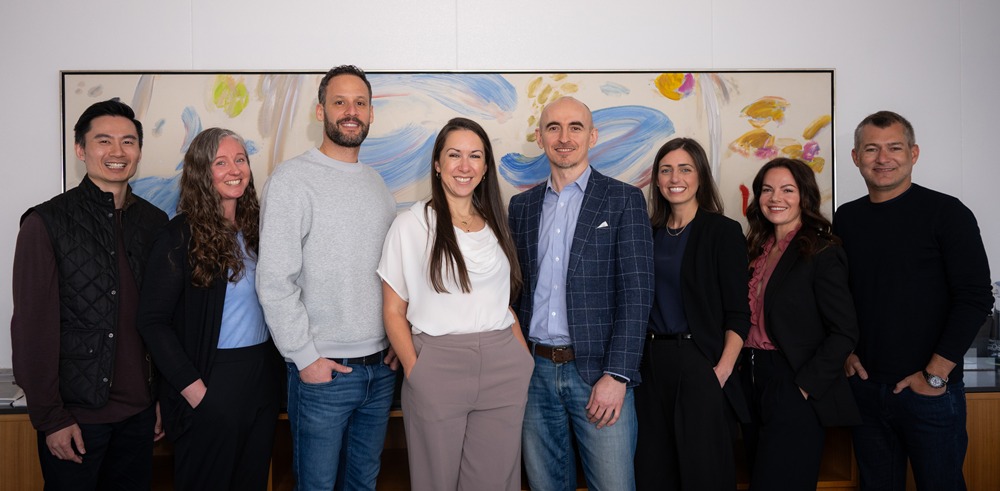
Future Fertility Inc. has announced the closing of a US$4.1 million Series A financing round.
The round was led by M Ventures (the corporate venture capital arm of Merck KGaA, Darmstadt, Germany) and Whitecap Venture Partners, with participation from new investors Sandpiper Ventures, Gaingels, and Jolt VC.
The financing will accelerate Future Fertility’s commercial expansion into Asia-Pacific and support its entry into the United States, including planned FDA 510(k) clearance for additional products as part of a broader U.S. market entry strategy.
Proceeds will also advance the development of a broader AI platform, from egg assessment through to embryo transfer, designed to support clinicians, embryologists, and patients across the full IVF journey.
M Ventures and Whitecap have supported Future Fertility’s mission to translate AI innovation into meaningful clinical outcomes since the company’s earliest stages.
Oliver Hardick, investment director, M Ventures, said: “Future Fertility is addressing a critical unmet need in reproductive medicine with a differentiated AI platform grounded in clinical data and real-world workflow integration.
“We are excited to continue supporting the company and team because we believe its technology has the potential to improve decision-making for clinicians, bring greater clarity to patients, and help advance a more personalised standard of care in fertility treatment.”
Future Fertility’s AI platform addresses a long-standing gap in fertility care: historically, there has been no objective, clinically validated method for assessing egg quality (Gardner et al., 2025), despite it being one of the most important drivers of reproductive success.
The company’s suite of deep learning tools includes VIOLET™, MAGENTA™, and ROSE™, purpose-built for egg freezing, IVF, and egg donation respectively.
The tools are based on AI models trained and validated on more than 650,000 oocyte images and are deployed in over 300 clinics across 35 countries.
Rhiannon Davies, founding and managing partner, Sandpiper Ventures, said: “The best outcomes in fertility care globally come from better data and smarter tools. Future Fertility understands that, and they’ve built a platform that delivers on it.
“Sandpiper is proud to back a team turning rigorous science into real results for patients and clinicians alike.”
Partnerships with the world’s leading fertility networks – including IVI RMA and Eugin Group across Latin America and Europe, FertGroup Medicina Reproductiva in Brazil, and most recently announced Kato Ladies Clinic in Japan – reflect growing demand for objective, AI-powered oocyte assessment in fertility care. In the United States, ROSE™ is newly available under an FDA 513(g) determination.
Research shows that approximately 50 per cent of IVF patients do not understand their likelihood of success, and many discontinue treatment prematurely, even though cumulative success rates improve significantly with multiple cycles (McMahon et al., 2024).
By delivering earlier clarity on egg quality, Future Fertility’s tools support more informed conversations between clinicians and patients, helping set realistic expectations and guide decisions about next steps.
Future Fertility’s growing evidence base spans seven peer-reviewed publications in Human Reproduction, Reproductive BioMedicine Online, Fertility & Sterility, and Nature’s Scientific Reports, and more than 70 scientific abstracts accepted and presented with partner clinics at conferences worldwide.
Christine Prada, CEO, Future Fertility, said: “Fertility treatment is one of the most emotionally and physically demanding experiences a person can go through.
“Every patient deserves objective data, not just a best guess, to support better decisions at critical moments in their care.
“This funding means we can bring that clarity to more patients, in more countries, at a moment when it matters most.”
Find out more about Future Fertility at futurefertility.com












 Entrepreneur3 weeks ago
Three sessions that show exactly where women’s health is heading in 2026
 Entrepreneur1 day ago
Future Fertility raises Series A financing to scale AI tools redefining fertility care worldwide

 Pregnancy3 weeks ago
How NIPT has evolved and what AI NIPT means in 2026

 Menopause4 weeks ago
Watchdog bans five ads for women’s heath claims

 News3 weeks ago
Two weeks left to make your mark in women’s cardiovascular health

 Opinion4 weeks ago
Q1 momentum: Female founders are advancing, but the system still hasn’t caught up

 News4 weeks ago
Endometriosis firm wins NIH prize

 Menopause1 week ago
More research needed to understand link between brain fog and menopause, expert says
Pingback: amlodipine besylate 2.5mg tablets
Pingback: ciprofloxacin 500
Pingback: erythromycin antibiotic
Pingback: mebeverine 200mg