




News
Is femtech finally getting the attention it deserves?


Proptech, medtech, commtech – the digital revolution over the past decade has paved the way for technology to infiltrate every facet of our lives (both personal and professional) to make every day even easier.
While many viewed this as merely a ‘fad’ in the early days, more and more people, businesses and investors are starting to realise, acknowledge and admit that technology is clearly the way forward, and must be integrated into everyday life.
But it’s not simply being able to virtually tour a property, diagnose over the internet, or communicate with colleagues and counterparts all over the globe that technology can help with, it’s now having an impact on an often neglected element of healthcare: women’s health.
What is femtech?
Generally speaking, and according to femtechinsider.com, ‘femtech’ refers to: “software, diagnostics, products and services that use technology to support women’s health”.
The categorisation came about accidentally after the founder of period tracking app Clue, Ida Tun, introduced it as such to her mainly male investors.
While it has come under some scrutiny for not being inclusive (by definition excluding trans men), and that it is liable to encourage the Pink Tax, these are often refuted due to the latter mainly being aimed at products rather than services, and the fact that it is often understood as ‘a technology that improves women’s lives’ to counter the former (as that’s exactly what it does – more medtech, less lifestyle).
Femtech is more than period trackers; the category now encompasses pregnancy, sexual health, chronic disease and maternal care amongst many other.
What’s going on with Femtech investment?
While appetite for anything technology related is increasing, the world has started to realise that female consumer power has arrived – and the force is strong.
Global venture capital investment in femtech surpassed $1.2 billion for the first time ever in 2021 with some very big deals crossing the line ($80 million in Elvie, $75 million in Carrot and $50 million in Flo).
And while some deals are big, others are gigantic. Understood to be the largest amount of femtech funding raised ever, Maven Clinic reached unicorn status with investment of $110 million.
And the big factor? Women are more engaged in healthcare than men. In the US, women spend $500 million a year on medical expenses, and a survey by the US Department of Labor found that women make 70 per cent of the family’s healthcare decisions.
What’s behind this boom in investment?
For many, there are two key trends: Covid and feminism.
Across almost every industry, experts claim technological advancement accelerated spectacularly from March 2020, with projects expected to be completed within five years often being finished within eight weeks to meet a growing need.
While this undoubtably had an impact on femtech’s development, it was already well on its way thanks to the ongoing wave of female empowerment (supported by events such as the #MeToo movement), enabling half the world’s population to realise that there is a significant lack of solutions tailored to them.
So, they built them as the pandemic exposed the challenges women face when it comes to their health.
The prolonged lockdowns, for example, disproportionately impacted women dealing with the higher burden of housework, and domestic abuse against them also increased.
In an interview with Omnia Health, Das, an industry analyst, noted that “during the pandemic, women’s health worldwide suffered intensely, right from increased mental health issues to a surge in unwanted pregnancies and stillbirths”.
As Covid 19 simultaneously fuelled the popularity of online health tools, there had never been a better time for femtech to flourish.
What’s in the future for Femtech?
In 2020, only 2.3 per cent of venture capital funding went to female-led startups. As 90 per cent of investment decision makers are male, femtech developers are not only encountering the usual funding stumbling blocks, but mighty hurdles in the form of lack of understanding by those they are pitching to. Their issues aren’t understood, so why should their solutions be?
There is light at the end of the tunnel however.
While many femtech firms focus on menstruation and reproductive health, space is available for more taboo – and often uncomfortable – topics such as menopause, sex and other urogenital health matters to come to the fore.
By 2023, for example, figures from the Female Founders Fund suggest that 1.1 billion women will be postmenopausal – a huge market and spectacular opportunity for innovation and development.
Businesses and apps such as mySysters have already set waves in motion to support those going through perimenopause or menopause – an often confusing and misunderstood time.
What the future holds, we just don’t know. But what we do know is that thanks to bold innovators, the future of female health is digital – we just need to make sure people understand how vital it is!











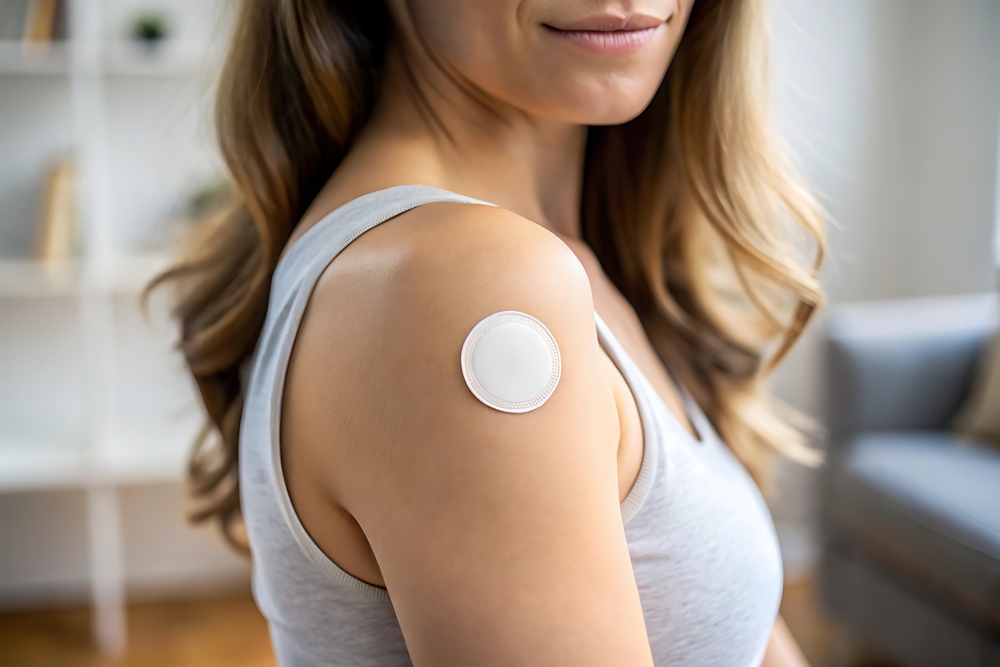
Impli has secured a £1.4m grant to begin clinical use of a real-time hormone patch for infertility treatment.
The startup, which is working with innovations from Imperial College London, is developing a continuous hormone monitoring system for use in in vitro fertilisation, known as IVF.
IVF is a fertility treatment in which eggs are fertilised outside the body before an embryo is transferred to the womb.

Timing is critical in IVF, the most common form of infertility treatment, but most patients are still monitored through blood tests taken every other day at best.
Hormone levels can change within hours, meaning important shifts may be missed.
These can include hormone surges linked to egg release, dips that may contribute to implantation failure and early signs of ovarian hyperstimulation syndrome.
Ovarian hyperstimulation syndrome is a potentially serious reaction to fertility medicines, where the ovaries over-respond and become swollen.
In a treatment with low success rates, these uncertainties can affect patient outcomes and wellbeing.
Impli’s system is based on research by Dr Salzitsa Anastasova in the department of mechanical engineering at Imperial.
The technology uses electrochemical biosensors to sample hormones in the fluid between cells.
These can be used in a subcutaneous implant, meaning one placed under the skin, or in Impli’s Bio-Endocrine Analysis Monitor, known as BEAM, which uses microneedles that pierce the skin.
Microneedles are tiny needles designed to enter the upper layers of the skin with minimal discomfort.
The biosensors continuously measure oestradiol, luteinising hormone and progesterone, which are hormones involved in the menstrual cycle and fertility treatment.
Data is transmitted wirelessly to a smartphone, where AI software converts raw signals into real-time hormone trends.
Sotirios Saravelos, consultant gynaecologist and reproductive medicine subspecialist at the Wolfson Fertility Centre, part of Imperial College Healthcare NHS Trust, said:
“Continuous hormone monitoring has the potential to change the landscape of fertility treatment, both in terms of clinical care and patient experience. Rather than snapshots taken at fixed points in time, with Impli we will have access to a live feed of each patient’s hormonal response, allowing us to personalise care in a way that has not been possible before.”
Saravelos is part of the research consortium that has won a £1.4m grant to take Impli’s BEAM device from prototype to its first human clinical validation for IVF.
The project was designed with support from Dr Simon Hanassab as part of a PhD on how AI can support decision making for IVF.
The work was carried out at the UKRI Centre for Doctoral Training in AI for Healthcare at Imperial, a collaboration between the department of computing and the department of metabolism, digestion and reproduction.
Hanassab is now working part-time as Impli’s head of AI.
The grant comes from the National Institute for Health and Care Research Invention for Innovation programme.
It will support a 30-month project bringing together Impli, Imperial College Healthcare NHS Trust, the London Institute for Healthcare Engineering at King’s College London and the patient advocacy network Fertility Europe.
Specialist medical device manufacturer TTP is also involved.
BEAM is the first step in Impli’s plan to develop a broader platform of fully implantable, long-duration monitoring systems.
Anna Luisa Schaffgotsch, founder and chief executive of Impli, said:
“We are not just building a device, we are building the evidence base to show that continuous hormone monitoring is possible, clinically meaningful and ready for the real world. With an exceptional consortium behind us, we now have the funding, the expertise and the clinical pathway to do that properly.”
According to the company, the same core technology could later have applications in hormonally driven cancers, polycystic ovary syndrome, endometriosis and menopause.
Polycystic ovary syndrome is a common hormonal condition that can affect periods, fertility and metabolism.
Endometriosis is a condition where tissue similar to the lining of the womb grows outside the uterus, often causing pain.
BEAM’s development builds on more than 15 years of biosensor research at Imperial, with intellectual property covering the sensing approach, device architecture and data interfaces.
Impli has so far delivered three functional prototypes, completed pre-clinical laboratory trials and begun animal trials, which the company said have shown positive results.
It also has a strategic partnership with Bayer on real-time hormone biosensing and relationships with IVF clinics internationally.

Spain will triple annual women’s health research funding to €18m under a programme focused on discrimination in medical research.
Spain’s Ministry of Science will increase investment in research and development projects focused on women’s health to €18m a year.
The initiative was announced on Monday by prime minister Pedro Sánchez during the presentation of Somos. Contamos: Fin de la discriminación de las mujeres en la investigación de la salud, which translates as We Are. We Count: Ending Discrimination Against Women in Health Research.
Sánchez said:
“This will boost research, diagnosis and treatment in areas that affect the lives of thousands of women in our country, who have not received the necessary attention.”
The plan is divided into three main areas.
These include a specific mission on women’s health through the centre for technological development and innovation, which will support companies and research centres working on research and development projects.
It also includes a new funding line for the Carlos III health institute and measures to build the research workforce in the field, including predoctoral contracts for projects focused on women’s health.
Sánchez said conditions such as endometriosis reflected discrimination faced by women in healthcare.
Endometriosis is a condition where tissue similar to the lining of the womb grows outside the uterus, often causing severe pain and, in some cases, fertility problems.
The prime minister said the condition affects one in seven women and can take a decade to diagnose.
He said:
“This cannot be allowed in Spain today.”
Sánchez added:
“If a disease affected one in seven men, causing chronic pain, difficulty working, and fertility problems, would we accept a decade-long delay in diagnosis? The answer is obvious: certainly not. So it’s high time we said ‘no’ with the same clarity when we talk about diseases that affect millions of women.”
Other diseases where diagnosis and treatment suffer from a lack of a gender perspective include chronic pain, autoimmune and thyroid diseases, cardiovascular and mental health conditions, menopause and hormonal imbalances.
Autoimmune diseases occur when the immune system mistakenly attacks the body, while thyroid diseases affect a gland in the neck that helps regulate metabolism, energy and hormones.
Sánchez said:
“There can be no equality while science continues to respond better to some lives than to others.”
The prime minister also addressed the delay in diagnosing women.
He said:
“It is a paradox that says a lot about our past, that challenges our present, but that also drives us to change the future, including through politics.”
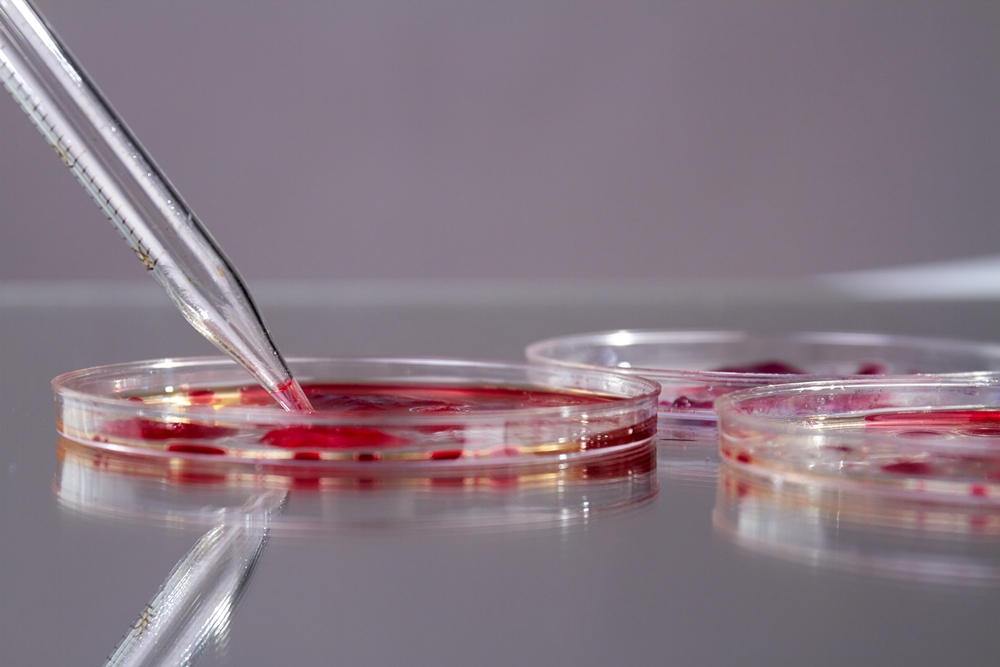
A first-in-human clinical trial of an immune rejuvenation therapy designed to restore the function of worn-out T cells is expected to begin later this year, building on research led by UCL scientists into the mechanisms of immune ageing.
The Phase 1 trial will focus on exhausted or senescent T cells, which accumulate with age and in chronic disease and become less effective at coordinating immune protection.
Researchers hope that metabolically resetting these cells may help the immune system regain characteristics associated with younger, healthier immune responses. The work may have clinical utility for diseases such as cancer, HIV and dementia.
Our immune system protects us from infection, cancer and disease. However, as we age, some immune cells become exhausted and lose their ability to function effectively. This process, known as immune ageing, can leave people more vulnerable to illness and less able to respond to health challenges.
The new therapy, developed by biotech company SenTcell founded by Dr Alessio Lanna (UCL Medicine), is designed to rejuvenate these worn-out immune cells. Rather than attacking diseased cells directly, it works by restoring the immune system’s natural ability to recognise and respond to threats.
The treatment is a liquid formulation administered by intramuscular injection, similar to many commonly used vaccines. Once delivered, it is designed to reprogramme key pathways that drive immune dysfunction, helping immune cells regain characteristics of younger, healthier cells.
The goal is to improve immune resilience, enhance protection against disease and ultimately support healthier ageing.
Dr Lanna said: “People living with HIV are now able to live long and healthy lives thanks to major advances in treatment, but many still experience features of accelerated immune ageing. Similar patterns of immune dysfunction are also seen in cancer and other chronic diseases.
“This trial is an important step towards testing whether we can safely rejuvenate exhausted immune cells and restore aspects of healthy immune function. Our goal is to help establish immune rejuvenation as a new way of treating diseases linked to immune ageing and dysfunction.”
The trial builds on research suggesting that some dysfunctional T cells – a type of white blood cell that helps coordinate the body’s immune response – can be restored to a more youthful, functional state. Researchers are focusing on CD4+ T cells, often described as the “conductors” of the immune system because they help direct other immune cells to respond to infection, cancer and disease.
Inside every cell, chromosomes are protected by structures called telomeres, which sit at their ends like protective caps. Telomeres help shield genetic material from damage and gradually shorten as cells divide over time, making them a well-established marker of biological ageing.
Previous laboratory studies suggest that rejuvenated CD4+ T cells may be able to release telomere-containing structures into the bloodstream. Researchers have termed these structures “telomere rivers” and are investigating whether they could help explain how rejuvenated immune cells influence the health and function of other tissues throughout the body. This idea remains under active investigation and has not yet been demonstrated in humans.
The research programme has received support through the Medicines and Healthcare products Regulatory Agency’s (MHRA) Innovative Licensing and Access Pathway (ILAP), recognising its potential to address significant unmet needs associated with age-related immune decline and immune dysfunction.
UCL researchers are preparing for Phase 1 of the trial, which will carefully select adult participants and is expected to focus initially on people with evidence of immune dysfunction, including immune ageing and chronic viral infection. Participants will undergo detailed immune profiling before and after treatment.
Investigators will look at whether the therapy can restore features of healthy immune function. As an early-stage trial, the primary goals are safety and biological activity rather than demonstrating clinical benefit.
If successful, the programme could establish immune rejuvenation as a new therapeutic approach: restoring the immune system’s protective capacity instead of targeting each pathogen or disease process separately.
Researchers believe the strategy could eventually have relevance for conditions characterised by immune exhaustion, including chronic infections, autoimmune disease and cancer, while also informing broader efforts to improve healthy ageing.











 Menopause3 weeks ago
Perimenopause misinformation ‘putting women at risk’

 Hormonal health4 weeks ago
NHS urged to update website following renaming of PCOS

 News3 weeks ago
Women still being failed when they reach menopause, experts say

 Events3 weeks ago
Women’s Health Innovation Summit opens submissions for 2026 Innovation Showcase

 Insight2 weeks ago
British women among angriest in Europe, health survey reveals

 Menopause3 weeks ago
Sweden eyes domestic production of oestrogen patches amid menopause treatment shortage

 News3 weeks ago
Three menopause innovators shortlisted for Femtech World Award

 News4 weeks ago
Low insulin diet and avoiding four food groups may prevent menopause weight gain
3 Comments