




Fertility
Genetic carrier screening before pregnancy: What to know


Article produced in association with London Pregnancy Clinic and Jeen Health
For the majority of couples planning a pregnancy, genetic testing is not something they think about until a problem arises.
Pre-conception genetic carrier screening challenges this approach by identifying risk before pregnancy begins.
As panel sizes have grown and at-home testing options have become widely available, carrier screening is transitioning from a niche clinical referral into a mainstream component of reproductive planning.
What Carrier Screening Tests For
Being a carrier of a genetic condition means carrying one copy of a variant in a gene associated with that condition, without being affected by it.
In most cases, carriers are entirely unaware of their status.
The clinical significance of carrier status emerges when both members of a couple carry a variant in the same gene: in this scenario, each pregnancy carries a one in four chance of resulting in a child who inherits two copies of the variant and is affected by the condition.
The conditions most frequently included in expanded carrier screening panels include cystic fibrosis, spinal muscular atrophy (SMA), fragile X syndrome, sickle cell disease, and a range of metabolic and enzyme deficiency disorders.
The Beacon 787 carrier test, offered by Jeen Health, screens for 787 conditions from a single sample, making it one of the most comprehensive panels currently available to UK families.
Who Is Most Likely to Benefit
Any couple planning a pregnancy can consider carrier screening. It is particularly relevant for:
- Couples with a family history of a known inherited condition
- Those from populations with higher carrier frequencies for specific conditions, including Ashkenazi Jewish, South Asian and African communities
- Couples pursuing fertility treatment, where genetic information informs treatment planning
- Those who wish to have the most complete picture of their reproductive health before conception
Importantly, being a carrier of a condition does not mean a child will be affected. It means there is a defined statistical risk that can be quantified, discussed and planned for with appropriate clinical support.
How the Test Is Performed
Carrier screening is typically carried out on a blood or saliva sample.
For at-home options such as the testing offered by Jeen Health, a cheek swab collection kit is dispatched to the patient, the sample is returned by post, and results are delivered digitally within a defined turnaround period.
In-clinic carrier testing may use a blood draw and provides the advantage of immediate access to a clinical consultation at the point of result delivery.
London Pregnancy Clinic offers genetics counselling through its partnership with Jeen Health, allowing couples to receive and contextualise carrier test results with expert support.
Genetic counselling before and after testing is recommended by Genomics England as a standard component of any genomic testing pathway.
What Happens If Both Partners Are Carriers
If both partners are identified as carriers for the same autosomal recessive condition, they are typically offered further counselling to discuss their options.
These may include proceeding naturally with an awareness of the risk, using prenatal diagnosis (CVS or amniocentesis) during pregnancy to test the fetus, or pursuing preimplantation genetic testing (PGT) in the context of IVF, which allows unaffected embryos to be selected before transfer.
The purpose of identifying carrier status before pregnancy is to give couples time to consider these options without the added pressure of an ongoing pregnancy.
Knowledge of carrier status does not remove reproductive choices; it expands the information available when making them.
The Role of Pre-Conception Services
Carrier screening sits within a broader category of pre-conception care that includes fertility assessments, general health optimisation and, where relevant, management of existing conditions before pregnancy begins.
London Pregnancy Clinic offers pre-conception services encompassing fertility investigations, genetics counselling and carrier testing as part of an integrated 0th trimester approach, allowing couples to address genetic and clinical risk factors before their pregnancy starts rather than after.
Disclaimer: This article is produced for informational purposes only and does not constitute medical advice, diagnosis or treatment.
Clinical guidance referenced reflects published NHS, NICE and RCOG standards as at March 2026. Individual circumstances vary; readers are advised to consult a qualified healthcare professional before acting on any information in this article.
This piece was produced in association with London Pregnancy Clinic and Jeen Health, which provided background clinical information for editorial purposes.
Hyperlinks to external sources are included for reference only and do not represent an endorsement of any product, service or organisation.

















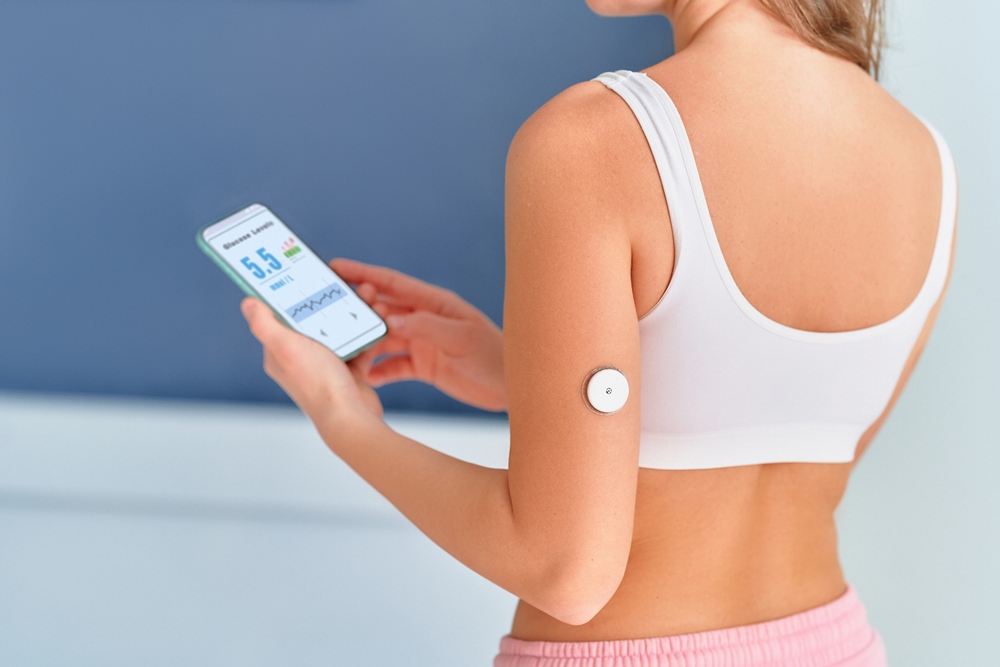
Even when standard clinical tests show normal hormone levels, men and women may have hidden problems in how their reproductive hormones are timed and coordinated, potentially affecting fertility, new research suggests.
The findings suggest reproductive health may depend not only on hormone levels in the bloodstream but also on the rhythm, timing and synchronisation of hormone changes across hours, days and the menstrual cycle.
Researchers said a wearable skin sensor patch, combined with artificial intelligence, could help detect endocrine dysfunction earlier and support more personalised fertility care.

Unexplained infertility affects about 15 to 30 per cent of couples and is diagnosed when standard investigations reveal no clear cause.
In men, current tests for infertility or hypogonadism, defined clinically as low testosterone, often include a single morning serum testosterone measurement.
In women, fertility assessment typically examines menstrual cycle characteristics and reproductive hormones such as luteinising hormone, follicle-stimulating hormone, oestradiol and progesterone.
However, reproductive hormones are not static markers. They are dynamic biological signals that rise and fall in regulated patterns throughout the day and across the menstrual cycle.
Testosterone, for example, follows a diurnal rhythm, meaning it changes across the day, while female reproductive hormones act through coordinated feedback loops involving the hypothalamic, pituitary and ovarian systems.
A single blood test may therefore miss clinically important disruption in hormonal timing.
In one study, Dr Tinatin Kutchukhidze, from the University of Oxford, examined 102 men in Georgia and the UK.
The participants were aged 22 to 38 and had normal morning total testosterone levels, measured at 12 to 35 nanomoles per litre, with or without infertility or symptoms of hypogonadism.
Hypogonadism is a condition in which the body produces too little testosterone or other sex hormones.
Kutchukhidze and colleagues used wearable AI-enabled skin sensor patches to measure testosterone levels every 15 minutes across four days.
The team found that men with symptoms had significantly disrupted testosterone rhythms, despite standard laboratory tests showing normal testosterone levels.
These previously undetected rhythm abnormalities were also associated with reduced sperm concentration and symptoms of androgen deficiency.
Androgens are hormones, including testosterone, that play an important role in reproductive health.
Kutchukhidze said: “For the first time, we have been able to track androgen patterns in real time across several days with a novel, non-invasive, continuous, AI-driven testosterone monitoring patch, compatible with Android and iPhone mobile devices.
“Previous research suggests that a normal morning testosterone level is sufficient to exclude clinically significant androgen deficiency. However, our findings challenge that assumption by demonstrating that men with normal serum testosterone may still exhibit marked disturbances in hormonal rhythmicity associated with reproductive dysfunction.”
According to the abstract, the study compared 54 men with infertility or hypogonadal symptoms with 48 age-matched healthy controls.
Mean morning serum testosterone did not differ significantly between symptomatic men and controls, at 22.4 ± 3.1 compared with 23.1 ± 3.5 nanomoles per litre.
Continuous AI-assisted monitoring, however, revealed significant differences in androgen dynamics.
Men with symptoms had lower diurnal amplitude than controls, at 5.2 ± 1.1 compared with 8.7 ± 1.4 nanomoles per litre.
The AI-derived rhythm indices predicted subclinical dysfunction with an area under the curve of 0.87, compared with 0.61 for static serum testosterone testing.
In diagnostic research, the area under the curve is used to assess how well a test distinguishes between groups, with higher values indicating stronger discrimination.
A second study by Kutchukhidze’s team examined female reproductive hormone rhythms.
The researchers developed an AI-driven metric called Endocrine Rhythm Integrity to assess whether reproductive hormones were changing in the correct pattern, at the correct time and in the correct relationship to one another across the menstrual cycle.
Endocrine refers to the hormone system, while endocrine dysfunction means hormones are not being produced or regulated in a typical way.
The team analysed data from 312 women aged 18 to 22 who had self-reported regular menstrual cycles.
Participants included fertile controls and women with unexplained infertility.
The researchers assessed key reproductive hormones during the luteal phase, including luteinising hormone, follicle-stimulating hormone, oestradiol and progesterone.
The luteal phase is the part of the menstrual cycle after ovulation. Ovulation is the release of an egg from the ovary.
They also incorporated physiological data such as basal body temperature, heart rate and sleep patterns.
Basal body temperature is the body’s resting temperature and can shift slightly around ovulation.
The study found that women with unexplained infertility had lower Endocrine Rhythm Integrity scores even when conventional hormone levels appeared normal.
Lower scores predicted infertility and were also associated with a higher incidence of implantation failure, when an embryo does not successfully attach to the womb lining.
Kutchukhidze said: “Our study reveals that a woman may have a seemingly healthy menstrual cycle and normal hormone levels but still experience hidden endocrine dysfunction that affects her ability to conceive.
“Rather than analysing hormone levels as isolated values, Endocrine Rhythm Integrity evaluates whether reproductive hormones are changing in the correct pattern, at the correct time and in the correct relationship to one another across the menstrual cycle.”
In the female study, mean cycle length did not differ significantly between fertile and infertile groups, at 28.9 ± 2.3 compared with 28.9 ± 2.5 days.
Endocrine Rhythm Integrity scores, however, were lower in the infertility group, at 0.61 ± 0.12 compared with 0.78 ± 0.10.
Disrupted endocrine rhythm integrity was observed in 64 per cent of infertile participants despite hormonally normal mid-luteal progesterone levels.
The metric independently predicted infertility status after adjustment for age, body mass index and anti-Müllerian hormone.
Anti-Müllerian hormone is made by reproductive tissues and is best known as a marker of ovarian reserve, meaning an estimate of the number of eggs remaining in the ovaries.
Receiver operating characteristic analysis indicated that Endocrine Rhythm Integrity identified infertility more effectively than cycle length or single-time-point progesterone assessment.
Lower Endocrine Rhythm Integrity scores were also associated with a higher incidence of implantation failure.
Kutchukhidze said: “Our AI-driven rhythm analyses were significantly better at identifying subclinical reproductive dysfunction than conventional testing, suggesting that both female and male endocrine disorders may not simply be disorders of hormone quantity, but rather disorders of hormonal timing, synchronisation and biological rhythm.”
The team will next assess whether the tool can reliably predict fertility outcomes across different reproductive conditions in larger and more diverse populations.












 Menopause1 week ago
Perimenopause misinformation ‘putting women at risk’

 Opinion4 weeks ago
What Maternal Mental Health Month reveals about where postpartum support actually breaks down

 News4 weeks ago
NIH Grant terminations disproportionately impact minority scientists, research finds

 Adolescent health4 weeks ago
WUKA brings Period-Positive Pool Party to London Aquatics Centre to keep girls swimming through puberty

 Insight3 weeks ago
PCOS renamed after decade-long campaign to end ‘cyst’ misconception

 Events4 weeks ago
WHIS 2026 unveils agenda and first speakers for the leading women’s health summit

 Menopause4 weeks ago
CBT shows promise for menopause insomnia and hot flashes

 Hormonal health2 weeks ago
NHS urged to update website following renaming of PCOS