




News
15k breast cancer patients a year could benefit from genome sequencing


Whole genome sequencing could identify unique genetic features to guide treatment for more than 15,000 breast cancer patients each year in the UK, new research suggests.
The technique, which analyses DNA from both patient and tumour to identify genetic changes, helps reveal what drives each cancer and highlights potential treatment targets or resistance.
Scientists at the University of Cambridge used data from almost 2,500 women across England held in the National Genomic Research Library – one of the world’s largest resources of its kind, run by Genomics England.

The data came from the 100,000 Genomes Project and was linked to clinical and mortality records, tracking outcomes over five years.
They found that 27 per cent of breast cancer cases had genetic features that could help guide personalised treatment immediately, either using existing drugs or through clinical trials – equivalent to more than 15,000 women a year in the UK.
Professor Serena Nik-Zainal is from the Department of Genomic Medicine and Early Cancer Institute at the University of Cambridge.
She said: “The UK is a genuine world-leader in its ability to do whole genome sequencing through the NHS Genomic Medicine Service.
“Now that we have population-level evidence of how impactful whole-genome sequencing could be, we have the potential to make a difference to thousands of patients’ lives every year, helping tailor their care more precisely, giving more treatment to those who need it and less to those who don’t.”
Among the key findings were HRD (homology-directed repair deficiency) – a DNA repair issue found in 12 per cent of breast cancers – unique mutations that could be targeted with specific drugs, signs of resistance to hormone therapy, and mutational patterns suggesting weaknesses that treatments could exploit.
An additional 15 per cent of cases had features useful for future research, such as problems in other DNA repair pathways, equating to about 8,300 women a year.
The analysis also offered insights into prognosis. In ER+HER2– breast cancers – the most common subtype, accounting for roughly 70 per cent of diagnoses – researchers found strong genetic indicators of tumour aggressiveness.
Major structural DNA changes, APOBEC mutational signatures (a form of DNA damage) and mutations in the cancer gene TP53 were all linked to higher death risk.
These genetic markers proved more predictive than traditional measures such as age, cancer stage or tumour grade.
Using these results, the researchers developed a framework to help clinicians identify which patients need more aggressive treatment and which could safely have less.
Around 7,500 women a year with low-grade tumours could benefit from more intensive therapy.
Professor Matt Brown, chief scientific officer of Genomics England, said: “This promising research further demonstrates the potential of genomics in improving cancer treatment outcomes for many people.
“Rapid advances in genomics are already ushering in the next generation of personalised cancer medicine. Not only can a patient’s genes guide precision treatment decisions that will best serve them, but we could improve how we match people up to clinical trials and help more patients access innovative treatments.
“Research like this highlights the value of the National Genomic Research Library and how understanding our genes can provide a real boost to the way we diagnose and treat disease.
“It’s all thanks to the contribution of participants and NHS partners in the 100,000 Genomes Project – the consented clinical and genomic data opens the door for incredible research opportunities.”













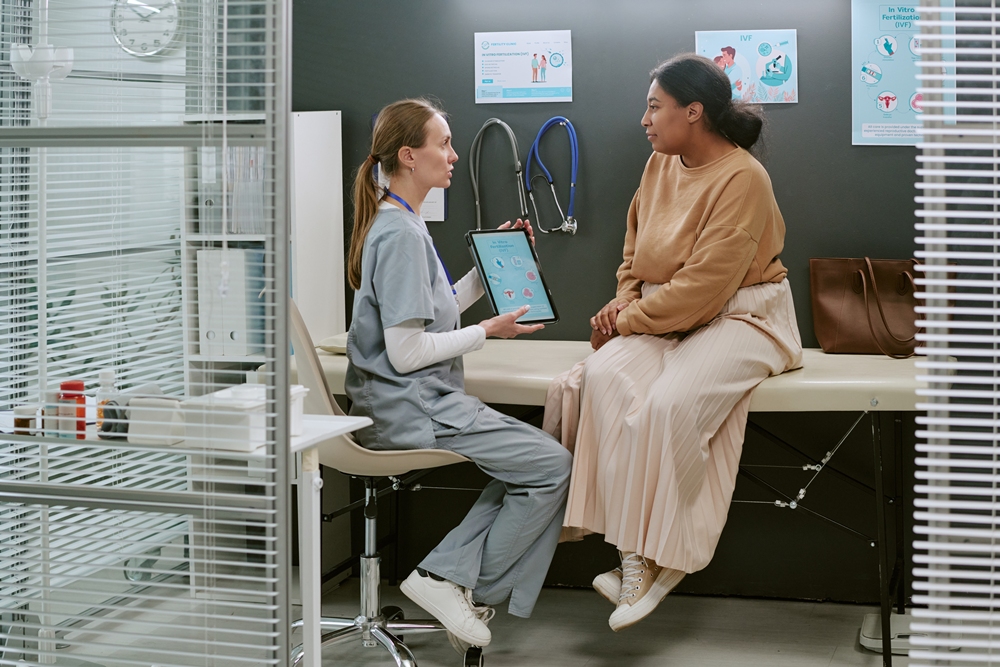
The Scottish government has launched a national review into whether NHS IVF access should be extended to single women.
The review will also consider whether wider access should be offered to couples who have children from previous relationships.
Health secretary Angela Constance said: “Access to NHS IVF treatment should be fair, timely and reflect the way people’s lives and families look today.”

Most single women are not currently eligible for NHS IVF treatment in Scotland.
Campaigners have welcomed the review.
Katie Rollings of Fertility Action said: “It’s an essential and long-awaited decision that will impact a huge number of people who are struggling to grow their families.
She said there is “no evidence” that having two parents rather than one determines whether a child will thrive.
She added: “What matters is whether a child is loved, safe, supported and has stable, positive relationships around them.”
Figures from the Human Fertilisation and Embryology Authority show Scotland is the only UK nation where NHS-funded IVF cycles outnumber privately funded cycles.
In 2024, more than 6,000 cycles of fertility treatment were carried out among more than 4,000 patients in Scotland. Both figures were slightly lower than the record highs recorded in 2022.
The past 20 years have also seen a rise in the number of same-sex female couples and single women receiving fertility treatment.
In 2024, 625 IVF cycles were carried out for women in same-sex couples in Scotland, with more than one third funded by the NHS.
There were 330 cycles involving single women, of which 50 were NHS-funded.
In England, single women can access IVF through the NHS, although eligibility varies according to the local health trust’s policy.
Current Scottish rules state that couples are eligible if they have been living in a stable relationship for two years and neither partner has been sterilised.
Couples where one partner already has a child can be eligible, but those where both partners have children from previous relationships are not.
Eligibility rules also require a body mass index above 18.5 and below 30, and state that couples must not smoke, drink alcohol or take drugs during treatment. The mother must be under 42.
The Scottish government said the review would also examine consistency of access to fertility preservation, including during cancer treatment, as well as reducing waiting times for donor eggs and sperm.
Same-sex female couples already have access to NHS IVF, but they can face long waits for donor eggs or sperm, as can heterosexual couples who require donor treatment.
The National Fertility Group will lead the review and make “costed, demand-modelled recommendations”, which are due to be published by early summer 2027.
The group will include fertility experts from Scotland’s four NHS-assisted conception units in Glasgow, Edinburgh, Aberdeen and Dundee.
Prof Sarah Martins Da Silva, an NHS consultant and chair of fertility medicine at Dundee University, said there were questions to be answered in a resource-stretched NHS.
“As a fertility specialist I’m never going to be disappointed if the criteria is widened,” she said.
“But with single people, as an NHS clinician looking at the competing demands we have, I’d ask the question about whether being single is a health condition that needs to be funded.”
Da Silva said NHS waiting lists were full of couples who require donated eggs or sperm because of medical conditions including cancer and could face longer waits.
“It’s slightly a disservice to them,” she said.
“There would need to be a real investment and resource without making everybody wait an extraordinary long time.
“With the current financial environment we work in, if you’re talking about new money, where would that come from?”
She said she would welcome changes that encouraged more people to donate eggs or sperm and questioned whether arguments about children needing two parents were necessarily relevant to the debate.
“On the one hand bringing up a child is quite an expensive process, and if you don’t have that support, it can be very difficult.
“But on the other hand, many people start off as a couple and divorce.”
Da Silva also welcomed plans for the review to consider eligibility for couples who already have children, describing the move as “fantastic”.

Entrepreneur
Last chance to save on Women’s Health Week and Women’s Sport Summit: Early Bird pricing ends 11 September
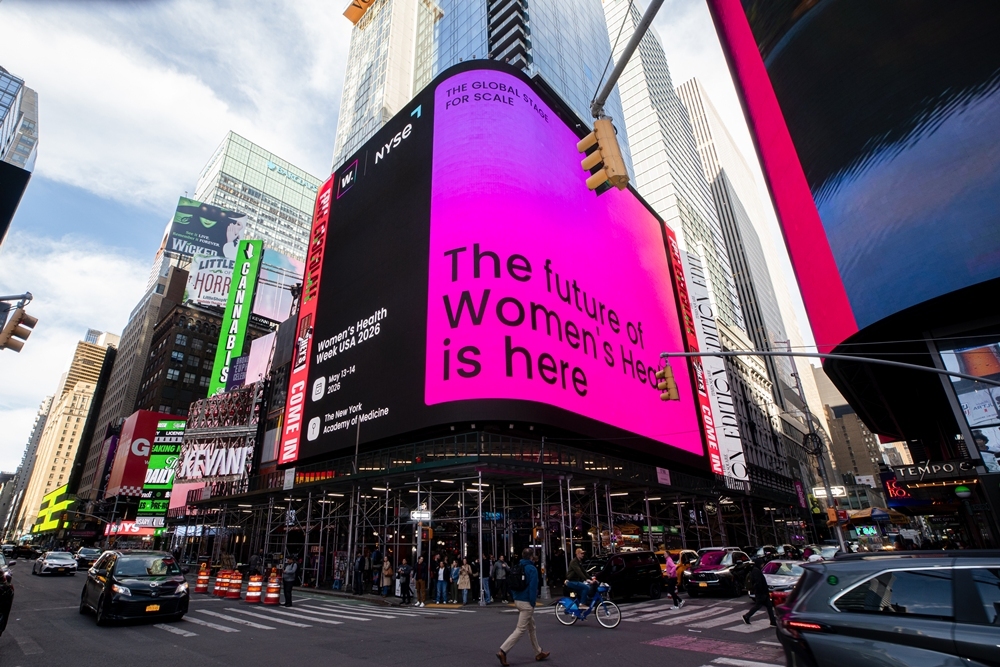
Early bird pricing for W Group’s two flagship October summits – Women’s Health Week Europe 2026 and Women’s Sport Summit Europe 2026 – closes on 11 September.
Both events take place at Emirates Stadium, London, bringing together founders, investors, corporates, and industry leaders shaping the future of women’s health and sport.
Women’s Health Week Europe 2026
7-8 October | Emirates Stadium, London
This year’s edition will be Women’s Health Week Europe biggest one yet: with 700+ attendees, 80+ speakers, and 20+ sponsors, it will also feature two stages – a Global Stage covering market trends and policy, and a Scale Stage focused on company-level growth and commercialisation. WHW takes place across two days of content, business matchmaking, and dealmaking.
Agenda highlights include:
- Where Capital Flows: Funding Trends in Women’s Health – with Merete Clausen (EIF), Ekaterina Gianelli (Calm/Storm), Henriette Hessen (Verdane), Jemma Day (British Business Bank), Ravit Warsha Dor (Telus Global Ventures), Tim Davis (LSEG)
- Six Feet Under-funded: Surviving the Valley of Death in Women’s Health – with Patric Stenberg (Gesynta Pharma), Valentina Milanova (Daye), Amber Vodegel (28x)
- The Women’s Health Label – Gift or Curse? · Live Debate – with Juan Camilo Arjona Ferreira (organon), Marissa Fayer (DeepLook Medical), Christian Lautner (Heal Capital), Annie Theriault (CBIV), Ida Tin (Clue)
- Passport to Scale: Taking Your Women’s Health Business Global – with Vanessa Carpenter (Femtech Across Borders), Annie Theriault (CBIV), Victorine Lançon (Daya Ventures), Dr Mridula Pore (Peppy)
Early bird pricing (ends 11 September):
| Ticket type | Early bird | Standard |
| Startups, Scaleups, Investors, Non-Profits, Government | £599 + VAT | £699 + VAT |
| Corporates, Payors & Providers | £1,799 + VAT | £1,999 + VAT |
| Service Providers & Consultants | £3,299 + VAT | £3,499 + VAT |
Register for Women’s Health Week Europe | See the full agenda for WHW
Women’s Sport Summit Europe 2026
6 October | Emirates Stadium, London
The first-ever Women’s Sport Summit expands W Group’s expertise in connecting key decision-makers to the sports industry.
WSS brings together rights holders, brands, investors, athletes, and media to accelerate commercial growth across the sector.
Agenda highlights include:
- From capital to crowd: the women’s sport cycle at scale – with Omar Shaikh (Arsenal FC), Nicole McWilliams (Google), Kerstin Lutz (Mercury13), Jo Currie (BBC Sport)
- Women’s sport through the investor lens: what gets funded – and why – Hugo Sever (APEX Capital)
- Rethinking ROI: what are we measuring that doesn’t actually matter? – Fi Watherston (Metro Bank), Silvia Keiser (Billie Jean King Cup), Gabriel Akin-Odujobi (Crux Football), Tammy Parlour (WST)
- Beyond the 90 minutes: matchday as a commercial product, not just a fixture – Maggie Murphy (Aston Villa Women FC), Sam Feasey (Diageo/Guinness), Molly Miller (OneFootball), Megan Feringa (The Athletic/The New York Times)
Early bird pricing (ends 11 September):
| Ticket type | Early bird | Standard |
| General Pass | £299 + VAT | £399 + VAT |
| Service Providers & Consultants | £1,799 + VAT | £1,999 + VAT |
Register for Women’s Sport Summit Europe | See the full agenda for WSS
Attending both events?
For group tickets or to attend both summits this October, contact Callum, W Group’s Client Success Lead, at [email protected].







 Hormonal health2 weeks ago
Major UK study could be a ‘game-changer’ for heavy periods and endometriosis
 Entrepreneur5 days ago
KOVE Medical raises €1.7 million to improve safety of foetal surgery
 Events2 weeks ago
One week left to apply: W Accelerate with Merck KGaA and M Ventures

 Pregnancy6 days ago
UK study aims to transform maternity care for high-risk pregnancies

 Menopause2 weeks ago
Quarter of women miss work due to menstual symptoms, survey finds

 Hormonal health1 week ago
PMDD after SSRIs or hormones: Why the brain may be the missing treatment target
 Diagnosis1 week ago
Ark Surgical secures further institutional backing to accelerate US expansion

 Insight2 weeks ago
Study to tackle years-long delays in endometriosis diagnosis