




Cancer
15k breast cancer patients a year could benefit from genome sequencing


Whole genome sequencing could identify unique genetic features to guide treatment for more than 15,000 breast cancer patients each year in the UK, new research suggests.
The technique, which analyses DNA from both patient and tumour to identify genetic changes, helps reveal what drives each cancer and highlights potential treatment targets or resistance.
Scientists at the University of Cambridge used data from almost 2,500 women across England held in the National Genomic Research Library – one of the world’s largest resources of its kind, run by Genomics England.

The data came from the 100,000 Genomes Project and was linked to clinical and mortality records, tracking outcomes over five years.
They found that 27 per cent of breast cancer cases had genetic features that could help guide personalised treatment immediately, either using existing drugs or through clinical trials – equivalent to more than 15,000 women a year in the UK.
Professor Serena Nik-Zainal is from the Department of Genomic Medicine and Early Cancer Institute at the University of Cambridge.
She said: “The UK is a genuine world-leader in its ability to do whole genome sequencing through the NHS Genomic Medicine Service.
“Now that we have population-level evidence of how impactful whole-genome sequencing could be, we have the potential to make a difference to thousands of patients’ lives every year, helping tailor their care more precisely, giving more treatment to those who need it and less to those who don’t.”
Among the key findings were HRD (homology-directed repair deficiency) – a DNA repair issue found in 12 per cent of breast cancers – unique mutations that could be targeted with specific drugs, signs of resistance to hormone therapy, and mutational patterns suggesting weaknesses that treatments could exploit.
An additional 15 per cent of cases had features useful for future research, such as problems in other DNA repair pathways, equating to about 8,300 women a year.
The analysis also offered insights into prognosis. In ER+HER2– breast cancers – the most common subtype, accounting for roughly 70 per cent of diagnoses – researchers found strong genetic indicators of tumour aggressiveness.
Major structural DNA changes, APOBEC mutational signatures (a form of DNA damage) and mutations in the cancer gene TP53 were all linked to higher death risk.
These genetic markers proved more predictive than traditional measures such as age, cancer stage or tumour grade.
Using these results, the researchers developed a framework to help clinicians identify which patients need more aggressive treatment and which could safely have less.
Around 7,500 women a year with low-grade tumours could benefit from more intensive therapy.
Professor Matt Brown, chief scientific officer of Genomics England, said: “This promising research further demonstrates the potential of genomics in improving cancer treatment outcomes for many people.
“Rapid advances in genomics are already ushering in the next generation of personalised cancer medicine. Not only can a patient’s genes guide precision treatment decisions that will best serve them, but we could improve how we match people up to clinical trials and help more patients access innovative treatments.
“Research like this highlights the value of the National Genomic Research Library and how understanding our genes can provide a real boost to the way we diagnose and treat disease.
“It’s all thanks to the contribution of participants and NHS partners in the 100,000 Genomes Project – the consented clinical and genomic data opens the door for incredible research opportunities.”
















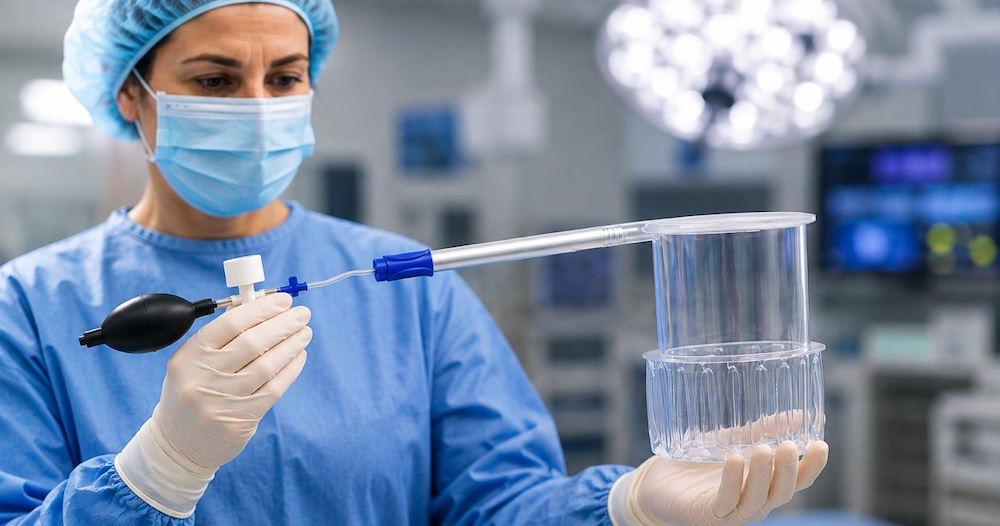
Women’s health medical device company Ark Surgical has secured further institutional backing from JNF and the Israel Innovation Authority (IIA) as it accelerates the US commercial expansion of its surgical tissue containment technology.
Both organisations have previously backed Ark, making the renewed support a significant vote of confidence in the company’s technology, leadership team and commercial strategy as it moves into its next stage of growth.
The new backing comes alongside Ark Surgical’s ongoing Series A financing round, which has also attracted investment from physicians and experienced medical device executives, adding further industry validation as the company builds its US commercial presence.
The Israel Innovation Authority, Israel’s public agency supporting technological innovation, selected Ark Surgical for additional non-dilutive funding following an extensive evaluation process.
The assessment examined the unmet clinical need addressed by Ark’s technology, its clinical results, business and US go-to-market strategy, Israeli and US teams, execution against milestones and future product pipeline.
JNF, which supports economic development and community-building initiatives in Israel, has also increased its previous backing of Ark Surgical.
The relationship has particular significance given Ark’s roots in northern Israel. The company is headquartered near Nazareth in the Galilee and plans to continue strengthening its manufacturing capabilities in the region as its commercial presence in the US grows.
Together, the continued institutional support and investment from experienced healthcare leaders reflect growing confidence in Ark’s technology and its strategy for US expansion.
Stav Tori, CEO of Ark Surgical, said: “Having organisations that already know Ark, our technology and our team choose to support us again is particularly meaningful.
“It reflects our ability to consistently achieve the clinical, regulatory and commercial milestones we set and gives us additional resources to accelerate our expansion in the US.
“Our ambition goes beyond bringing another medical device to market.
“We want to help establish a higher standard of surgical safety for women undergoing minimally invasive procedures.”
Addressing an overlooked risk in women’s surgery
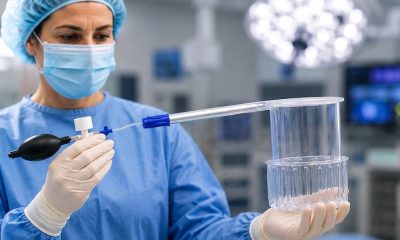
At the centre of Ark’s expansion is LapBox, the company’s FDA-cleared dual-wall tissue containment system developed to address an important safety challenge in minimally invasive gynecologic surgery.
Procedures such as hysterectomy and myomectomy can require large uterine specimens or fibroids to be divided into smaller pieces so they can be removed through small laparoscopic incisions.
This process, known as morcellation, carries a risk of disseminating tissue within the abdominal cavity.
In rare cases where an unsuspected malignancy is present, morcellation can spread malignant tissue and potentially worsen a patient’s prognosis.
But the risk is not limited to cancer.
Even benign uterine tissue can implant elsewhere in the abdominal cavity and grow, potentially resulting in complications such as parasitic fibroids and the need for additional treatment.
LapBox was developed as a dual-wall, bag-in-bag containment system that creates a secured chamber for tissue extraction. The device is FDA-cleared for use with both manual and power morcellation.
From clinical innovation to US adoption
Ark Surgical is now moving beyond its clinical and regulatory milestones to focus on broader commercial adoption.
LapBox™ has already been used in hundreds of procedures, while Ark has been expanding its presence within US hospitals and building relationships with leading minimally invasive gynecologic surgeons.
The latest institutional backing will support the next stage of that strategy, including additional hospital partnerships, key opinion leader engagement, sales leadership and clinical support.
Joseph LaBruzzo, President and CEO of U.S. Operations at Ark Surgical, said: “Ark has reached an important point in its development.
“We have the regulatory clearance, growing clinical experience and increasing engagement from US surgeons and hospitals.
“The focus now is execution and scale.
“What makes this continued backing particularly meaningful is that these are organizations that have followed Ark’s development and seen the team deliver against its objectives.
“Their decision to support the company again provides further validation as we build the commercial and clinical infrastructure needed for broader US adoption.”
That growing adoption is also being reflected in the experience of surgeons using LapBox.
Dr Ramon Yera, a minimally invasive gynecologic surgeon with more than 35 years of experience, said: “Once surgeons use LapBox, they realize this is the bag they should be using for their bread-and-butter procedures.”
Yera believes this reflects a broader shift in expectations around tissue containment in gynecologic surgery.
“Containment is no longer optional. It is an expectation.”
Ark Surgical is continuing its Series A financing round, with additional capital intended to support the next phase of US commercial expansion and development of its broader product pipeline.
Further information for prospective investors is available at ark-surgical.com/investment










 Hormonal health2 weeks ago
Major UK study could be a ‘game-changer’ for heavy periods and endometriosis
 Entrepreneur5 days ago
KOVE Medical raises €1.7 million to improve safety of foetal surgery

 Fertility2 weeks ago
One week left to apply: W Accelerate with Merck KGaA and M Ventures

 Mental health6 days ago
UK study aims to transform maternity care for high-risk pregnancies

 Hormonal health2 weeks ago
Quarter of women miss work due to menstual symptoms, survey finds

 Mental health1 week ago
PMDD after SSRIs or hormones: Why the brain may be the missing treatment target
 Diagnosis1 week ago
Ark Surgical secures further institutional backing to accelerate US expansion

 Insight2 weeks ago
Study to tackle years-long delays in endometriosis diagnosis