




Menopause
FDA plans to revise black box warning on menopause hormone therapies


The US Food and Drug Administration (FDA) plans to update the black box warning on menopause hormone therapies soon, commissioner Dr Martin Makary has said.
The move follows years of debate over safety alerts that have limited access to treatment for millions of women with menopause symptoms.
“We are in serious discussions now about what to do about the black box warning, and I think you’ll hear something on it very soon,” Makary told CNN’s Dr Sanjay Gupta on the Chasing Life podcast.

The black box warning – the FDA’s strongest safety alert – has appeared on oestrogen-containing menopause treatments since 2003, including pills, patches, sprays and creams.
It warns that their use can increase the risk of uterine and breast cancers, strokes, blood clots and dementia in women over 65.
The label was added after a large government-funded study found that women taking oestrogen pills after menopause had higher risks for certain cancers, heart disease and stroke compared with those given a placebo.
The participants had an average age of 63, meaning many were already past menopause when they began therapy.
After the study and label change, prescriptions for hormone replacement therapy (HRT) dropped by more than 70 per cent, and many doctors became reluctant to prescribe them.
“It’s really a tragedy. It’s maybe one of the greatest screw-ups of modern medicine,” Makary said.
“It’s resulted in 50 million women being denied this incredible therapy.”
The result has been undertreatment of symptoms that can be debilitating for women in midlife.
In the late 1990s, more than one in four postmenopausal women took hormones to manage symptoms such as hot flushes (sudden sensations of heat), mood swings and night sweats.
By 2020, that figure had dropped to about one in 25.
Newer analyses of the original Women’s Health Initiative data have since found that hormone therapy started in women under 60, or within 10 years of starting menopause, may safely help manage symptoms such as hot flushes and poor sleep, provided they do not have specific contraindications such as a history of hormone-sensitive breast or uterine cancer.
Makary said HRT may also have benefits including reducing bone loss, lowering heart disease risk and helping preserve memory.
“Women live longer and feel better on hormone replacement therapy when started before age 60,” Makary told Gupta.
The potential change follows a July meeting of experts convened by the FDA to discuss the benefits and risks of hormone replacement therapy.
The panellists urged the agency to remove the warning label.
“I am begging the FDA, and all of us are begging, please remove the box label,” said Dr JoAnn Pinkerton, professor of obstetrics and gynaecology at the University of Virginia School of Medicine.
“And please stop harming women.”
Some women’s health experts say the FDA overstepped when it applied the boxed warning to all forms of oestrogen replacement.
“That is a real mistake,” said Dr JoAnn Manson, professor at Harvard Medical School and one of the principal investigators of the Women’s Health Initiative study.
Some forms do not raise oestrogen levels in the blood, so they are unlikely to increase cancer risk.
For example, studies have found that low doses of oestrogen delivered by vaginal tablets, creams or rings can safely treat symptoms of dryness, painful sex and urinary tract infections in postmenopausal women, Manson said.
However, the black box warning may still deter women from using them.
“It scares them away. And even after they purchase the product, they just don’t take it,” Manson said.
“This is really where women are being tremendously undertreated and are suffering unnecessarily due to a boxed warning that is just class labelling.
“All hormone therapy products get exactly the same boxed warning, and it is really harming women,” said Manson, who is chief of the Division of Preventive Medicine at Brigham and Women’s Hospital.
Manson said it would also be reasonable for the FDA to consider removing the warnings from oestrogen-containing therapies delivered through the skin in patches, sprays or creams to relieve menopause symptoms such as hot flushes and night sweats.
These deliver hormones into the bloodstream, but observational studies suggest they have a more favourable balance of risks and benefits than pills.
She was less certain about removing the boxed warning from oestrogen-containing pills taken by mouth.
“I think that’s where it’s evidence-based and justified,” she said.
A 2022 review by the US Preventive Services Task Force concluded that, in women past menopause, there was no net benefit to taking either oestrogen alone – prescribed for women who have had their uterus removed – or a combination of oestrogen and progestin – typically prescribed for women who still have their uterus – to prevent chronic conditions such as heart disease and dementia.
What remains unclear is whether women who start hormone therapy during perimenopause (the transition before menopause) need to stay on it long-term to gain potential heart, brain and bone benefits.
“It’s a very good question,” said Dr Roberta Diaz Brinton, a neuroscientist who studies oestrogen’s effects on the brain at the University of Arizona.
“We need to answer that.”
Other experts say there is still not enough scientific evidence to support long-term use of hormones to prevent heart disease, Alzheimer’s disease or osteoporosis.
Four medical societies – the American College of Obstetricians and Gynecologists, the Menopause Society, the Endocrine Society and the American Association of Clinical Endocrinology – support the use of hormones to relieve menopausal symptoms but do not recommend continued use to prevent chronic conditions such as heart disease.
Dr Leslie Cho, who runs Cleveland Clinic’s women’s cardiovascular centre, said she supports lifting the warning from vaginal oestrogen cream.
“It’s never made sense on the cream,” she said.
But Cho warned that some of the proposed benefits are based on after-the-fact analyses of studies that were not designed to measure them.
“I’m so glad to hear the FDA chair talk about this, because then, if that’s the case, they should do a study.
“They should fund a study,” she said.
With the rise of online hormone prescriptions, Cho warned that some women could start taking hormones despite having risk factors such as high blood pressure, obesity or high cholesterol, which could outweigh potential benefits.
Even in younger women, studies show that hormones may increase the risk of blood clots.
“Women have to talk to their physicians about hormone replacement therapy before they believe in all the hype that’s currently ongoing, because so much of it is hype,” she said.











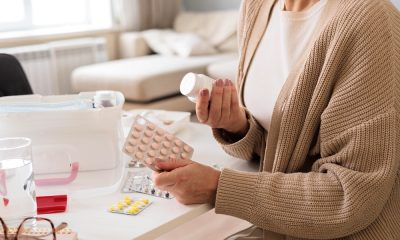


Women who do not use menopausal hormone therapy have a greater risk of developing osteopenia or osteoporosis, conditions that weaken bones and can lead to fractures, disability and loss of independence, new research suggests.
The retrospective cohort study included 387 postmenopausal women who underwent DXA scans between 2021 and 2025. A DXA scan is an imaging test used to measure bone mineral density.
Participants were classed as menopausal hormone therapy users, who made up 33 per cent of the group, or non-users, who made up 67 per cent.
Low bone mineral density was defined as osteopenia, where bones are weaker than normal, or osteoporosis, where bones become more fragile and more likely to break.
Women taking menopausal hormone therapy had about 69 per cent lower risk of low bone mineral density in the spine and hip compared with those not using it.
The association remained after researchers accounted for age, time since menopause, vitamin D levels, smoking and other health conditions.
Diego Espinoza-Peralta, vice president of the Mexican Society of Nutrition and Endocrinology and principal investigator at Investigación Médica Sonora, said: “For years, many women have avoided menopausal hormone therapy because of safety concerns and warning labels.
“This study revisits that narrative and shows that menopausal hormone therapy may have an important added benefit: protecting bone health. That shifts the conversation from ‘avoid if possible’ to ‘reconsider in the right patient.’
“In simple terms: menopausal hormone therapy appears to independently protect bones, not just by coincidence.”
The findings suggest hormone therapy could help some women find relief from menopausal symptoms while preventing bone loss or lowering fracture risk.
Espinoza-Peralta said: “Clinicians may begin to weigh its benefits more carefully, especially in women early after menopause, potentially improving long-term health and quality of life.”
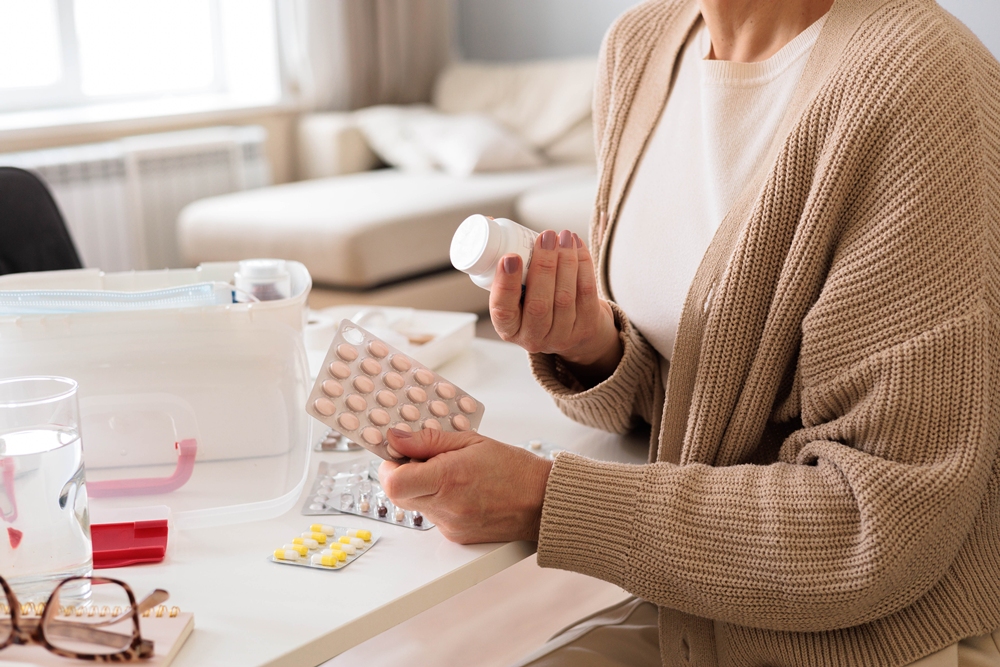
The highest dose of an oral GLP-1 was linked to significant weight loss across menopause stages in post-hoc analyses of two late-stage trials.
The results suggest Foundayo may help women with obesity or overweight lose weight during premenopause, perimenopause and post-menopause.
Women taking the highest dose also saw reductions in waist circumference, a measure linked to abdominal fat and cardiometabolic risk.

The analyses were based on more than 1,500 female participants in the ATTAIN-1 and ATTAIN-2 clinical trials.
GLP-1 medicines mimic a hormone that helps regulate appetite and blood sugar. They are used in weight management and diabetes care.
Cardiometabolic risk means the likelihood of developing conditions such as heart disease, high blood pressure or type 2 diabetes.
The findings were presented at the American Diabetes Association’s 86th Scientific Sessions.
Eli Lilly and Company said women taking the highest dose of Foundayo, the brand name for orforglipron, achieved significant weight loss at every stage of menopause.
Orforglipron is a once-daily oral GLP-1 receptor agonist. Unlike injectable GLP-1 medicines, it is taken as a tablet.
Menopause is the point at which menstrual periods have permanently stopped. Perimenopause is the transition before menopause, when hormone levels and periods can change.
The company said menopause can contribute to weight gain, particularly around the abdomen, and may make weight loss harder to achieve and maintain.
Rachel Batterham, senior vice-president of medical innovation and external engagement at Lilly, said: “Menopause can be an incredibly frustrating time for many women, partly because weight gain often feels beyond their control, and the biology of menopause can undermine even the most determined efforts to manage weight.
“These findings show that Foundayo was associated with meaningful weight loss in women at every stage of menopause.
“For women who have seen their weight become harder to manage precisely when their health is more at risk, this is what progress could look like.”
In ATTAIN-1, women without diabetes who were premenopausal lost up to 12.8 per cent of their body weight after 72 weeks on the highest dose.
Women in perimenopause lost up to 14.4 per cent, while post-menopausal women lost up to 14.1 per cent.
This was equivalent to 28.0 lbs, 30.4 lbs and 28.2 lbs respectively.
At the highest dose, up to 51.5 per cent of women in ATTAIN-1 achieved at least 15 per cent weight loss.
Waist circumference fell by up to 4.9 inches in the trial.
In ATTAIN-2, which involved adults with obesity or overweight and type 2 diabetes, women also lost weight across menopause stages.
Premenopausal women lost up to 11.3 per cent of their body weight, perimenopausal women lost up to 8.9 per cent and post-menopausal women lost up to 13.6 per cent.
This was equivalent to 23.4 lbs, 18.5 lbs and 27.8 lbs respectively.
At the highest dose, up to 44.2 per cent of women in ATTAIN-2 achieved at least 15 per cent weight loss.
Waist circumference reductions reached up to 4.3 inches.
ATTAIN-1 was a 72-week phase 3 trial comparing three doses of Foundayo with placebo in adults with obesity, or overweight with at least one weight-related condition, who did not have diabetes.
ATTAIN-2 was a 72-week phase 3 trial in adults with obesity or overweight and type 2 diabetes.
A placebo is an inactive treatment used for comparison in a clinical trial.
Both trials tested the drug alongside lifestyle measures, including diet and physical activity.
The analyses were post-hoc, meaning they looked at the data after the trial results had already been collected.
Post-hoc analyses can help identify patterns, but they are generally considered less definitive than findings from trials designed specifically to answer that question.
Foundayo is approved by the FDA in the US for adults with obesity, or some adults with overweight and weight-related medical problems, to reduce excess body weight and maintain weight reduction alongside diet and physical activity.
The source material states that the drug should not be used with other GLP-1 receptor agonist medicines and that it is not known whether it is safe and effective in children.
It also states that oral birth control pills may not work as well while taking Foundayo, and that healthcare professionals may recommend another form of contraception for 30 days after starting the drug and for 30 days after each dose increase.
Common side effects listed in the source material include nausea, constipation, diarrhoea, vomiting, indigestion, abdominal pain, headache, swollen belly, tiredness, belching, heartburn, gas and hair loss.
The company said orforglipron is also being studied for type 2 diabetes, obstructive sleep apnoea, osteoarthritis knee pain, hypertension, peripheral artery disease and stress urinary incontinence.

Apple announced menopause and perimenopause tracking for its Health app at WWDC 2026, with symptom logging and cycle alerts for some users.
The update expands the app’s cycle tracking beyond fertility and menstrual periods.
If logged cycle patterns suggest a user may be experiencing perimenopause, the app will send a notification prompting a conversation with a doctor.
However, this perimenopause-specific cycle deviation notification is only for users aged 40 and over and is not intended to replace a doctor’s diagnosis or treatment.
Stacey Ford, Apple’s vice-president of OS management, said users will also be able to log menopause and perimenopause symptoms in the Health app.
Educational content will also be available to help users learn more about these life stages and understand changes in their bodies.
Every year, about 2 million women enter perimenopause, the stage before menopause when levels of the hormone oestrogen decline.
According to a February 2025 survey involving 4,432 participants aged over 30, more than half of women aged 30 to 35 experienced moderate or severe perimenopause symptoms.
The findings suggest perimenopause does not affect only older adults.
About 6,000 women in the US enter menopause every day, according to the Society for Women’s Health Research.
Given the number of women affected by perimenopause and menopause, the update broadens the Health app’s scope.
The app launched in 2019, meaning it has gone seven years without these women’s health tracking features, which could help users better understand their bodies and prepare for informed conversations with doctors.











 Menopause3 weeks ago
Perimenopause misinformation ‘putting women at risk’

 Hormonal health4 weeks ago
NHS urged to update website following renaming of PCOS

 News3 weeks ago
Women still being failed when they reach menopause, experts say

 Entrepreneur3 weeks ago
Women’s Health Innovation Summit opens submissions for 2026 Innovation Showcase

 Insight2 weeks ago
British women among angriest in Europe, health survey reveals

 News3 weeks ago
Three menopause innovators shortlisted for Femtech World Award
 Hormonal health3 weeks ago
Sweden eyes domestic production of oestrogen patches amid menopause treatment shortage

 News4 weeks ago
Low insulin diet and avoiding four food groups may prevent menopause weight gain